
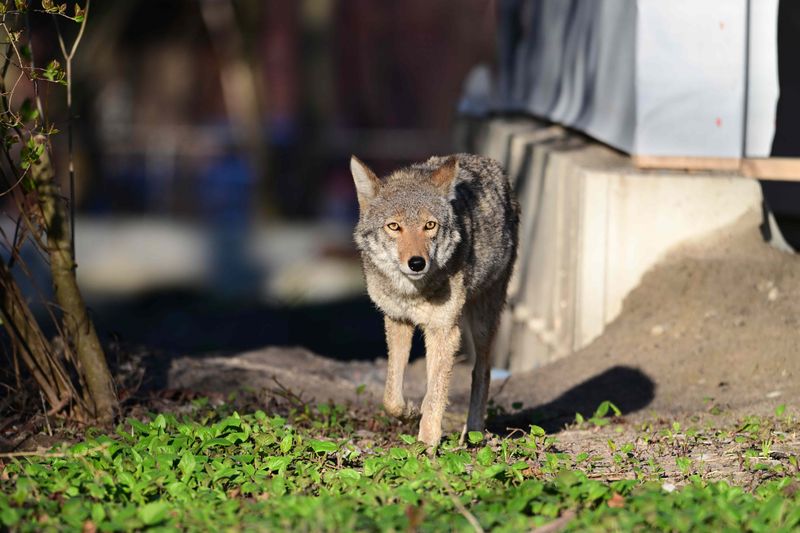
A coyote trotting across your lawn can make your heart jump, and your first instinct may be to bolt or grab the nearest pet. Those instincts are often the wrong moves.
A few calm, simple steps protect your family and animals without turning a sighting into a crisis. Here is what to do, what to skip, and when to simply walk away.
A coyote sighting is not automatically an emergency
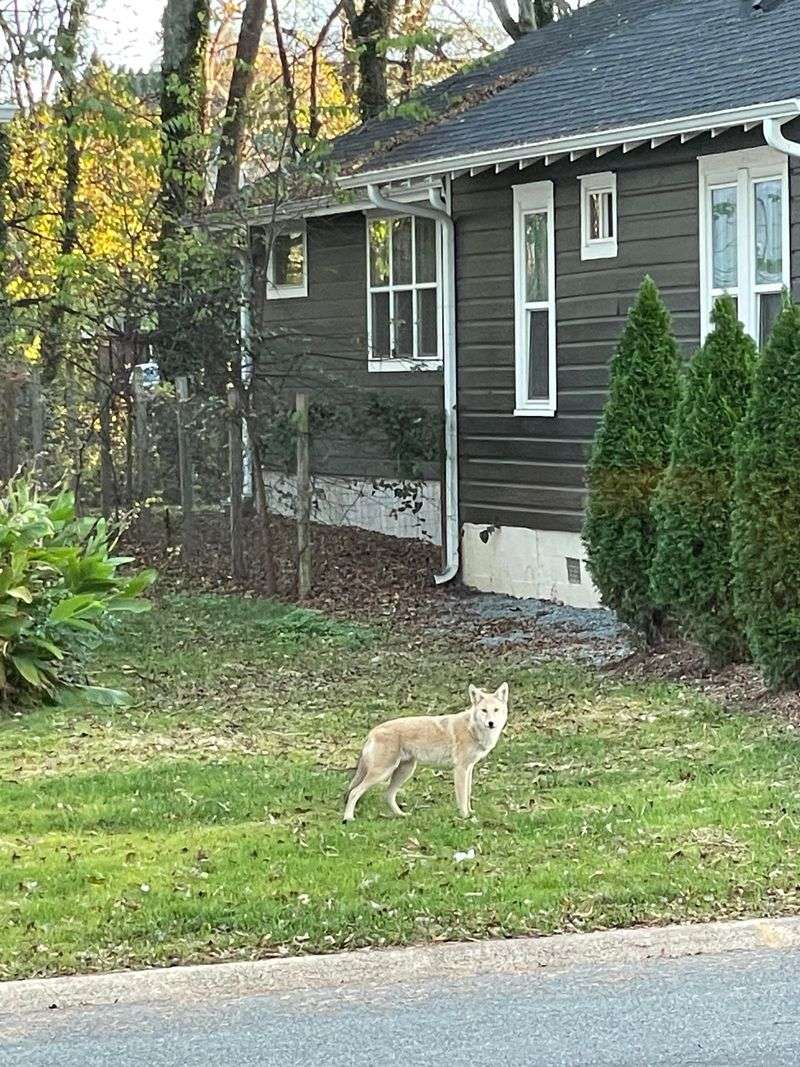
Seeing a coyote is not the same as being in danger. A coyote crossing the back corner of your property or trotting down the street is simply a wild animal moving through its range.
Iowa State Extension guidance, developed with the Iowa DNR, says that merely seeing a coyote does not necessarily mean action is needed.
Daylight sightings are not proof of trouble either. A coyote out in the morning is not automatically sick or rabid.
Behavior is the clue worth watching, not the time on the clock or the animal’s mere presence.
Start by sizing up the distance. A coyote far across the yard that keeps moving away needs little more than your attention.
A coyote that comes closer, lingers near people, or heads toward your pets is a different matter. For that kind of ordinary close approach, NC Wildlife recommends hazing, which means making yourself loud and large so the animal leaves.
Keep that simple frame in mind: watch first, then act based on what the animal does. The next sections walk through the steps, plus the situations where leaving is smarter than hazing.
Stand tall and haze an ordinary approach
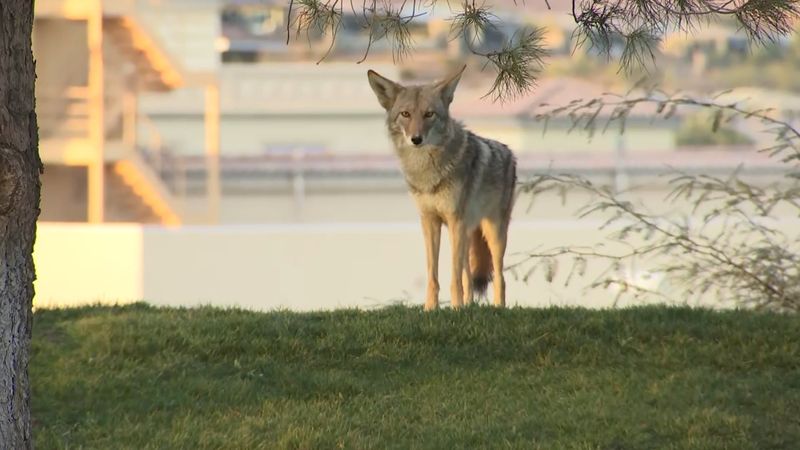
When a coyote comes closer than you are comfortable with, here is the sequence. Stand tall and stay put.
Running can feel natural, but NC Wildlife says not to run, so plant your feet and keep your posture upright.
Next, haze the coyote. NC Wildlife’s guidance suggests using a loud voice, waving your arms, spraying the animal with a garden hose, or throwing a small object in its direction.
Think of it as making yourself the most unpleasant thing in the yard. A firm shout like “Go away, coyote!” works fine.
Keep going until the coyote leaves. A single clap may not do it, so repeat the noise and movement until it turns and heads off.
Distance matters. Hazing is meant to be done from where you already are.
Do not walk toward the coyote, chase it, or corner it. An animal with no clear exit has fewer choices, and that creates risk you do not need.
If you have a hose, stay on the patio and use the spray to cover the gap. If you toss something, aim in the coyote’s direction as a signal, not at the animal itself.
Keep in mind that this routine fits an ordinary encounter. A few situations call for a quiet exit instead, and those are covered below.
Keep pets close and under control
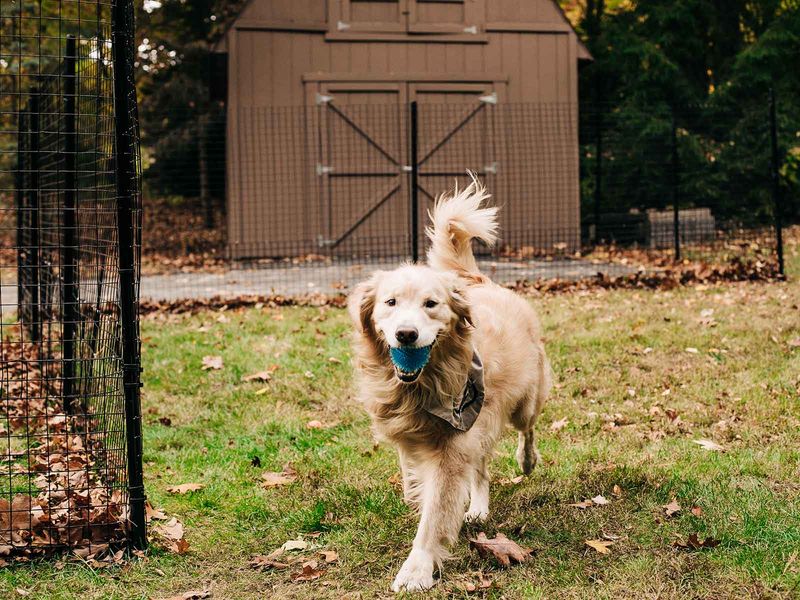
Pets are the main reason many homeowners worry about coyotes, so handle them first. If your dog or cat is with you, bring it close and keep it on a leash or otherwise controlled.
Pick up a small dog if you can do so calmly. Never let a pet chase or engage the coyote, even a bold one that barks at the intruder.
Small pets are the most vulnerable. NC Wildlife warns that small pets may be at risk and recommends never leaving pets outside unattended.
Once the coyote is gone, walk your pet inside and keep outdoor time supervised from then on.
Fencing can help. NC Wildlife says a six-foot fence with a ground barrier to prevent digging can help protect pets that are outside.
Treat it as one layer of protection, not a promise. A fence does not make an unsupervised pet completely safe.
Iowa State Extension also notes that close supervision is a practical piece of coyote management, and that fits the same idea: your presence beats a barrier. Dusk and overnight potty breaks are good times to step outside with the dog, flip on a light, and stay within arm’s reach.
Leave calmly if a coyote seems to defend an area
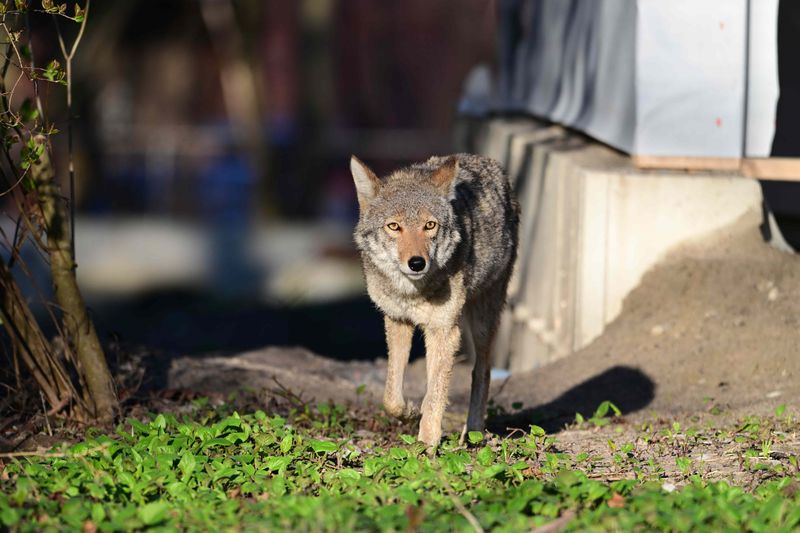
Some coyotes are not just passing through. From February through June, coyotes may be more territorial while raising pups.
NC Wildlife says that if one seems intent on defending a particular area, you should leave calmly, since a den may be nearby and hazing may not work.
Clues include a coyote that holds its ground near one patch of brush, a crawl space, or a woodpile, and does not move off as you approach. Skip the shouting and hose in this case.
Turn away, take your pets with you, and avoid the area if possible. Do not go looking for a den or try to drive the animal off.
Staring and following are separate warning signs. The agency’s 2026 spring guidance advises calmly leaving if a coyote stares at or follows someone, and alerting others to avoid that location.
Walk, do not run, and keep your back from being a long-term target by glancing over your shoulder as you go. Then tell neighbors, family, and anyone who uses the space, such as dog walkers or kids, to steer clear for a while.
Hazing can discourage approaches, but results vary
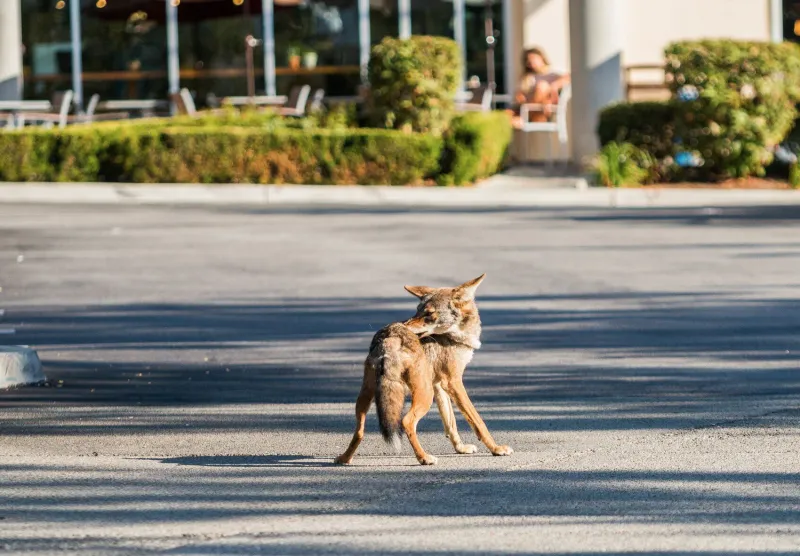
Hazing is a useful tool, but it is not magic. A USDA Wildlife Services study, described in a National Wildlife Research Center spotlight, tested hazing on captive coyotes under specific conditions.
The researchers found fewer approaches over repeated encounters.
That is encouraging, but it has limits. The study does not show that one hazing attempt will keep a coyote from coming back to your particular yard.
A single shout and a splash of water may send it off today without settling tomorrow.
Past experience plays a role. USDA says effectiveness depends partly on how coyotes have been treated by people before.
In the controlled study, coyotes that had been fed were more likely to approach even when hazed. The same was true for coyotes exposed to a person with a dog.
For homeowners, the practical meaning is simple. Hazing may discourage approaches, especially when done consistently, but it is not a substitute for protecting pets or removing food sources.
Think of it as one tool in a set, alongside supervision and a tidy yard, rather than the whole plan.
Reduce food and shelter attractants around the yard

After the coyote is gone, turn to the yard. A few weekend chores can make your property less appealing, though none of them promise that coyotes will never return.
Start with food. NC Wildlife advises removing pet food from outdoors and securing garbage in sturdy containers with tight lids.
Bring bowls in after meals, and set cans out the morning of pickup rather than the night before.
Next, look down. Rake up fallen fruit from persimmon, apple, fig, or pear trees, and clear away food waste from compost that is not fully enclosed.
Fall is a good time for this, since fruit and nuts drop across the Piedmont and coastal plain.
Birdseed counts too. Keep seed off the ground by using feeders with trays or seed catchers, and sweep up spills.
Loose seed draws rodents, and rodents can draw coyotes.
Finally, think about shelter. Close crawl spaces under decks, sheds, and porches that could give a coyote a place to rest or den.
Use sturdy lattice or hardware cloth, and check first that no animal is inside before you seal anything.
These steps can reduce what attracts wildlife to your yard, and they pair well with supervising your pets.
Know when to contact animal control or seek medical advice
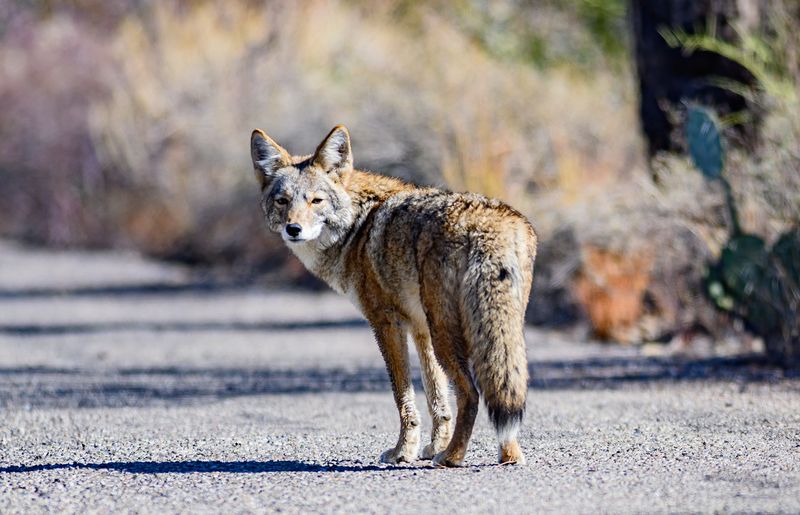
Most coyote visits end with the animal trotting away. A few situations call for backup, so know the path before you need it.
Contact your local animal control if you suspect a coyote has rabies or if it acts aggressively without apparent provocation. NC Wildlife advises this step for those cases.
Examples include a coyote that attacks without being cornered or threatened, or one that seems confused or unable to move normally. Keep your distance, bring pets inside, and describe what you saw.
If anyone is bitten or scratched in a way that could expose them to rabies, wash the wound right away with soap and water, then seek urgent medical advice. CDC guidance supports prompt medical attention after possible exposure.
Keep the risk in proportion. CDC says human rabies cases in the United States are rare, and it lists bats, skunks, raccoons, and foxes as the animals most frequently found with rabies, not coyotes.
A coyote in daylight or one that simply walks through your yard is not a rabies warning.
Calm observation, a quick call when behavior is truly odd, and fast first aid after a bite cover nearly every scenario a homeowner will face.