
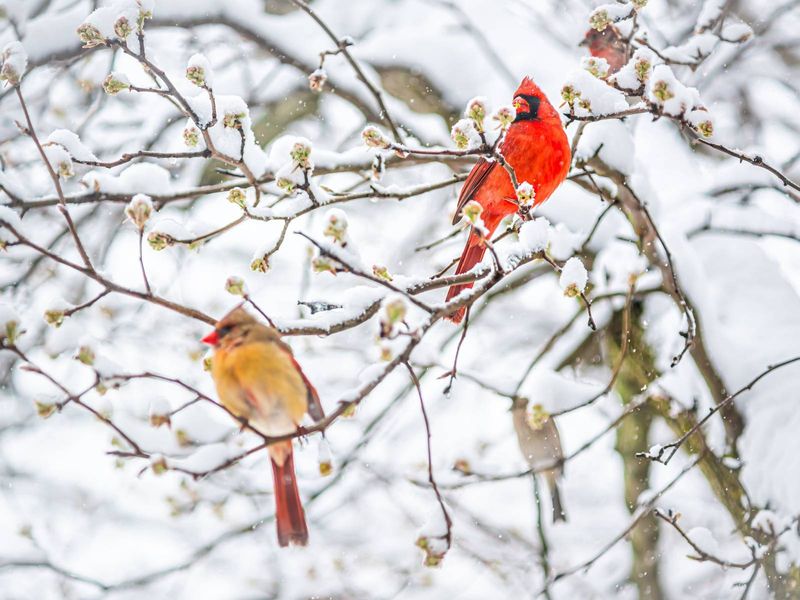
A flash of red outside the kitchen window on a cool October morning is hard to ignore. Many Texans wonder if it means something, like a hard winter ahead or a bird just arriving from the north.
The real story is simpler and more useful. That bird is telling you something about your yard, and you can act on it.
A cardinal is not a forecast of a hard winter
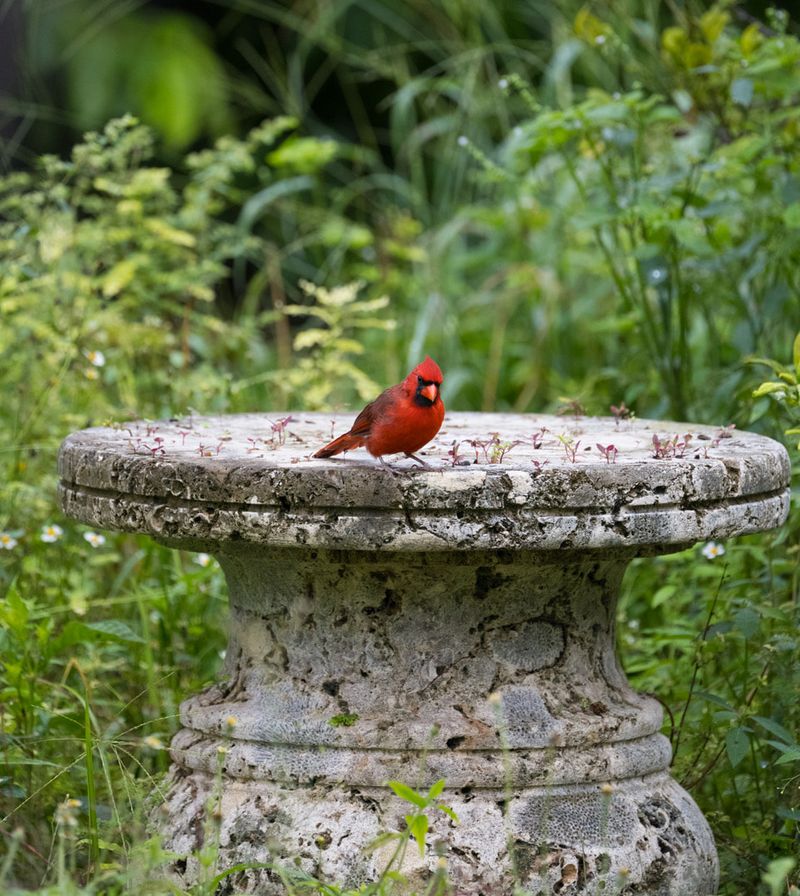
Old folk wisdom says a red bird at the window means weather is coming. It makes a good story, but cardinals do not work as weather forecasters.
A bird in your yard on a fall morning tells you nothing reliable about a cold snap or a harsh winter.
Here is what we do know. According to Texas Parks and Wildlife Department, Northern Cardinals are year-round residents across the eastern two-thirds of Texas.
They do not migrate in the usual sense, so a cardinal at your fence in October is not a traveler who just flew in from up north.
Fall and winter flocking is also normal. Cardinals that kept to their own territories during summer often loosen up in the cooler months and gather in small groups to feed.
Seeing several at once can look like a sudden arrival, but it is usually birds that were already nearby.
Keep the geography in mind, too. The residency fact applies to the eastern two-thirds of the state, and places called Central Texas do not all have identical bird populations.
Your own sightings are what confirm cardinals live around you.
So drop the weather question and ask a better one. What is it about your yard that makes a cardinal stop by at breakfast time?
The next sections walk through what a visit can show, what it cannot, and how to support the birds that use your space.
A repeat visit shows use, not dependence

If a cardinal shows up around 7:30 most fall mornings, you can say one thing with confidence. A cardinal is using your yard at that time of day.
That is a real observation, and it is worth enjoying.
It does not tell you everything, though. You cannot know whether it is the same bird each day, because males and females look alike from one visit to the next unless you spot something distinctive.
Two or three cardinals may be taking turns.
A visit also does not prove the bird nests in your yard. Cornell Lab of Ornithology life history information notes that cardinals use backyards, natural vegetation, and feeders, so a bird passing through your property may live a few lots over.
Feeder dependence is another thing a sighting cannot show. If you have a feeder, it is tempting to credit it.
But seeds, fruits, insects, and shelter on your property may be part of the draw, and you cannot tell which one from watching alone.
Finally, a morning habit does not promise a winter stay. Birds shift where they feed as food supplies change, and a regular can vanish for a week and come back.
Think of each visit as a snapshot of that moment, not a contract.
With those limits set, the clues in your yard become more interesting. You can look at what the bird might be finding there.
Food and cover can make a yard useful
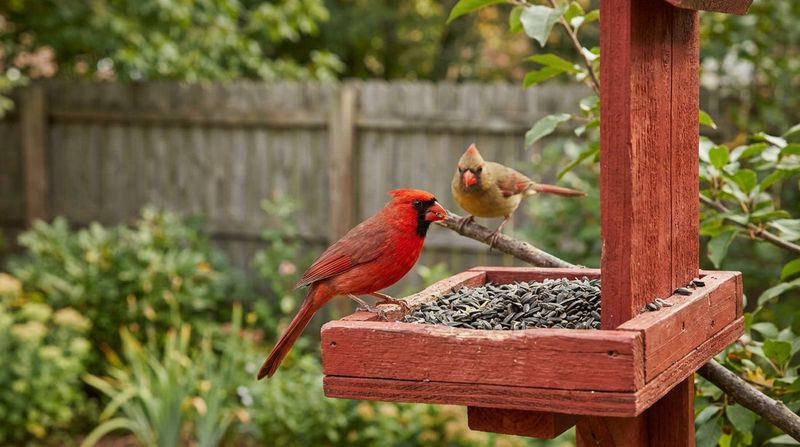
Cardinals have simple needs, and two of the biggest are something to eat and somewhere to hide. A yard that offers both may be useful to them, which is a reasonable way to read repeat visits.
On the food side, TPWD says cardinals eat seeds, fruits, and insects. Natural foods include fruits and seeds from plants like hackberry, blackberry, sumac, dogwood, and wild grape.
Black-oil sunflower seed is a feeder option they commonly use.
Cardinals also tend to feed on or near the ground. You may see one hopping under a shrub or picking through fallen seed beneath a feeder or tree.
That ground-level habit is why leaf litter and low cover matter as much as what hangs overhead.
Cover is the other half. Cornell Lab describes cardinals as favoring dense shrubs and thickets, where they can feed close to shelter and slip out of sight quickly.
Here is the catch. A sighting alone cannot reveal which of these drew the bird.
It could be the berries on a nearby tree, the seed under the feeder, the thicket along the fence, or a mix of all three. Treat food and cover as plausible explanations, not proven causes.
That uncertainty is useful, because it points you toward looking at your whole yard instead of crediting one feature.
Choose habitat plants for your Texas region
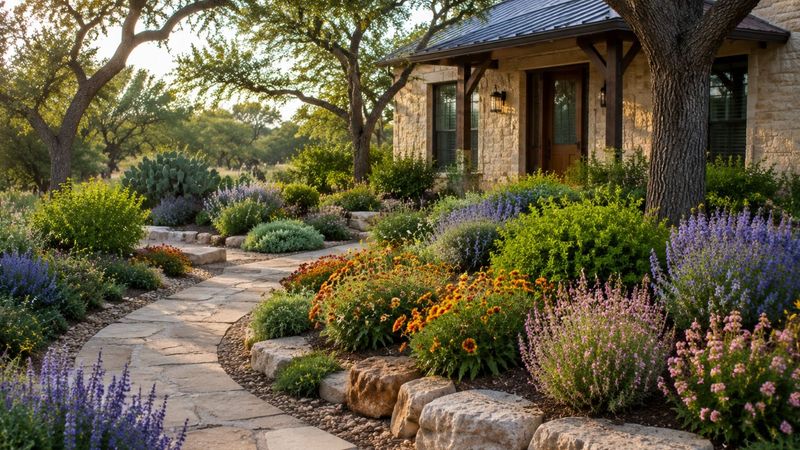
Planting for birds starts with a simple idea. Where it fits your space, keep or add dense shrubs and layered vegetation, such as low plants, mid-height shrubs, and taller trees.
That layering gives birds places to feed and places to duck out of view.
Texas is a big state with distinct ecoregions, and a plant that thrives in the Post Oak Savannah may struggle on the Edwards Plateau. Central Texas yards can sit on very different soils, from deep blackland clay to thin limestone.
For that reason, use a regional list instead of one statewide recommendation.
TPWD offers a good starting point in its habitat resources for birds. Its Texas Wildscapes program also supports gardeners who want to build habitat with native plants.
Look for lists tied to your ecoregion and check what local native plant nurseries recommend.
Native plants can provide food and shelter, and they are generally suited to Texas heat and watering limits. Still, no single shrub is a guaranteed cardinal magnet.
A mix of fruiting shrubs, seed-bearing plants, and dense cover gives you more chances to support birds than any one star plant.
Plan on gradual changes. Add one shrub cluster this fall, since cooler months are a good planting window in much of Texas, and watch how birds use it over time.
Think of these changes as support for wildlife, not a promise that cardinals will keep visiting.
Water and feeders need reliable upkeep
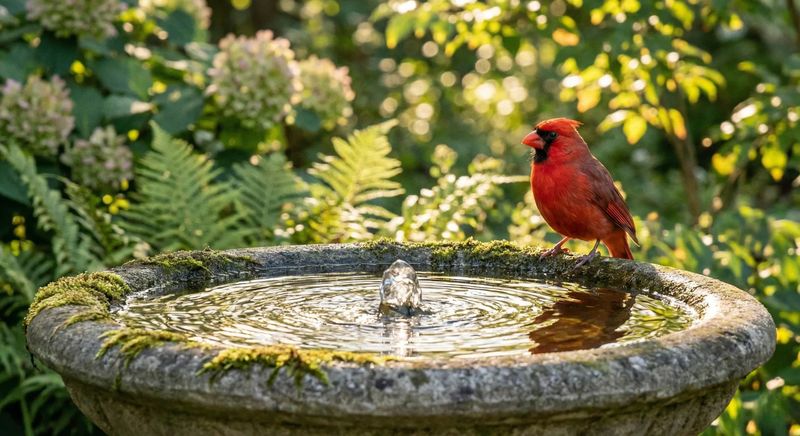
Water can be as valuable as food, especially through long dry stretches. A shallow bird bath works well.
TPWD advises keeping the water no more than three inches deep and cleaning it regularly.
A quick scrub and fresh water every few days keeps things tidy. In summer heat, algae builds fast, so check it often.
Feeders are optional. They can supplement natural food and habitat, but they do not replace it, and a visit to one does not mean the feeder caused the sighting.
If you choose to feed, plan for the upkeep from the start.
Cornell’s Project FeederWatch gives clear guidance on cleaning feeders. For seed or suet feeders, clean them about every week or two.
Clean more often during wet weather or heavy use, since damp seed spoils quickly.
Do not forget the ground. Rake up spilled seed and waste below the feeder, because that mess can add to disease risk.
Cardinals feed on the ground, so they are right in the path of it.
If you notice sick birds, read the disease-specific guidance from FeederWatch instead of assuming one response fits every illness. If cleaning feels like too much work, lean more on plantings and a clean bath, which still support birds well.
Reduce everyday risks around the yard
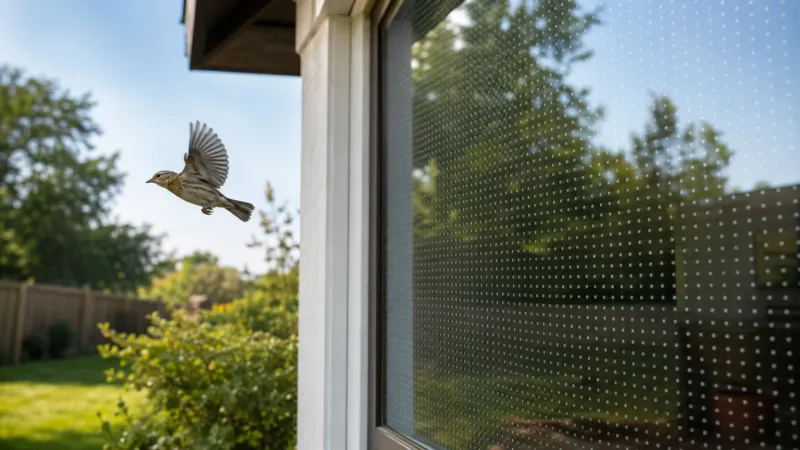
A good bird yard should also be a safer one. Windows are a common hazard, because glass can reflect trees and sky so well that birds fly straight at it.
The fix is to make the glass look solid from the outside.
The U.S. Geological Survey explains in its window collision FAQ that effective patterns should go on the exterior of the glass.
It also describes spacing them in a two-inch-by-two-inch grid. Tape, decals, or other markings placed that closely leave no gap a bird would try to fly through.
Interior stickers or a few scattered decals may not do the job. Even a well-marked window will not stop every collision, so watch for birds that still strike and adjust the pattern.
Cats are the other big concern. Keep pet cats indoors to reduce predation risk to cardinals and other birds, especially around feeders and low shrubs where birds feed and rest.
Indoor cats are often healthier too, with fewer encounters with cars and wildlife.
For more ideas on layout, Project FeederWatch offers guidance on creating a safe feeding environment. Placement matters, and small tweaks can lower risk.
None of these steps removes every hazard, but together they make your yard a better place to visit.
Read the visit as a clue, not a promise
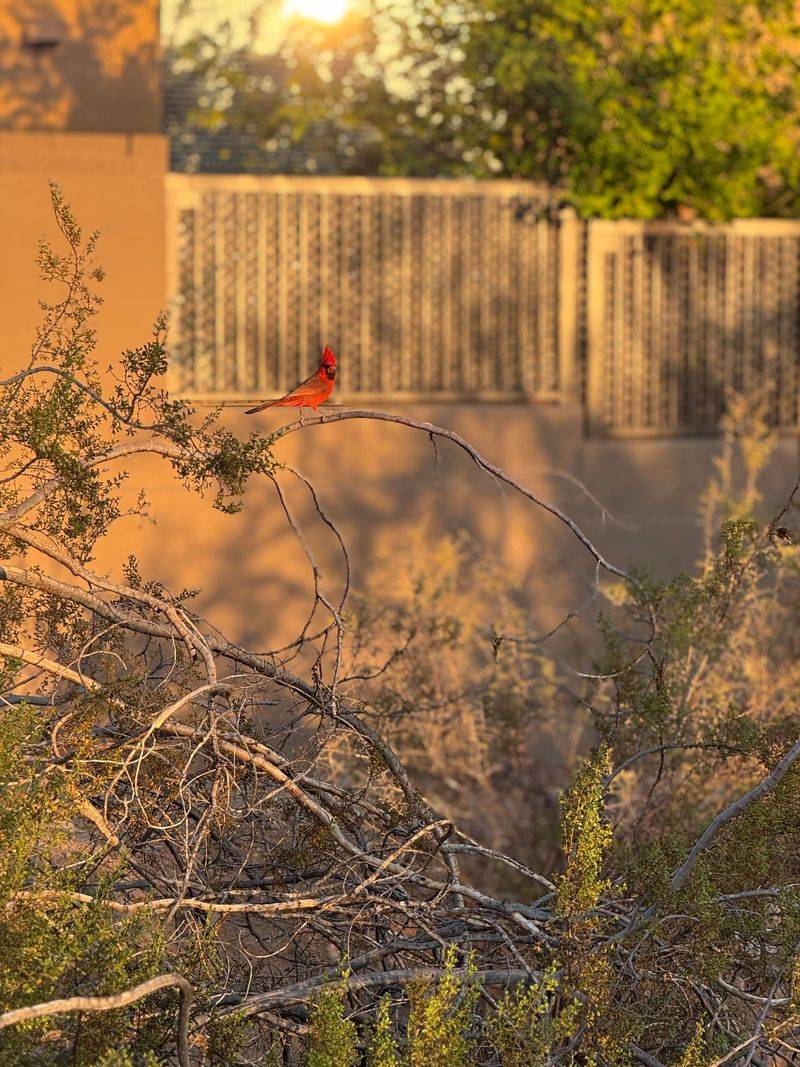
That red bird on the fence at breakfast is telling you something modest and real. As TPWD and Cornell Lab describe, cardinals are residents who use yards, not messengers or migrants.
Your yard is part of its day.
Build on that with food and cover suited to your region, clean water, tidy feeders if you use them, and safer glass and pets. Those steps support birds without guaranteeing any one of them stays.
Enjoy the visit for what it is, a small morning invitation to look closer at your own yard.