
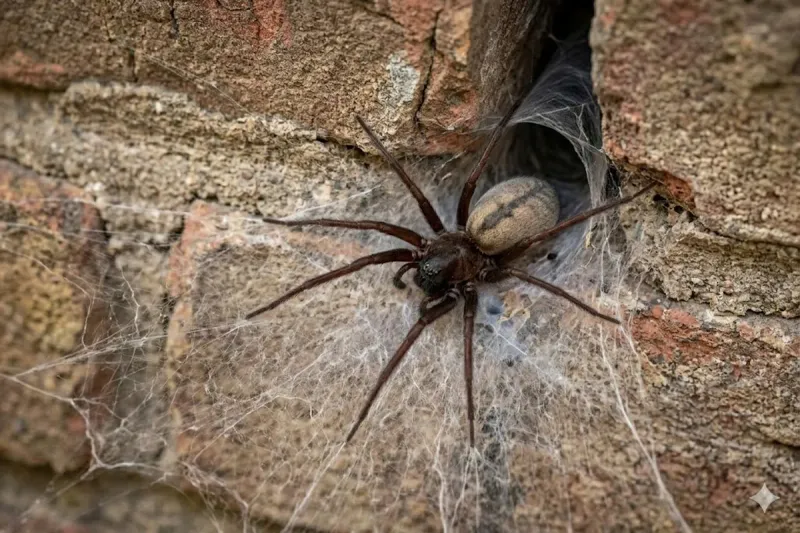
Reaching into an old box or pulling on a stored boot is something most Texans do without a second thought. Texas is home to a few spiders that can cause real trouble, and the brown recluse is one that people often ask about.
It likes quiet corners, which is why garages and closets come up so often. Knowing where it may shelter, and how to handle your stored things, helps you stay careful without worrying about every shadow.
The brown recluse is the likely spider behind the warning
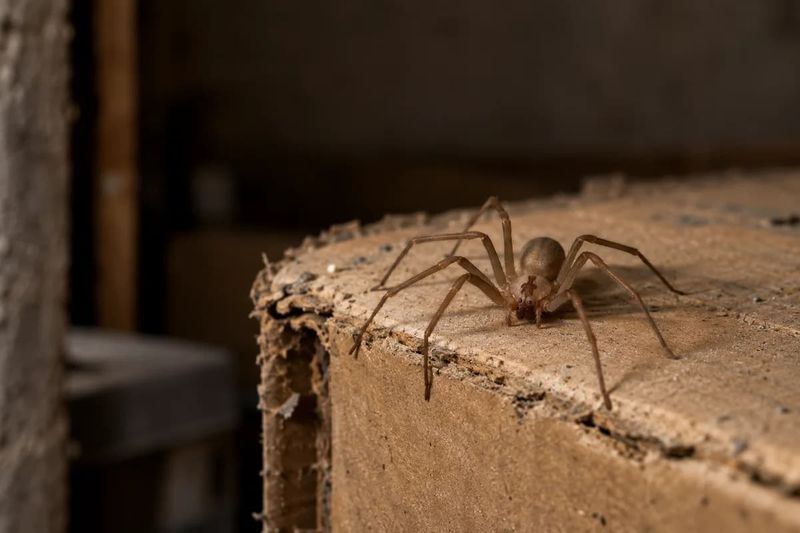
Ask Texans which spider worries them most in the garage, and many will name the brown recluse (Loxosceles reclusa). It does live in Texas, and it favors hidden, rarely disturbed spots.
Texas A&M’s Insects in the City updates describe it as a spider of quiet places that can stay active all year inside climate-controlled homes, garages, and storage areas.
The idea that it is Texas’s single most dangerous spider is harder to support. Texas DSHS lists both the brown recluse and the black widow as medically significant spiders in Texas.
Black widow bites can cause severe whole-body reactions, and on rare occasions death, so neither spider deserves a simple first-place ranking.
Then there is the seasonal part. Texas A&M says recluses are most frequently seen in spring, and that they are active outdoors from spring through fall.
Nothing in the Texas source says they stream into Central Texas houses once autumn nights cool off. Some extension material from Mississippi describes fall movement into attics, but that is a different region and should not be treated as a Texas rule.
So the useful takeaway is modest. A recluse could be around in a spot like a garage, but that does not mean one is living in your house.
Think of it as a reason for sensible habits, not a reason for alarm.
Garages, closets, and undisturbed storage
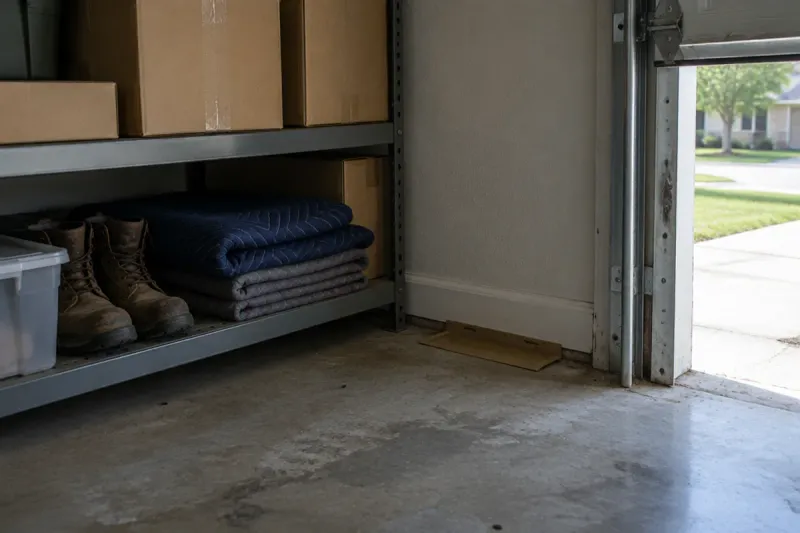
Picture the corner of a garage where a stack of boxes has sat since the last move. That kind of spot is exactly what the brown recluse is known to like: dark, calm, and left alone.
Texas DSHS says the spider turns up in garages and among boards, boxes, old towels, and clothes.
University of Florida researchers have reported much the same. A UF/IFAS publication on the brown recluse records specimens in boxes, stored papers, clothing, and other places that go undisturbed for a long time.
These are favored or reported hiding places, not proof that one lives in your garage. Most homes with cluttered closets never have a problem.
The point is simply to know which spots deserve a little extra attention.
Because Texas A&M notes that recluses can stay active year-round in climate-controlled spaces, there is no single season when you must start paying attention. A quiet weekend is as good a time as any to look over seldom-used areas.
Shoes and gloves stored for months are worth a quick check before you put them on. Turn them over, tap them on the floor, and give them a look.
It takes seconds and removes most of the surprise.
A bite can happen when a spider is trapped against skin
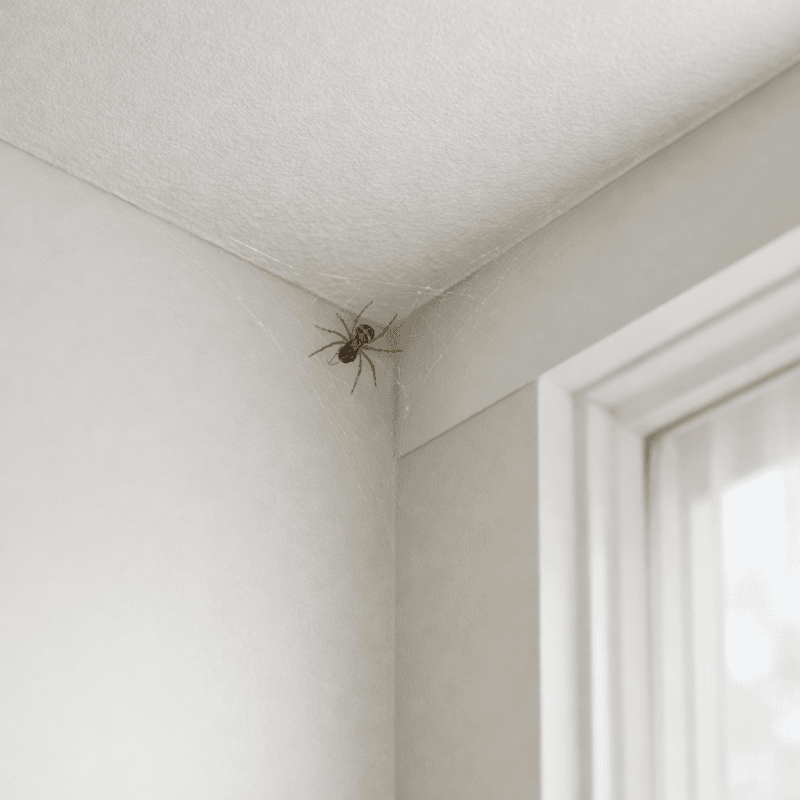
Recluses are shy, not hunters of people. Texas DSHS says brown recluses and black widows are not aggressive but may bite when they are accidentally trapped, disturbed, or threatened.
A spider that has no room to escape may bite in self-defense.
That is why bites are tied to everyday moments of accidental contact. Someone slides a hand into the back of a box, pulls on a boot that has sat in the closet, or picks up a towel that was folded against the wall.
In each case, a spider could end up pressed against skin with nowhere to go.
None of this means every stored item holds a spider. Most boxes, shoes, and towels are just boxes, shoes, and towels.
The risk comes from a rare meeting at the wrong moment, not from spiders going after anyone.
Understanding that makes the fix easier. You do not need to avoid your garage or empty every closet.
You only need to slow down when you reach into spaces you cannot see, so that a hidden spider is not squeezed against your hand or foot.
Handle stored items with simple precautions

A few small habits go a long way when you work with stored things. Virginia Cooperative Extension advice on the brown recluse suggests wearing gloves when moving boxes, firewood, or other items that have sat for a while.
Skip reaching barehanded into spaces you cannot see. Lift a box lid with a gloved hand and look inside first.
If you must reach into a dark gap behind a shelf, a flashlight helps.
Shake out stored shoes and clothing before wearing them. Give boots a firm tap, and shake out jackets, work shirts, and towels that have hung in the garage or a back closet.
Seasonal clothing pulled from a bin deserves the same treatment.
Regular cleaning and decluttering take away places to hide. Swap cardboard for sealed plastic bins when you can, and keep things off the floor.
Sweep and vacuum corners, shelves, and the edges of the room now and then.
Firewood belongs away from the house. Stack it off the ground and a good distance from walls, and wear gloves each time you carry it indoors.
These steps reduce chances for contact. They cannot promise a spider-free home, so treat them as good habits rather than guarantees.
A mark or wound cannot confirm a recluse bite
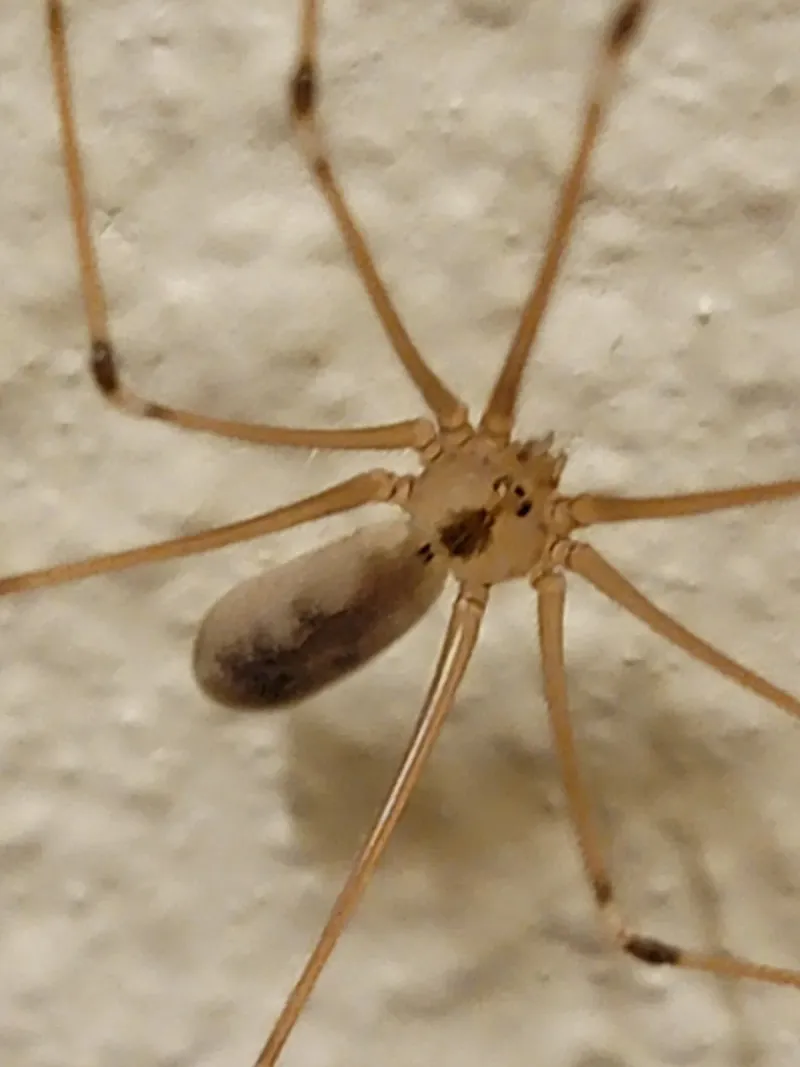
You may have heard that a violin shape on the back marks a brown recluse. It is not a reliable test.
Poison Control points out that a more distinctive feature is the recluse’s six eyes arranged in three pairs, which is hard to see without a close look.
Other spiders get mistaken for recluses all the time. A UF/IFAS publication documents that confusion, so a brown spider with a dark mark is not enough to settle the question.
Wounds are just as tricky. The CDC says most alleged spider bites are not actually spider bites, and a painful or breaking-down sore may be a bacterial skin infection instead.
Other conditions can look similar too.
A study of brown recluse diagnoses in four western states found far more diagnoses than confirmed recluse records. It says nothing about Texas bite rates, but it shows why caution about labels makes sense.
So avoid diagnosing yourself from a mark or a sore. If something looks wrong, a clinician can sort out what is really going on.
Wash a suspected bite and get expert advice

If you think a spider has bitten you, start simple. Wash the area with soap and water.
Texas DSHS also mentions an ice pack for pain or swelling.
Next, call Poison Control at 1-800-222-1222 or contact a clinician for advice. Poison Control guidance on brown recluse bites is a good starting point, and the staff can talk you through what to watch for.
Get medical assessment if the wound gets worse, or if you develop symptoms of illness such as fever, chills, or feeling unwell. Do not wait and guess.
A professional can tell whether it is a bite, an infection, or something else.
Back at home, the best defense is still ordinary care with stored boxes, shoes, and firewood. A mark or a sore will never tell you for certain what caused it, but a pair of gloves and a quick shake can spare you the question.