
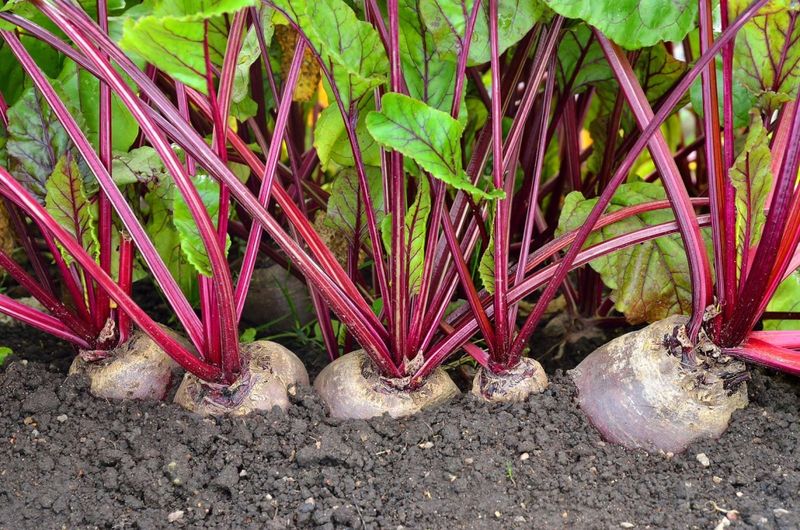
You pulled up your fall beets expecting fat, round roots, and found tiny ones sitting under a jungle of leaves. It is a common letdown, and it usually has more than one possible cause.
Crowding is one of the most common suspects, and it is something you can plan around in your next sowing. Here is how to sort out what may have happened and what to do differently.
Leafy tops do not tell the whole story
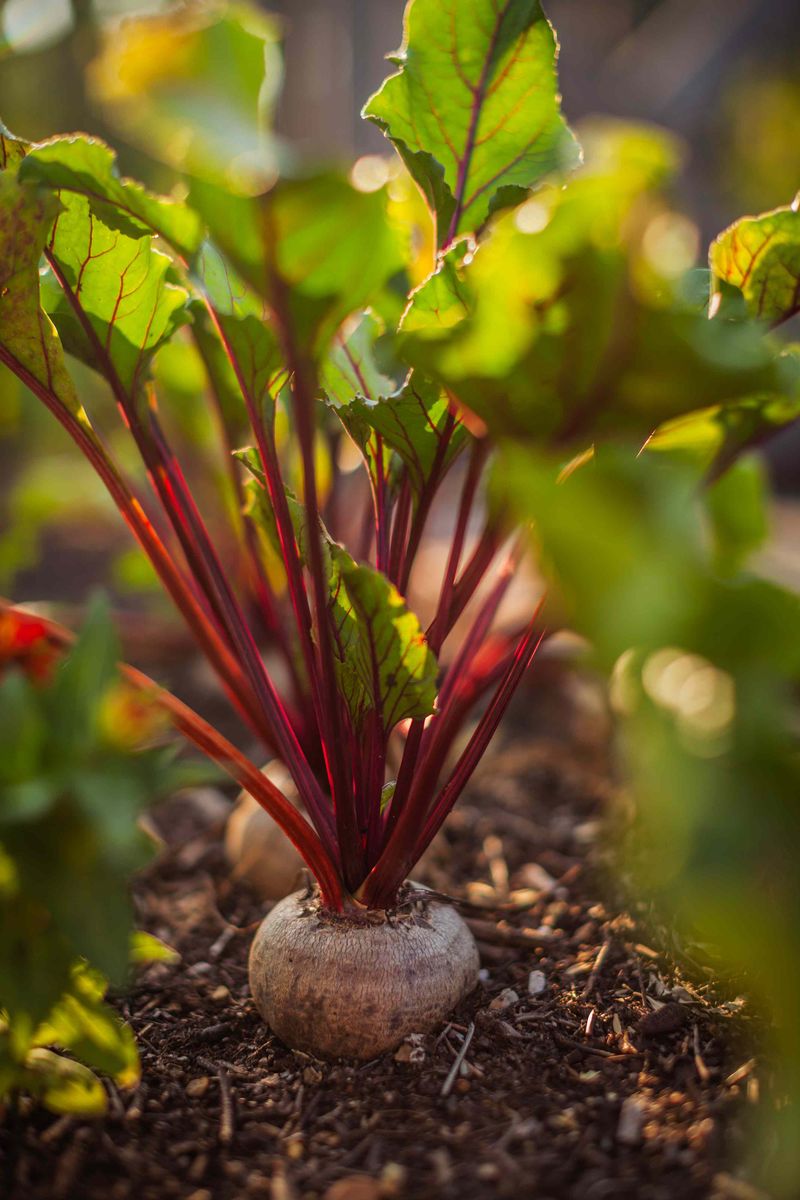
Picture a row of beets with tall, glossy, deep-green leaves. Then you tug one up and the root is barely bigger than a marble.
That mismatch can feel like a puzzle, especially when the plants looked so healthy all season.
It matters most when you wanted a root crop. Beets are also grown for their tender greens, according to UF/IFAS, so plentiful tops are not a failure on their own.
You can cook them like spinach or chard.
The tricky part is that leaf size alone cannot tell you why the roots stayed small. Extra nitrogen can push leaf growth at the expense of roots, as noted in South Dakota State Extension guidance, and other conditions can play a part too.
This article treats crowding as a common possibility, not a verdict, and walks through clues and fixes you can use next season.
Crowding is common, but not the only explanation
What looks like one beet seed is actually a dried cluster that can hold several seeds. When it sprouts, you may see two, three, or more seedlings popping up in one spot, as described by Illinois Extension.
If those seedlings are never separated, they can end up competing for the same patch of soil.
Roots need room to swell. When plants are packed together, each one has less space, water, and nutrients to work with, and small roots can be the result.
Extension guidance, including Iowa State University Extension, points to inadequate thinning as a frequent cause of poor root development.
Still, small roots do not prove crowding. Heat, extra nitrogen, uneven watering, and bed conditions can all affect how beets size up.
Think of crowding as a strong suspect, not the only one in the lineup.
Thin young seedlings and leave room for roots
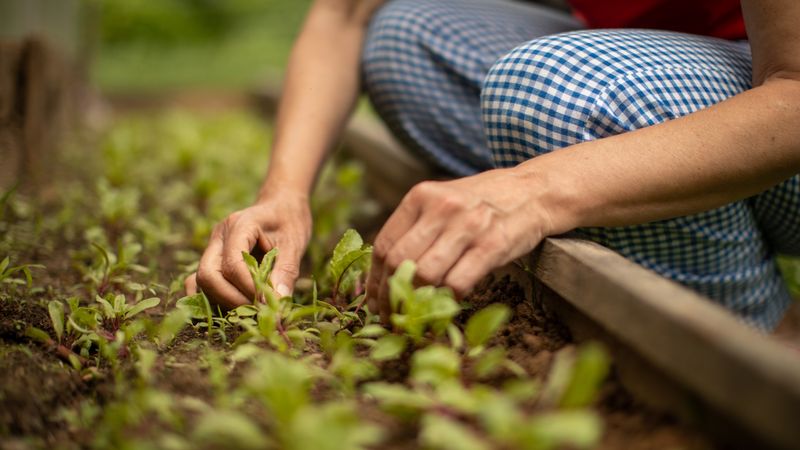
Start by sowing according to the seed packet. Once seedlings are a few inches tall, it is time to thin.
Waiting until the row is a tangle makes the job harder and the competition worse.
For table beets, about 3 to 4 inches between plants is useful guidance. It is not a universal rule, so check your packet, since varieties differ.
UF/IFAS gives a broader 2 to 4 inch range, and clusters often need thinning because they yield multiple seedlings.
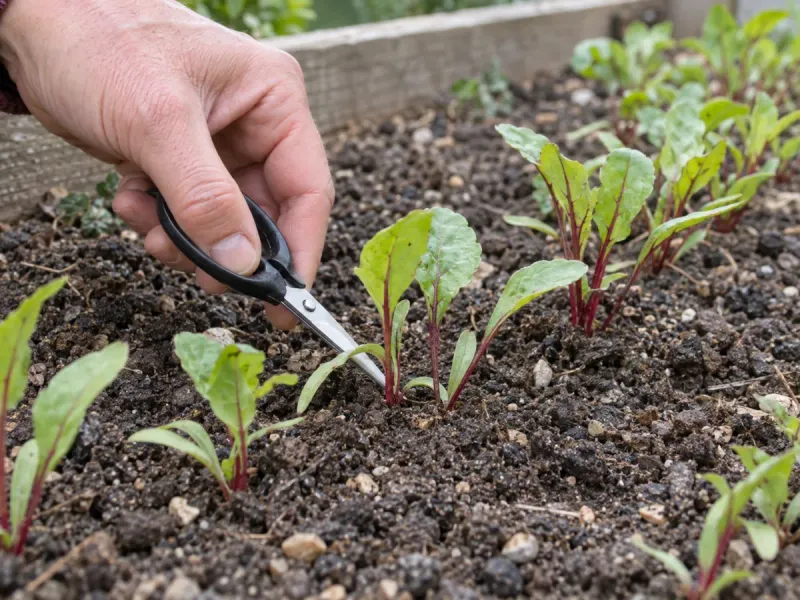
Snip the extras at soil level with small scissors instead of pulling them. UC Master Gardeners describe this as a way to avoid disturbing the roots of the plants you keep.
The trimmed seedlings are tasty in salads or a quick saute.
Thinning is prevention for young plants and future sowings. It is not a proven way to enlarge roots on mature beets that have already stayed small.
A well-drained bed and steady moisture support root growth
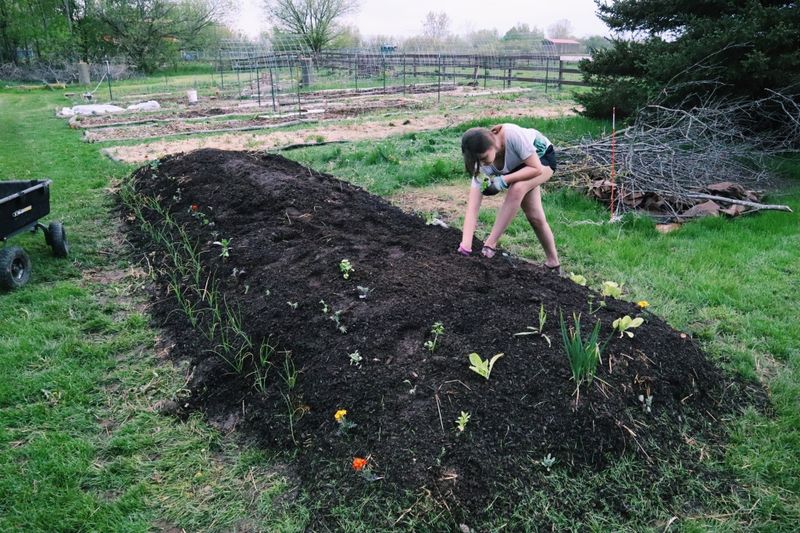
Beet roots need loose, well-drained soil to expand. Texas A&M AgriLife Extension recommends deep, well-drained soil, compost where the ground is heavy with clay, and ridges in low spots where water tends to sit.
Pick a site that does not stay soggy after rain. If your yard is heavy clay, work compost into the bed before sowing.
Where water pools, a raised ridge can lift the planting zone above the wet.
Moisture matters just as much. UF/IFAS notes that adequate water supports sprouting and root development, so keep the seedbed damp until seedlings emerge, then water regularly as they grow.
Swings between bone dry and soaked can slow growth and lower yields, according to Utah State Extension. A layer of mulch and a consistent watering routine can help.
None of this is fertilizer advice; it is simply about getting the bed itself in good shape.
What else can keep roots small?
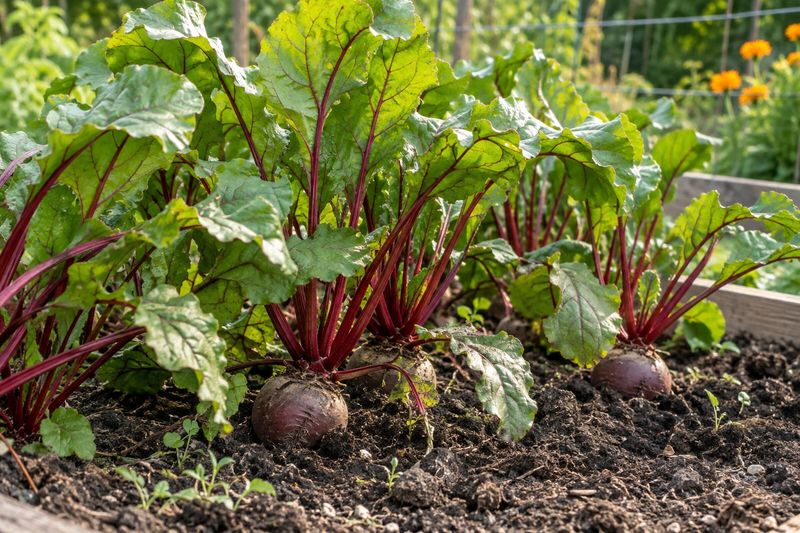
If your beets were spaced well and still stayed small, look at other possibilities. Too much nitrogen can encourage lush leaves while roots lag behind, as South Dakota State Extension points out.
A lawn-style fertilizer worked into the bed is one way that can happen.
Heat is another factor. Beets are a cool-season crop, and Texas A&M AgriLife Extension notes that hot weather can impair their performance.
Uneven watering can slow growth too, which ties back to the moisture swings mentioned by Utah State Extension.
Before adding anything to the soil, get facts. UF/IFAS recommends a soil test or a call to your county Extension office before fertilizing.
Beets can be sensitive to boron-deficient soil, but that is not a reason to add boron on a hunch. Test first, then decide.
Southern sowing dates depend on where you garden
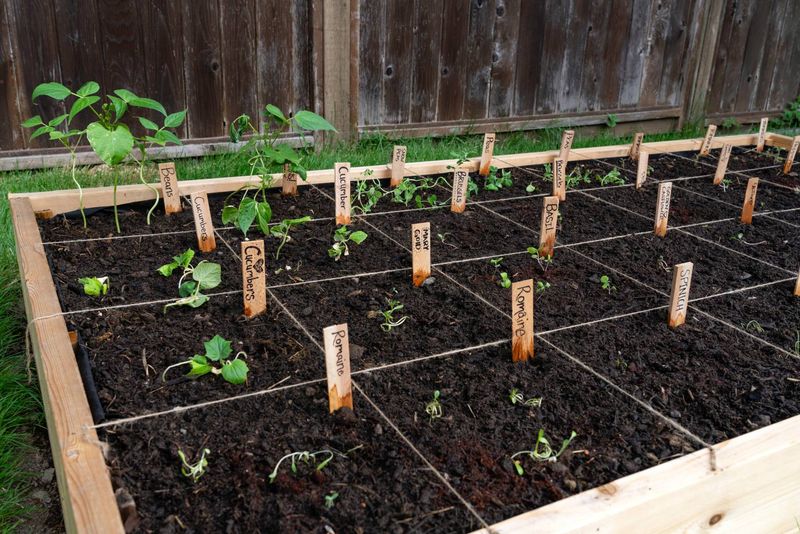
Timing is part of the picture, since beets prefer cooler weather. For Florida, UF/IFAS lists general planting windows of August to February in North Florida, September to February in Central Florida, and October to January in South Florida.
Texas is too big for one date. Fall planting times vary a lot between regions, so check the regional table in the Texas A&M fall vegetable gardening guide or ask your county Extension office.
Good timing will not make up for every other issue, and spacing alone does not decide the outcome. Still, matching your sowing to your local window can help beets grow in conditions they tolerate better.
Give the next sowing room to develop
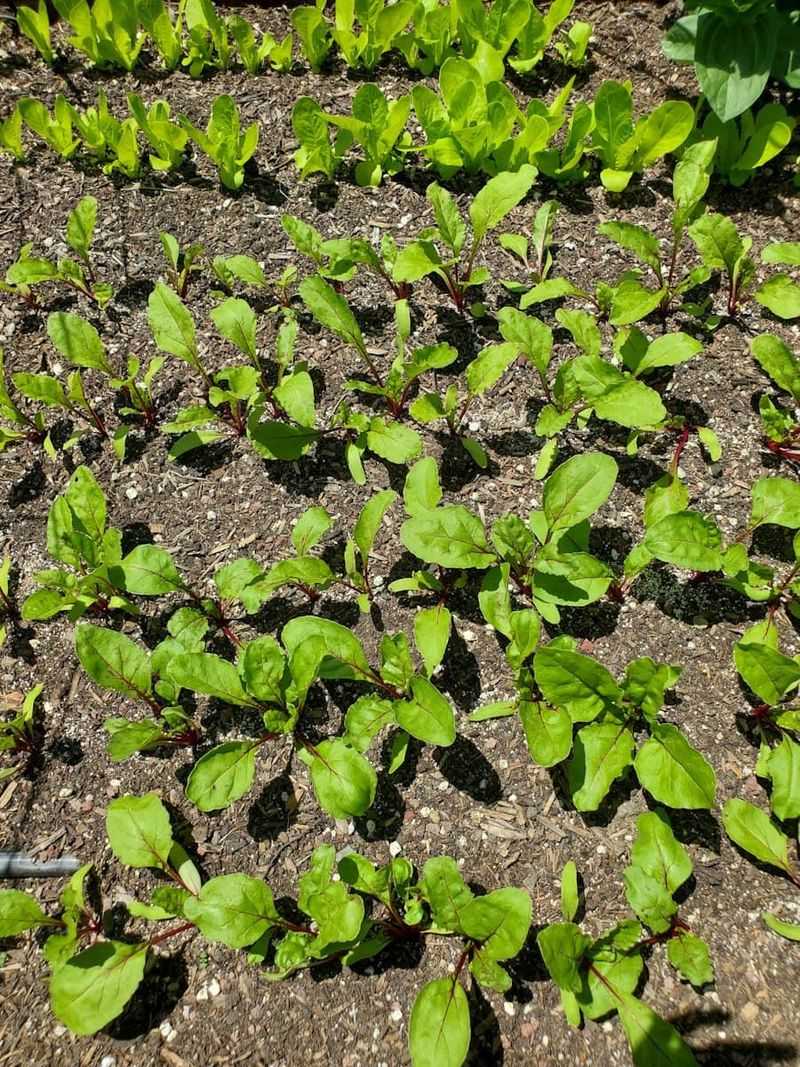
Next time, sow by the packet, thin young seedlings to the spacing your variety recommends, and give them a well-drained bed with regular moisture. These steps tackle common problems, but they cannot guarantee bigger roots or rule out heat and extra nitrogen.
Give the plants room, and the soil gets a fair chance to do its work.