
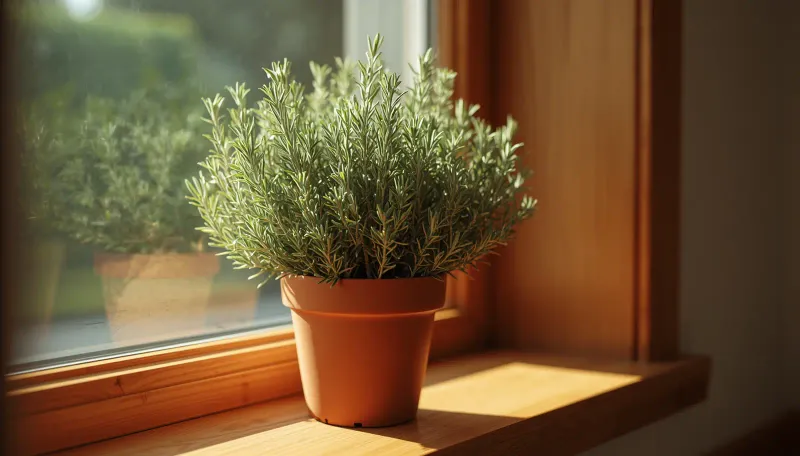
Your rosemary looked great on the patio, so why does it start to struggle a few weeks after you carry it inside? Many gardeners reach for the watering can the moment the needles look dull.
But indoor winter conditions change how fast a pot dries, and wet roots can cause trouble. A simple moisture check can help you keep that plant going until spring.
Wet roots are a serious risk, not the only possible cause
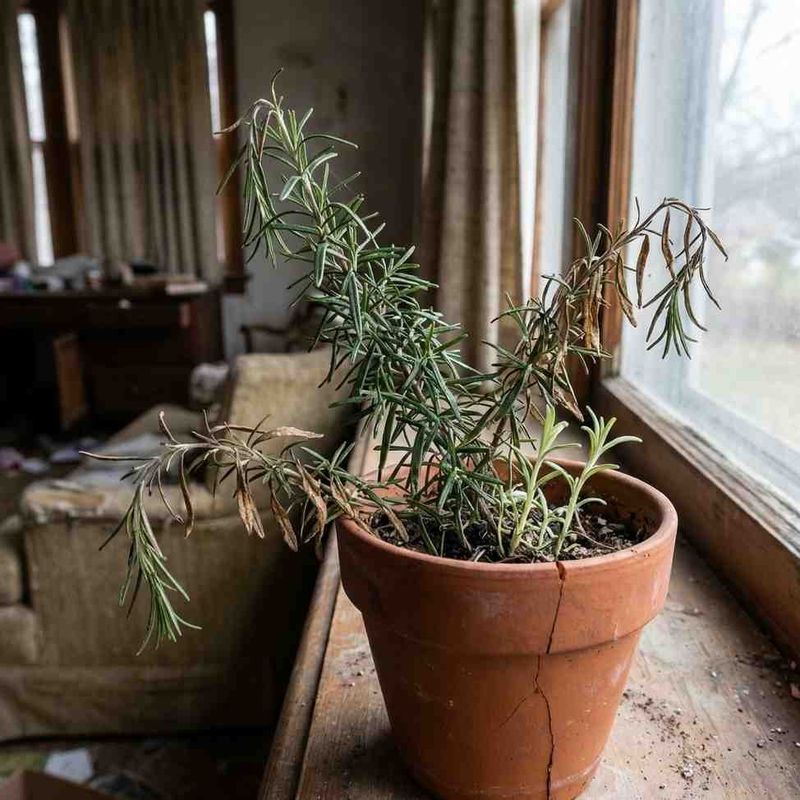
Soggy soil is one of the best-known ways to lose a rosemary plant. UF/IFAS guidance says rosemary does best in well-drained soil and suffers when it is watered too often.
Texas A&M AgriLife also stresses full sun, good drainage, and avoiding excess water.
Still, nobody has shown that wet roots are the top cause of indoor winter losses. Guidance warns about overwatering and poor drainage as real risks, but it does not rank the causes.
Cold can also hurt rosemary, and a chilly or drafty spot indoors can be a problem too.
So the goal is not to water by a fixed calendar or to assume the weather is never to blame. Instead, let the potting mix tell you what the plant needs.
Illinois Extension notes that rosemary can dry quickly indoors, yet extra watering can lead to root rot, which is why checking first matters.
Why a pot may stay wet longer indoors
Picture the difference between a sunny July patio and a living room in January. Light indoors is weaker, and rosemary usually grows more slowly.
Iowa State Extension points out that light is often the limiting factor for indoor herbs.
A slower-growing plant may use less water. Cooler rooms and less direct sun can also mean the mix loses moisture more slowly.
That is why the pot that needed water every few days in summer may stay damp much longer in winter.
Not every pot behaves the same way, though. A small clay pot near a heater can dry fast, while a big plastic pot in a dim corner can stay wet.
Since rosemary likes strong light and good drainage, as UF/IFAS explains, check your own pot before each watering and water less often only if the mix stays damp longer.
Check the mix before you water
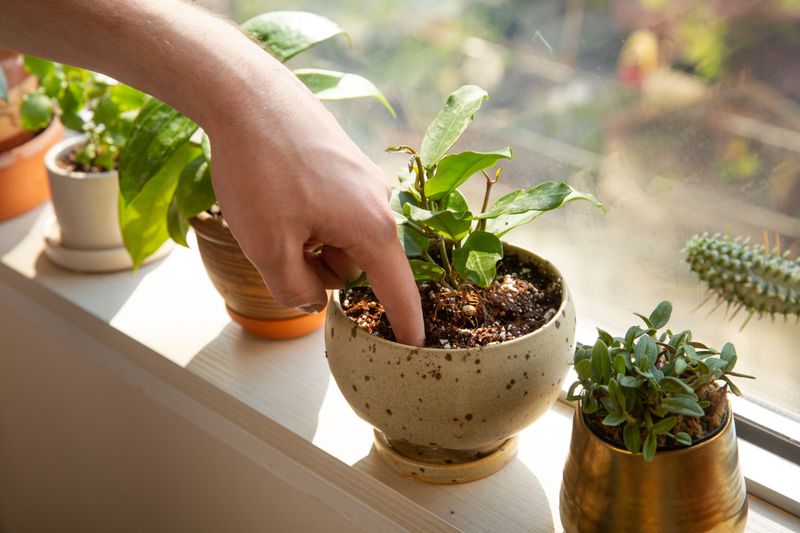
Forget the calendar and use your finger. Push it a couple of inches into the potting mix.
If it feels damp, wait. If the mix has dried substantially, it is time to water.
Penn State Extension says rosemary should dry slightly between waterings, and Texas A&M AgriLife advises letting it dry thoroughly. When you do water, soak the mix well and let the extra drain out of the bottom.
Light sips tend to leave part of the root zone dry and part soggy.
Drying out does not mean forgetting the plant for weeks. University of New Hampshire Extension notes that rosemary can suffer from drought as well as from being kept too moist.
A pot that feels light when you lift it is another handy clue that it may be ready.
Give roots a pot that drains freely
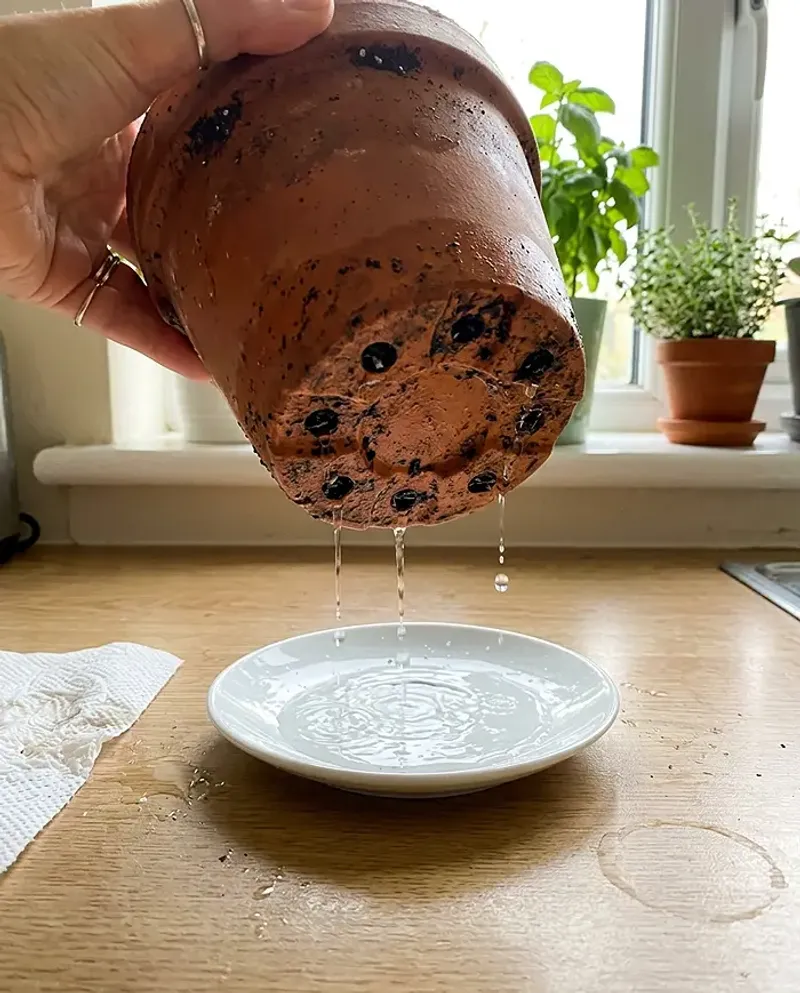
Drainage holes are not optional for rosemary. A pot with no way out for extra water can hold the roots in soggy mix for days.
Pair that pot with a well-draining potting mix so water moves through instead of pooling.
Size matters too. Iowa State Extension notes that an oversized pot can stay wet too long, and that porous terracotta can help the mix dry more readily.
Terracotta is an option, not a guaranteed fix, since a dim room can still slow drying.
After watering, empty the saucer so the pot is not sitting in runoff. If your air is dry and you want more humidity, a separate pebble tray can help without making the mix wetter.
Illinois Extension cautions that brown tips from dry indoor air do not mean the plant needs more water.
Put light in the watering plan
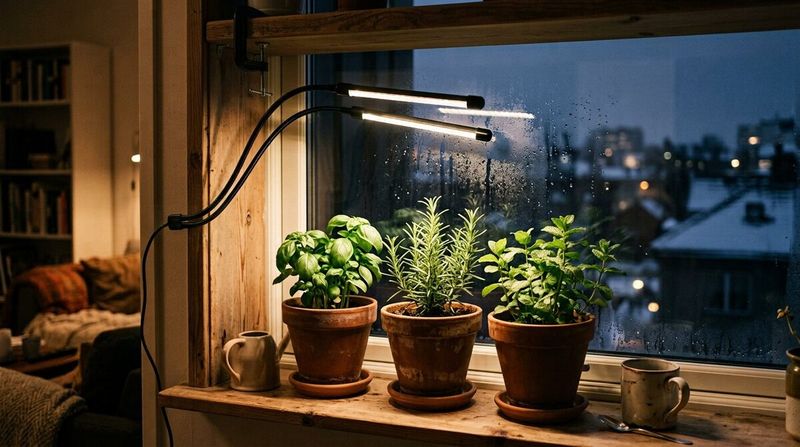
Light and water work as a pair. A rosemary plant in strong light uses more water and dries its pot faster than one sitting in a shady corner.
Giving it the brightest window you have is one of the easiest ways to help.
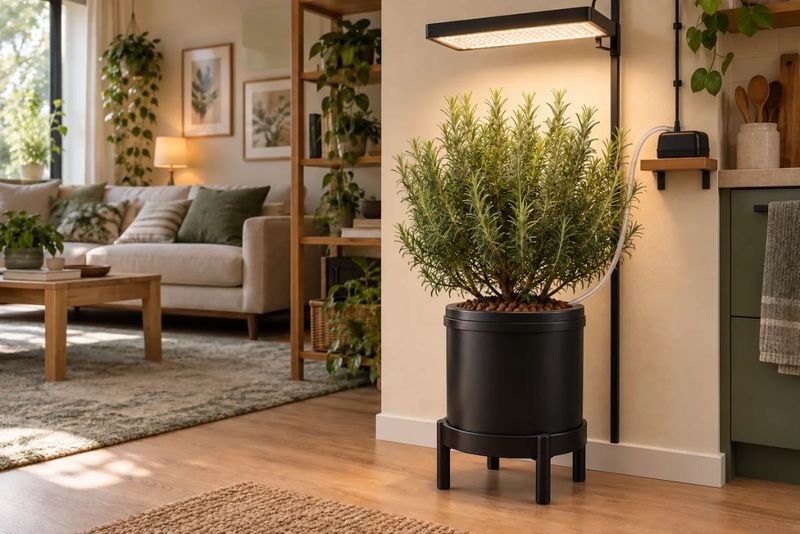
If the window is not bright enough, a grow light can fill the gap. Maryland Extension recommends supplemental lighting for indoor herbs in winter.
Iowa State Extension suggests putting the light on a timer for 12 to 16 hours when grow lights are needed.
That range is a guide, not a rule for every home. Rosemary naturally wants a lot of sun, and UF/IFAS advises at least six hours of it.
After you add light, keep checking the mix, because the pot may start drying faster than it did before.
Read symptoms cautiously and check cold exposure
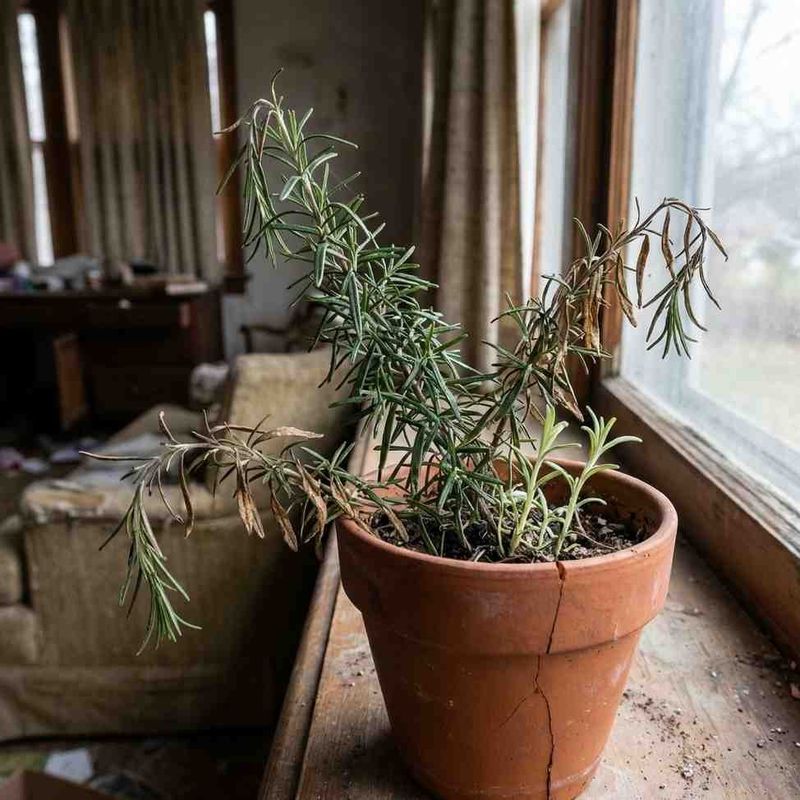
Brown tips and droopy stems can be confusing because several problems look alike. Dry indoor air can crisp foliage even when the roots are fine.
UC ANR calls brown leaf tips a likely sign of root rot, yet University of New Hampshire Extension says rosemary can show stress from either drought or too much moisture.
So check the mix and the roots’ drainage before you decide anything. Dry-looking foliage alone does not prove the plant needs water.
Illinois Extension says brown tips from dry air do not mean you should water more.
Cold matters as well. University of Wisconsin Extension notes that hardiness varies by cultivar, and UF/IFAS says rosemary can grow year-round in Florida but may need freeze protection in colder areas.
Many Southern gardeners may not need to bring it inside at all.
A rosemary plant rarely needs a guess, just a finger in the mix and a look at the thermometer.