
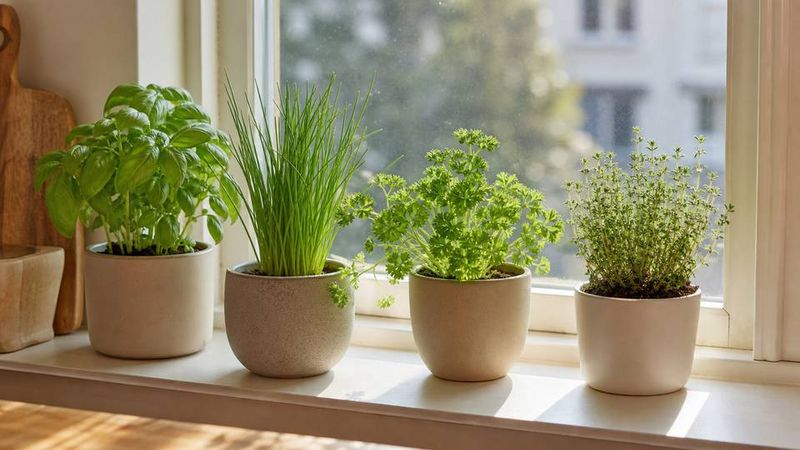
You carried your basil, rosemary, or thyme inside to keep it safe, and now it looks pale or stretched out. That change can be confusing, especially when the pot sits in a window that seems bright.
Several things can cause it, and a few simple checks can help you sort them out. Here is how to read the clues and make careful changes.
Leggy growth can point to a light problem
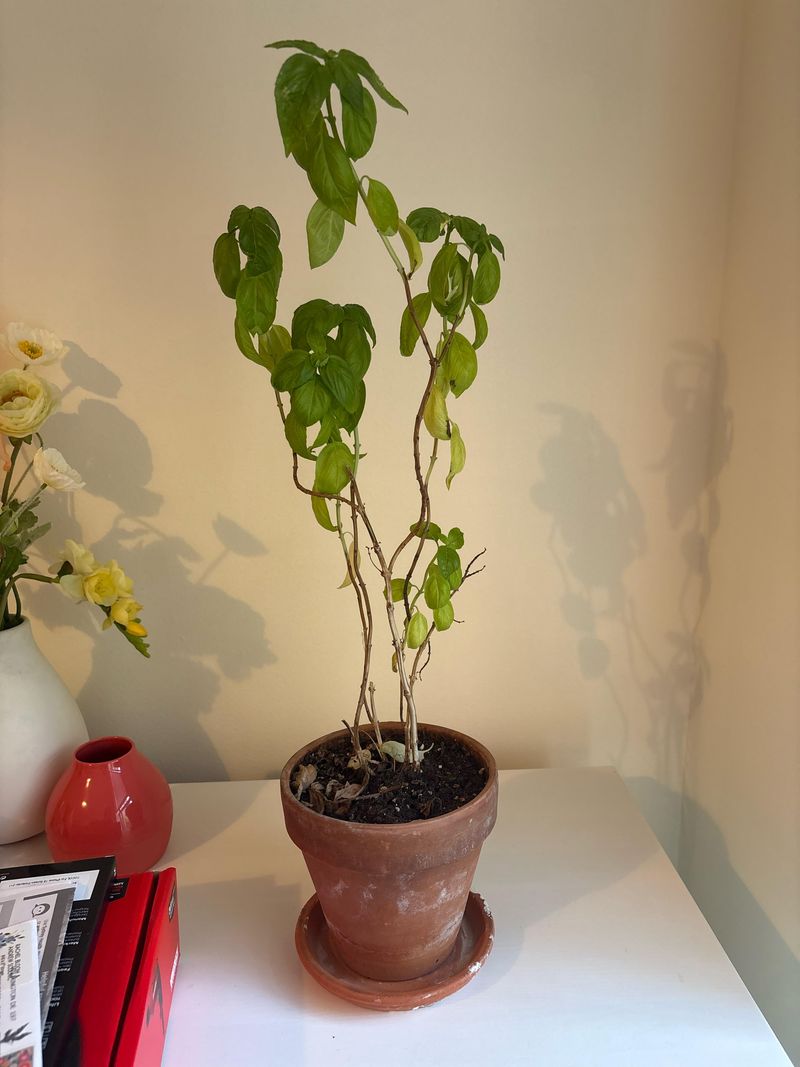
Tall, thin stems with wide gaps between the leaves are a common sign that a plant is reaching for more light. University of Minnesota Extension lighting guidance links insufficient light with stretched growth and with pale or yellowing foliage.
Yellow leaves are trickier, because many problems can cause them. Too little light is one possibility, but soggy potting mix, damaged roots, pests, and cold exposure can look much the same.
So treat each symptom as a clue and not a verdict. Before you change anything, look closely at the whole plant.
Check which leaves are yellow, whether the stems are soft or firm, and whether new growth looks thin or normal. Note how the pot is draining and how far it sits from the glass.
University of Maryland Extension’s plant problem guide recommends this kind of step-by-step check of the plant and its growing conditions.
That short inspection keeps you from fixing the wrong thing. It also gives you a baseline, so you can tell later whether your changes are helping.
A sunny-looking window may still provide too little light
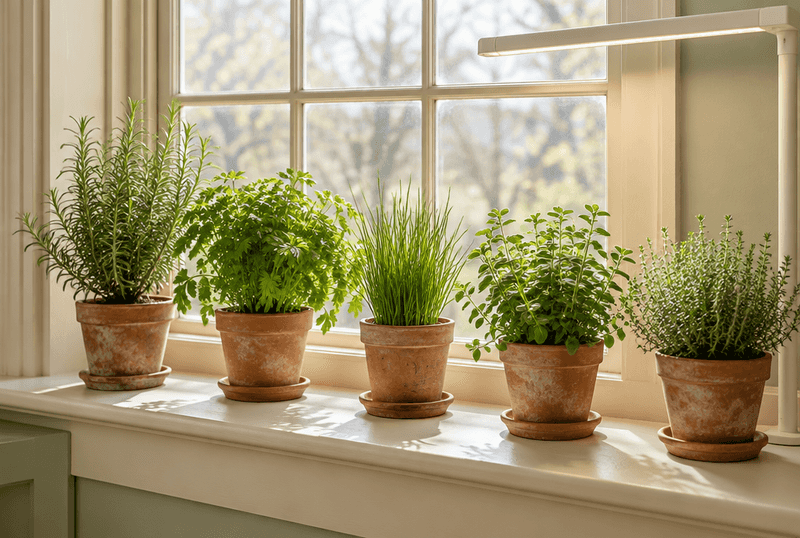
A window that looks bright to you can still be dim to a plant. Herbs that thrived in open Southern sun outdoors may get a fraction of that light once they sit behind glass.
Several things change what actually reaches the leaves. Window direction matters, and so do porch roofs, overhangs, trees, and nearby buildings.
Distance from the glass matters too, because light fades quickly as you move a pot back into the room. UGA Extension’s indoor plant guide describes how these factors shape the light indoor plants receive.
The season plays a part as well, since the sun sits lower and days run shorter in fall and winter. Still, timing and homes vary, so a calendar month alone does not explain a struggling plant.
Extension guidance for indoor herbs also differs on how much light they need. Some Southeast advice mentions about 4 to 6 hours of sun, while Illinois Extension herb advice points to bright light for longer.
Watch your own window across a day to see how long direct light truly lands on the pot. Minnesota Extension notes that a bright-looking room is not a measure of plant-usable light.
Check the potting mix before blaming the leaves
Lower light usually means slower growth, and slower growth means the plant drinks less. A pot that stayed dry fast on the patio may stay wet far longer on a shelf indoors.
When mix stays soggy, roots can lose the air they need. University of Maryland Extension on overwatered plants explains that persistently wet soil and poor drainage can damage roots and lead to yellowing leaves.
That means yellow foliage alone does not tell you the plant needs more water or less.
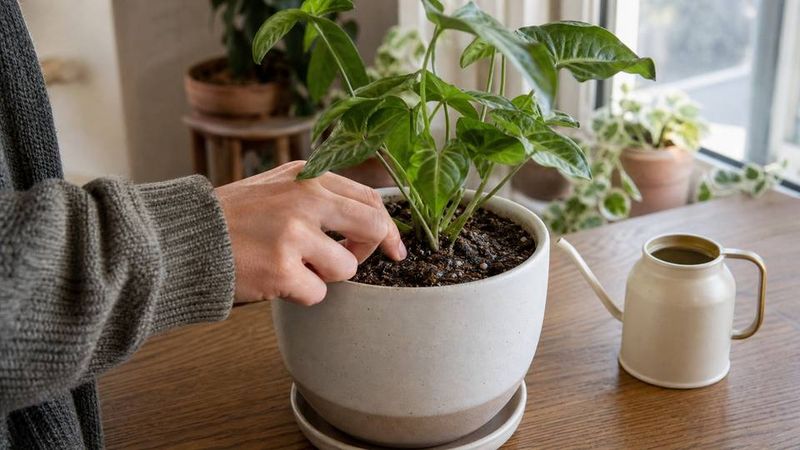
Start by feeling the mix. Push a finger a couple of inches down and note whether it is dry, damp, or wet.
Lift the pot to judge its weight, and look for drainage holes that are clogged or blocked. Check the saucer for water that has been sitting there.
Roots that look brown or smell sour are another warning sign.
Moving plants indoors changes their needs, as Penn State Extension’s indoor transition advice explains. Checking the mix first helps you avoid guessing.
Give the herb more usable light
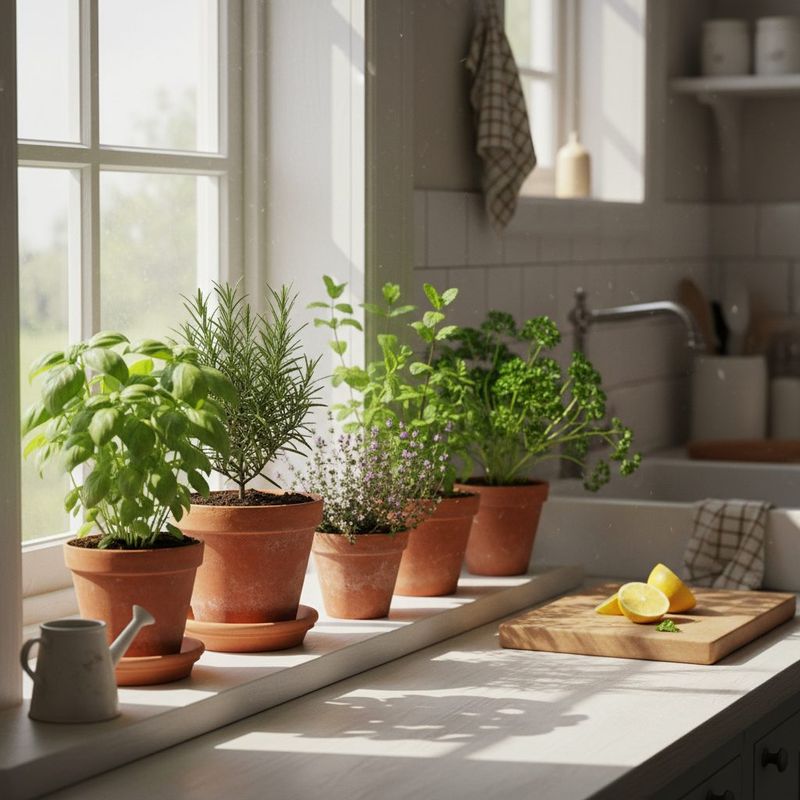
Once you suspect low light, start with placement. Put sun-loving herbs in the brightest suitable window, and a south-facing one is commonly recommended.
Keep leaves from pressing against cold glass, and clear away anything that blocks the view of the sky.
Turn each pot a quarter turn every few days. Rotating helps limit the one-sided leaning that happens when stems stretch toward the glass.
If a window still falls short, a grow light may help. Illinois Extension herb guidance suggests roughly 12 to 14 hours of light a day for indoor herbs, and longer when artificial light replaces natural light.
Treat that as a general range, not a rule for every plant or setup.
Fixtures differ, so follow the instructions that come with yours for placement and distance. A timer makes the daily schedule easy to keep.
University of Minnesota Extension’s lighting overview covers the basics of supplemental lights. Better light often helps new growth come in sturdier, but older stretched stems will not shrink back.
Water by the plant and pot, not the calendar
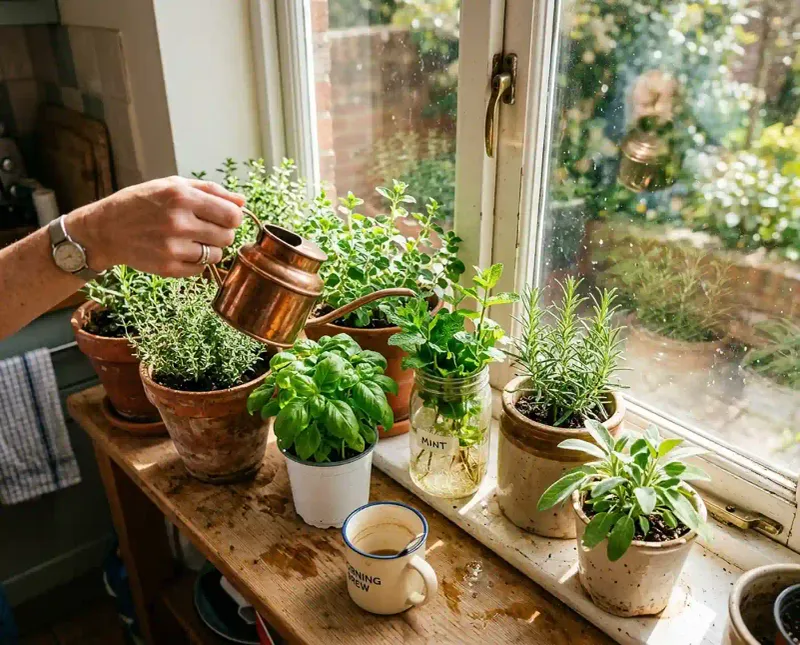
A fixed schedule like once a week rarely fits indoor herbs. Each pot dries at its own pace, depending on the herb, the light, the temperature, the pot size, and how well it drains.
Feel the potting mix before you pick up the watering can. Illinois Extension’s watering guidance stresses checking the mix and the plant instead of following the calendar.
Cutting back without checking can leave a plant too dry, which stresses it too.
When the mix is ready for water, soak it well until extra drains from the bottom. Use a pot with drainage holes, and empty the saucer so roots do not sit in water.
Penn State Extension’s indoor herb advice supports these basics.
Herbs also differ in what they like. Rosemary prefers well-drained conditions and can suffer if watered too often, according to UF/IFAS rosemary guidance.
Basil and mint usually appreciate more even moisture. Group pots by their needs so each gets the right care.
Rule out pests, cold stress, and timing differences
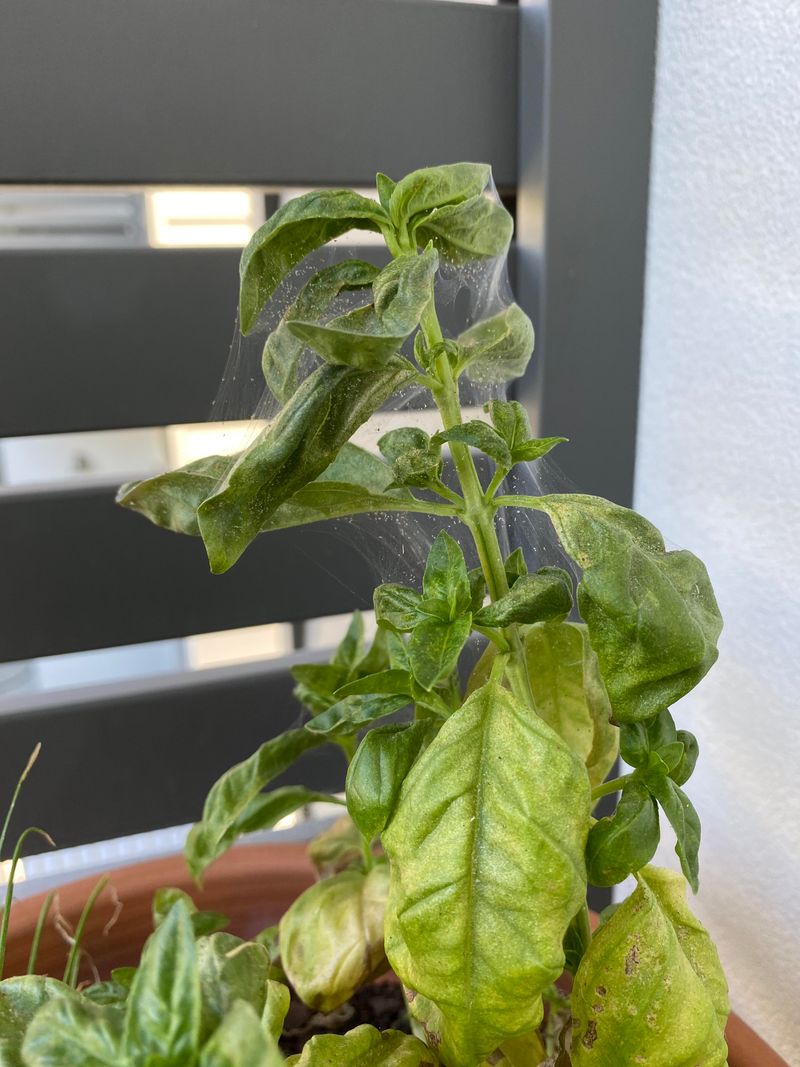
If light and water seem fine, look for other causes. Turn leaves over and check both sides for aphids, spider mites, webbing, or sticky residue.
University of Minnesota Extension’s indoor insect guide covers common culprits. Move a suspect plant away from the others while you sort it out.
Cold drafts, chilly glass, and poor drainage can also cause yellowing, as the University of Maryland Extension problem guide notes.
Prevention helps. Before bringing pots inside, rinse the foliage and inspect for pests.
Penn State Extension suggests keeping returning plants apart from other houseplants for several weeks.
Timing varies too. Basil is frost-sensitive, according to UF/IFAS basil guidance, while rosemary can grow outdoors year-round in Florida but may need freeze protection in colder areas.
Florida seasons also differ across the state, as UF/IFAS fall herb guidance shows. Many Florida and Texas gardeners can leave hardy herbs outside much longer, so base your move on the herb, your local forecast, and cold exposure.
Trim modestly and give indoor growth time
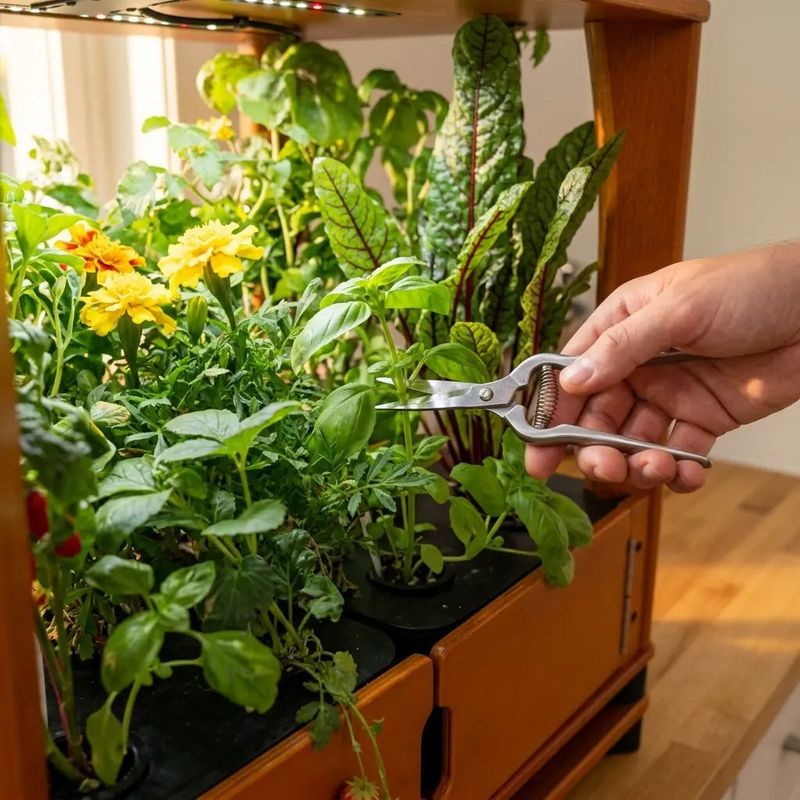
Pinching the tips of stretched stems can encourage side shoots and a bushier shape. It will not fix a shortage of light, though, so trim lightly and pair it with the light changes you have made.
UGA Extension’s Southern herb guide offers pruning and harvest tips.
Expect slower progress inside. Illinois Extension notes that indoor herbs commonly grow more slowly and produce less than outdoor plants.
Harvest in proportion to new growth, and skip heavy feeding while a plant is not actively growing, since extra fertilizer can harm it.
After you adjust light and water, watch for new leaves over several weeks. Damaged roots, pests, cold injury, and normal seasonal slowdown can limit recovery, as Penn State Extension suggests, so some plants may not bounce back fully.
Patience is the quiet skill here. A herb that holds steady and adds a little fresh growth is doing well.