
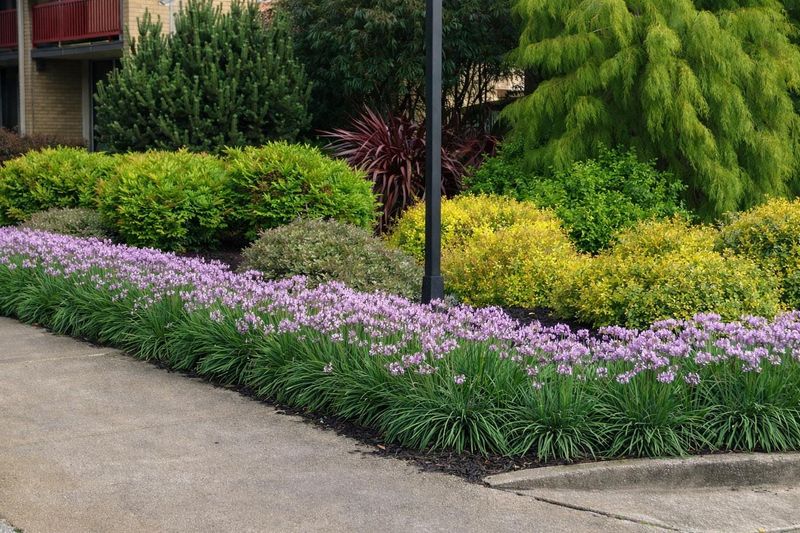
North Florida yards can swing from baking sand to frosty mornings in the same year. The right perennials handle those shifts without demanding constant watering, feeding, or replacing.
These 11 plants offer flowers, texture, and wildlife value, with choices for both dry beds and damp spots. Give them a good start and the right location, and your chore list can get a little shorter.
1. Pink Muhly Grass
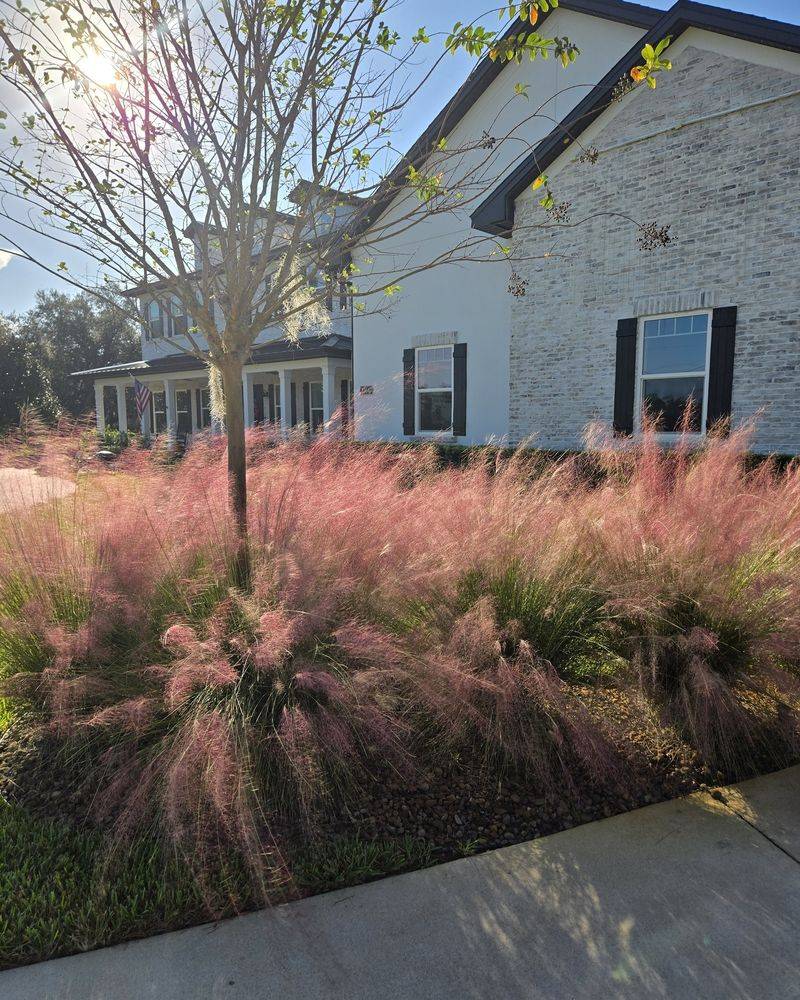
Fall sunlight turns an ordinary clump of grass into a pink cloud. Pink muhly grass, Muhlenbergia capillaris, earns its space with a late-season show that needs little help once the roots settle in.
This Florida native suits sunny, well-drained beds, including the sandy strips where thirsty flowers struggle. Expect a mound roughly 2 to 3 feet tall and wide, with flower stalks rising above the leaves.
Plant it where sunlight can shine through the plumes, such as beside a driveway or along an open fence. Space plants about 3 feet apart rather than squeezing them into a tight row.
Water new plants regularly until established, then reduce irrigation according to rainfall and soil conditions. Avoid rich fertilizer and soggy planting holes, which can weaken the plant instead of helping it.
Winter cold may brown the foliage, but established crowns tolerate North Florida freezes. If the clump looks tired, trim it back in late winter before fresh growth begins, leaving several inches above the crown.
2. Coontie
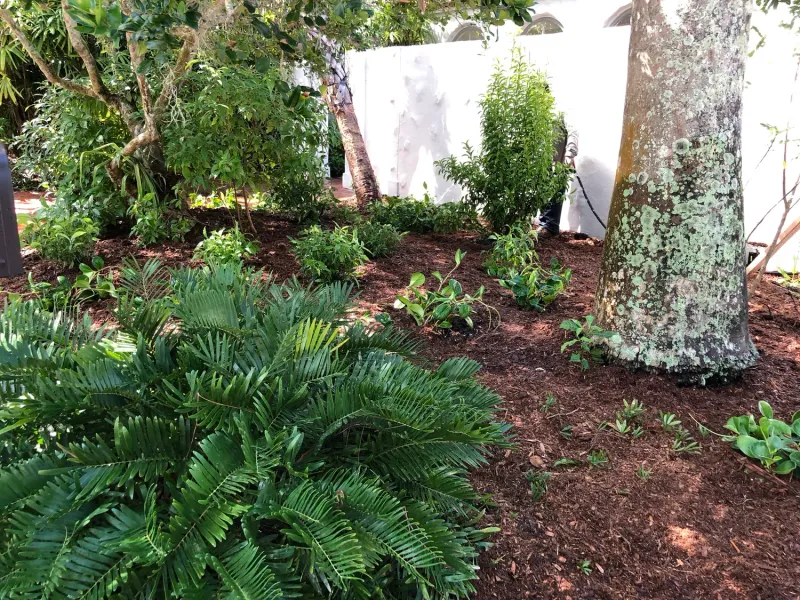
A tidy foundation bed does not have to come with a weekend pruning job. Coontie, Zamia integrifolia, brings the neat shape of a small shrub while growing as a long-lived native cycad.
Its stiff, divided leaves provide year-round structure in sun or partial shade. Most garden plants stay around 2 to 3 feet tall, making them useful beneath windows or beside an entry path.
Good drainage matters far more than rich soil. Once established, coontie handles dry spells well, but a low spot that stays flooded after storms is a poor choice.
North Florida freezes can damage the leaves during severe cold, yet established plants generally recover from their underground stems. Remove damaged fronds when needed rather than shearing the whole plant into a ball.
Coontie also serves as a host plant for atala butterflies where those butterflies occur, mainly farther south. All plant parts are poisonous if eaten, so keep it away from pets or children likely to chew plants, and watch occasionally for scale insects.
3. Lanceleaf Coreopsis
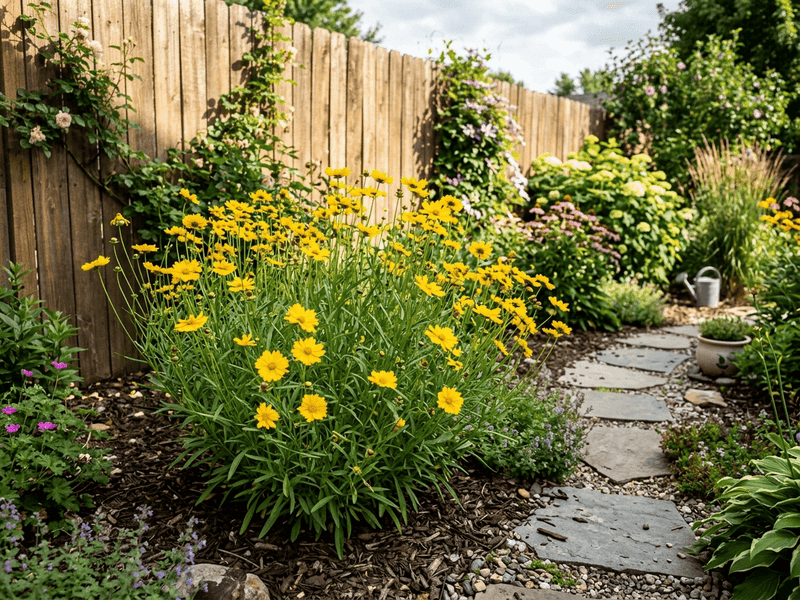
Yellow flowers beside a front walk can make the whole yard look more cared for. Lanceleaf coreopsis, Coreopsis lanceolata, delivers that cheerful effect without needing a heavily watered flower bed.
Give this Florida native full sun and soil that drains quickly after rain. Its narrow leaves form low clumps, while spring and early-summer flower stems usually reach about 1 to 2 feet tall.
Lean soil is an advantage here. Heavy feeding can produce floppy growth, and constantly damp roots are a bigger threat than an occasional missed watering once plants become established.
Snip off spent flowers if you want a tidier appearance and a chance at additional bloom. Leave some seed heads later so plants can reseed and help maintain the patch as older clumps fade.
Although it is perennial, individual plants may be short-lived in Florida conditions. Think of it as a renewing colony rather than a permanent collection of identical clumps, and avoid thick mulch where you want seedlings to appear.
4. Stokes’ Aster
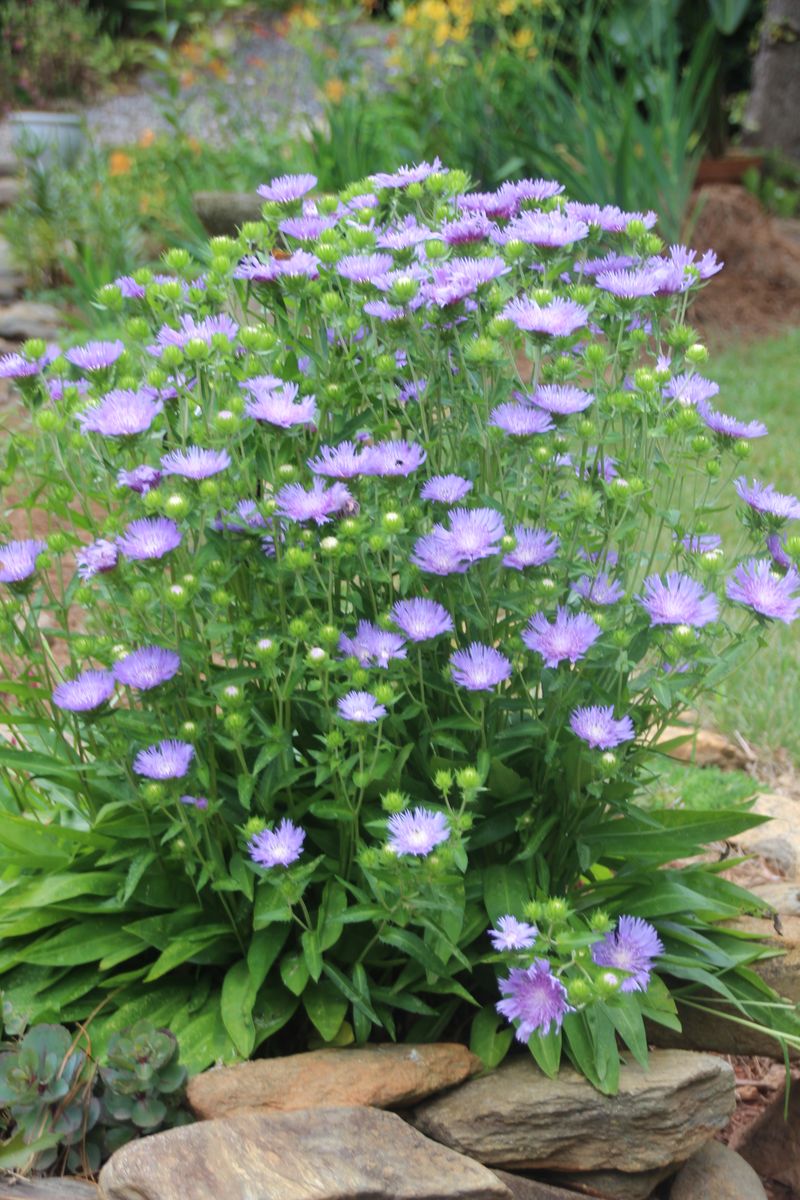
For a softer color near the porch, lavender-blue flowers are hard to beat. Stokes’ aster, Stokesia laevis, adds that cool tone while standing up to the heat and winter cold of North Florida.
The flowers rise above a low cluster of leaves in late spring and summer. Most selections fit comfortably near the front of a border, reaching roughly 1 to 2 feet tall when blooming.
Choose full sun for strong flowering, or a spot with afternoon shade where reflected heat is intense. The soil should hold some moisture without remaining waterlogged, especially during winter.
Water during establishment and extended drought rather than assuming this plant wants desert conditions. A light mulch layer helps sandy soil stay more evenly moist, but keep mulch away from the crown.
Removing faded flower stalks keeps the clumps attractive and may encourage more flowers. Divide crowded plants when flowering declines, and pair them with fine-textured grasses for a border that looks planned without needing constant seasonal replacements.
5. Lyreleaf Sage
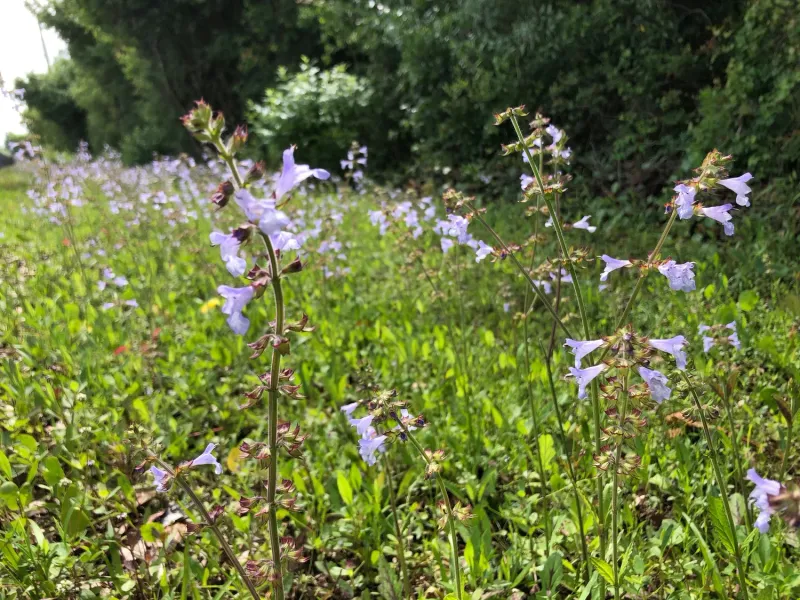
Not every useful perennial needs to stand knee-high. Lyreleaf sage, Salvia lyrata, keeps its leaves close to the ground, then sends up pale lavender flower spikes for a spring display.
This Florida native works along informal paths, beneath open trees, or in a relaxed meadow-style planting. Its purple-marked leaves add interest even when the flowers are gone, particularly during cooler weather.
Sun to partial shade suits it, and established plants tolerate a range of soils and some drought. Flower stalks commonly reach around 1 to 2 feet, while the leafy base stays much lower.
Its real trick is self-seeding. Let a few stalks mature if you want the planting to spread, or trim them after flowering if you prefer firmer boundaries.
Use it where a loose, changing patch will look intentional rather than messy. It can handle occasional mowing after seed has dropped, but it is not a substitute for turf in areas with heavy foot traffic, and newly planted rosettes still need watering until rooted.
6. White Wild Indigo
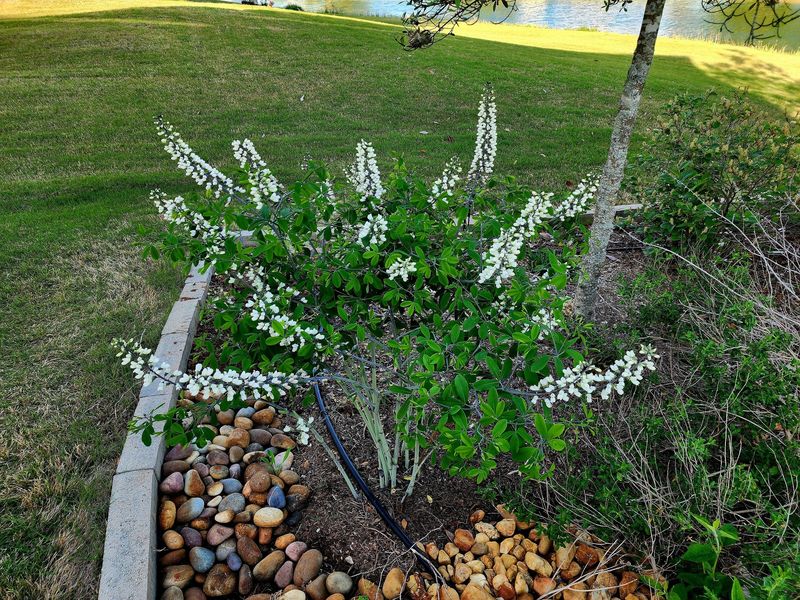
Patience pays especially well with white wild indigo. Baptisia alba may look modest when first planted, but an established clump becomes a substantial, shrub-like presence with white spring flower spikes.
Its deep root system helps it manage dry weather after establishment. Full sun and well-drained ground give it the strongest framework, while too much shade can leave the stems leaning.
Allow room for a mature plant roughly 3 to 4 feet tall and wide, depending on conditions. Place it behind shorter flowers, where its blue-green leaves can provide a steady backdrop after blooming ends.
Pick the location carefully because mature plants resent being moved or divided. Water during the establishment period, then avoid treating it like a thirsty annual that needs frequent feeding and irrigation.
The top growth dies back with cold weather, which is normal rather than a sign of failure. Cut old stems before new spring shoots appear, and keep the plant away from curious pets because its parts are toxic if eaten.
7. Sweet Goldenrod
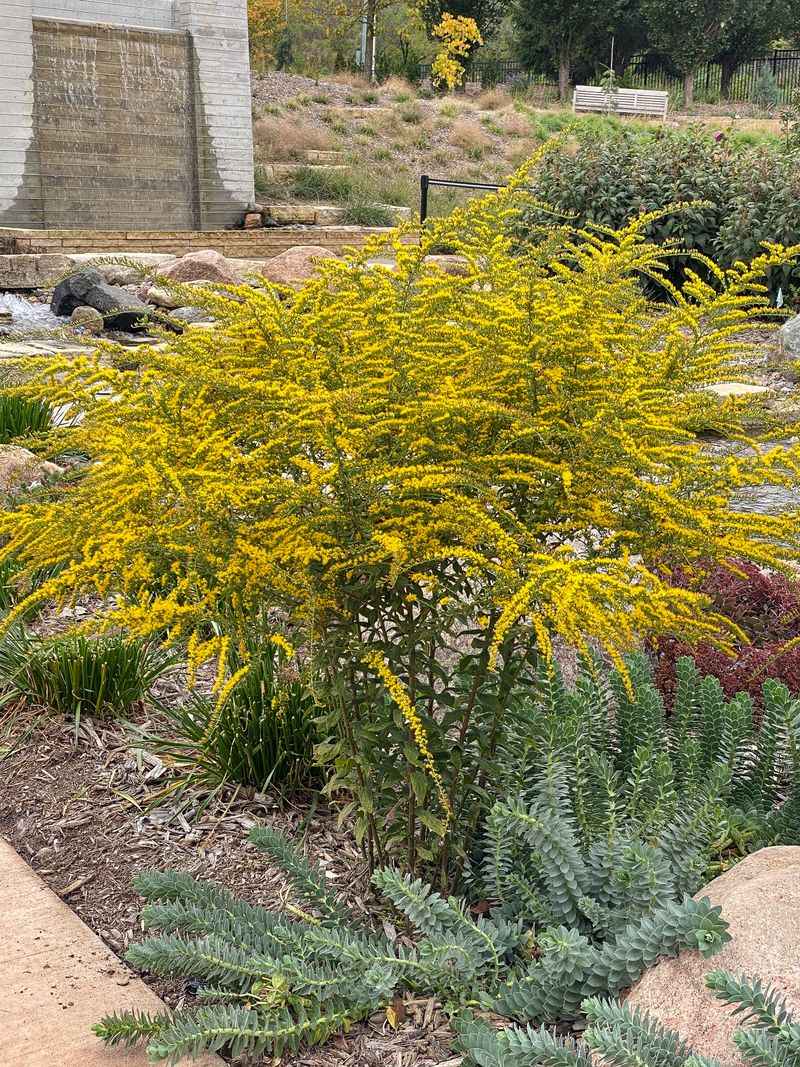
When many summer flowers slow down, golden sprays keep the garden open for business. Sweet goldenrod, Solidago odora, offers late-season nectar and pollen while bringing warm color to a sunny bed.
It fits dry, well-drained sites better than the wet-ground plants elsewhere on this list. Established plants tolerate sandy soil and drought, making them useful along an open fence or at the back of a low-water border.
Expect stems about 2 to 4 feet tall, with size varying by growing conditions. Give neighboring plants breathing room, and remove unwanted seedlings if the patch starts moving beyond its allotted space.
Goldenrod often gets blamed for fall allergies, but wind-pollinated ragweed is usually the bigger culprit. Goldenrod pollen is carried mainly by insects, which makes the flowers valuable to visiting bees.
Leave some spent stems standing through winter for texture and habitat, then cut them back before spring growth. Avoid heavy fertilizer, since overly lush stems are more likely to flop and create extra work.
8. Swamp Sunflower
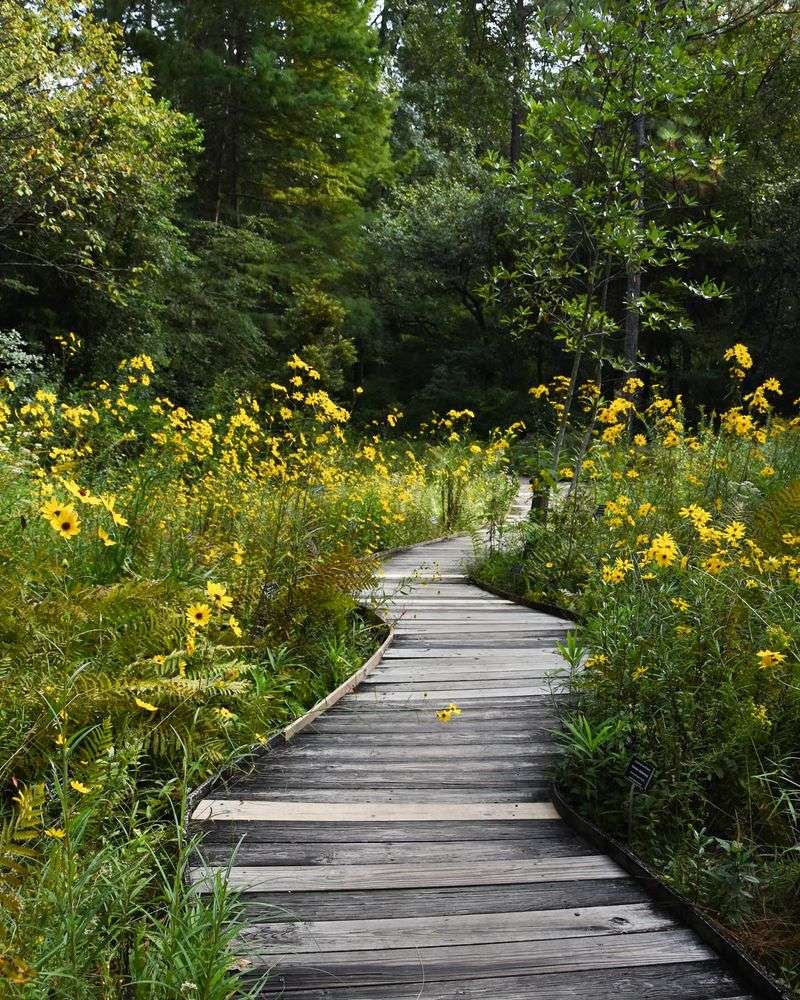
That damp corner may be better suited to a flower patch than another attempt at lawn. Swamp sunflower, Helianthus angustifolius, turns sunny, moisture-holding ground into a tall wall of yellow flowers in fall.
This native perennial commonly reaches 5 to 8 feet, sometimes taller in rich, wet conditions. Use it at the back of a large border or around a rain garden, not beside a narrow walkway.
Unlike the dry-site choices on this list, it appreciates dependable moisture. It can handle periodic wet conditions, but a sandy bed that stays dry for weeks will require extra watering.
Cut stems back by about one-third in late spring or early summer if you want a shorter, bushier planting. Avoid late pruning that could remove developing flower buds and reduce the fall display.
Cold weather sends the stems dormant, while underground growth returns in spring. The clump can spread assertively, so divide or remove wandering shoots when needed and give it a defined area where its size is an asset.
9. Slender Blazing Star
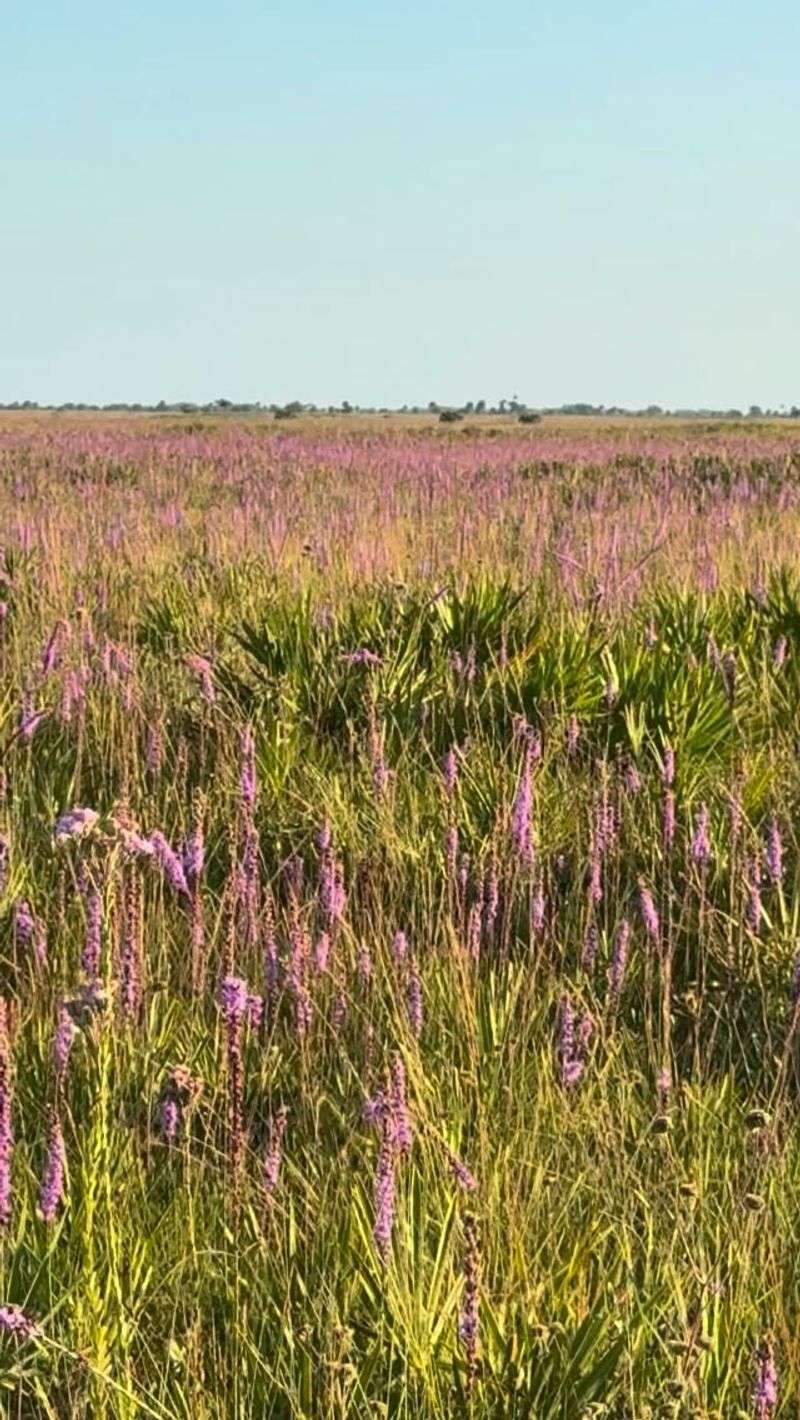
Purple flower spikes can add height without making a small bed feel crowded. Slender blazing star, Liatris tenuifolia, has a light, narrow shape that fits naturally among grasses and other dry-site natives.
Its Florida sandhill roots tell you where to plant it: full sun and sharply drained, sandy soil. A low spot with standing water is a poor match, even if nearby plants seem happy there.
Fall flowers attract butterflies and other pollinators when the garden needs another burst of color. Plant several together so the slender stems make a visible group rather than disappearing into the background.
Water carefully during establishment, then let the site dry between waterings. Keep thick, damp mulch away from the base, and resist adding rich compost to a plant adapted to lean ground.
The foliage and stalks die back seasonally, but the underground storage structure survives ordinary North Florida winter cold. Mark the planting spot so you do not accidentally dig it up while it is dormant, and buy nursery-propagated plants rather than collecting from wild populations.
10. Orange Coneflower
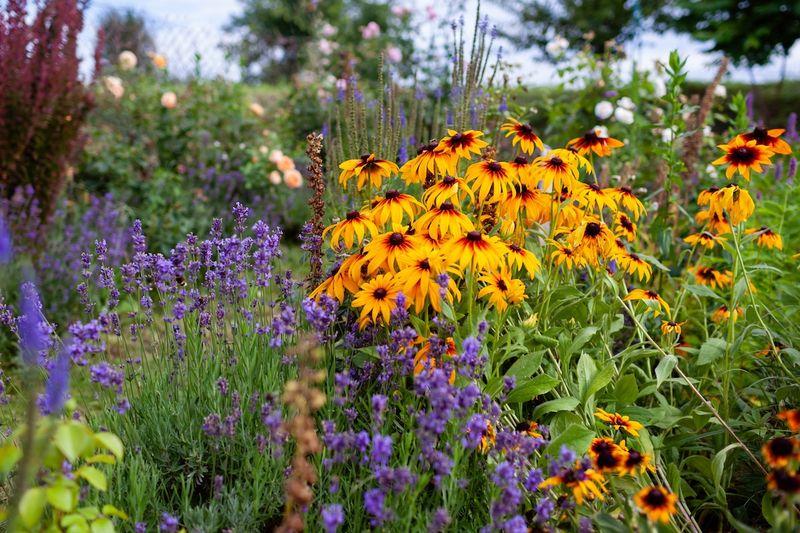
A reliable clump of golden daisies can carry a border through the hottest stretch of the year. Orange coneflower, Rudbeckia fulgida, provides that familiar dark-centered flower shape on a true perennial plant.
Check the botanical name when shopping, because plants sold as black-eyed Susan may instead be Rudbeckia hirta, which often behaves as an annual or short-lived perennial. The distinction matters when your goal is a returning clump.
Plant in sun with decent air movement and soil that drains while retaining some moisture. This is not the best choice for the driest patch of bare Florida sand unless you can provide occasional irrigation.
Allow roughly 18 to 24 inches between plants, adjusting for the cultivar’s mature size. Crowding and overhead watering can encourage leaf problems during humid weather, so water at soil level when practical.
Remove faded blooms for a neat appearance, or leave some seed heads for birds. Divide crowded clumps when needed, and expect winter dormancy rather than year-round flowers or spotless foliage.
11. Society Garlic
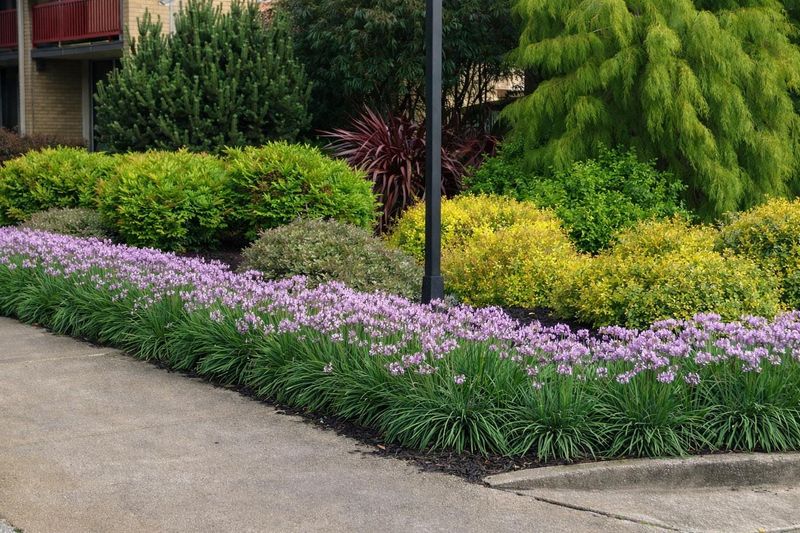
Along a sunny walkway, neat leaves can matter as much as flowers. Society garlic, Tulbaghia violacea, offers both, with narrow foliage and lavender flower clusters held above the clumps during warm weather.
This South African perennial is not a Florida native, but it is a useful low-maintenance choice for well-drained residential beds. Most plants stay around 1 to 2 feet tall in flower and form manageable clumps.
Full sun encourages the best bloom, although light shade is workable. Established plants tolerate dry spells, while standing water and constantly wet soil can damage their roots.
Bruised leaves release a garlic-like smell, so avoid placing it where people will brush against it every time they pass. Use it slightly back from a path, along a driveway bed, or in repeated groups near an entry.
Hard freezes can burn the foliage, especially in exposed inland yards, but established roots generally survive typical North Florida winters. Trim damaged leaves after the worst cold has passed, divide crowded clumps occasionally, and water new divisions until they take hold.