
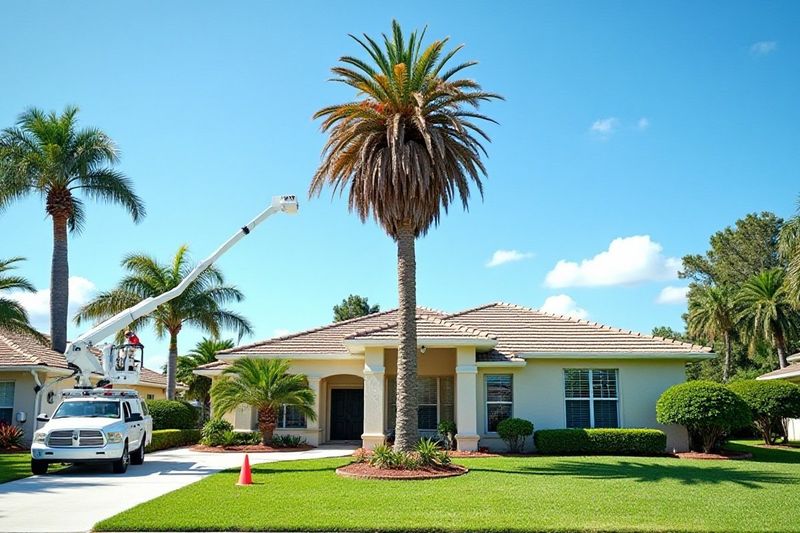
That little shade tree beside the porch may grow into your yard’s biggest bill. In Florida, wide roots, heavy branches, and falling debris can turn a poor planting spot into years of repairs and cleanup.
These 11 familiar trees deserve extra thought before they go near a house. Knowing their mature size and weak spots can help you keep the shade without creating trouble.
1. Live Oak
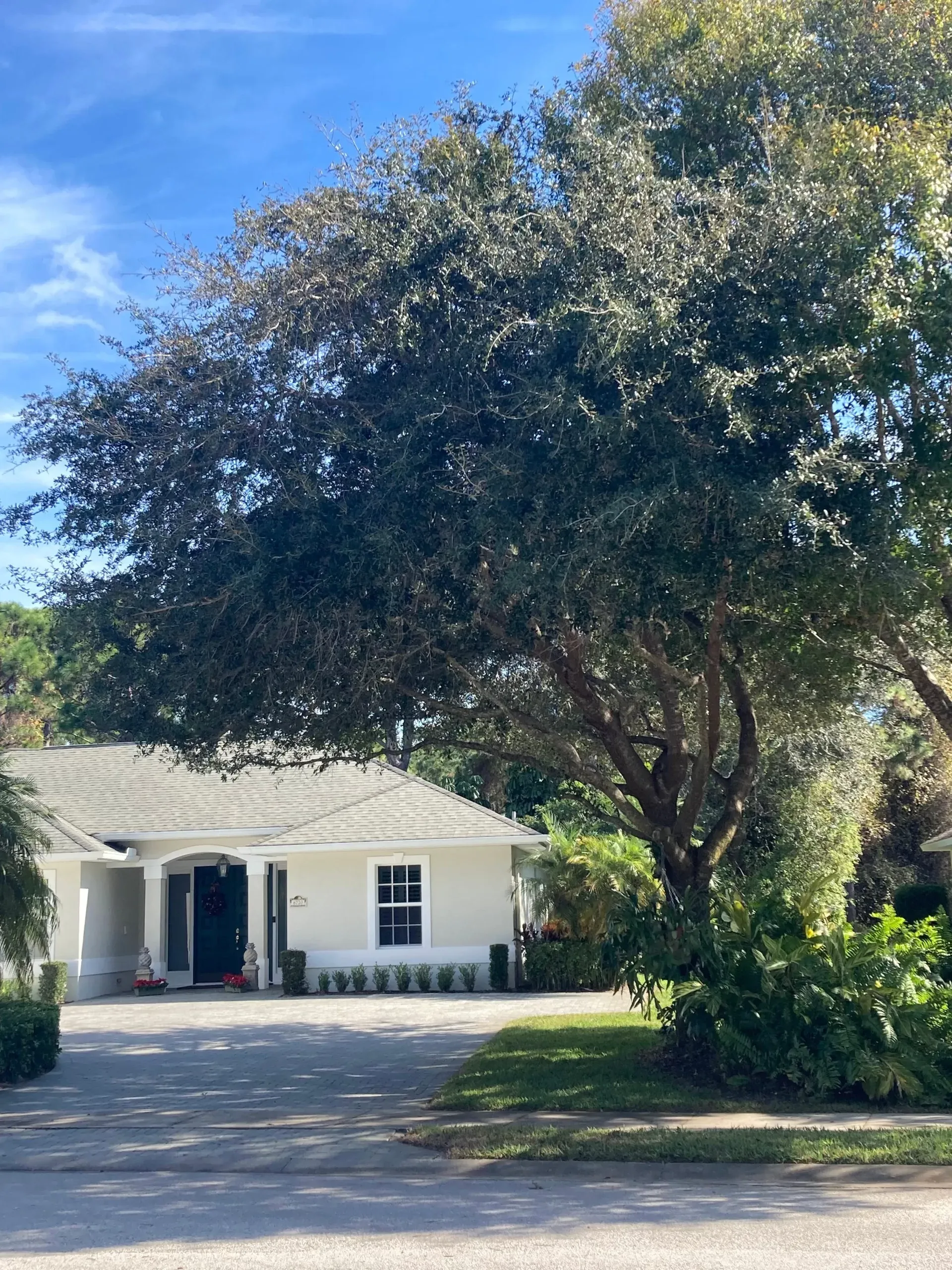
A shady front porch can look wonderful beneath an oak, until the tree starts sharing space with the roof. A mature live oak can spread wider than many Florida house lots, making its broad canopy the main concern near a building.
Low limbs may press against gutters, scrape roofing, or leave little room for future growth. Large surface roots can also lift nearby walkways and driveways, especially where pavement crowds the trunk.
That does not make live oaks bad landscape trees. Healthy, well-structured specimens are valued for wildlife habitat and relatively strong wind resistance, but even a sturdy tree needs enough room and proper care.
Before planting, compare the expected canopy width with the entire space available, not just the distance to the wall. For an established tree, ask an ISA Certified Arborist about branch clearance and root protection before remodeling or replacing pavement.
Never cut large roots simply to flatten a sidewalk, because that can weaken the tree and create a much bigger problem.
2. Laurel Oak
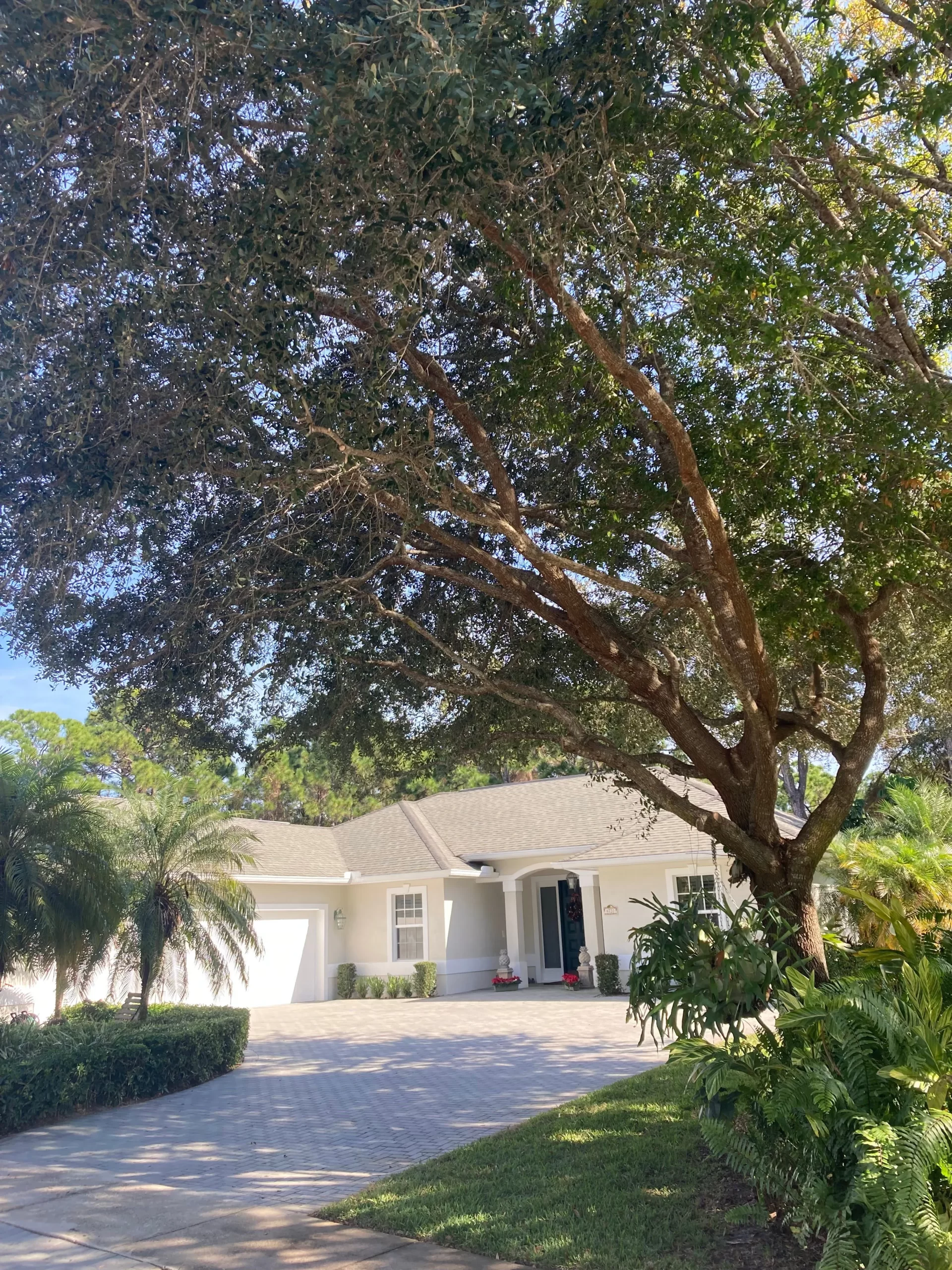
Fast shade has a catch when the tree providing it begins to decline. Laurel oak is common in Florida neighborhoods, and its quick growth can make it seem like an easy answer for a sunny yard.
The concern near a house is its tendency to develop decay and structural problems as it ages. A leafy crown can hide trouble in the trunk or large limbs, so green foliage alone does not prove that an older tree is sound.
Watch for cavities, mushrooms near the base, dead upper branches, and cracks where major limbs meet. None of these signs tells the whole story by itself, but each deserves attention when bedrooms, patios, or parked cars sit below.
Avoid planting a young laurel oak where its eventual crown will be squeezed against the roof. If one already dominates a small lot, arrange an arborist assessment rather than waiting for storm season.
Early planning can give you time to establish a suitable replacement before removal becomes urgent and more difficult.
3. Water Oak
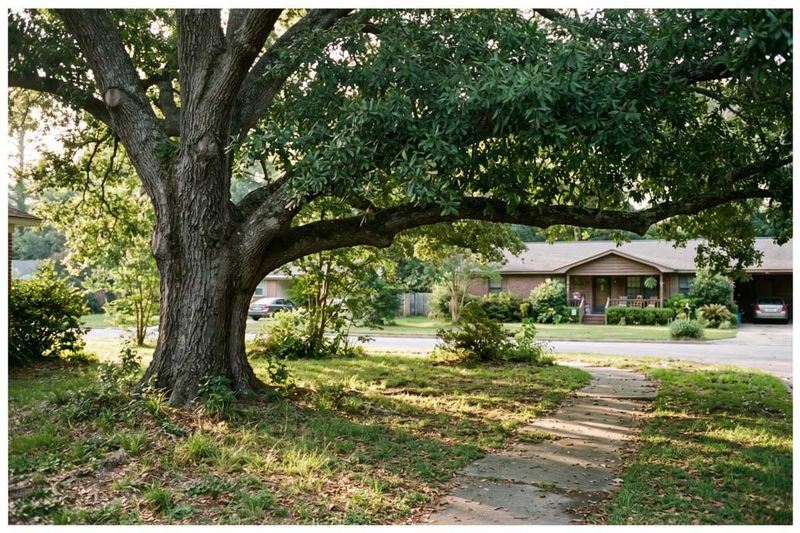
One narrow fork can matter more than a whole yard of healthy leaves. Water oaks often develop branch arrangements that need attention while the tree is young, especially when several large stems compete for space.
Common in north and central Florida, this fast-growing oak can become a large tree with heavy limbs. Weak attachments, old wounds, and internal decay can increase the chance of failure, creating a costly risk when the crown hangs over a house.
Its size also makes corrective work harder with every passing year. A branch that could have been guided with a small pruning cut may eventually require specialized equipment and a careful removal plan.
For a new planting, leave room for a full-sized shade tree and arrange early structural pruning. For an existing water oak, have major forks and old pruning sites checked by a qualified arborist.
Do not top the crown to make it feel safer, because topping encourages poorly attached shoots and can introduce decay. Careful evaluation is more useful than simply making the tree shorter.
4. Weeping Fig
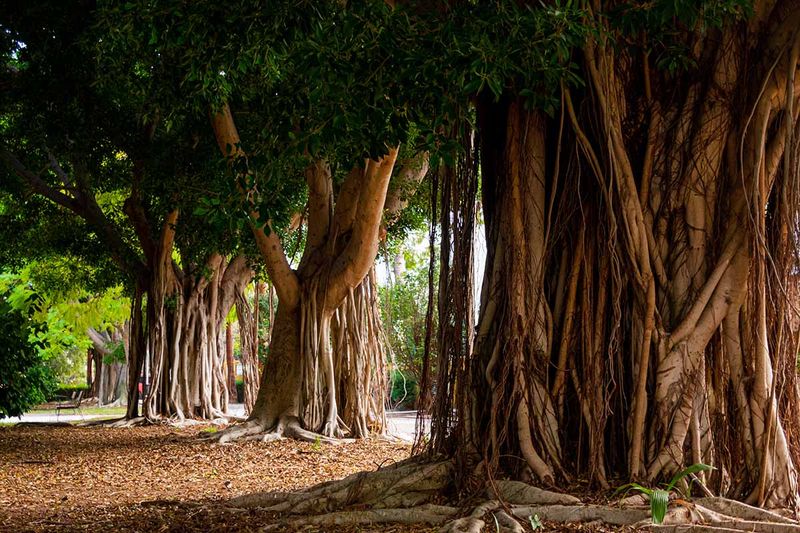
The familiar indoor ficus plays by different rules outdoors in frost-free Florida. Given warmth and space, weeping fig can become a substantial tree with a dense crown and a vigorous root system.
That growth is the reason it belongs well away from tight foundation beds. Roots can crowd shallow irrigation lines and lift nearby paving, while the canopy may require frequent trimming to stay clear of walls and roof edges.
Roots do not routinely break through sound foundations or intact pipes. However, leaking joints, existing cracks, and moist soil around damaged plumbing can create opportunities for roots to enter, turning an old defect into a larger repair.
Before planting, check the tree’s outdoor mature dimensions rather than relying on its nursery size. A narrow strip beside the garage is not enough room.
If an established ficus is already causing trouble, get advice before cutting roots or installing a barrier. Severe root removal can harm its health and stability, particularly where a large crown remains above a restricted root area.
5. Banyan
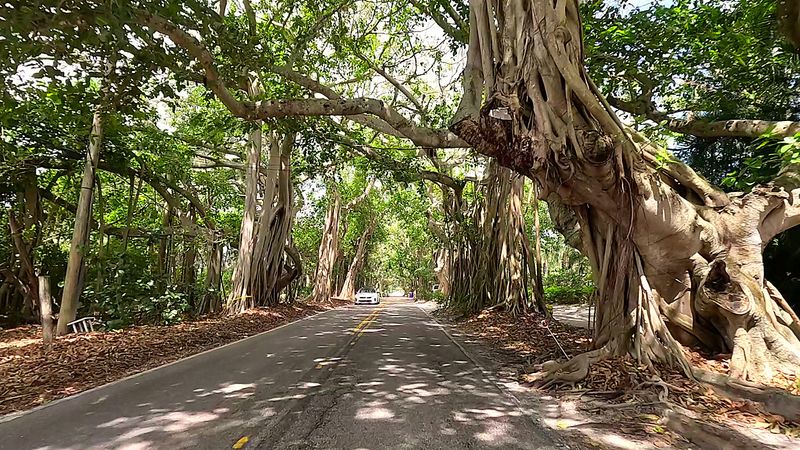
A single banyan can eventually look like a small grove. Its hanging aerial roots may reach the ground and thicken into supporting trunks, allowing the tree to occupy far more space than its original planting hole suggests.
That expanding footprint makes banyan a poor fit beside a house, pool deck, or narrow driveway. Both the crown and the rooted supports can interfere with access, pavement, and outdoor living areas as the tree matures.
In frost-free parts of south Florida, its impressive growth can turn routine maintenance into specialized tree work. Pruning near buildings may require careful rigging, and removing a large specimen can involve several stems rather than one simple trunk.
Enjoy these giants in landscapes built to accommodate them, not as small-yard shade trees. If you inherit one, document nearby paving changes and have its structure assessed before construction begins.
Do not assume that trimming off visible aerial roots will solve the space problem. The main root system and broad canopy still need room, and repeated cutting creates an ongoing maintenance commitment.
6. Royal Poinciana
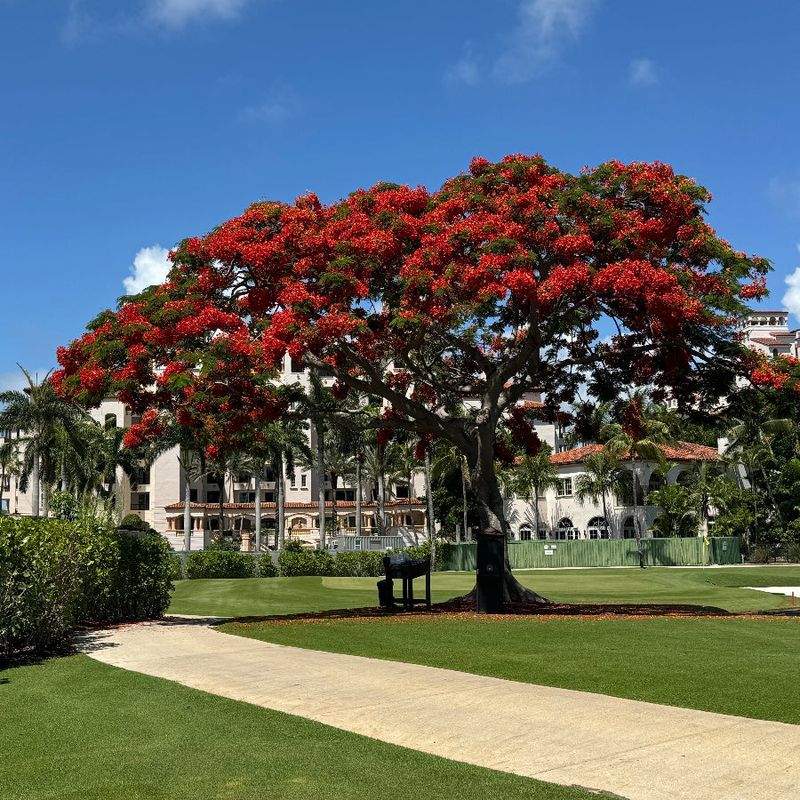
Those fiery flowers can distract you from just how wide the branches are getting. Royal poinciana is a showpiece in warm south Florida, but its low, spreading form can overwhelm the space beside a one-story home.
Surface roots may conflict with sidewalks and patios, especially in cramped planting areas. Above ground, long limbs can reach across roof edges, while flowers, leaves, and woody seedpods add cleanup around gutters and outdoor drains.
Branch structure deserves attention, too. Poorly attached limbs and storm damage can lead to expensive work when a large crown extends over a building, so early pruning is more useful than repeated emergency cuts later.
Choose an open lawn location with space for the mature canopy, clear of overhead utilities and hard surfaces. If yours is already close to the house, ask an arborist to assess branch attachments and plan gradual clearance.
Avoid stripping out the interior or topping the tree. Those shortcuts can leave an awkward, stressed canopy without fixing the original problem of too little room.
7. Southern Magnolia
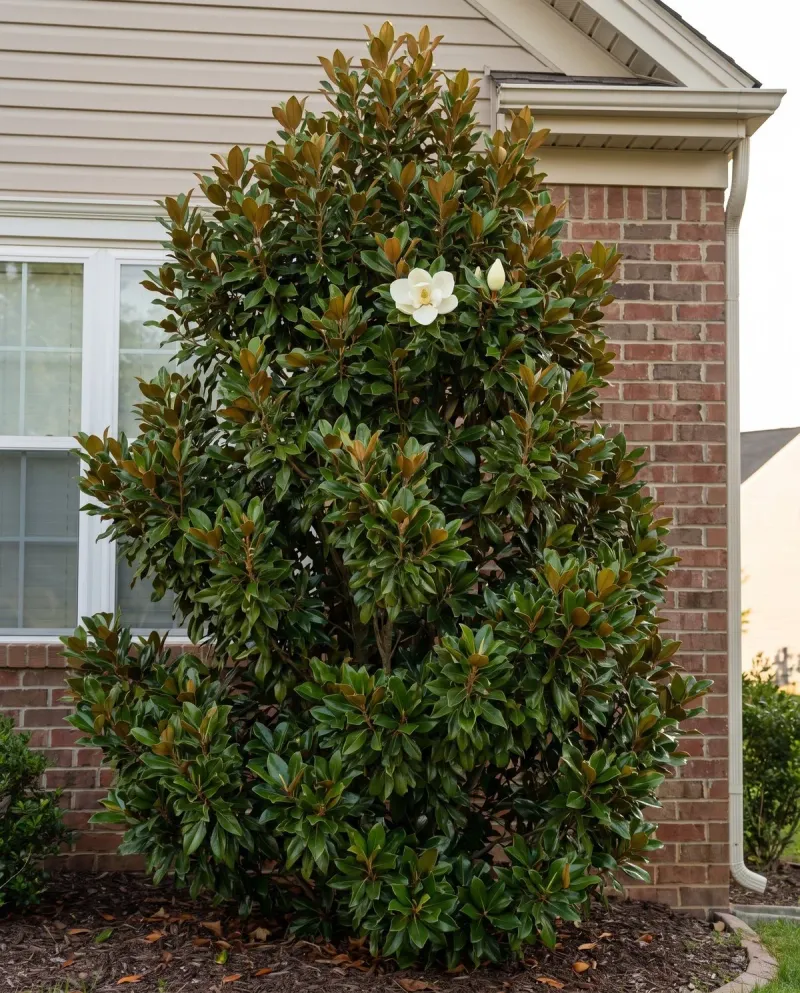
A tree that blocks the living room window was probably chosen for its flowers, not its final size. Full-size southern magnolias can become large, dense evergreens, bringing year-round crowding when planted in a foundation bed.
Their low branches can swallow walkways and press into walls. Thick leaves and fallen seed structures also create persistent cleanup, and debris collecting in gutters or roof valleys can slow drainage during Florida downpours.
Magnolias are not automatically dangerous neighbors. The problem is often a mismatch between a substantial tree and a tiny planting space, followed by years of pruning to force the tree into a shape it does not naturally hold.
Read the cultivar label carefully, because compact selections still need meaningful clearance from windows, eaves, and paths. Keep the root zone protected, and avoid excavating around an established tree to add a patio.
Where space is limited, choose a genuinely smaller plant suited to your part of Florida. That decision usually costs less than repeatedly reshaping a large magnolia beside the house.
8. Sweetgum
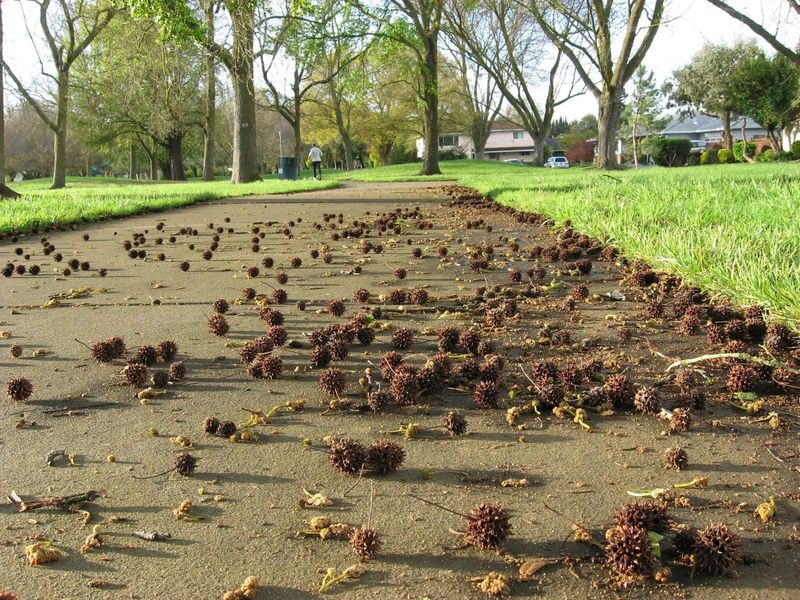
Bare feet and sweetgum seed balls are an unpleasant combination. Around a house, those hard, spiky fruits can turn a front walk, pool route, or driveway into a recurring cleanup job.
Sweetgum is a native tree found especially in north and central Florida, where it supports wildlife and can provide useful shade. Trouble starts when its mature size and shallow roots are squeezed between buildings and paving.
Roots may lift thin sidewalks, while fruit and small debris collect around drains and heavily used entryways. The resulting costs are often less dramatic than a fallen limb, but pavement repairs and repeated maintenance can still add up over time.
Keep new trees away from narrow passageways and places where people regularly walk barefoot. If you already have one, collect fallen fruit before it builds up and inspect nearby pavement for developing trip hazards.
Ask an arborist before cutting roots to repair a walkway. In some cases, rerouting a path or using a suitable flexible surface is safer for the tree than slicing through its supports.
9. Slash Pine
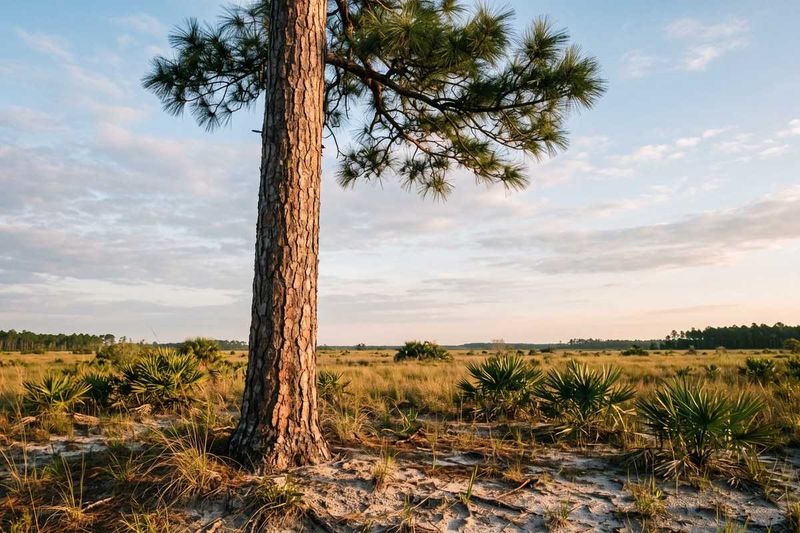
A roof valley full of pine needles can stay hidden until heavy rain exposes the problem. Slash pine sheds long needles that can collect in gutters and tight roof corners, slowing water flow and holding debris against roofing.
Its height adds another concern when the trunk stands close to a building. Dead limbs, large cones, or a declining top can fall into areas used daily, even though a healthy pine should not be judged unsafe simply because it is tall.
Construction damage is especially easy to overlook. Added fill, trenches, compacted soil, and root cutting may stress an established pine, with signs of decline appearing well after the work is finished.
Preserve healthy trees where the site allows, but keep roof drainage clear and watch for sudden needle browning, new lean, or dead branches. Have concerning changes evaluated rather than removing every nearby pine out of fear.
Before an addition or driveway project, protect the root area with professional guidance. Never top a pine to reduce its height, because that permanently damages its natural structure.
10. Camphor Tree
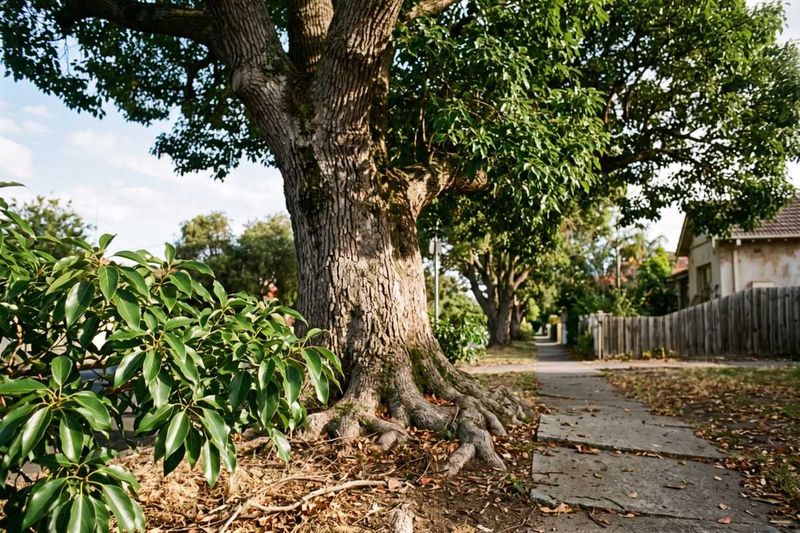
The free seedling beside the fence may come with a very expensive future. Camphor trees spread through bird-carried seeds, and volunteers can grow unnoticed along foundations, hedges, and property lines.
Left in place, a seedling can become a large evergreen with a broad crown and substantial roots. Near a house, that means potential conflicts with paving, crowded rooflines, and difficult removal from spaces that equipment cannot easily reach.
There is also a reason not to plant more of them: camphor is invasive in Florida. Keeping it out of new landscape plans helps reduce seed sources that can spread into nearby natural areas.
Check beds and fence lines regularly, and pull small seedlings while the soil is moist, removing the roots rather than just clipping the top. For an established tree, get a professional removal plan if it threatens structures or crowds other plantings.
Larger stumps may resprout, so follow-up management can be needed. Replace it with a regionally appropriate, noninvasive tree whose mature dimensions fit the available space.
11. Queen Palm
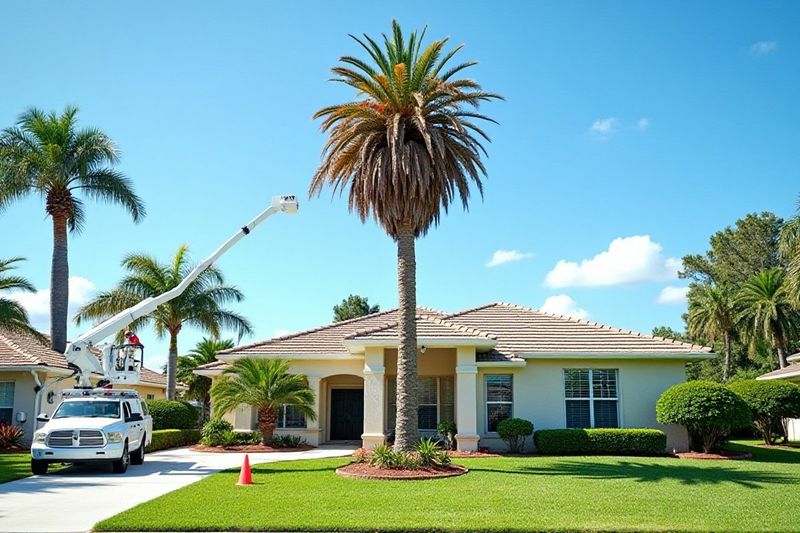
Reaching the crown gets more expensive every year. A queen palm that once needed a simple cleanup can eventually require professional equipment, especially when its fronds and fruit stalks hang above a roof or screened enclosure.
Its roots are generally less likely to lift pavement than those of the large broadleaf trees on this list. The bigger concerns near a house are overhead clearance, falling debris, and the cost of maintaining a tall palm in a cramped location.
Heavy fruit clusters can leave slippery, messy surfaces below. Nutrient deficiencies are another common issue in Florida landscapes, so yellowing or damaged fronds deserve a proper diagnosis rather than repeated cosmetic cutting.
Plant where the mature crown has room to clear the building and where falling fruit will not cover an entrance. Use palm care suited to Florida soils, and avoid hurricane cuts that remove healthy green fronds.
Those cuts do not make a palm storm-proof. For an existing specimen, weigh recurring access and cleanup costs before adding a patio or screen enclosure beneath it.