
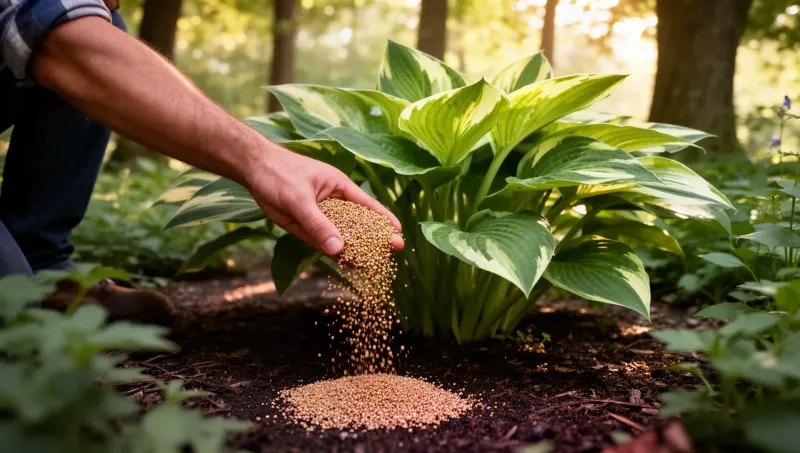
When hosta leaves turn yellow and flop over in fall, many gardeners worry the plant is dying. It is not, it is just getting ready to rest for winter.
A couple of small tasks now can mean fewer slugs, less disease, and healthier clumps next spring. There is also one popular fall habit that may do more harm than good, especially in Southern gardens.
1. Clear Away Mushy, Collapsed Leaves
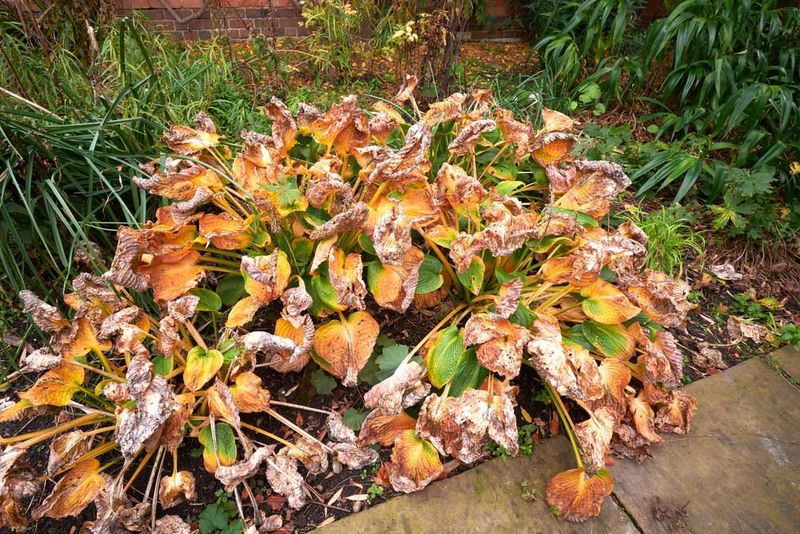
Picture a slug’s dream hotel: a soggy pile of hosta leaves lying flat on cool, damp soil. That heap is exactly where many slugs lay eggs and where fungal spores can sit out the winter, waiting for spring.
Once the foliage has turned yellow or brown and gone limp, gently pull or snip it off at the base. Wait until the leaves have truly collapsed, since green leaves are still sending energy down to the roots.
A light frost usually signals the right time in colder areas, while in North Texas or the upper South it may be closer to late November or December.
Bag the old leaves or toss them in the trash if you saw spots, holes, or slime trails this year. Composting diseased foliage can spread trouble back into your beds.
Healthy leaves can go in the compost pile.
Gardeners in milder parts of the South may notice hostas linger longer before fading, and that is normal. Just clean up whenever the leaves finally give out.
This simple tidy-up often reduces slug damage next year, and your bed will look neater through the dull winter months too.
2. Give Roots a Deep Drink and a Light Mulch
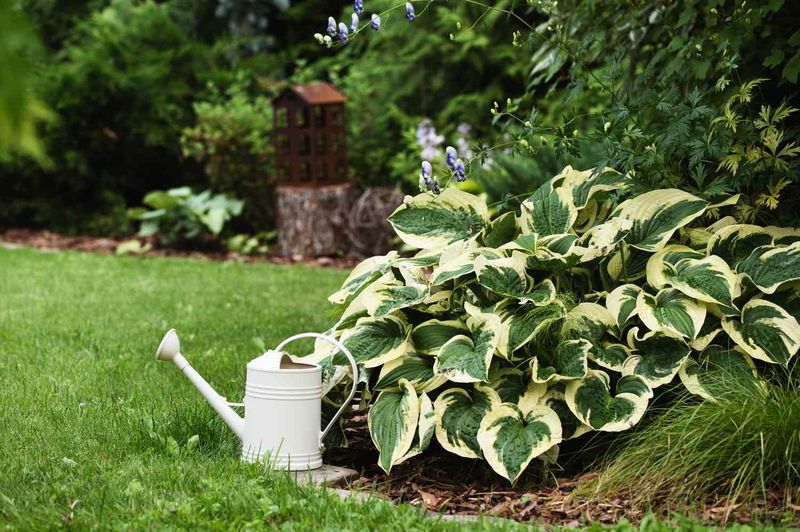
Dry fall weather sneaks up on a lot of us. In Texas and much of the South, autumn can bring weeks without real rain, and thirsty hosta roots head into winter stressed and weak.
Before the ground cools, water each clump deeply once a week if rainfall is scarce. Aim for soaking the soil several inches down rather than a quick sprinkle.
Moist roots tend to handle cold snaps better than dry ones.
After watering, spread about two inches of shredded bark, pine straw, or chopped leaves around the plant. Keep it a few inches away from the crown, since mulch piled against the center can trap moisture and invite rot.
The goal is a cozy blanket, not a smothering pile.
Mulch helps in a few ways:
It may steady soil temperatures during the South’s wild freeze-and-thaw swings. It also holds moisture and can cut down on early spring weeds around those emerging shoots.
Here’s a handy bonus. Hostas planted in containers dry out faster, so check pots every week and water whenever the top inch feels dry.
A few minutes with the hose now can pay off with stronger, fuller leaves next season.
3. Skip the Fall Fertilizer
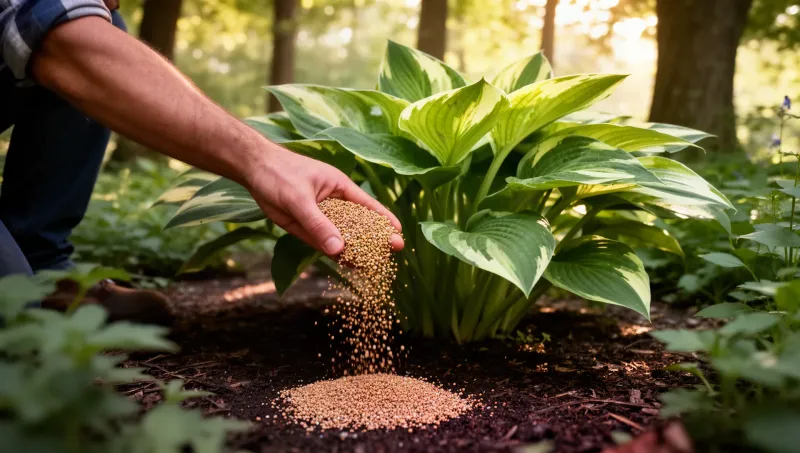
Feeding a sleepy plant sounds kind, right? Plenty of gardeners grab the fertilizer in October thinking it will give hostas a head start.
In reality, it can work against them.
Nitrogen pushes soft new growth. When a hosta should be slowing down and storing energy in its roots, a fall feeding may nudge it to sprout tender leaves instead.
A sudden freeze, which the South gets more often than people expect, can then damage that fragile growth and weaken the plant.
Extra fertilizer sitting in cold, idle soil can also wash away with winter rains, wasting money and possibly running off into nearby water.
So when should you feed? Spring is the sweet spot.
Wait until the pointed shoots, often called pips, push up through the soil, then apply a balanced slow-release fertilizer or a layer of compost. That timing lines up with the plant’s natural growth burst.
Fun fact: hostas are native to Japan, Korea, and China, where they grow in rich woodland soil and rarely need much feeding at all. Honestly, a little compost each spring is often all a healthy clump wants.
Put that fertilizer bag away until the garden wakes back up.