
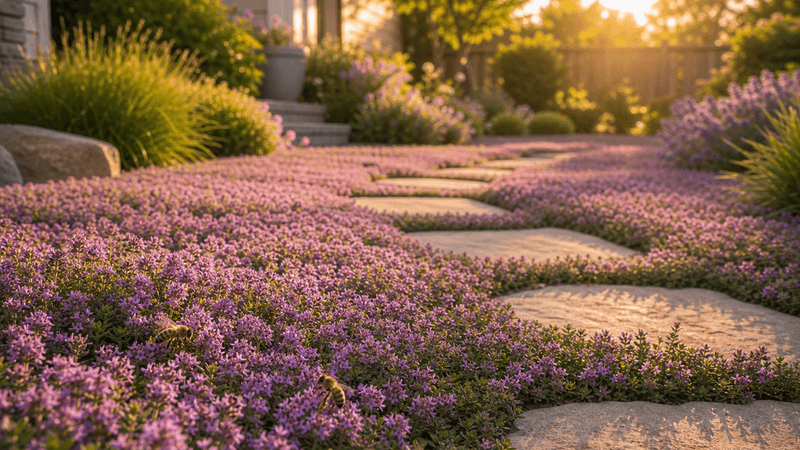
That bare strip along the fence keeps sprouting weeds no matter how often you pull them. Creeping thyme is a low, spreading plant that some gardeners use to cover small sunny spots like this.
It can help, but it is not a quick or guaranteed fix. Here is how to decide if it suits your patch and how to give it a fair start.
First, check the fence line’s light and drainage
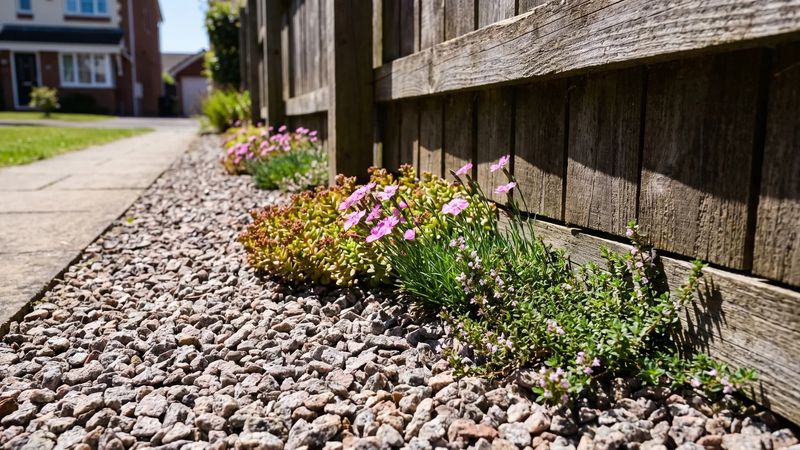
Stand at the fence at different times of day and watch where the sun lands. Illinois Extension lists full sun to very light shade and well-drained soil as the preferred conditions for creeping thyme.
A strip that sits in deep shade under a tall fence, a big tree, or a building is a poor match, and a little shade tolerance does not mean thyme will thrive in the dark.
Drainage matters just as much. UF/IFAS Extension Pasco County suggests about 6 to 8 hours of sun and notes that thyme needs well-drained soil.
In Central Florida, some afternoon shade may ease heat stress.
After a heavy rain, check the strip. If puddles linger or the soil stays muddy, thyme is likely to struggle there.
A fence line is not automatically a good thyme site, so test the spot before you shop.
Check the plant label before you buy
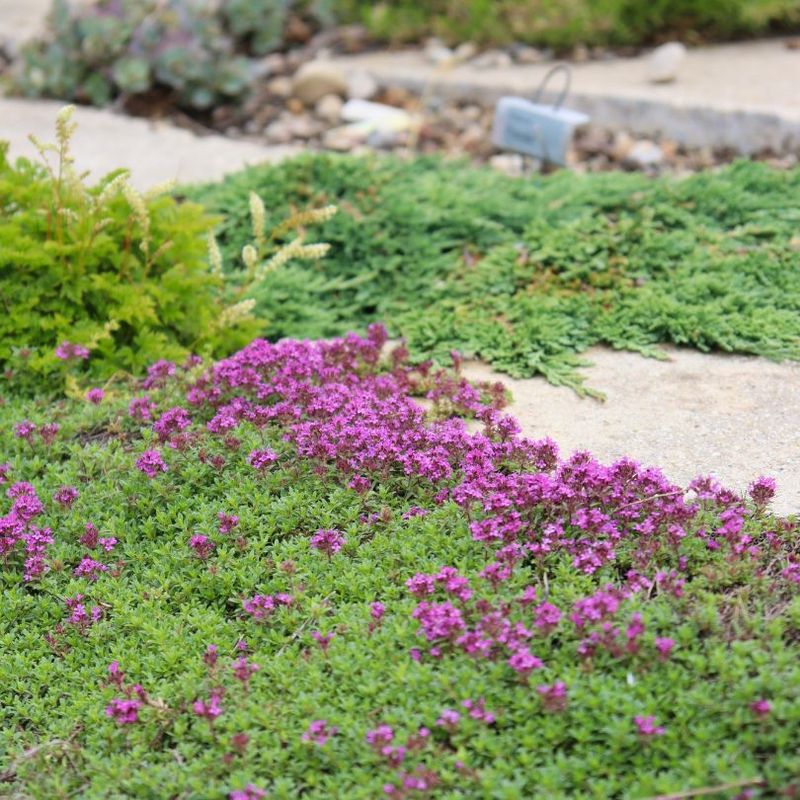
Common names can be slippery, so read the botanical name on the tag. Illinois Extension identifies creeping thyme as Thymus serpyllumT. praecoxT. serpyllum, while Penn State Extension separates creeping thyme () from wild thyme ().
Sources do not always match, so confirm what you are actually buying.
Growth habit matters too. Texas A&M AgriLife notes that thyme species and hybrids grow in different ways, including creeping forms, and that thyme needs good drainage.
That is a reason for care in Texas, not a promise that every cultivar suits every region.
Ask the nursery staff whether the plant spreads low across the ground and how it handles your local heat and humidity. Look up the exact name with your county Extension office before you plant.
Remove weeds before you plant
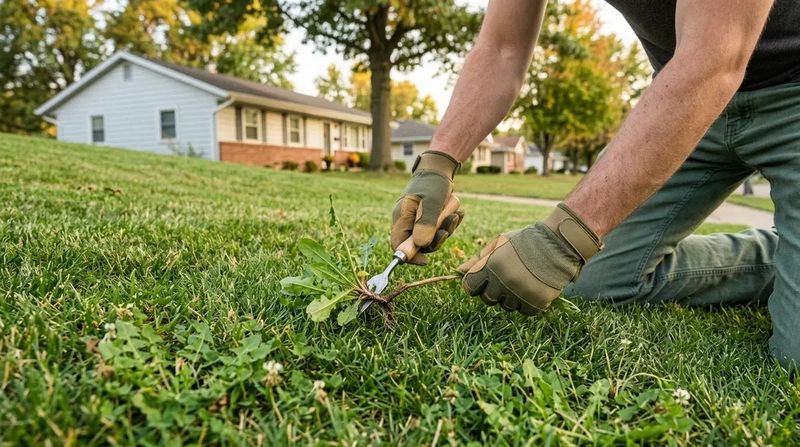
Thyme will not smother weeds that are already established. Illinois Extension says weed competition can slow groundcover establishment, so clear the strip first.
Dig out perennial weeds, roots and all, because those are the ones that keep coming back.
While the thyme settles in, stay on top of new sprouts. Shallow cultivation or hand-weeding works well, and a light touch keeps you from disturbing young roots.
Clemson Extension also advises controlling weeds before and during groundcover planting.
General groundcover guidance suggests 1 to 2 inches of mulch to reduce weeds and hold moisture. Treat that as a site-preparation option and use it in the gaps between plants.
Space the starts—and choose timing for your location
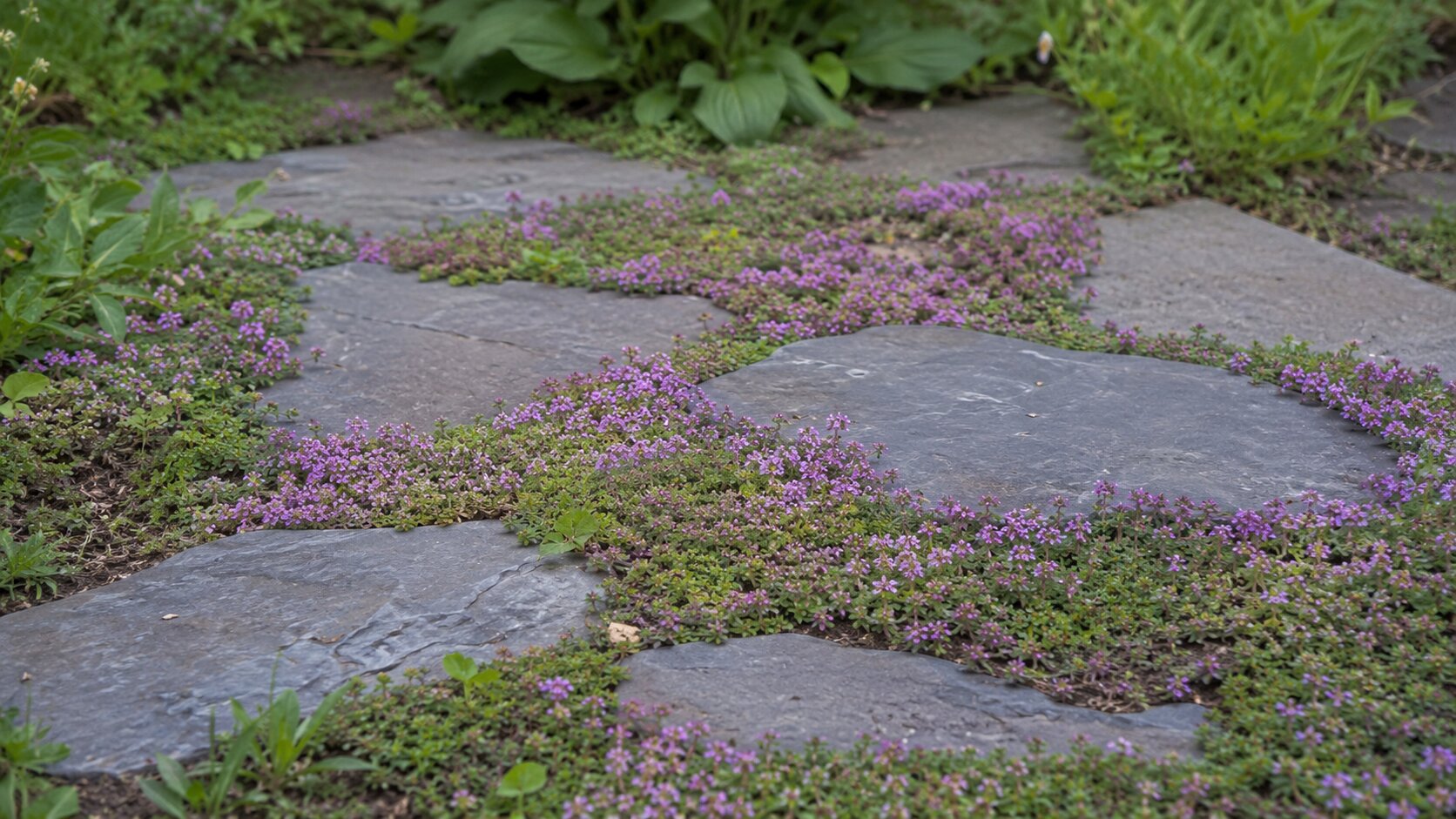
Illinois Extension recommends setting creeping thyme plants 8 to 12 inches apart. Closer spacing leaves fewer gaps for weeds, but spacing alone will not decide how fast the patch fills in.
Fall can be a good planting window for groundcovers in general, according to Illinois Extension’s groundcover guide. Still, local climate, current weather, and soil conditions change the best date.
Texas gardeners should check with their county office, since conditions vary widely across the state.
Florida readers need region-specific timing. UF/IFAS treats North, Central, and South Florida as different gardening regions with different calendars.
Look up yours before you buy plants.
Water new plants without keeping the soil soggy
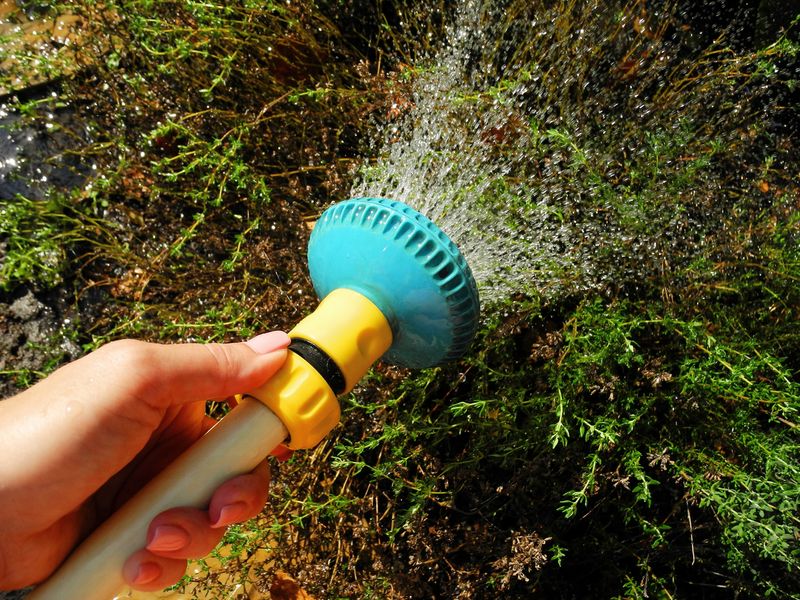
Young thyme needs water while its roots get going. Soggy ground is the bigger danger, though.
UF/IFAS Extension Pasco County warns that thyme is susceptible to root rot in waterlogged soil.
Check the soil with your finger rather than watering by habit. If it feels wet below the surface, wait.
If it is dry, give the plants a drink.
Keep an eye on the gaps between plants as well. Illinois Extension recommends hand-weeding or shallow cultivation during establishment, and open soil invites new weeds.
Water and weeding work as a pair until the plants knit together.
Expect gradual coverage, not a weed-proof carpet
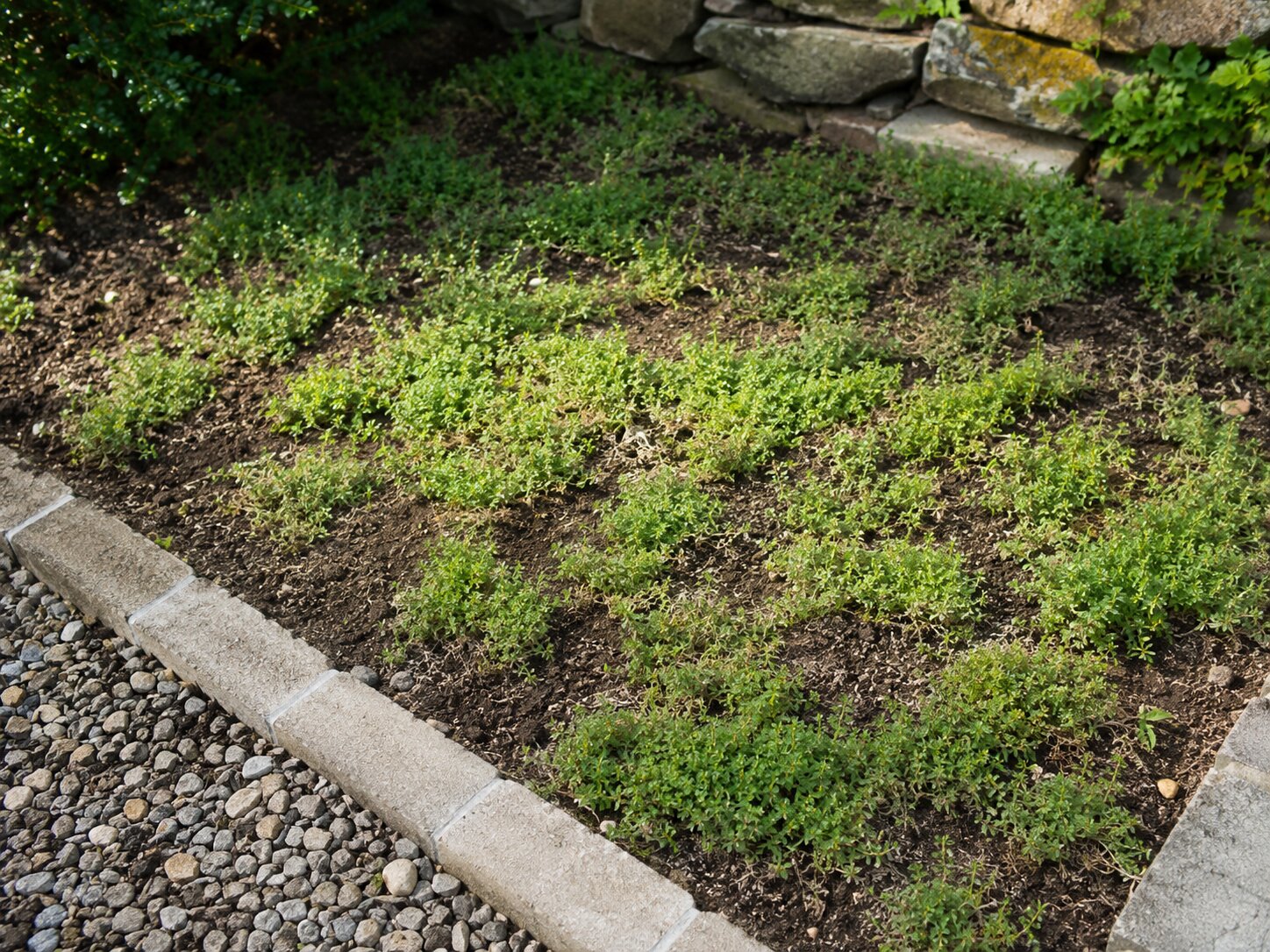
A dense groundcover can retard weed growth, but it does not guarantee a weed-free patch. Illinois Extension says most groundcovers need at least one to two growing seasons to become established.
That is a general benchmark, not a prediction for creeping thyme.
So by next summer, you may still see open gaps and a few weeds. Pace depends on spacing, site conditions, and how well you maintain the planting.
Clemson Extension also stresses weed control while plants fill in. Pull sprouts when they are small, and keep checking the edges of the strip.
Coverage is gradual, and creeping thyme still needs care until it thickens.
Choose a groundcover that fits the site
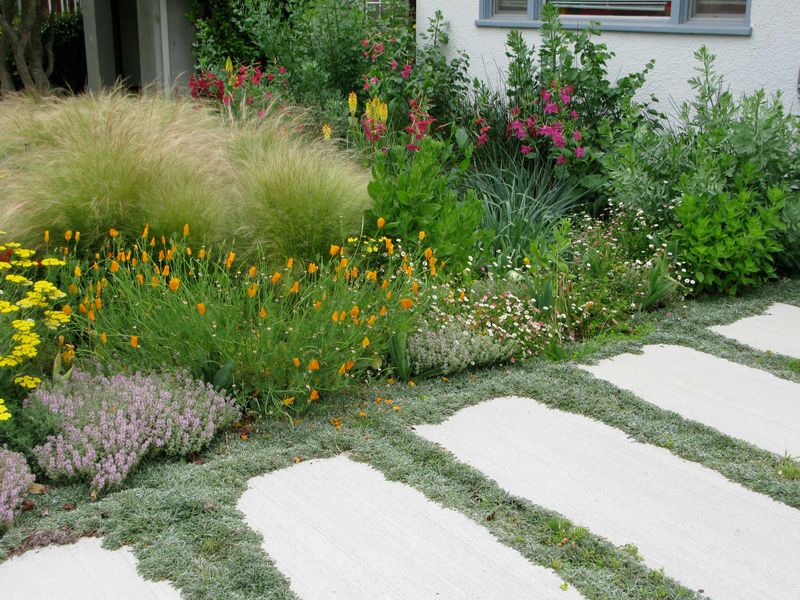
Use creeping thyme where the light and drainage fit, prepare the patch well, and plan on ongoing weeding while it spreads. Creeping thyme is non-native to North America, according to the Morton Arboretum.
If your strip is shady or soggy, or you prefer native plants, see the UF/IFAS groundcover guide. Suitability still depends on your site.
The best groundcover is the one that suits the spot you actually have.