
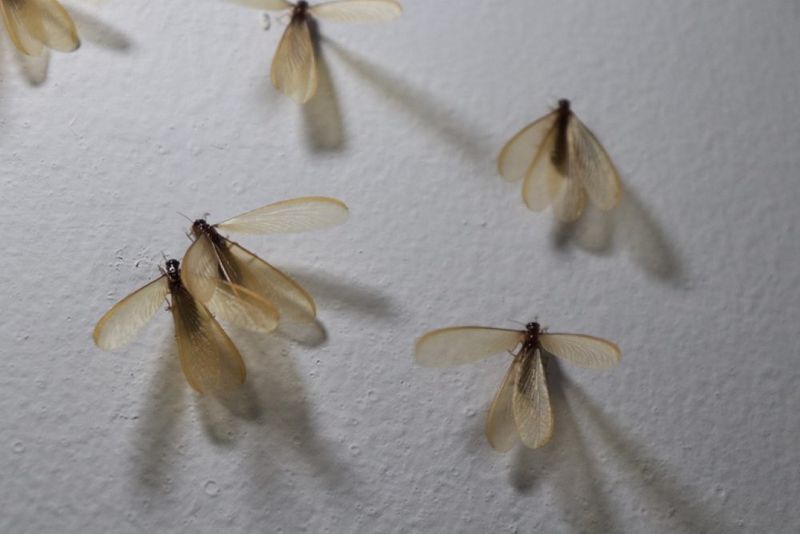
You step outside after a soaking rain and see hundreds of winged insects rising from the soil. It looks alarming, and many California homeowners assume the worst right away.
The sighting does tell you something, but not as much as you might think. Here is how to read what you are seeing and what to check next.
Rain can coincide with a subterranean termite mating flight
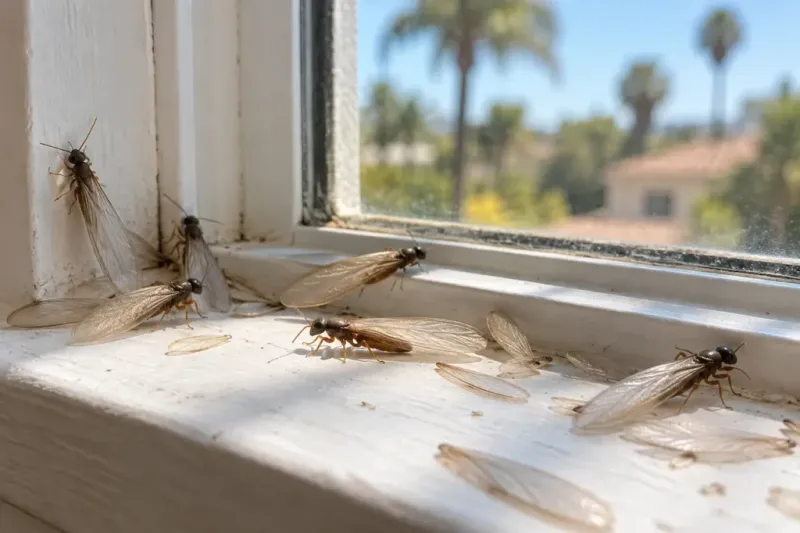
Hundreds of winged insects lifting out of wet ground fit the pattern of a subterranean termite mating swarm. That fit is a clue, not a confirmation, because the insects still need to be identified.
The flyers are reproductive adults. They leave an established colony to disperse, pair up, and try to start new colonies.
They are not the workers that feed on wood. According to UC IPM guidance on subterranean termites, most swarmers die, and a swarm does not prove a new colony will succeed.
In California, the common subterranean termites in the genus Reticulitermes often swarm in spring or fall. They tend to fly in the afternoon on clear days after soaking rain.
That is why the first big storm of the season gets so much of the blame.
Still, rain is a useful pattern and not a rule. UC identification guidance on swarming termites notes that timing varies by species and location.
Some species fly in summer or in the evening, and not every rain sets off a flight.
One more point is worth clearing up. Rain does not push termites into your house.
Wet weather and warm, calm conditions can line up with a reproductive flight, but that is all the sighting tells you. It cannot show where the colony lives or whether any building is affected.
Check whether the swarmers are termites or winged ants
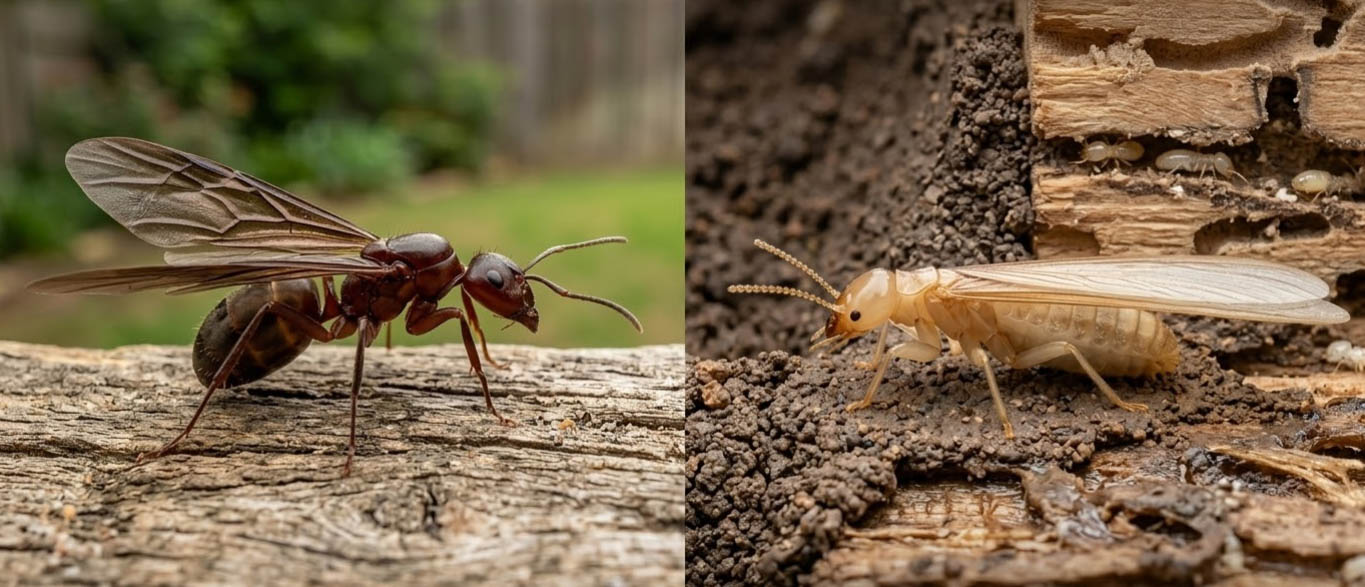
Winged ants get mistaken for termites all the time, and the two need very different responses. Three features make the comparison fairly easy if you can look closely at a few insects.
Termites have straight, beaded antennae, a broad waist with no pinch, and four wings of similar size. Ants have elbowed antennae, a narrow pinched waist, and front wings that are larger than the hind wings.
These are the same traits described in UC IPM termite quick tips.
A clear sheet of tape or a small jar helps you catch a few for a closer look. A phone macro photo against a white background also works well.
Wings often drop off after a flight, so look at the piles of discarded wings, too.
Where the insects appear matters. Emergence from soil is consistent with subterranean termites, but it does not identify every swarm.
Drywood termites live in wood and can swarm from it, as UC IPM drywood termite information explains. Dampwood termites are tied to very moist wood.
If the features are hard to read, save a specimen in rubbing alcohol or take sharp photos. UC guidance on identifying swarming termites recommends getting an expert to confirm rather than guessing.
A yard swarm does not confirm termites in the house
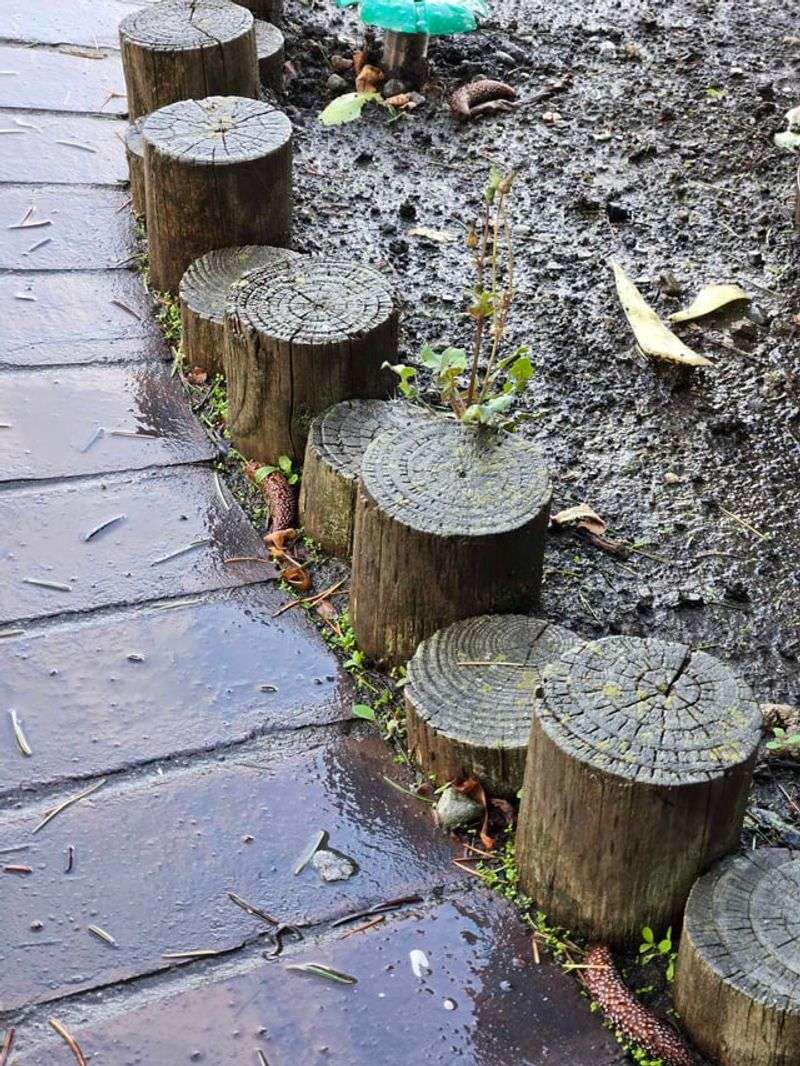
Seeing a swarm in the yard feels like proof that termites have found your house. It is not.
The colony could be a good distance from any building.
UC IPM notes that yard swarms can come from buried roots, stumps, fence posts, or other wood, and they do not necessarily mean termites are in the home. A flight from an old stump or a buried scrap of lumber is a common source.
The winged adults are also only the dispersal stage. They fly out to mate, and most never found a colony.
Their presence does not show that a new colony formed, or that one will ever reach your foundation.
Termites also do real good outdoors. They break down dead and decaying wood, return nutrients to the soil, and feed many predators.
UC IPM says they rarely injure or kill trees, so a swarm near a healthy oak or fruit tree is not a reason to worry about the tree.
That ecological role does not cancel out the risk to buildings. A minority of species can damage structural wood, and a swarm is a good prompt to take a careful look at your house.
The next section covers what that look involves.
Look for signs of termite activity near the foundation
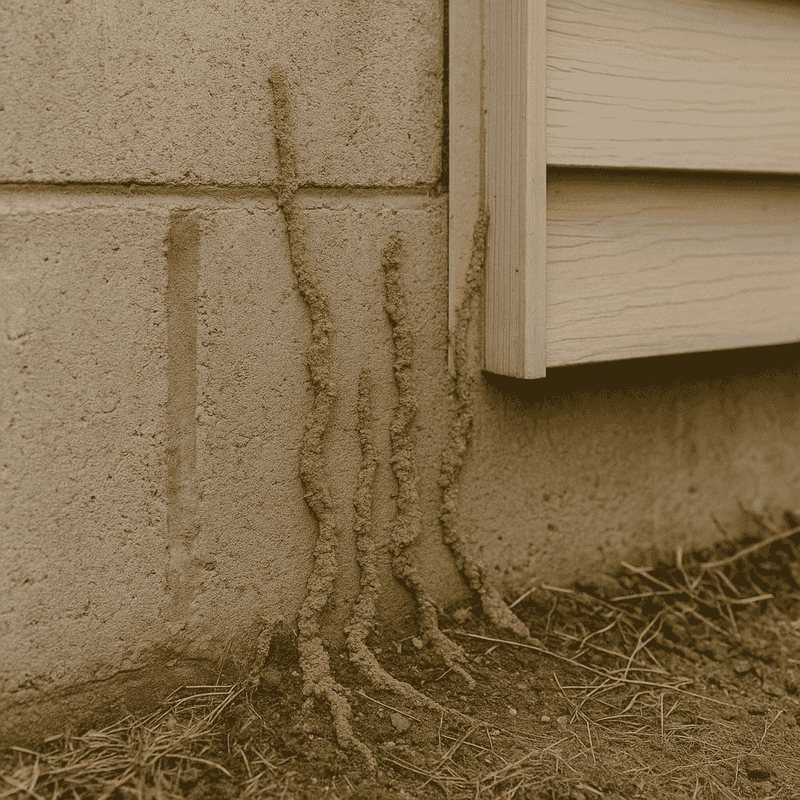
A walk around the house with a flashlight takes about twenty minutes and tells you far more than the swarm did. Focus on the places you can reach safely: the foundation perimeter, spots where wood meets soil, and the base of posts and steps.
Start with earthen shelter tubes, also called mud tubes. These pencil-width tunnels of soil run up foundations or along wood, and subterranean termites use them to travel.
UC IPM quick tips on termites list them among the key signs to look for.
Next, look at the wood itself. Check for termites inside wood, and for boards that look darkened or blistered, sound hollow when tapped, or are easily punctured with a screwdriver.
A gentle probe at a fence post base or deck support is plenty.
Keep it simple and safe. Do not pull off siding, cut into walls, or crawl into tight spaces.
Leave those areas to a professional.
Finding nothing does not clear the house, and finding one clue does not confirm damage. UC IPM explains that a swarm alone is not confirmation, and that a professional inspection is generally needed to establish whether a structure is infested.
Identify the insects and get an inspection when signs warrant it

Good next steps are small and calm. Note exactly where the insects came out, whether from a lawn patch, a planter bed, or a crack at the slab.
Then photograph a few or collect some in a jar so you can confirm what they are.
Some situations call for a call to a professional. These include a swarm emerging right at the house, mud tubes on the foundation, or wood that is damaged.
In those cases, arrange an inspection with a licensed structural pest-control company. UC IPM offers advice on hiring a pest control company, including how to compare inspection reports and bids.
Resist the urge to spray. Blanket lawn or soil spraying and pouring household chemicals into emergence holes will not tell you what the insects are or whether the house is affected.
They can also harm beneficial insects and soil life in a yard you want to keep healthy.
UC IPM states that do-it-yourself termite pesticides are generally ineffective. The EPA cautions that termiticides can be highly toxic and must be used exactly as labeled.
If treatment is needed, let the inspection decide what kind and where. Treating before you know what you have is how money and chemicals get wasted.
Keep structural wood dry and separated from soil
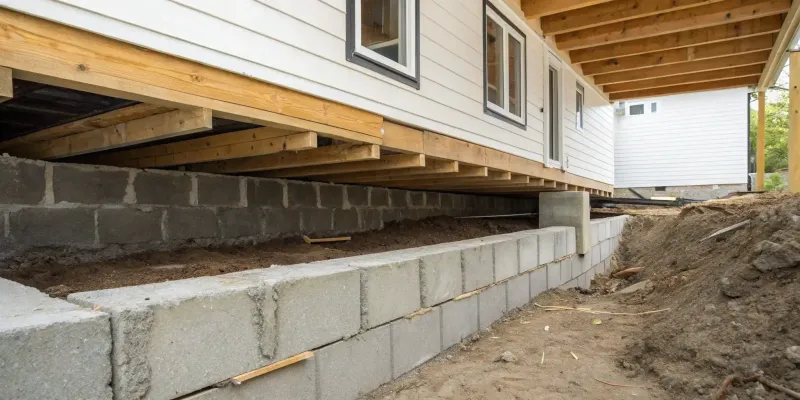
Prevention works best when it targets the building and the few feet around it, not the whole yard. Termites need moisture and wood, so cutting off both near your foundation is the most useful habit.
Keep structural wood off the ground. UC IPM guidance suggests a 12-inch gap between soil and structural wood, though local building codes set the exact requirements for your area.
Pull back mulch, planter soil, and stucco-hugging vines that bridge the gap.
Clear out wood that gives termites a stepping stone. Dig up buried scrap lumber and old form boards, and move firewood and lumber piles away from the walls.
Stack them on a rack off the ground.
Moisture matters just as much. Fix leaking pipes, hose bibs, and gutters, and redirect irrigation and downspouts away from the foundation.
In California’s dry summers, a drip line or sprinkler aimed at the wall can still keep one spot damp year-round. Keep crawl space vents clear so the area stays ventilated and dry.
So identify the insects, check for structural evidence, and let an inspection guide what you do. A swarm tells you a termite colony may be somewhere nearby, but your house tells you the rest.