
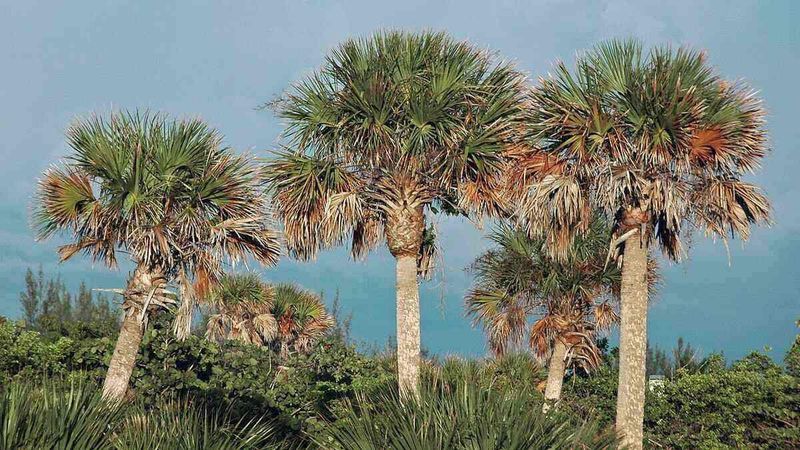
A palm that looks fine one month can be in serious trouble the next. Lethal bronzing is a disease that has killed many palms across Florida, and the signs can be easy to miss.
Many people watch the lower fronds, but that is not always where the first warning appears. Knowing the possible clues can help you act quickly and ask the right experts for help.
Lethal bronzing is an insect-spread disease, not just a color change
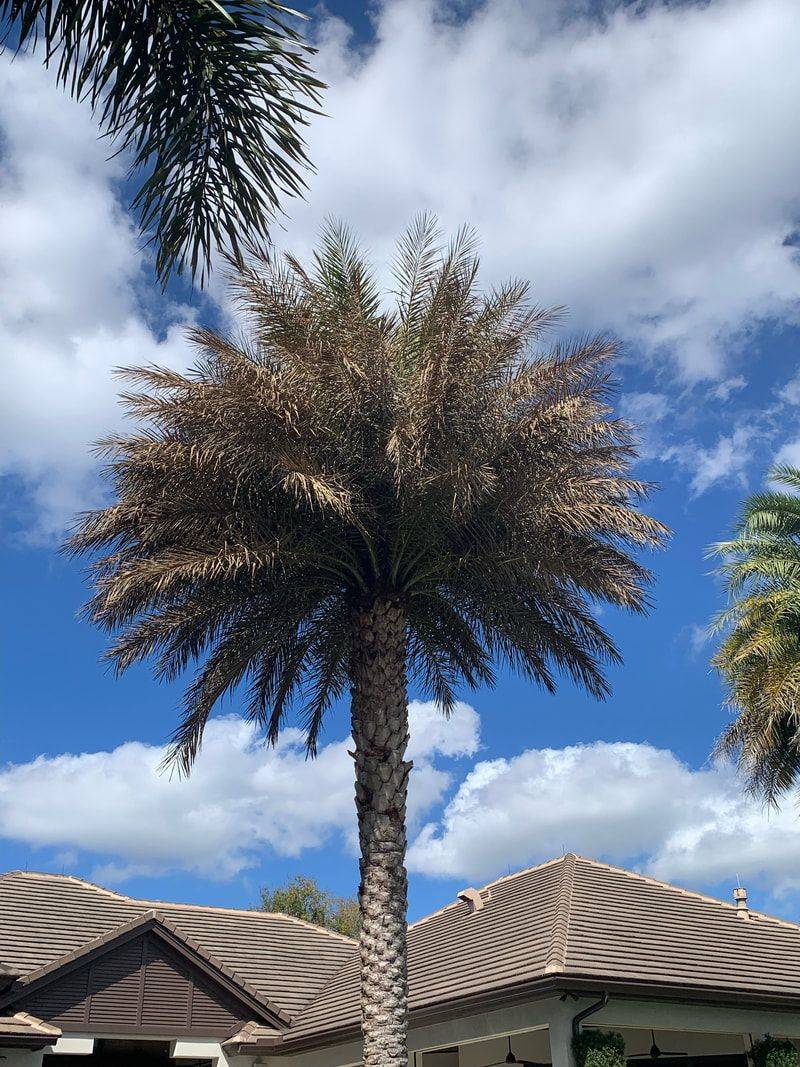
Bronze leaves get the attention, but the real cause of lethal bronzing is much smaller. According to UF/IFAS Extension, the disease is caused by a phytoplasma, a tiny bacteria-like organism that lives inside the plant’s vascular tissue.
Sap-feeding insects carry it from palm to palm as they feed.
That insect link matters for how you think about the problem. The disease is not a simple stain or a cosmetic issue on the leaves.
It moves through the plant and eventually damages the palm’s ability to survive.
Lethal bronzing is related to lethal yellowing, an older and better-known palm disease. The two are genetically distinct, even though they can look very similar.
A palm owner cannot tell them apart by eye, and neither can most professionals without testing.
This article is meant to help you recognize patterns that deserve attention, not to hand you a diagnosis. Many other problems can make a palm look unhealthy, and appearance alone cannot confirm infection.
Think of the signs ahead as reasons to take notes, take photos, and call for expert guidance.
Florida palms are a big part of the look and value of many yards, so a calm and early response is worth it. Knowing what the disease is, and how it travels, makes the warning signs easier to understand.
Fruit or flowers may show changes before the leaves
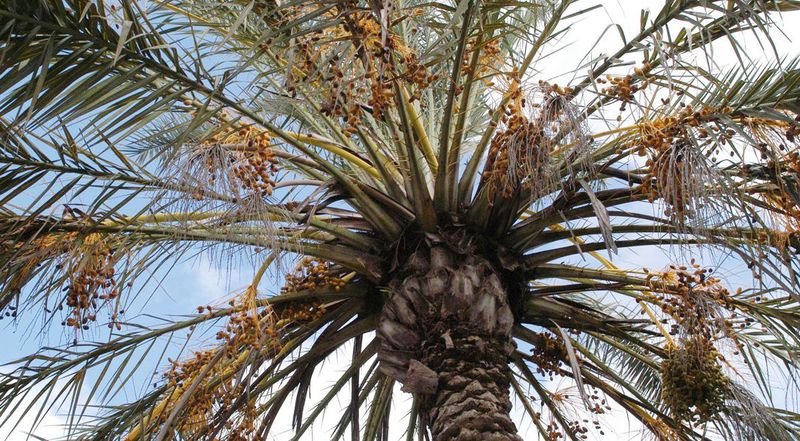
If your palm produces fruit or flowers, they may offer the earliest clues. UF/IFAS guidance lists premature fruit drop as a common early sign.
Flowers may also turn dark and die back instead of developing normally.
Picture a palm that usually holds heavy clusters of fruit. One week you notice many unripe fruits scattered across the lawn or driveway.
That change can be easy to blame on wind or a recent storm, so look at the whole pattern before deciding anything.
These signs may show up before any leaf color changes. That is why watching only the lower fronds can leave a gap in your early warning.
A quick look at the fruit stalks and flower spikes now and then can add useful information.
There is an important catch, though. Not every palm gives you these clues.
Some species rarely fruit in home landscapes, and some owners trim off flower stalks and fruit clusters as part of routine cleanup. A palm with no fruit drop and no dark flowers is not automatically safe.
Other things can also cause fruit to drop early, including heat, drought, and heavy storms. One sign by itself does not prove lethal bronzing.
If you notice fruit or flower changes, write down the date, take photos, and keep watching for other changes in the crown and leaves.
Older lower leaves often bronze and dry as symptoms progress
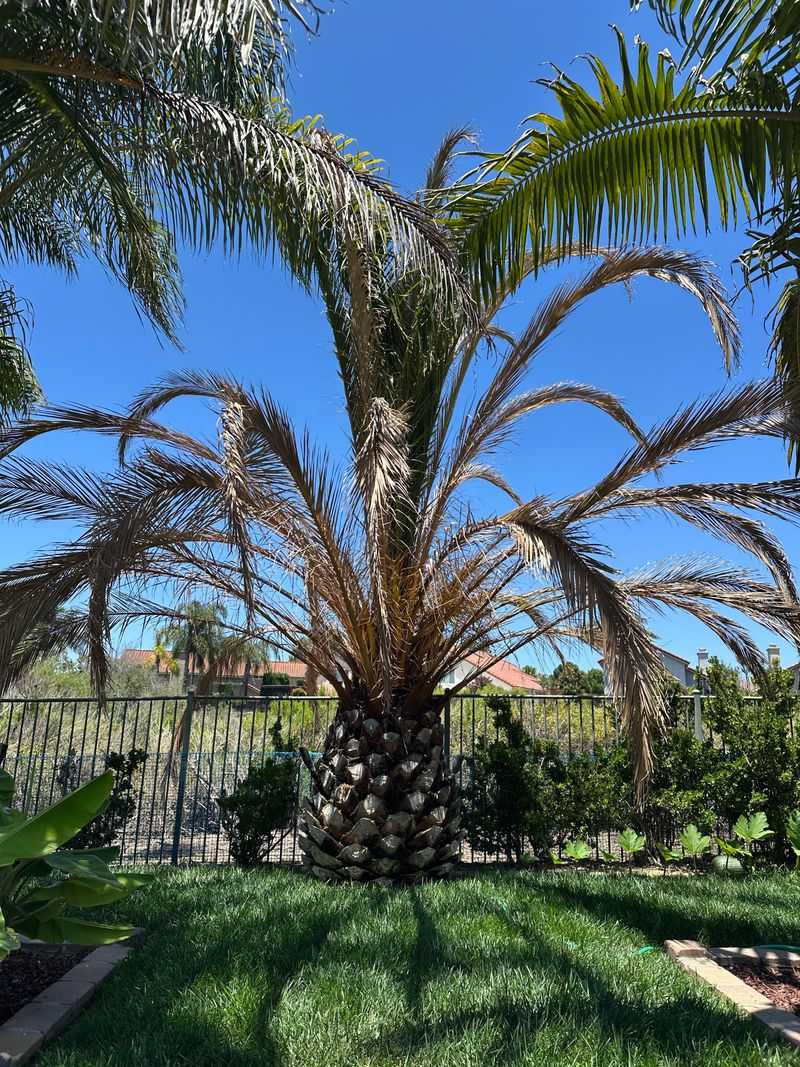
Reddish-bronze color in the oldest leaves is one of the best-known signs of this disease. Those lower fronds may turn bronze and then dry out.
As the disease advances, the color change tends to move upward through the crown.
Many people assume this is where trouble starts. UF/IFAS describes it as a common stage in the symptom pattern, not a guaranteed first warning.
Fruit drop or flower damage may come earlier, and some infected palms show no leaf discoloration at all before the center of the crown collapses.
Because of that, it helps to step back and look at the whole palm. Ask a few simple questions.
Is the color change on many old leaves or just one? Is it creeping upward?
Are there fruit or flower changes too?
Palm species can also vary in how the symptoms look, and the order and speed are not the same from palm to palm. Reported average timelines are not a dependable way to guess how fast any one palm will decline.
One bronzed frond on an otherwise healthy palm is a reason to watch, not to panic. A spreading pattern is a stronger reason to get help.
Take photos from a few angles over several days so an expert can see how things are changing.
A collapsing spear signals severe damage to the growing point
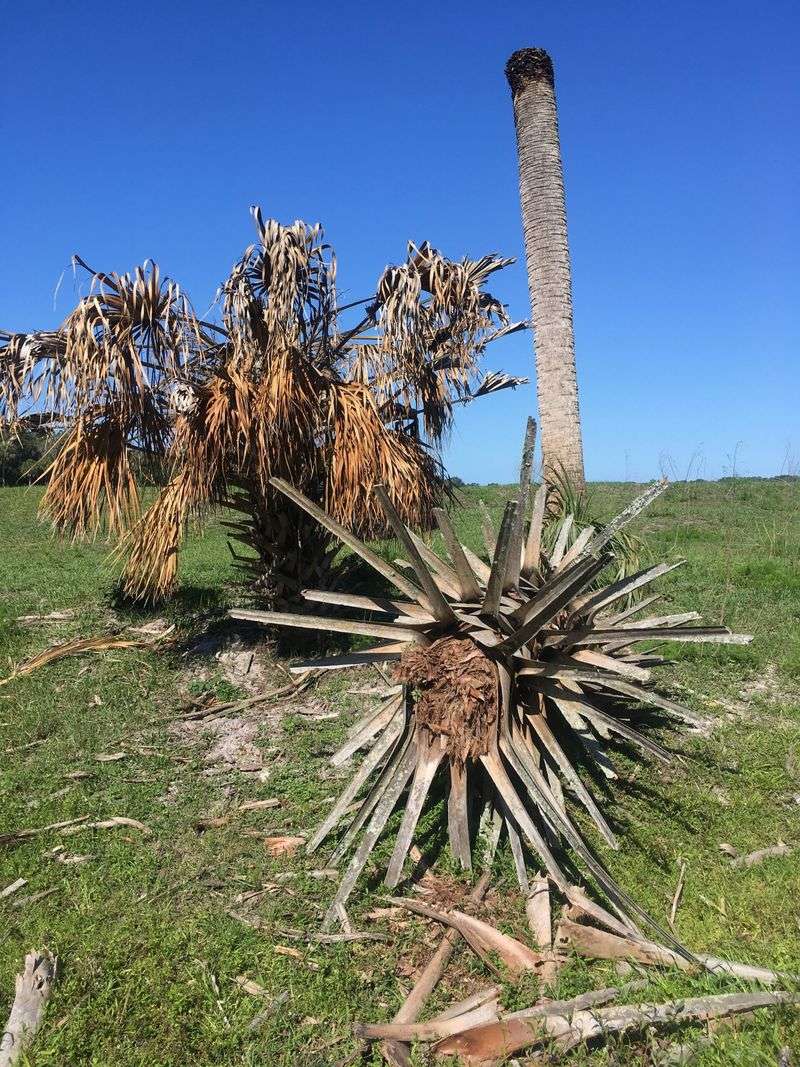
At the very center of a palm crown stands the newest, unopened leaf, called the spear leaf. It usually points straight up and looks fresh and green.
When it turns brown, dies, and then topples over, the situation is serious.
According to UF/IFAS Extension, a collapsed spear indicates that the palm’s growing point has died. Palms have only one growing point, so once it is gone, the palm cannot make new leaves.
In many cases, spear collapse follows other symptoms such as fruit drop, flower damage, and bronzing in older leaves. Yet some infected palms collapse in the center without ever showing leaf discoloration first.
That is why a palm that looked green and fine can seem to fail overnight.
Not every palm follows the same sequence or timeline. Some move quickly from one stage to the next, and others take longer.
Do not use a general schedule to decide how much time you have.
A leaning or fallen spear also does not prove lethal bronzing on its own. Other problems can damage the crown too.
Still, this is a sign to photograph right away and report to your county Extension office, because waiting only gives you less time to plan.
Other problems can discolor lower leaves
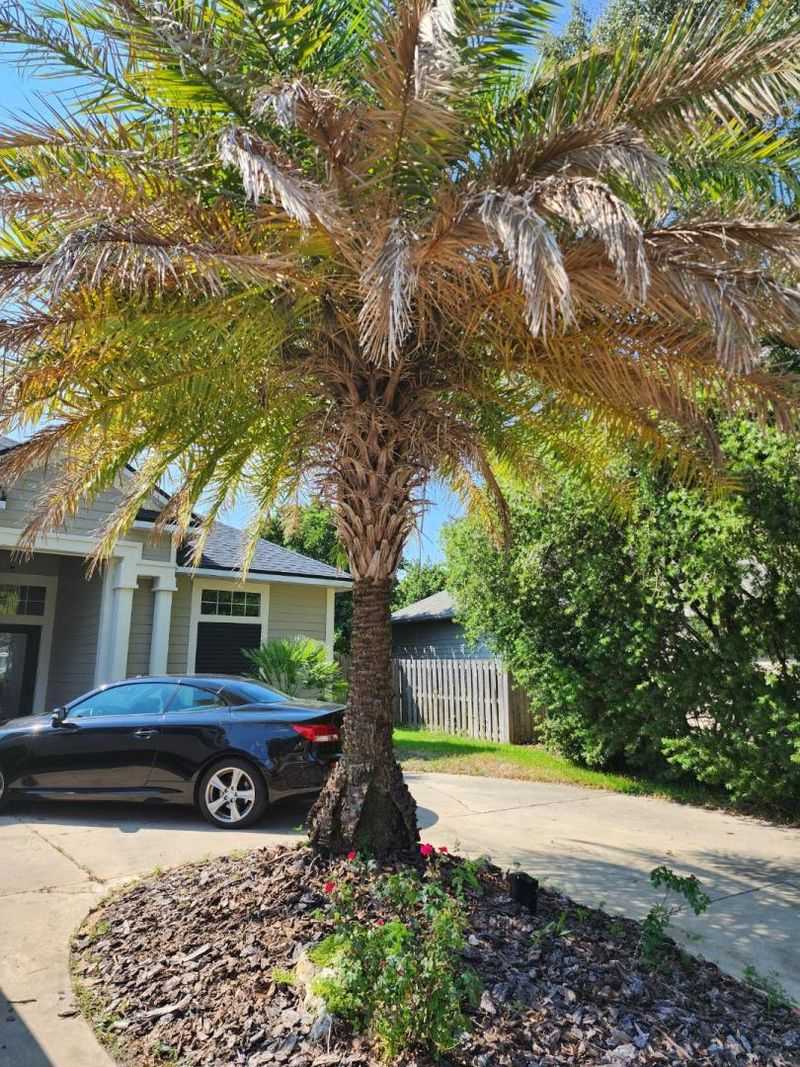
Old leaves turn colors for plenty of reasons, and many have nothing to do with this disease. Nutrient deficiencies are a common cause in Florida, where sandy soil lets nutrients wash away fast.
UF/IFAS pruning guidance notes that lower-leaf discoloration can reflect a nutrient problem.
Other diseases and stress factors can also cause similar symptoms. Texas A&M AgriLife Extension points out that bronze color on a palm can have causes besides lethal bronzing.
So a single bronzed frond cannot settle the question.
This is why the full pattern matters more than any one clue. Look for more than leaf color.
Consider fruit, flowers, the center spear, and how the changes are spreading.
There is also a practical caution. It can be tempting to cut off partly discolored lower leaves to tidy the palm.
Hold off before you have guidance. Those leaves may still supply potassium to the palm, and removing them for looks alone can take away something it needs.
Leave the pruning saw in the shed for now. Take photos, note the date, and ask Extension to help sort out whether you are seeing a nutrient issue, another problem, or something that needs testing.
Document the symptoms and contact Extension before sampling
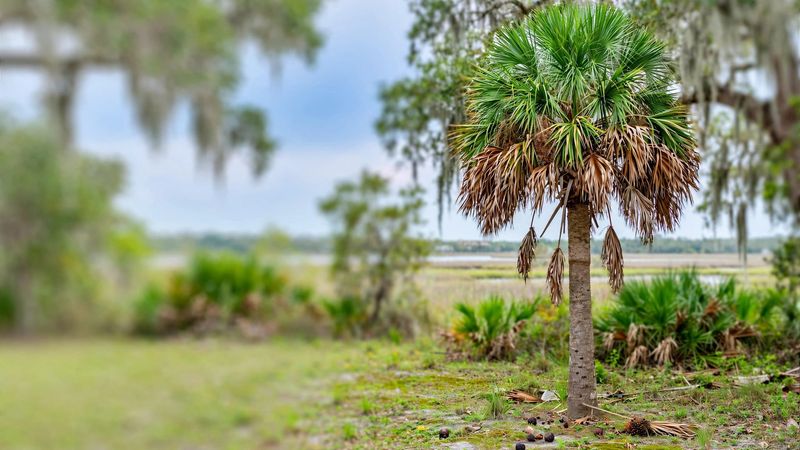
A phone camera is your best first tool. Start by photographing the entire palm so the shape and overall condition are clear.
Then take close shots of the crown, the center spear, any bronzing leaves, and any fallen fruit or darkened flowers.
Add notes about when you first noticed each change. Dates help an expert judge whether a pattern is spreading.
Next, contact your county Extension office for diagnosis guidance, as suggested by UF/IFAS Gardening Solutions.
Looking at a palm cannot confirm infection. A molecular test is what can help confirm it.
Testing usually involves collecting sawdust from the trunk, but that is not a do-it-yourself job.
The UF/IFAS Plant Disease Diagnostic Center asks people to contact it before collecting a sample. Its guidelines also say not to sample dead palms.
Samples can be ruined by cross-contamination, so the lab wants to guide you first.
Please do not drill into the palm, inject anything, or spray insecticides on your own. Let Extension tell you what comes next.
Good photos and clear notes make that conversation faster and more useful.
Florida guidance separates symptomatic palms from nearby healthy ones
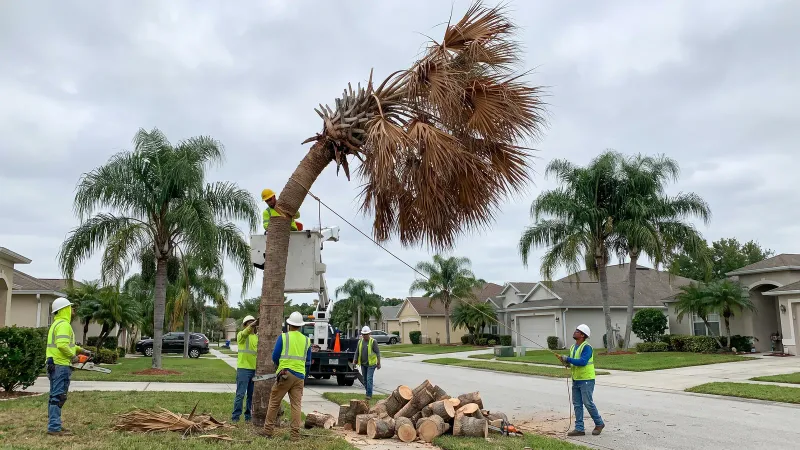
The hardest part of this disease is that there is no rescue for a palm that is already sick. In Florida guidance from UF/IFAS Extension, a symptomatic or test-positive palm is considered lost and should be removed.
Nearby palms may also need testing.
Removal can feel final, but it matters. An infected palm can remain a source of the disease while sap-feeding insects move around the neighborhood.
Extension staff can advise on timing and next steps.
Healthy palms near an outbreak are a different case. Oxytetracycline HCl is an antibiotic used as a preventive injection, and only for palms confirmed to be disease-free.
It is not a cure for an infected palm, and the label-rate treatment is not enough to reverse symptoms once they appear.
UF/IFAS recommends repeat injections every three to four months for at least two years. That is a long commitment, and it calls for specialist guidance.
It is not a do-it-yourself recipe, so do not try to inject palms on your own.
If you suspect trouble, your first call is to Extension, not to a hardware store. A palm can be lost, but the ones beside it may still have a chance.