
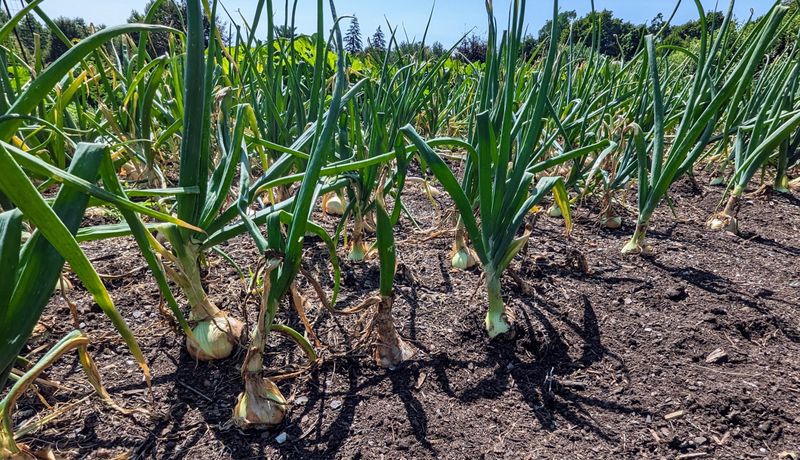
Green onion leaves poking up in a fall garden can make you wonder if something went wrong. In much of the South, fall is actually when onions are meant to be planted.
Whether those leaves lead to big bulbs or just good green onions depends on a few things you can check right now. Here is how to read your crop and decide what to do next.
Green leaves alone do not signal a failed fall crop
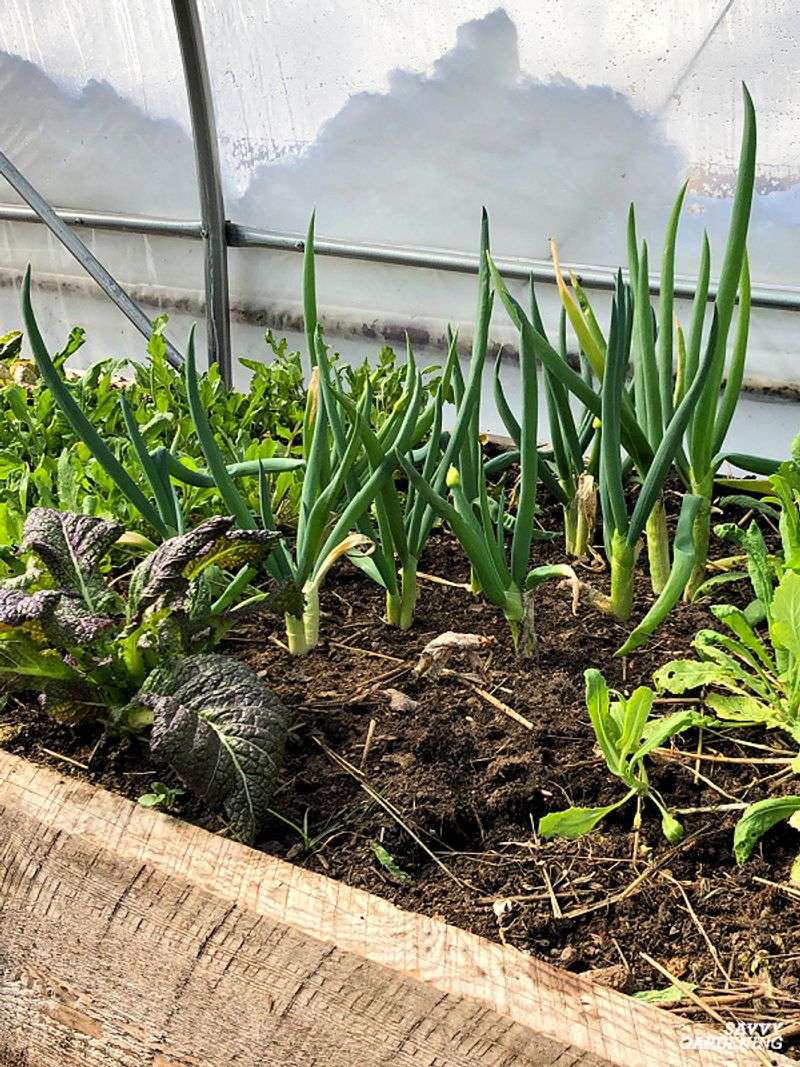
Seeing green leaves on onions in fall is usually good news. UF/IFAS guidance says onions are commonly planted in fall in Florida, and Texas guidance also gives fall planting windows.
Leaves are what a healthy young onion is supposed to be making.
Bulb onions need months to mature, so a leafy plant in October or November is simply early in its life. Leaves alone cannot tell you whether a plant will form a bulb.
That depends on the variety, day length, your location, and growing conditions, which the next sections cover.
It also helps to know that onions can be used in two ways. Some are grown for tender leaves, and others are grown for mature bulbs.
As Texas A&M AgriLife Extension explains, plants can be harvested earlier as green onions, long before bulbs would be ready. Knowing which goal you had in mind is the first step in judging progress.
Identify whether you planted onions for leaves or bulbs
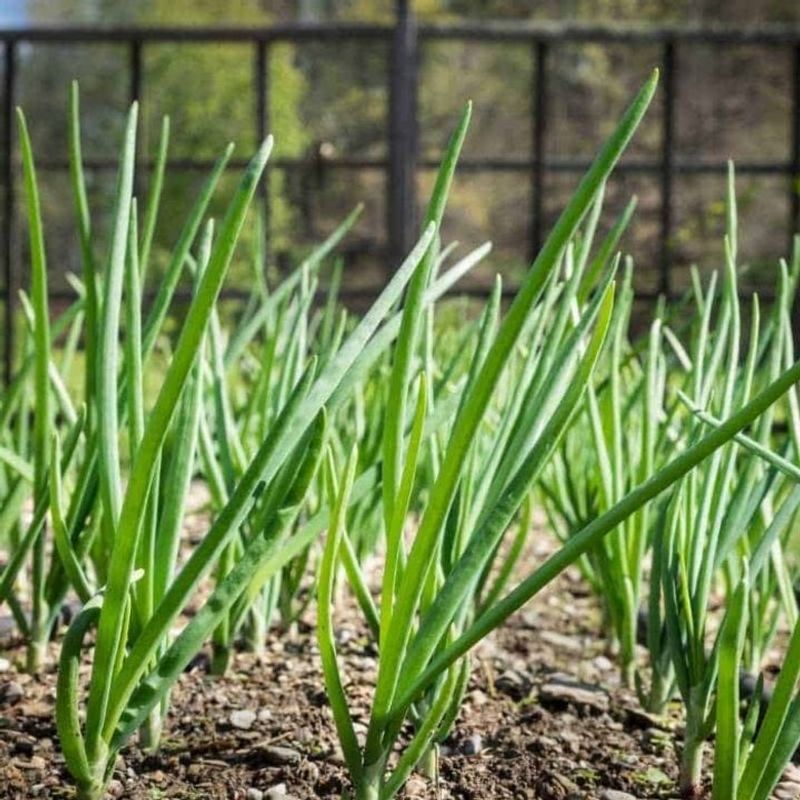
Check your seed packet or plant tag first. Bunching onions are grown for their leaves and do not form bulbs, according to Oklahoma State Extension.
If that is what you planted, tall green tops mean the crop is doing its job.
Bulb onions are a different story. They are grown to swell underground, but you can also pick them early for green-onion use.
Texas A&M says green onions may be harvested once plants are about pencil-sized and before bulbs begin to form.
That early harvest means pulling whole plants for the kitchen. It is not the same as trimming leaves off a plant you hope will make a bulb, and nothing here suggests that clipping leaves leads to bigger bulbs later.
If you want bulbs, leave those plants whole and let them keep growing.
Choose a variety suited to day length and location
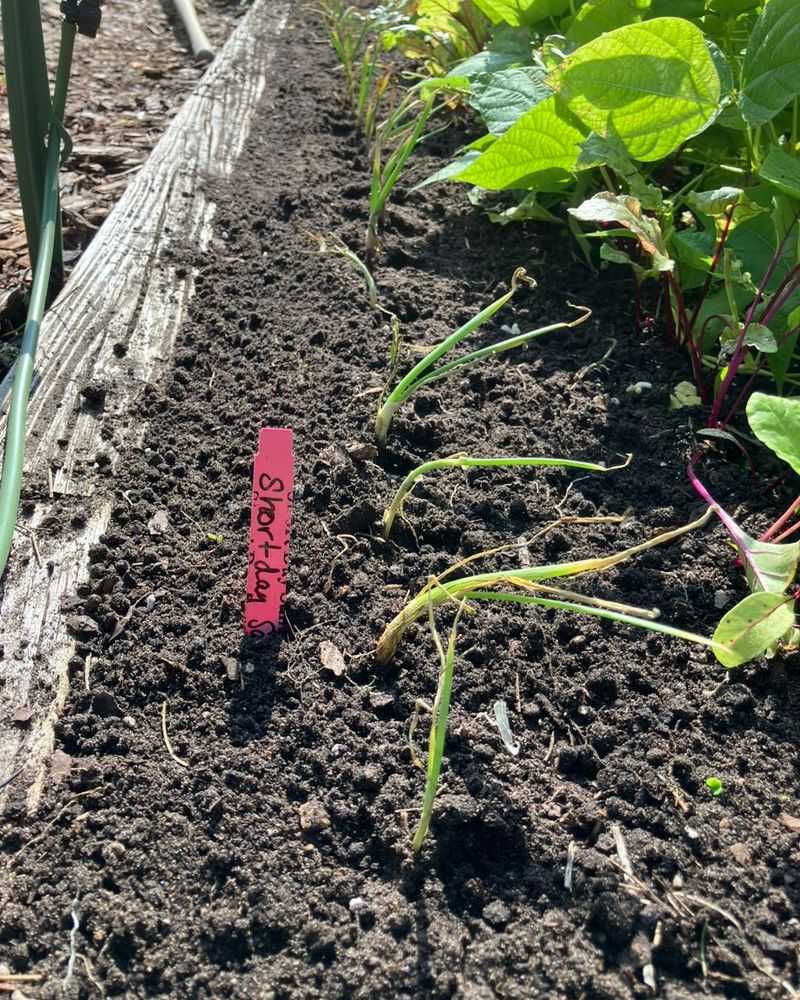
Onions decide when to form bulbs based on day length, and varieties differ in how many hours of daylight they need. Illinois Extension notes that varieties suited to southern areas differ from those for northern ones.
A leafy plant tells you little until you know which type you have.
For fall planting in Florida, UF/IFAS recommends short-day onions. Texas A&M also lists short-day varieties suited to Texas, and its lists separate onions by day-length class.
Not every onion will make a good bulb in every Southern location. A variety bred for long summer days may stay leafy or bulb poorly in a Gulf Coast winter.
If you are unsure what you planted, your county extension office can help match varieties to your area.
Use local planting dates, not a universal fall calendar
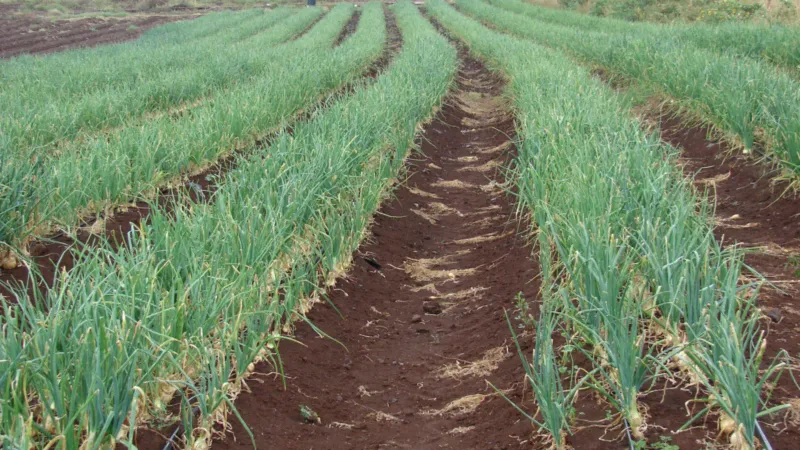
Planting dates change with where you live and how you start your onions. UF/IFAS gives a Florida window of September through December.
Its regional table narrows that to mid-September through mid-November for North Florida and October for Central and South Florida, as shown in Florida Fresh.
Texas advice looks a little different. Texas A&M recommends October through December for seeding onions for bulbs.
That guidance is about seed, so it should not be assumed to apply automatically to sets or transplants.
Treat these as regional examples, not one schedule for the whole South. Check dates for your own county and your planting method before you decide your timing was off.
Give bulb onions suitable conditions and time
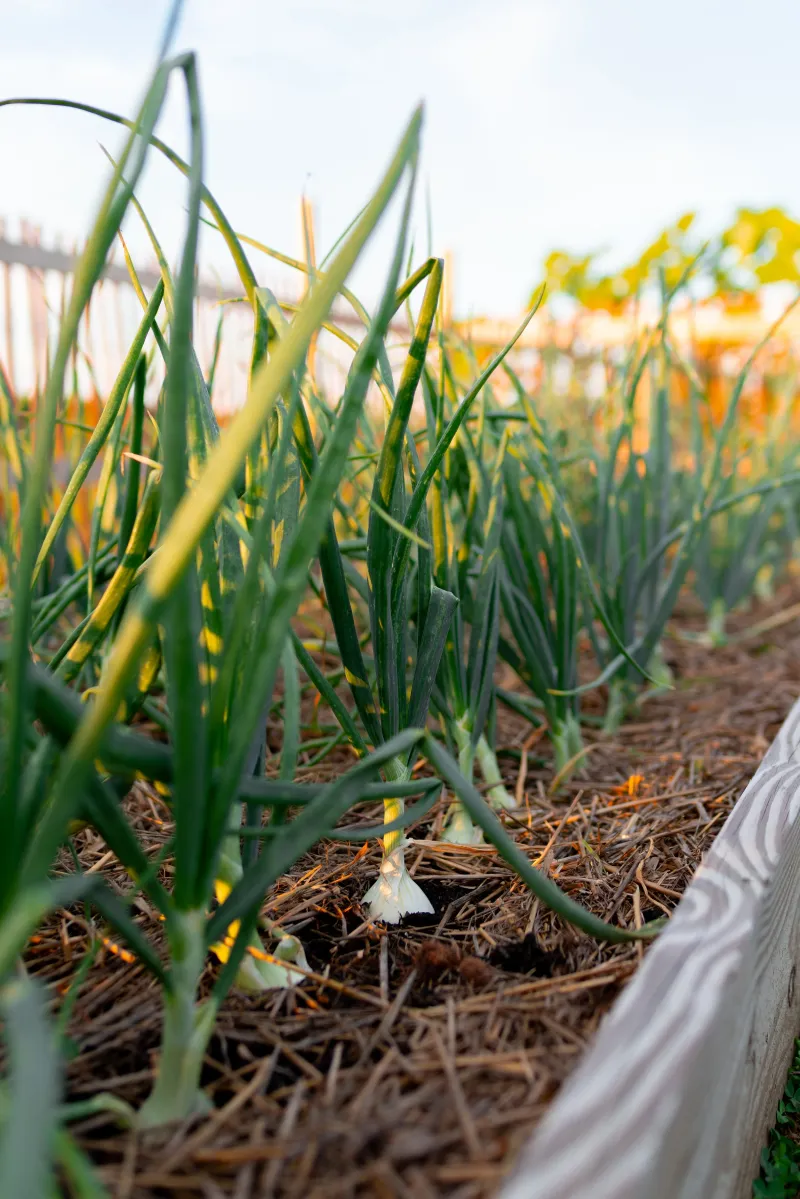
Texas A&M’s basics for bulb onions are simple: full sun, well-drained soil, proper spacing, deep watering, and control of competing weeds. Onions have shallow roots, so crowding and weeds can cut into the water and nutrients they need.
Patience matters too. Onions seeded in October through December, or transplanted in January and February, are expected to reach bulb harvest around May through July, according to the Texas A&M guide.
Green leaves in fall are just the first stage of that long season.
The publication lists fertilizer amounts, but those are general guidance, not a rule for every garden. A local soil test is a better starting point for deciding what your bed needs.
Good care gives plants a fair chance, though no single change can promise a bigger bulb.
Inspect damaged leaves before treating the plant
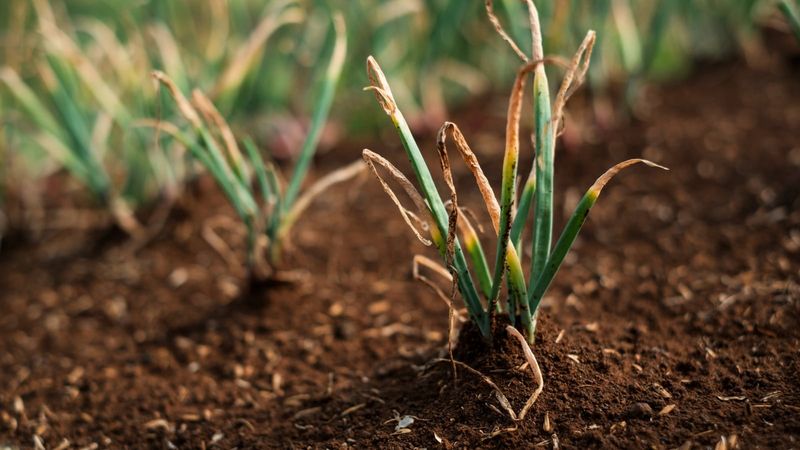
Healthy green growth is one thing, and damaged leaves are another. Look closely at your plants before reaching for a spray.
Texas A&M notes that onion thrips can hide between the center leaves, and that brown tips or spots can have disease causes.
Because many problems look alike, one cause cannot be assumed from a general description. Note what you see, where it starts, and how fast it spreads.
The University of Minnesota onion diagnostic tool can help you compare symptoms, and your local extension office can confirm what you find.
A pesticide or fungicide is not a blanket fix for every leaf problem, and it may not help if the cause is something else. If treatment is warranted after diagnosis, follow the product label exactly.
Judge your onions by their purpose, variety, location, and actual symptoms, and green tops in fall will usually just be the start of a long season.