
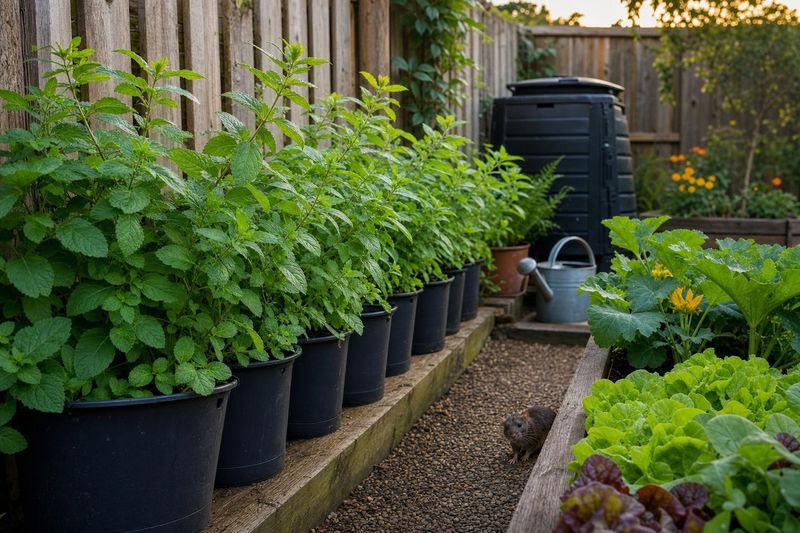
You may have seen a claim that one plant, tucked around your foundation, can keep rats out of your house. Mint, often peppermint, is the plant most likely behind that idea.
It smells great and grows easily in Texas yards, so the claim is easy to believe. Before you plant a border, here is what is known, what is not, and what actually protects your home.
Mint is the likely plant, but it is not a proven rat barrier
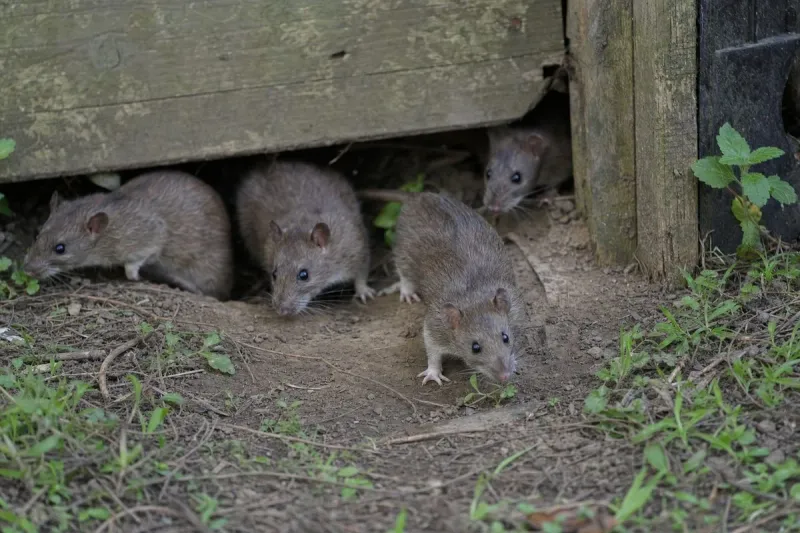
Mint, and peppermint in particular, is most likely the plant behind the rat-repelling claim. The story is simple: rats supposedly dislike the strong scent, so a mint border should keep them outside.
Nobody has shown that this works with living plants around a Texas house.
What exists is a laboratory test. A rat behavior study used concentrated plant extracts, including peppermint oil, and its authors said more research was needed to learn about real-world effects.
That is a long way from a row of mint at the base of your wall.
Scent products in general do not have a strong record either. UC IPM notes that odor repellents have not been found to solve rat problems for more than a short time.
So this article skips the scent border and focuses on steps with real backing: inspecting your home, sealing gaps, and removing what draws rodents in. Mint still has a place in the garden, just not as a guard.
Peppermint-oil research does not test a garden planting
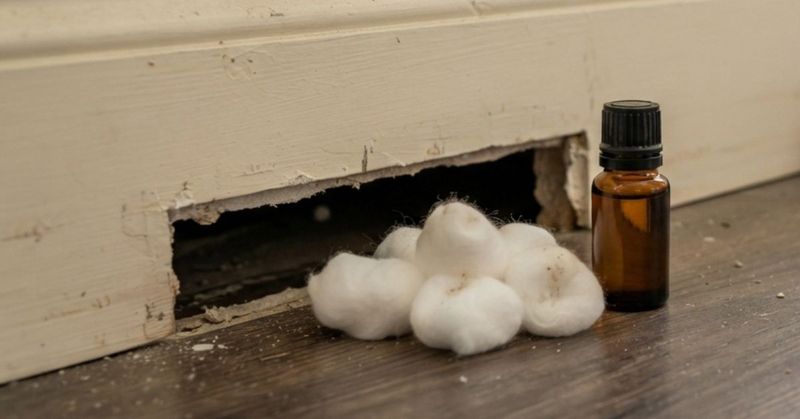
The study behind many repellent claims put rats in a circular open-field test, an arena used to watch how animals move and behave. Researchers exposed them to several concentrated plant extracts, peppermint oil among them, and saw changes in behavior.
You can read the details in the published rat study.
Notice what was not tested. There were no foundation plantings, no real houses, and no counts of how many rats got inside.
The authors themselves said more research was needed to understand practical effects in real environments.
A concentrated oil is also very different from a living mint plant. Oil packs a strong, steady dose of scent into a small space.
A plant outdoors gives off far less, and wind, rain, and Texas heat change it constantly.
A rat acting differently in a test arena does not tell you that a mint bed changes where rats go around your home. Even in the best case, scent seems to work briefly.
UC IPM says odor repellents may cause only short-lived aversion and have not solved rat problems beyond a short time. A rat that smells mint but finds food and shelter nearby has little reason to leave.
Fall is a useful time to inspect, not assume an invasion
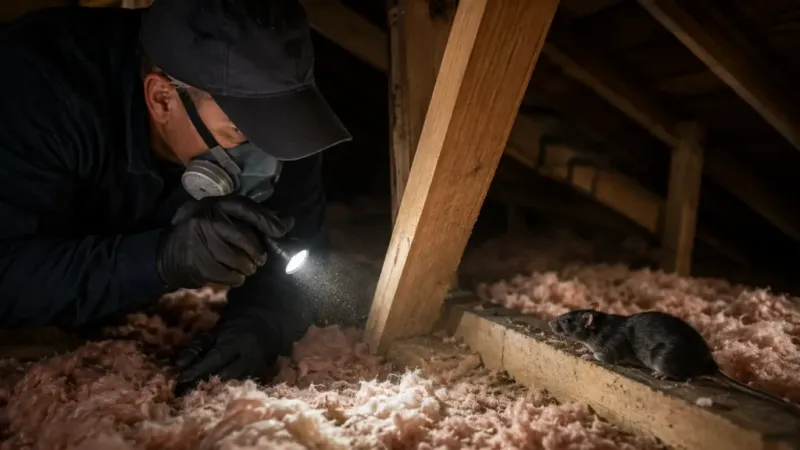
Autumn is a sensible moment for a walk around the house, and the reason is narrow. Texas A&M AgriLife reports that Norway rats produce the most young in spring and fall.
More young rats can mean more pressure on nearby homes and yards.
That is a reason to stay alert, not a prediction. Nothing here shows that rats flood into Central Texas houses the moment nights turn cool, so there is no need to panic.
Think of a fall check as routine upkeep, like cleaning gutters. Pick a dry weekend, bring a flashlight, and look for the clues that rodents leave behind: droppings, gnaw marks, greasy rub marks along walls, shredded nesting material, or burrow holes beside slabs and fences.
If you find nothing, you have still learned where your weak spots are. If you do find signs, you can act before the problem grows, and that beats counting on a plant to do the work.
Rats can use routes above and below the foundation
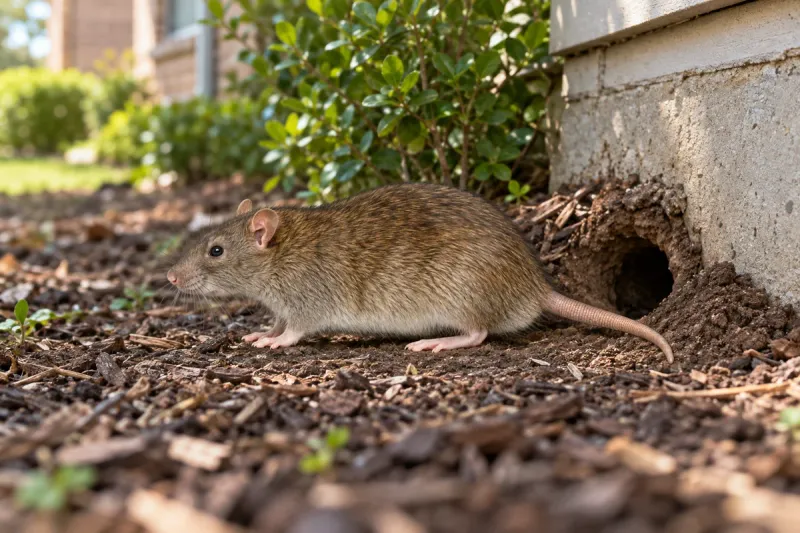
Not every rat arrives the same way. Texas A&M says Norway rats commonly burrow under foundations, while roof rats more often nest in walls and attics.
Both can live near Texas homes, so a plan that covers only the ground level can miss the roofline completely.
That is why a planting along the foundation, even a good one, would leave gaps. Rats that travel along utility lines, tree limbs, or fences may never touch the ground beside your wall.
Walk the whole house and check each of these spots:
Foundation gaps and cracks, especially where soil meets concrete. Places where pipes, cables, and AC lines pass through walls.
Door bottoms and garage door seals. Attic, gable, and foundation vents.
Eaves, soffits, and roof edges. Crawl-space openings and access panels.
Not every home will have trouble in every spot, and a single rat may use only one route. The goal is simply to find which openings your house has so you can close them.
Seal openings and remove resources that attract rodents
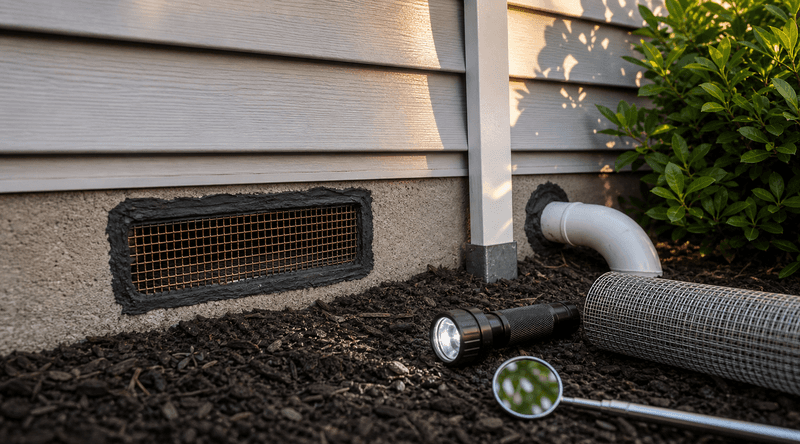
Sealing is the step that actually keeps rodents out. CDC guidance on sealing up points to rodent-resistant materials such as metal mesh, hardware cloth, and sheet metal.
Soft fillers like foam or plastic alone are easy for rodents to chew through.
On size, keep two things separate. The CDC’s pencil-width, quarter-inch rule is aimed at mice.
For rats, Texas A&M’s general rodent guidance recommends covering openings with rat-resistant materials, including 1/4-inch hardware cloth, as laid out in its rat and mouse publication.
Start with the gaps you found on your walk-around. Cover vents with mesh, fit sweeps on doors, and wrap metal around pipe and cable openings.
Then take away the reasons to visit. Texas A&M also recommends reducing food, water, and shelter.
Use these steps:
Keep garbage in lidded cans. Store pet food and birdseed in sealed metal or hard plastic bins.
Pick up fallen fruit and nuts. Fix dripping hoses and outdoor faucets.
Clear stacked boards, piles of debris, and cluttered corners of the garage or shed.
Rat numbers can shift from year to year, and a Texas A&M AgriLife expert has noted that an uptick is possible. A tidy yard with sealed walls gives rats little to work with, whatever the numbers do.
Grow mint for the garden, and keep it contained
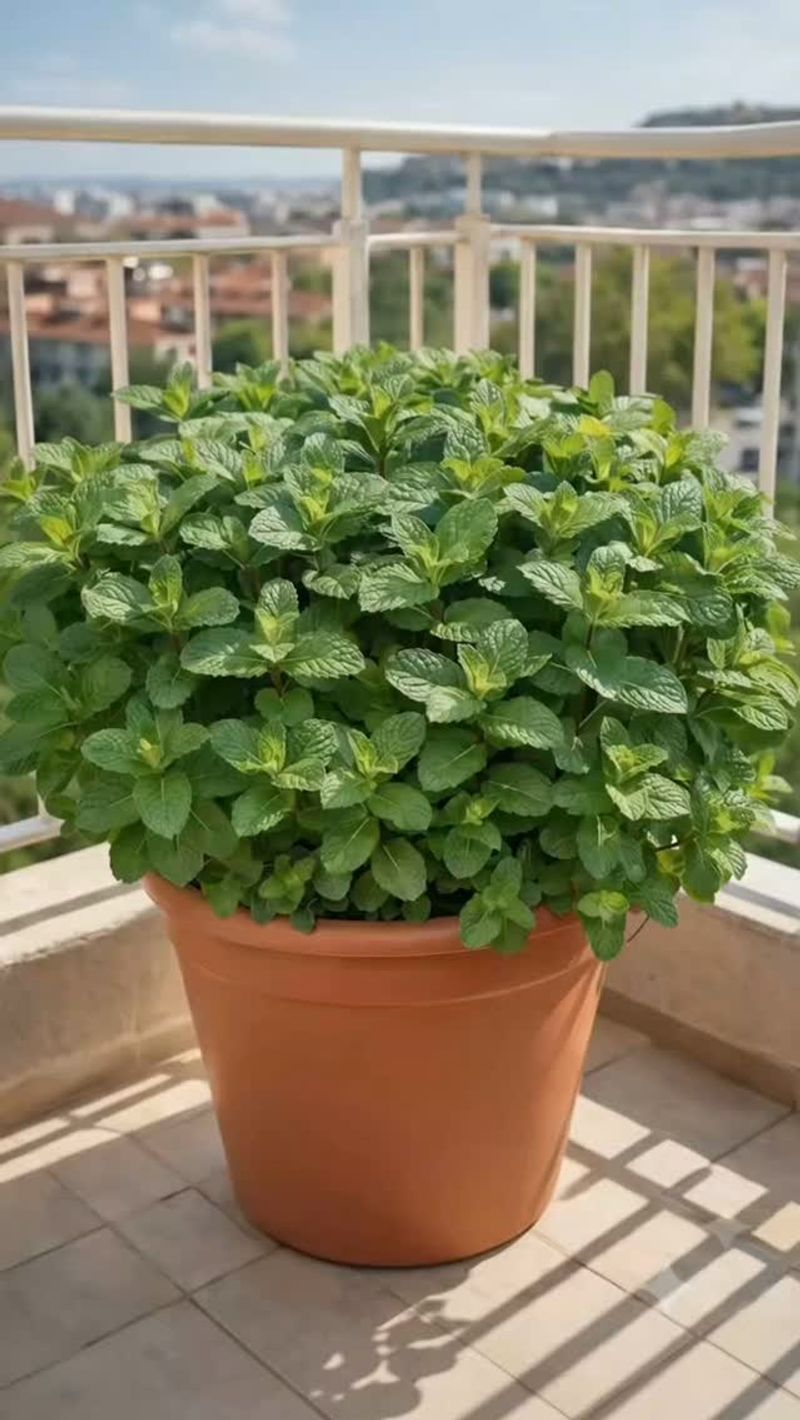
Mint earns its spot for good reasons: fresh tea, mojitos, fragrant leaves, and flowers that bees visit. Grow it for those pleasures and enjoy it without expecting it to guard the house.
Just give it limits. Utah State University Extension explains that mint spreads quickly, can crowd out other garden plants, and is hard to get rid of once it settles in.
A big pot is the easiest fix. Choose a container with drainage holes, set it on a patio or on pavers, and check that roots are not creeping out of the bottom into the soil.
In Texas heat, pots dry fast, so water often and give mint some afternoon shade.
If you prefer the ground, confine it with a bed edged by a deep barrier or place it in a raised planter by itself. Planted loosely along a foundation, mint can turn into a thick mat that holds moisture and cover close to the house, which is the opposite of a clean, open perimeter.
Clean rodent evidence safely
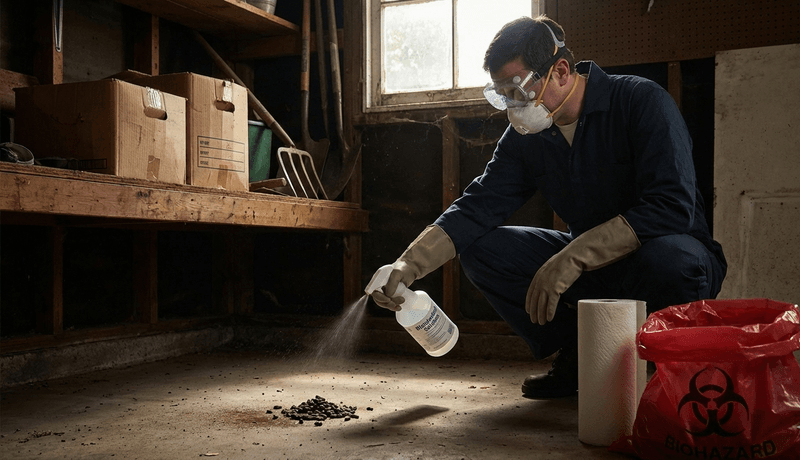
If you spot droppings or old nesting material, put gloves on first. CDC cleanup guidance says to wet the material with disinfectant and wipe it up with paper towels, then dispose of it in a sealed bag.
Never sweep or vacuum it dry. Dry cleaning can kick dust into the air, and that dust is what you do not want to breathe.
Wash your hands well when you finish, and clean the surface again. Then go back to sealing the gaps that let rodents in.
A mint border is a pleasant garden feature. Sealed walls and a clean, tidy yard are what do the real work.