
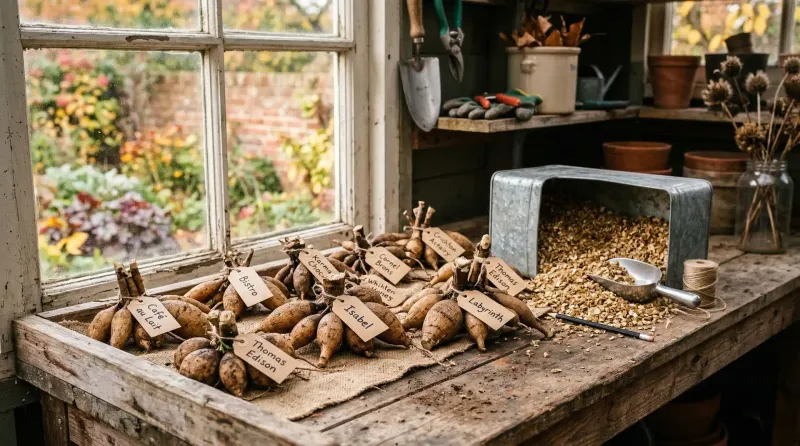
Those bold dahlia blooms start underground, in fat tubers that hold next summer’s flowers. When winter turns freezing or soggy, some of those tubers can be lost before spring.
A blackened row of leaves is a handy signal, but it does not mean the same thing in every Southern yard. Here is how to read your own conditions and protect the tubers you want to keep.
Does your winter make lifting the safer choice?
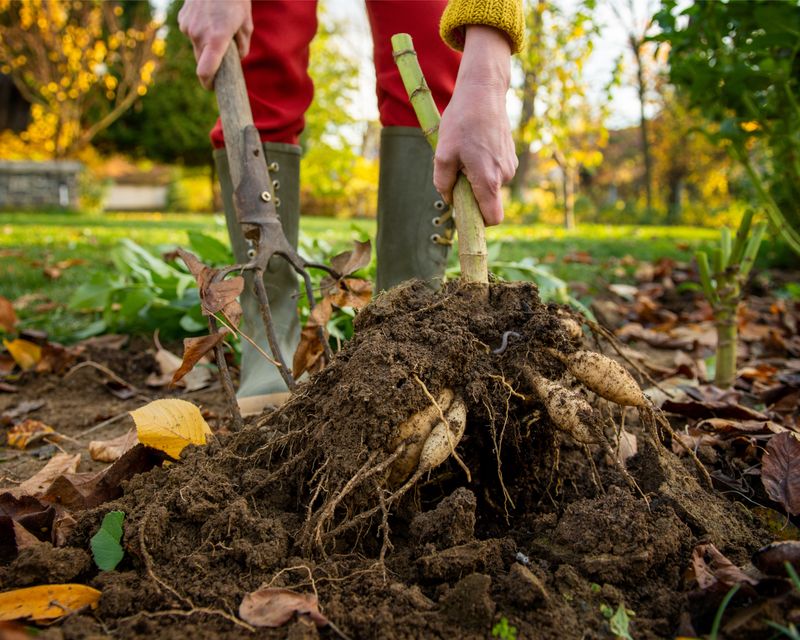
Your own winter matters more than any calendar date. Oregon State Extension says dahlias may overwinter in the ground in Zone 7 and above, but only where the site drains well and the clump is protected with steps like mulch and a cover.
That is a set of local conditions, not a hardiness-zone rule that works everywhere.
Freezing ground and soil that stays soggy all winter raise the odds of losing tubers. The Royal Horticultural Society also warns that leaving them in is a gamble, especially in a very wet or harsh winter.
Raised risk is not certain loss, though, and plenty of tubers come through fine.
Florida runs on a different rhythm. UF/IFAS notes that dahlias are challenging there and prefer moist but well-drained soil.
Its plant profile says gardeners in Zones 9b to 11 generally plant in fall for winter and spring color, so wait-for-frost advice may not fit.
Texas is too varied for one answer. Check how cold your ground gets, how fast water drains after a heavy rain, and how wet your winters run.
What does frost-blackened foliage tell you?
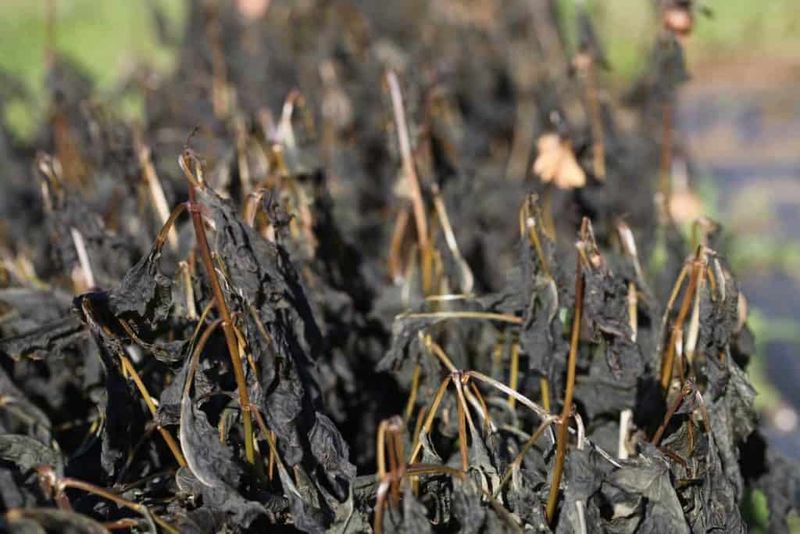
Blackened leaves are a useful cue, but they are not a starting gun. A light frost can nip blooms or a few leaves without killing the whole plant.
Most extension guidance ties digging to a hard frost or to tops that have died back, as UNH Extension explains.
Waiting a little can help. Tubers may keep developing after the foliage dies, and UConn Extension says gardeners can wait about a week after blackening when conditions allow.
Think of that as an option, not a fixed countdown.
Some situations call for moving sooner. If a damaging hard freeze is in the forecast, or a long wet spell is settling in, sitting tight may put the tubers at greater risk.
In those cases, digging on the early side can be the safer call.
Guidance does differ from source to source on hard frost versus full dieback, as you can see in Washington State’s overwintering guide. Match the cue to your weather.
Protect the crown and tuber necks as you dig
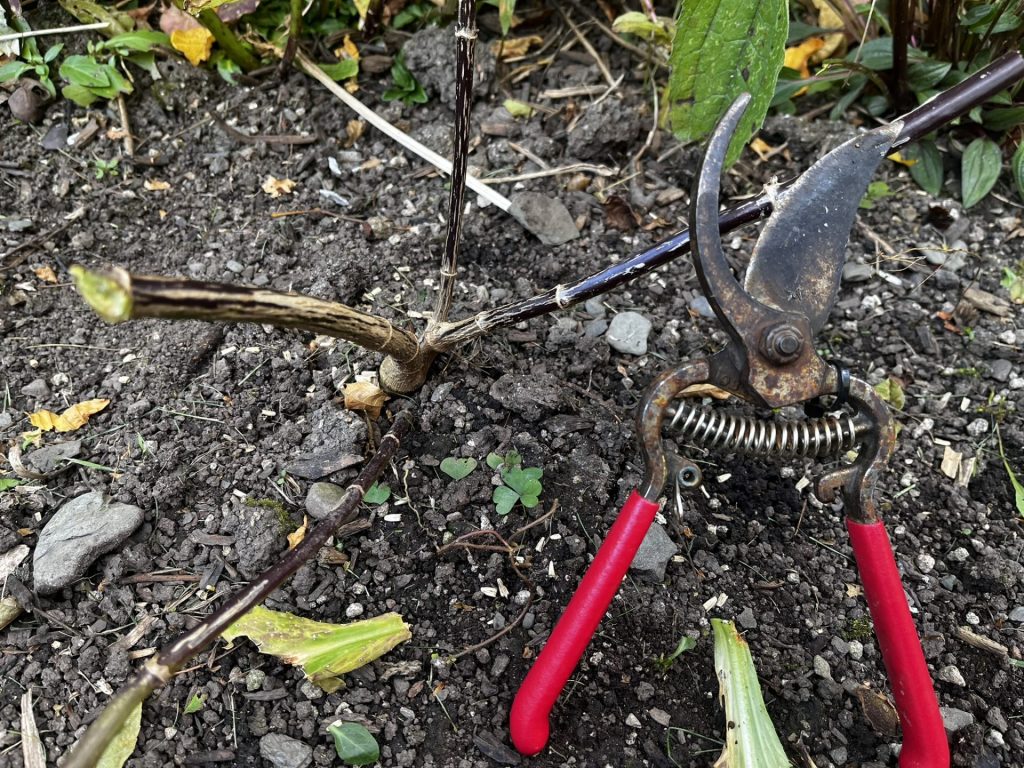
Digging is where many tubers get hurt. Tuber necks and crowns can snap, and the growth eyes sit where the crown meets the stem.
UGA Extension notes that losing the eyes can leave a tuber unusable.
Cut the tops back close to digging time, not weeks earlier. Hollow stems can collect rain, and UNH Extension warns that this water can promote crown rot and tuber decay.
If you must cut early, follow a local extension method for protecting the open stems.
Start with a spade or fork set several inches out from the stalk, so you do not slice into the clump. Loosen the soil all the way around, then ease the clump up from underneath.
Skip the temptation to yank it out by the stem. UConn Extension also advises careful handling, since a broken neck can mean a tuber that will not grow.
Dry the clumps before they go into storage
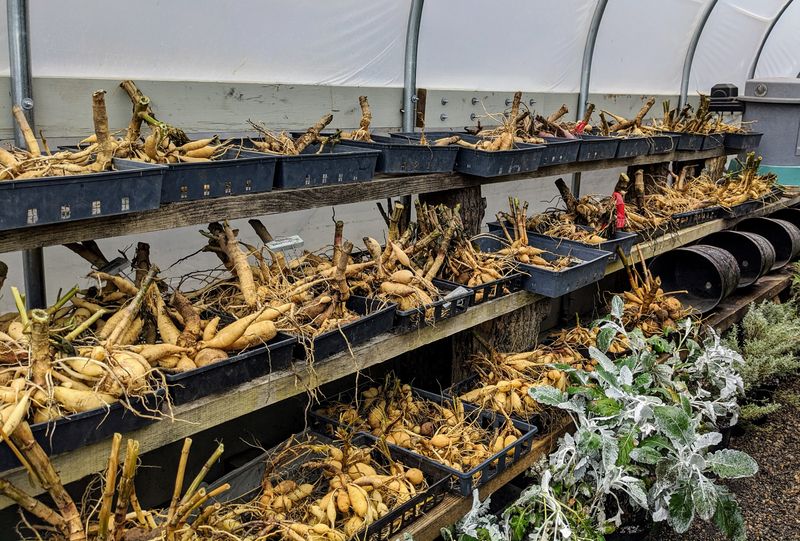
A few days of drying gives the surface moisture time to leave before tubers are tucked away. UNH Extension suggests curing in a ventilated spot, then storing below 50°F but above freezing, in a medium that holds a little moisture while still letting air move.
Cleaning advice is not uniform. Oregon State suggests not washing clumps you plan to store intact, while UNH and Iowa State list washing as an option before drying.
UConn offers its own approach too.
So choose a method and focus on the shared goals. Handle tubers gently, never store them soaking wet, avoid sealing them in a container that traps moisture, and keep them away from freezing temperatures.
A cool basement corner, unheated closet, or insulated garage can work, as long as it stays above freezing. Label each clump so you remember the variety.
Check stored tubers through the winter
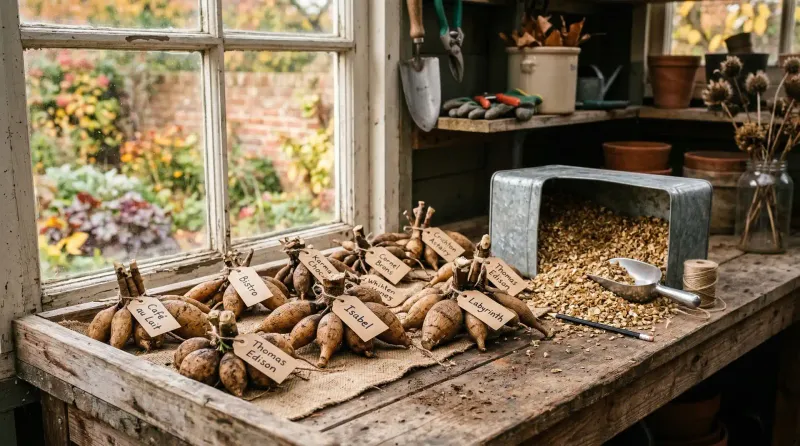
Storage is not set-and-forget. Pull the box out every few weeks and look over each clump.
UNH Extension recommends checking periodically and removing any tubers that are rotting.
Look for soft, slimy, or moldy spots, and take those out so they do not spread trouble to their neighbors. If the packing material feels damp or smells musty, let things dry and add airflow.
If tubers look shriveled, a very light mist or slightly moister packing may help.
Aim for a balance of cool air, airflow, and a touch of moisture. No single storage medium is the one right answer, so use what you have chosen and adjust as you see how the tubers respond.
Lifting removes some outdoor risks, such as freezing and soggy soil, but it cannot promise healthy tubers or summer blooms. Damage to the crown or growth eyes, noted by UGA Extension, can leave a tuber unusable, and tubers can rot in storage too.
Make the decision from your site conditions
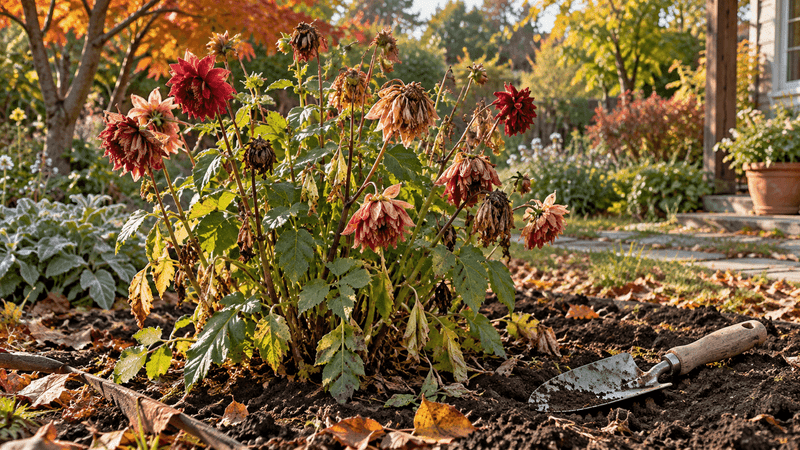
Start with freeze exposure and drainage. If winters bring hard freezes or the bed stays soggy, lifting is the safer choice, and blackened or hard-frosted tops are your timing cue rather than a deadline.
A mild, well-drained site may carry tubers through with protection, as Oregon State describes, though the RHS reminds us it carries risk. Neither path guarantees survival or blooms.
Your soil and your forecast are the best advisers a dahlia has.