
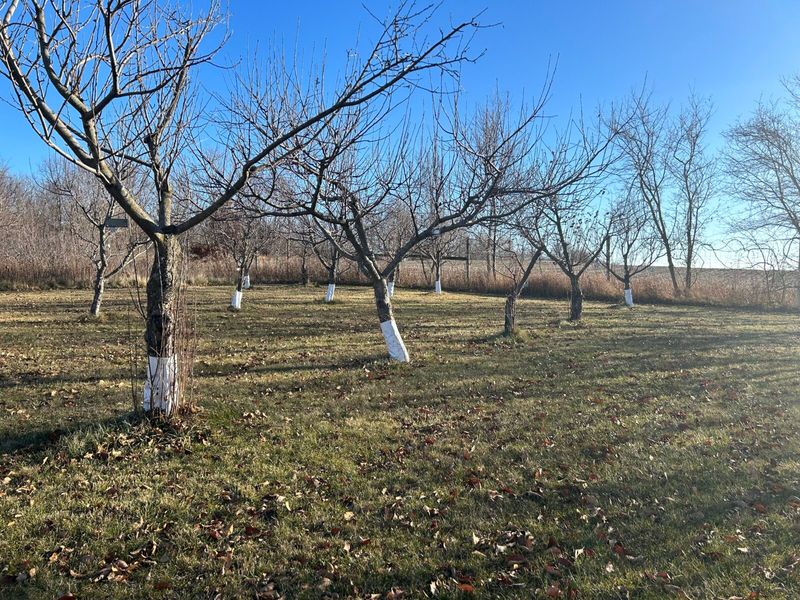
A young apple or pear tree can look perfectly fine in November and have a ring of missing bark by January. Rabbits are quiet, quick, and happy to nibble thin bark when other food runs short.
Bark loss all the way around a trunk can seriously threaten a tree, but a simple, roomy guard can stop the problem before it starts. Here is how to spot trouble, time your protection, and set up a guard that keeps the tree safe as it grows.
Young trees are especially vulnerable to bark damage
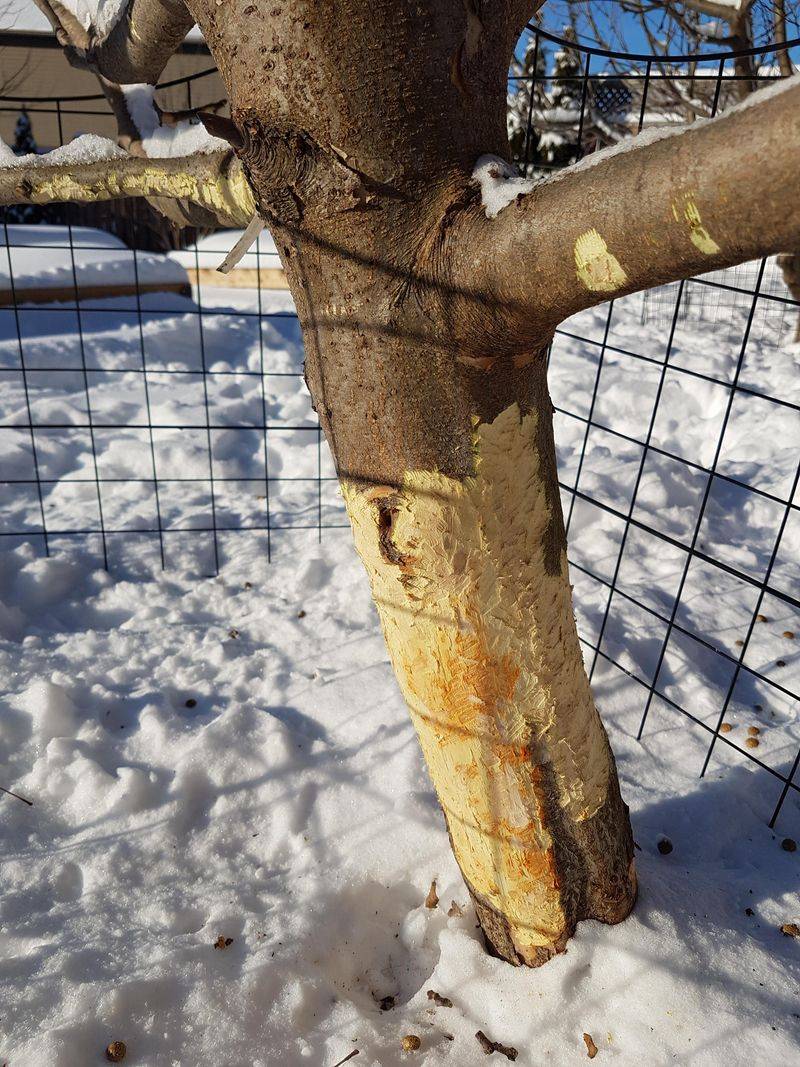
Young fruit trees wear thin, smooth bark that is easy to scrape off with a few bites. Older trees grow thicker, rougher bark that rabbits find harder to chew and that tolerates some damage better.
That is why a newly planted sapling can be hurt badly by feeding that an established tree would shrug off.
Apple and pear are named among the trees rabbits commonly damage in Iowa State Extension guidance. Figs are a plausible example of a young woody tree that could be nibbled, but they are not a specifically documented rabbit target, so treat them as worth watching rather than a known victim.
Feeding can pick up in winter when preferred plants are scarce, yet rabbits stay active all year, according to Penn State Extension. Southern gardeners have also reported rabbits working on backyard plants in every season, as noted in a University of Georgia Extension newsletter.
Before you act, though, it helps to confirm which animal is actually responsible.
Check the damage before blaming rabbits
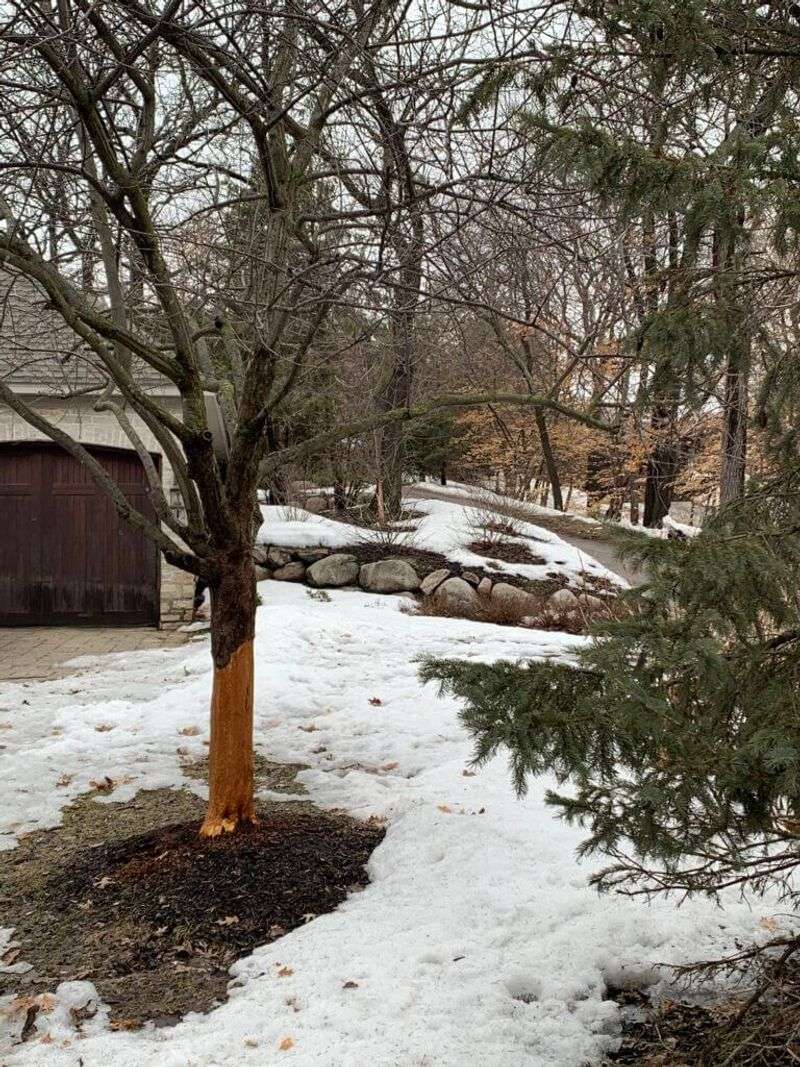
Bark loss alone does not name the culprit, so a quick inspection pays off. Look at where the damage sits and how the edges look.
Rabbit feeding often shows up higher on the trunk, with clean, angled gnaw marks left by their front teeth.
Mice and voles tend to feed close to the soil line, sometimes under grass or mulch where they stay hidden. Deer, on the other hand, usually leave torn, ragged strips because they lack upper front teeth.
The University of Minnesota’s trunk-chewing diagnostic page and a University of Florida IFAS guide to identifying wildlife damage describe these differences.
Treat these patterns as clues, not proof. Snap a few photos, measure how high the marks sit, and check for tracks or droppings nearby.
A guard sized for rabbits will not help much if voles are working at the base, so your findings shape what you do next.
Complete girdling poses the greatest threat
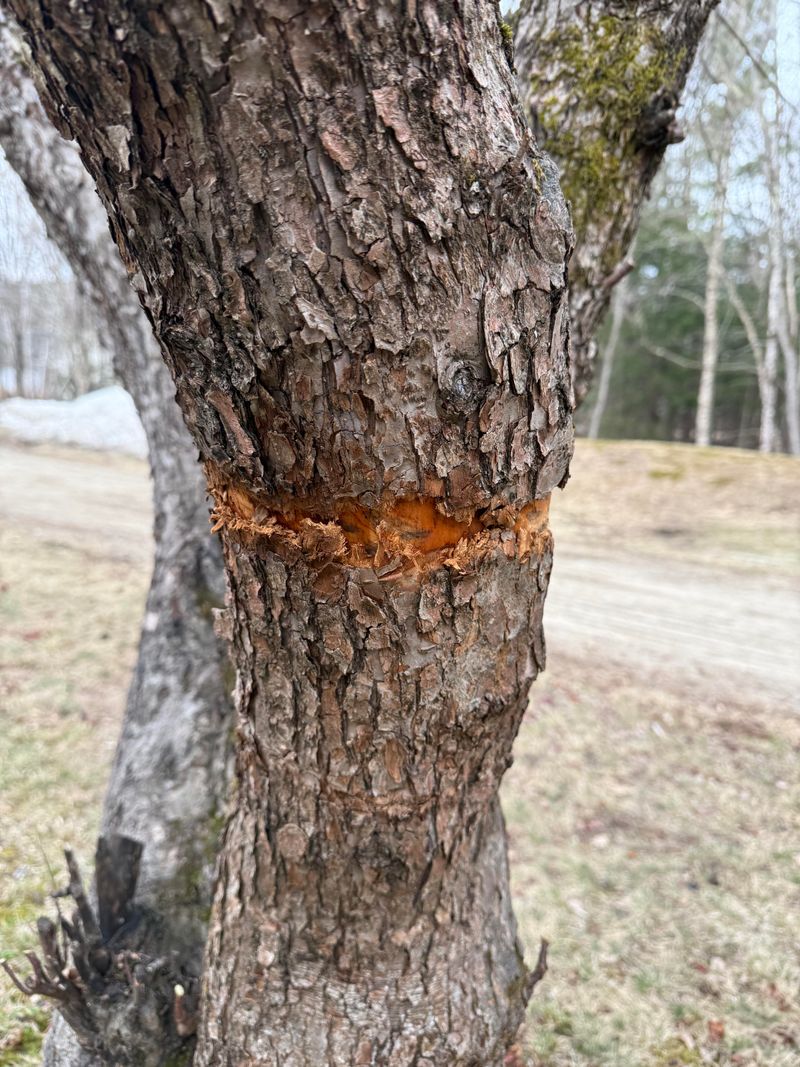
Right under the bark sits a thin layer of living tissue that carries sugars made in the leaves down to the roots. When bark is removed all the way around the trunk, that pathway is cut.
This is called girdling, and as University of Illinois Extension explains, a fully girdled tree can decline over time as its roots lose their sugar supply.
Isolated patches are a different story. A few gnawed spots that leave a continuous strip of healthy bark around the trunk do not carry the same threat, and many trees can recover from limited damage.
Decline from full girdling is also not instant, so a tree may leaf out for a while before problems show.
Young, small trees are the most at risk because a few nights of feeding can reach all the way around a slim trunk. Penn State Extension lists exclusion among the most effective protections, which is why prevention beats repair.
If you find a ring of missing bark, contact your local extension office for advice on your tree.
Install protection before local feeding or damage begins
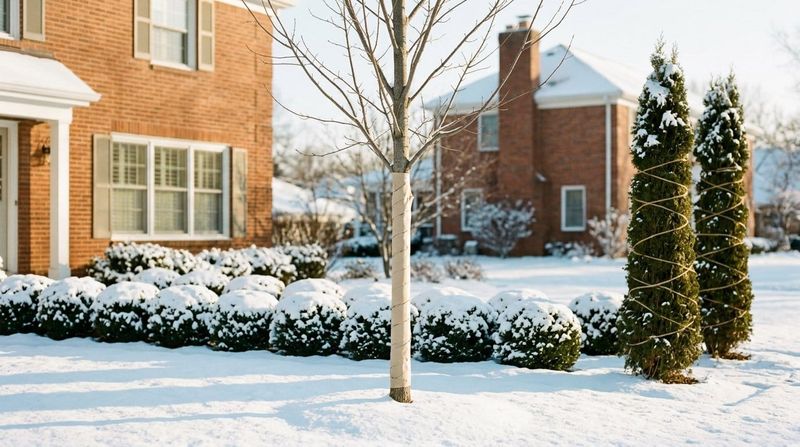
Snow is a poor alarm bell. The better rule is to have a guard in place before rabbits start feeding on your trees or other plants nearby.
Because that moment differs from one yard and region to the next, there is no single calendar date that fits everyone.
Snow does matter in one way: deep drifts can lift a rabbit higher up the trunk. But damage does not wait for it.
Southern guidance, including a Georgia Extension newsletter, describes rabbits feeding on backyard plants year-round and gnawing young trees in winter.
A University of Florida IFAS publication on wildlife damage points the same direction. If you see rabbits, droppings, or nibbled shrubs in your yard, guard new trees right away.
When in doubt, protect them at planting.
Use a roomy, secured trunk guard
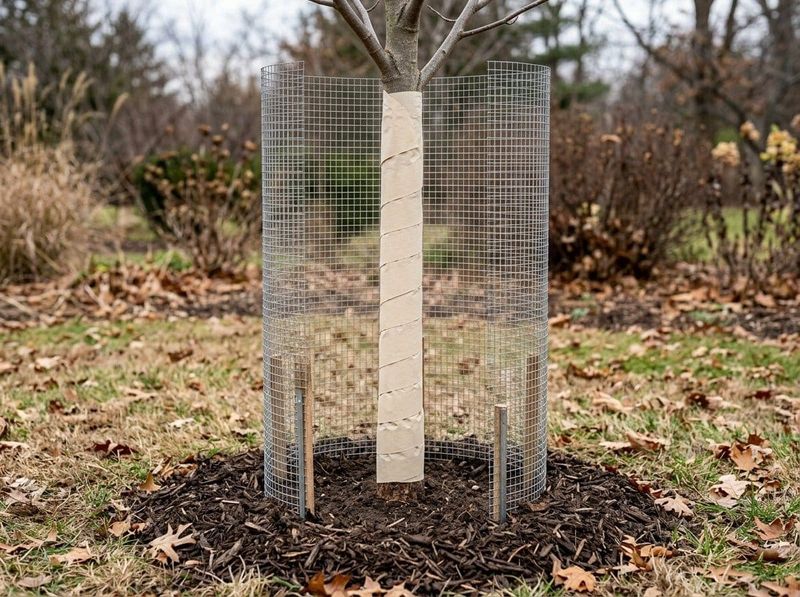
Think of the guard as a cage, not a bandage. An open cylinder of hardware cloth or a suitable commercial guard stands off the trunk instead of hugging it.
The University of Minnesota recommends quarter-inch-mesh hardware cloth about six inches from the trunk.
Roomy matters because trunks thicken each year. Illinois Extension advises making guards larger than the trunk, and Iowa State recommends hardware-cloth cylinders for young fruit trees.
Secure the bottom so rabbits cannot squeeze underneath, for instance by pressing the edge slightly into the soil. Tight or unchecked material can injure a growing trunk, a risk noted in University of Georgia guidance.
Each time you walk past, make sure nothing pinches the bark and the seam is still closed.
Set guard height for local conditions
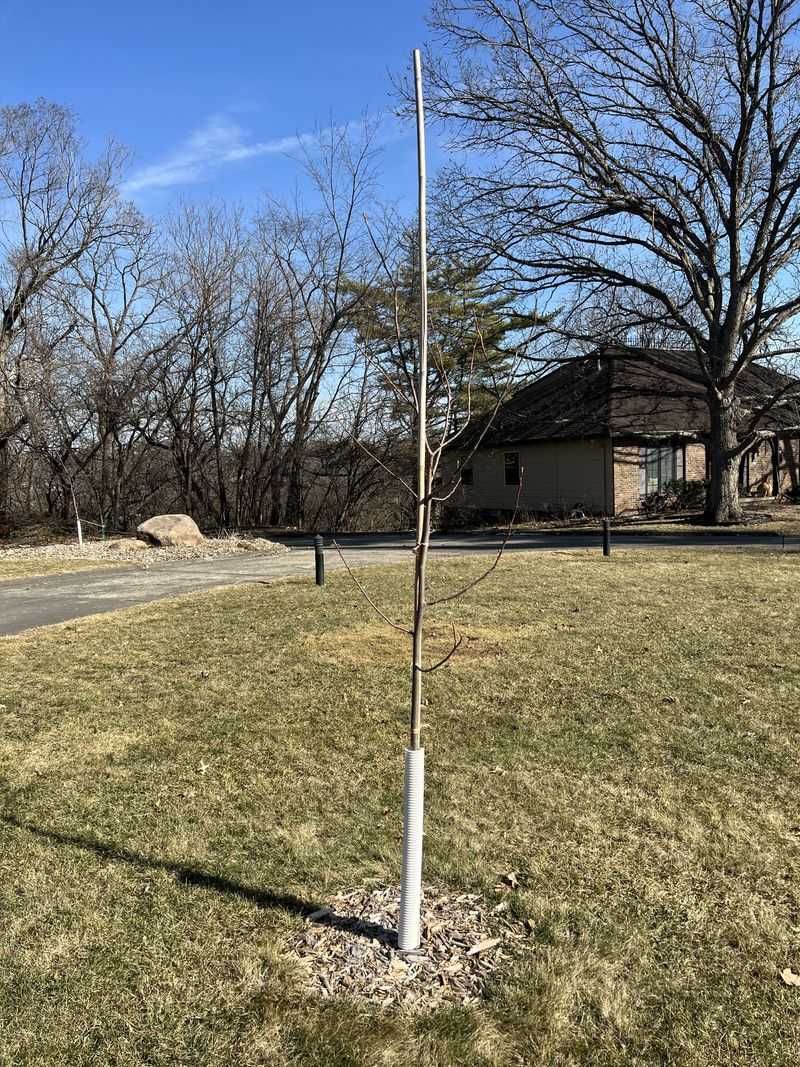
Extension advice on height varies, and that is a useful hint that no single number suits every yard. Illinois gives about 20 inches in one guide and 24 to 36 inches in another.
Where snow falls, Penn State says to extend the cylinder above the rabbit’s reach on top of the expected snow. In snow-free Southern yards, the guard only needs to clear how high a rabbit can stretch, so watch how your local rabbits behave.
Check guards through the season. Trunk tubes or solid wraps that could squeeze a growing trunk should be adjusted or removed, especially during the growing season.
Open-weave fencing spaced away from the trunk is different, and Illinois Extension notes it may stay in place if needed.
Reduce nearby cover, but keep the trunk guard
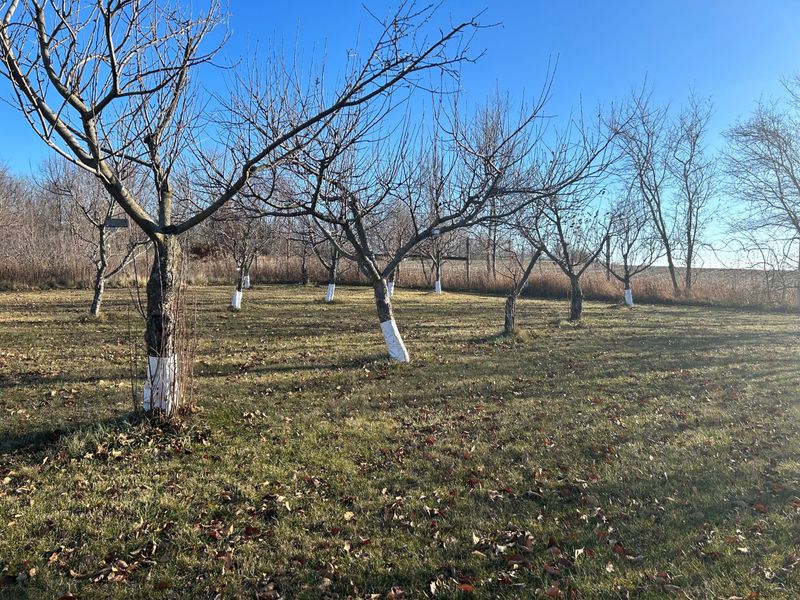
A little housekeeping around young trees makes the area less inviting to small rodents. Clear tall grass and brush from beside the trunk, and keep mulch from touching the bark.
The University of Minnesota and Illinois Extension both point to this as a way to cut down on hiding spots for mice and voles.
These chores can help, but they do not replace a rabbit barrier. A tidy bed will not stop a hungry rabbit from reaching a bare trunk.
Keep the main job simple: install a roomy, secured guard and check it for growth-related squeezing as the tree thickens. A guard you can ignore for a season is one you probably need to look at again.