
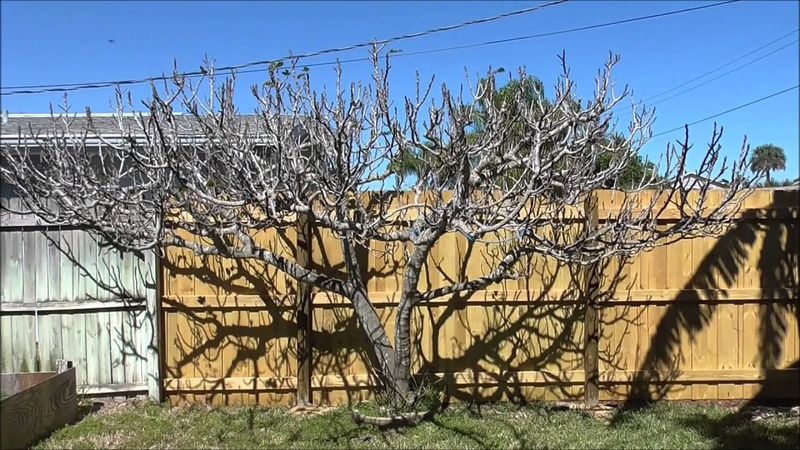
A fig tree can look fine in December and still leave you guessing in April. Cold can hurt buds and stems, and sometimes you cannot tell how much until spring growth starts.
North Carolina gardeners, especially those with young figs, can take a few simple steps before severe cold arrives. Knowing what to do now, and what to wait on later, can save a tree that looks worse than it is.
A first frost is not the same as fig-killing cold
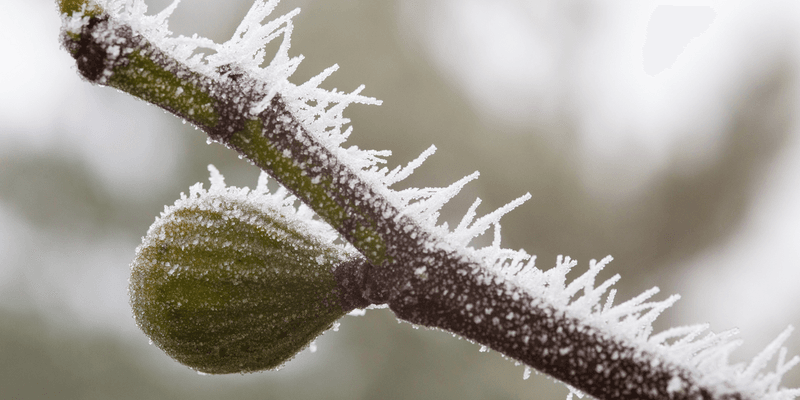
Gardeners often hear “frost” and “freeze” as if they mean the same thing, but they do not. Frost is ice that forms on surfaces, and it can happen even when the air temperature is a little above freezing.
The North Carolina State Climate Office defines a freeze as 32°F or below at standard measurement height, and it notes that ground frost can occur when measured temperatures are slightly higher.
A hard freeze is a step colder, usually described as around 28°F. The National Weather Service treats frost advisories, freeze warnings, and hard freeze warnings as separate alerts, so the wording on your forecast tells you something.
Fig freeze-back is tied to colder numbers still. NC State Extension says figs may freeze back to the ground at 20°F or lower, though plants can recover.
Those four thresholds are not interchangeable. A light frost in October does not prove your fig’s trunk has been hurt, and no single number guarantees safety either.
Cultivar, plant age, and how ready the tree is for winter all play a part.
There is also no single first-frost date for the whole state. Mountain, Piedmont, and coastal plain gardens reach freezing temperatures at different times, and even neighboring towns can differ.
The National Weather Service Raleigh frost and freeze maps and the State Climate Office’s Freeze Explorer give station-specific averages and observed dates. Pick the station nearest your yard and watch your own forecast as fall deepens.
Why winter injury may be hard to assess until spring
Cold can damage buds and the living layer just under the bark, and the outside of a branch may look normal. Texas A&M’s plant disease handbook describes winter damage that may not be noticed until spring or summer.
That is why a fig can seem fine in January and then fail to push buds in April.
This does not mean every fig is secretly hurt. Dropping leaves in fall is a normal response to shorter days and cooler nights as the tree heads into dormancy.
A bare fig in December is usually just a sleeping fig.
Hidden injury is a possibility, not a rule. Some trees come through winters with little trouble, and others lose tips or whole stems after a very cold snap.
The only reliable way to tell is to look at the tissue itself once the weather warms.
University of Maryland Extension suggests checking in spring whether the tissue beneath the bark is green. UF/IFAS also notes that dormant buds may be more susceptible than wood, which helps explain why a stem can look alive yet leaf out slowly.
Patience and a little spring checking will tell you far more than a winter glance.
Young trees and tender late growth need more attention
Age matters. NC State Extension says young fig trees and bushes are especially susceptible to cold.
A fig in its first few winters has thinner wood and a smaller root system, so it has less to fall back on.
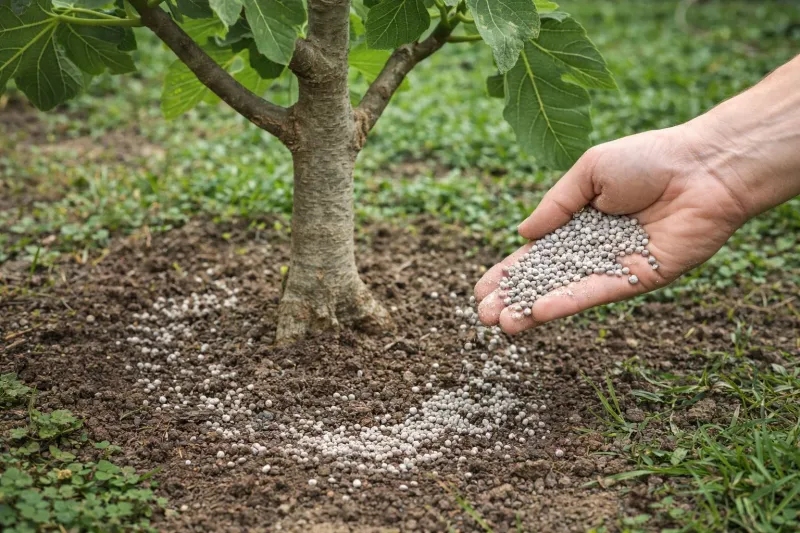
Fertilizer timing is another factor. Heavy nitrogen late in the season can push soft, tender shoots right when the tree should be slowing down.
That fresh growth is more vulnerable to winter injury than wood that has had time to harden.
If you feed your fig, do it earlier in the growing season and keep late-summer and fall doses light or skip them. Letting the tree wind down naturally is part of winter preparation.
Dormancy and cold conditioning also play a role. UF/IFAS explains that how well a fig has adjusted to cooling weather affects how it handles a freeze.
A tree that has gone dormant gradually may handle the same temperature better than one hit by a sudden swing after a warm spell.
For that reason, avoid treating any one temperature or any one cultivar name as a promise. A variety praised as cold tolerant can still lose young wood in the wrong conditions.
Use the age of your tree, its recent growth, and your local forecast together to decide how much attention it needs.
Build temporary protection before severe cold arrives
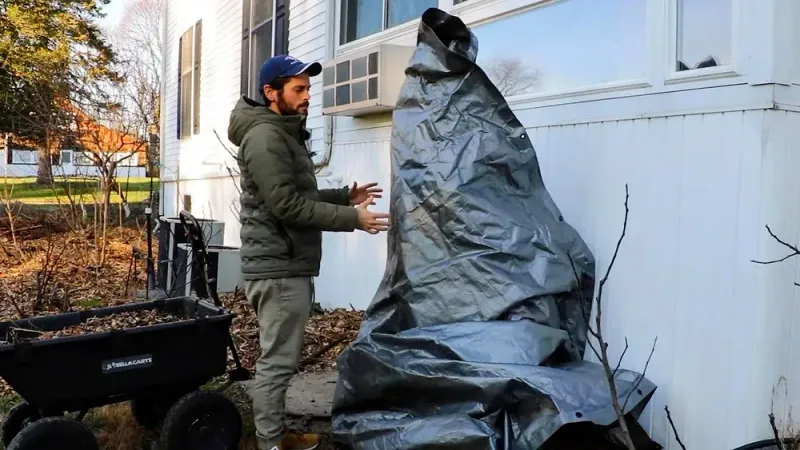
NC State’s fig guidance for late fall is simple. Pile loose soil or mulch 1 to 2 feet high around the trunk of young trees or bushes.
The mound is meant to shield the lower stems and crown, which are the parts that can regrow if the top is lost.
This is a temporary measure. Remove the mound in spring once frost is no longer a hazard, so the trunk is not left buried in damp material.
It is different from routine mulch, and deep mulch stacked against a trunk year-round is not a good habit.
When severe weather is in the forecast, NC State also suggests covering the plant with straw, a tarpaulin, cornstalks, or another suitable material. Watch your local forecast for freeze warnings and put covers on just ahead of the cold instead of leaving them on for the whole winter.
Timing the work is easy to plan. Gather soil or mulch in October or early November, and keep your cover material handy.
Then act when the forecast calls for a hard freeze or colder.
These steps can reduce exposure, but they cannot guarantee survival. A well-protected fig may still lose its top in an unusually harsh winter, and an unprotected one may come through a mild season unharmed.
Not every fig needs the full treatment, and young plants are the ones most worth the effort.
Cover the tree without trapping dampness
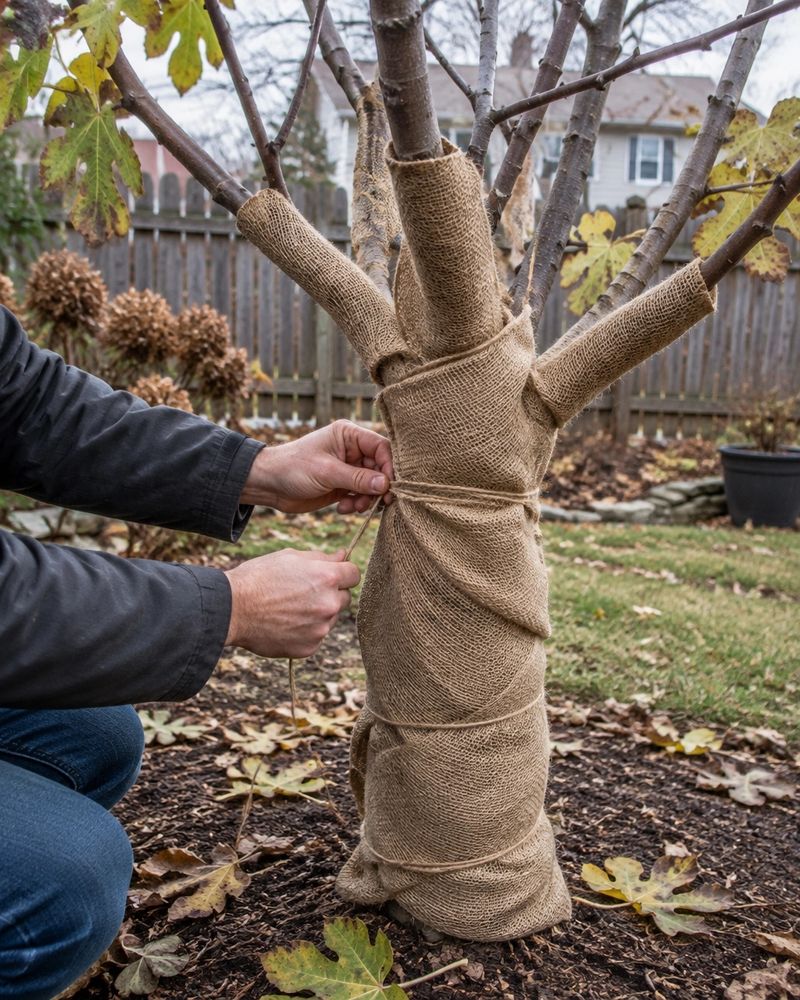
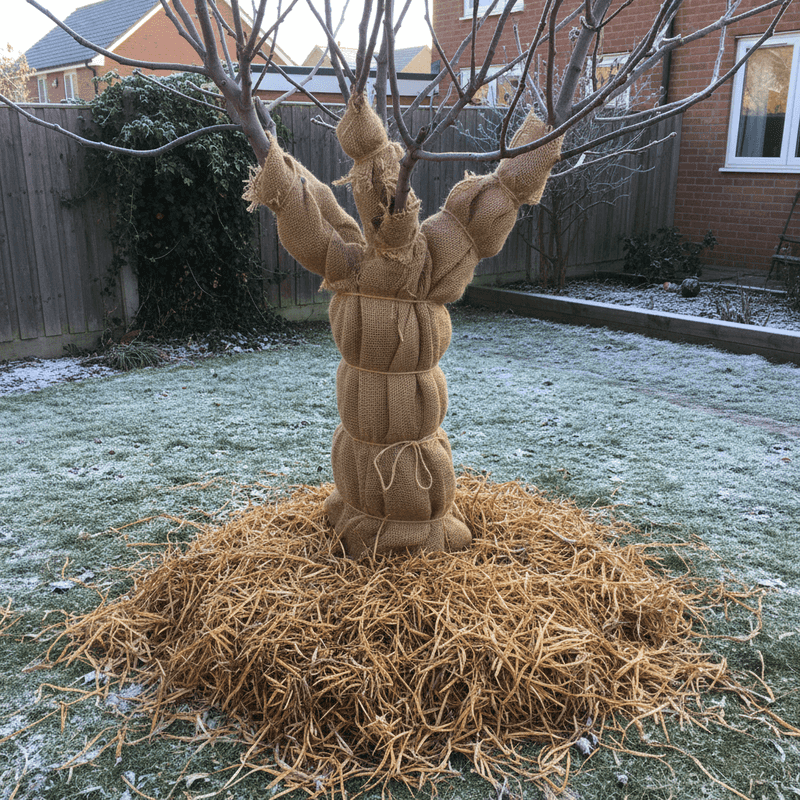
Breathable wrapping is a smart precaution for gardeners who choose to cover a fig. Penn State Extension, writing for a colder region, recommends breathable wrapping rather than plastic directly around the tree. It also cautions that sealed, damp wrapping can encourage disease.
Keep in mind that this is advice from Pennsylvania, not a North Carolina rule. It still makes sense here, because winter in much of our state can be wet as well as cold.
Use burlap or similar fabric against the branches, and skip plastic touching the tree.
If you add an outer tarp, leave an opening near the bottom so air can move through. Penn State advises leaving airflow at the bottom of the tarp.
On a sunny, mild afternoon, loosen or peel back the cover so moisture can escape.
Insulation brings a tradeoff. University of Maryland Extension warns that insulating material around figs can shelter voles that feed on tender bark.
Check around the base now and then, and consider whether your yard has a vole problem before packing the tree in thick material.
The goal is a covering that blunts the worst cold without creating a damp, cozy hiding place. Keep it loose, keep it breathable, and take it off when the danger passes.
Wait for spring signs before pruning
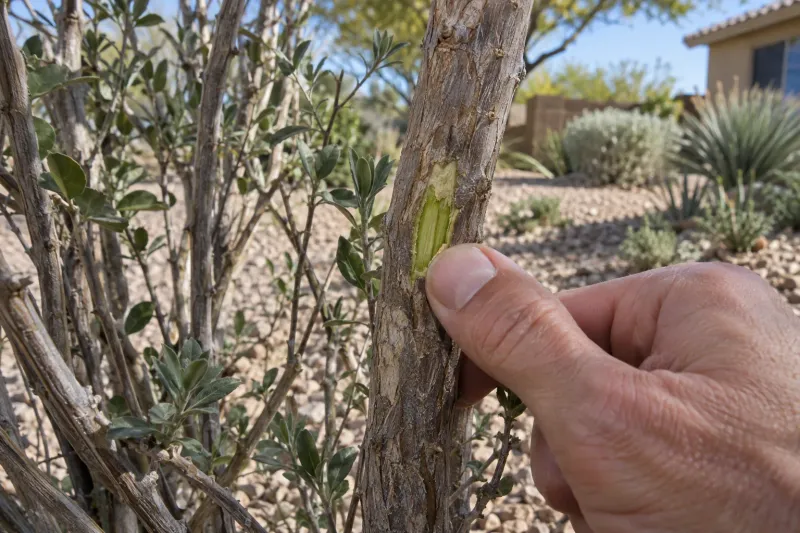
A fig with no leaves in early spring is not necessarily a dead fig. Figs are often slow to wake up, and a late start can fool even experienced gardeners. Leaflessness alone is not a diagnosis.
Instead, check the stems. University of Maryland Extension recommends lightly shaving the bark on several stems and looking for green tissue.
Green means living wood, while branches without green tissue can be pruned.
Use your thumbnail or a sharp knife and scrape only a small patch. Test several branches, and try spots at different heights, since a stem may be alive near the base and dead at the tip.
Brown or dry tissue under the bark in one spot does not condemn the whole plant.
Waiting matters too. Mississippi State Extension’s cold protection guide recommends checking the cambium and holding off on pruning until new growth appears.
As buds swell and leaves emerge, the line between living and dead wood becomes much easier to see.
Hold off on major cuts until then. If you prune too early, you may remove wood that would have recovered.
In North Carolina, that usually means giving the tree into late spring before making big decisions.
A damaged top does not always mean a dead fig
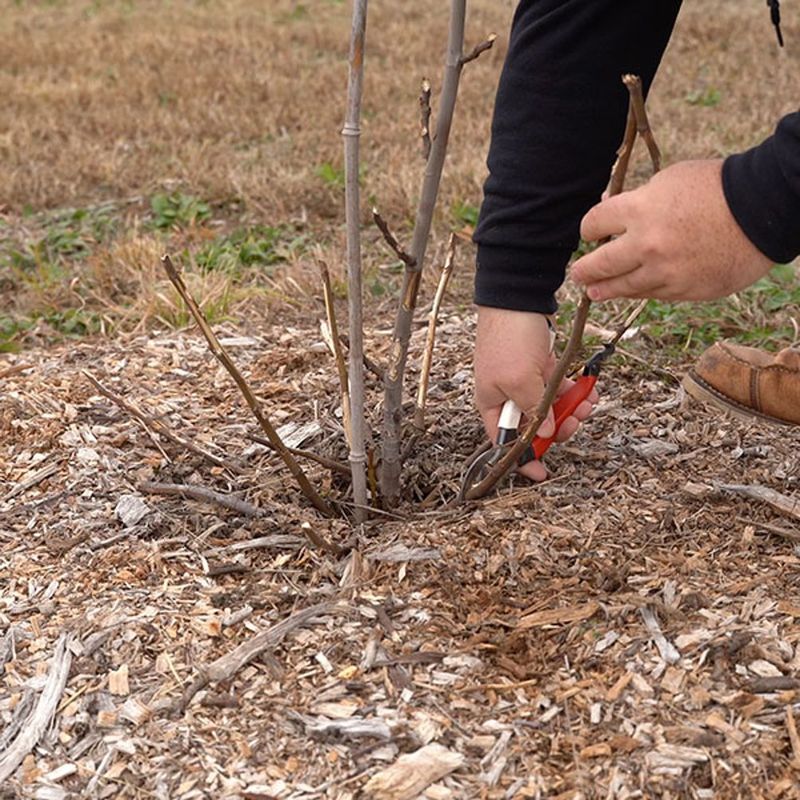
Even a harsh winter may not be the end. NC State Extension says that after a hard freeze, plants can recover from above-ground injury, though fruiting may be delayed until new growth emerges.
A fig cut back to the ground may still send up fresh shoots.
University of Maryland Extension notes that shoots may emerge from the roots after stem injury. Severe damage can delay normal production, so you may wait a season or more for a good crop.
The tree is still worth keeping.
So protect young or vulnerable figs before severe cold, then assess them calmly once spring arrives. Check stems, watch for buds, and let the plant show you what survived.
A fig is slower to give up than it looks, so give it until summer before you decide.