
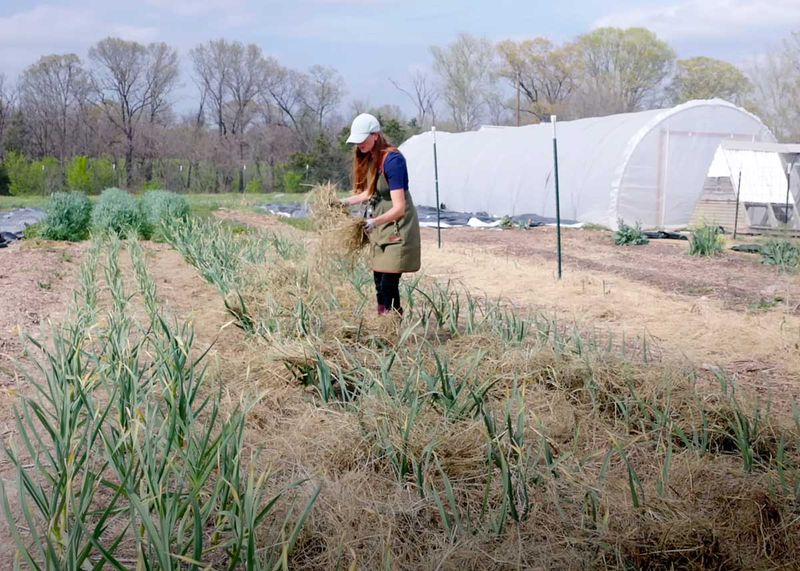
You tucked your garlic cloves into the ground this fall, and now you are wondering if a blanket of straw will help or hurt. Plenty of advice online claims early mulch leads to rot and that one soil temperature tells you when to cover the bed.
The real story is less tidy, and it matters because rot worries are common in humid Southern gardens. Here is what Extension sources from Georgia, Florida, Texas and beyond actually say.
The 50°F reading is for planting, not mulching
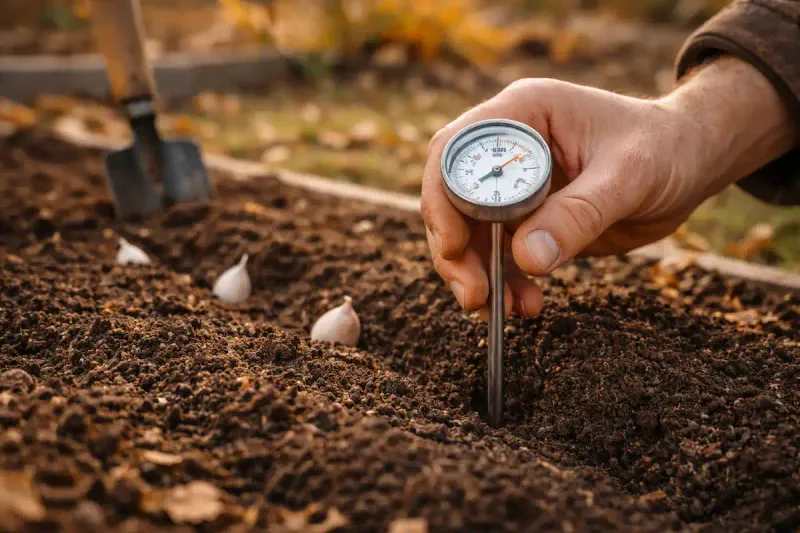
Here is where a popular tip goes off track. The 50°F soil number that gets passed around comes from South Dakota State Extension’s planting garlic guide, and it describes a good soil temperature for planting garlic, measured about 4 inches deep.
It is not a signal for when to spread straw.
The same South Dakota guide gives separate advice to mulch after the soil has frozen. That is a cold-winter step meant to reduce frost heave, which is when repeated freezing and thawing pushes plants out of the ground.
It answers a problem that most Florida and Texas gardens rarely face in the same way.
So neither instruction gives Southern gardeners a mulch-temperature threshold. If you have been watching a thermometer and wondering whether you missed a magic number, you can relax.
Your worry about rot is reasonable, but that 50°F figure was never meant to settle it.
Southern recommendations do not provide one thermometer cue
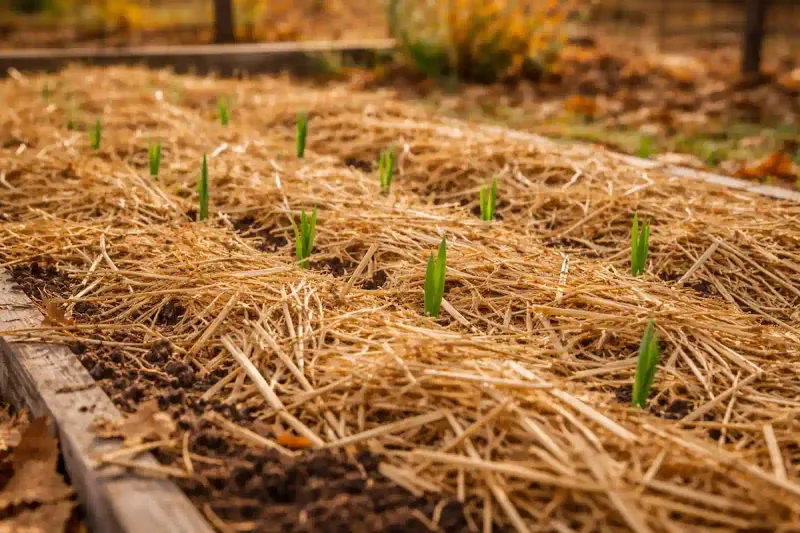
Look at the Southern sources side by side and you will not find one shared cue. Georgia Extension advises home gardeners to apply mulch after garlic shoots emerge.
That is a regional recommendation, not a rule for every Southern yard.
Florida guidance reads differently. UF/IFAS Gardening Solutions places planting from late fall into early winter, and its Pasco County garlic post suggests mulch for managing soil moisture.
Neither gives a mulch date or a soil temperature.
Texas readers may spot a number in the Texas A&M AgriLife garlic guide: soil below 85°F at 2 inches deep. That figure relates to getting garlic established, so it should not be borrowed as a mulch trigger.
Prioritize drainage without letting the soil dry out
Keeping garlic dry is not the answer. Garlic needs steady moisture to grow, and the goal is soil that stays evenly moist without turning soggy.
Problems tend to show up when water lingers.
Georgia Extension says garlic needs well-drained soil and warns that excess water can leave roots with “wet feet” and lead to bulb rots. If your yard holds water after storms, a raised bed or berm is a sensible fix, and Oklahoma State Extension supports that approach.
Mulch can help hold moisture and cut weeds, but amount matters. In colder-climate advice, Wisconsin Extension notes that heavy mulch can keep wet soil from drying.
A lighter layer on a well-drained bed gives you the benefits with less risk.
Keep mulch clear of garlic stems
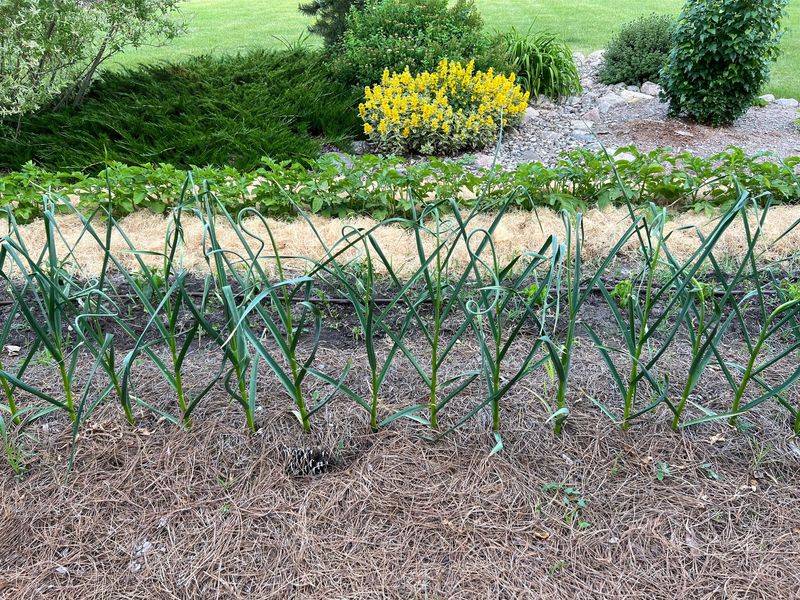
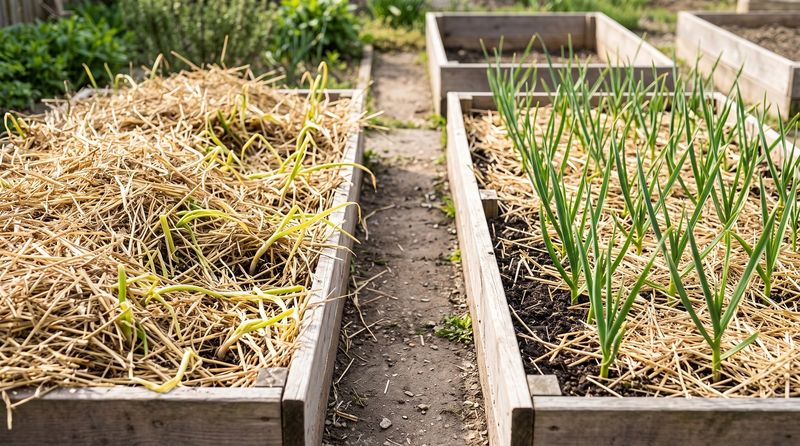
A ruler can be more useful than a thermometer here. The Georgia home-garden approach is simple: wait until the shoots have emerged, then spread 2 to 3 inches of mulch and keep it 2 to 3 inches away from the stems, according to Georgia Extension.
The gap matters because damp mulch pressed against stems can create conditions that favor disease. Leaving a clear ring lets air move around the base of each plant and lets the soil surface dry a bit between rains.
Treat this as Georgia guidance rather than a mandatory schedule for every Southern garden. Your soil, rainfall and bed layout may call for adjustments, but the stem clearance is an easy habit to adopt anywhere.
Rot needs diagnosis, not a timing guess
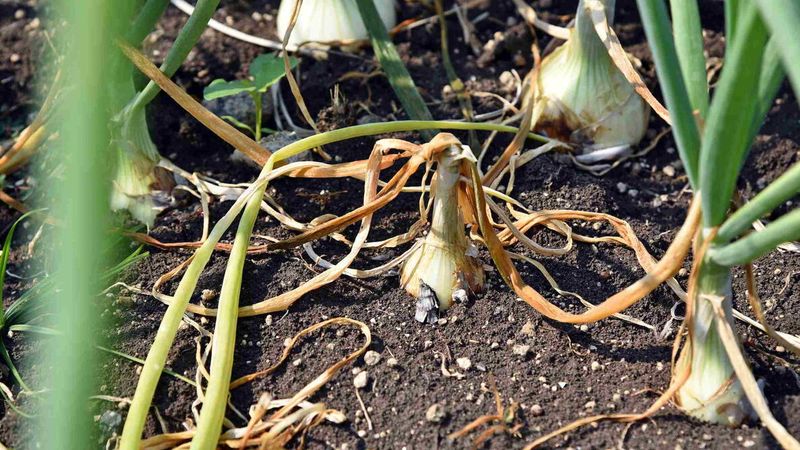
If you find a soft or discolored bulb, the first question is what kind of rot it is. Mulch timing alone cannot answer that.
Several problems can look similar from above the soil.
University of Maryland Extension describes white rot as a soilborne disease that favors cool, moist soil and can persist in the ground for decades. UC IPM describes Fusarium basal rot as a separate disease with its own pathogen and management steps.
Wet conditions can play a part in rot, as Georgia Extension notes for poorly drained soil, but that does not tell you the cause in your own bed. Look at the symptoms, check drainage, and contact your county Extension office for help identifying the problem before you blame the mulch.
Choose mulch timing for your region and bed
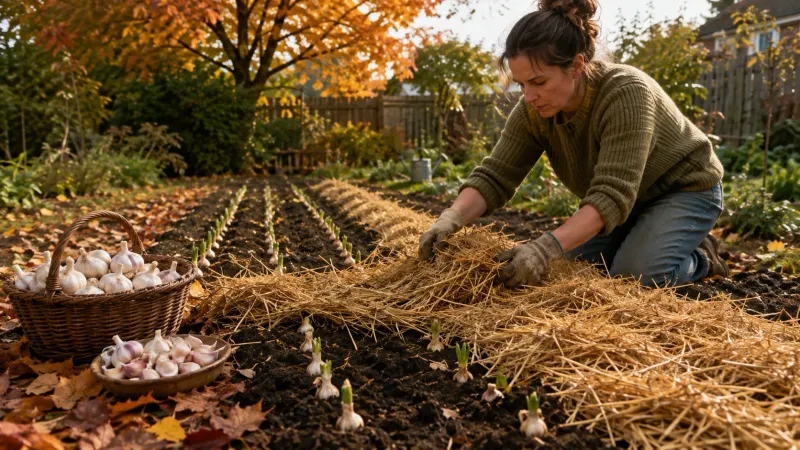
No Southern source supplied here offers a universal soil-temperature number for mulching garlic, so there is nothing to wait for. Start with guidance written for your area, such as your state or county Extension office, and fit it to your bed.
If you follow the Georgia method, mulch after shoots emerge and keep the stems clear. Florida gardeners can lean on UF/IFAS advice for evenly moist, not waterlogged, soil.
Good drainage and steady moisture do more for garlic than a perfectly timed layer of straw.