
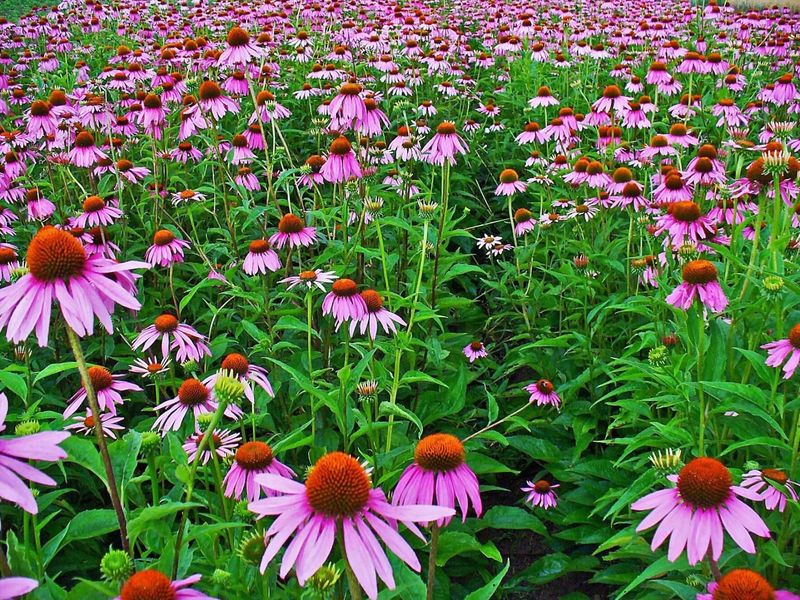
Those brown, spiky heads on your purple coneflowers are not just leftovers. Some may still hold seeds you can collect in a few minutes.
With a little care, those seeds give you a chance to try growing more plants for your yard. Here is how to check, collect, store, and sow them while still leaving plenty for the birds and bees.
A seed harvest offers a chance, not guaranteed plants next year
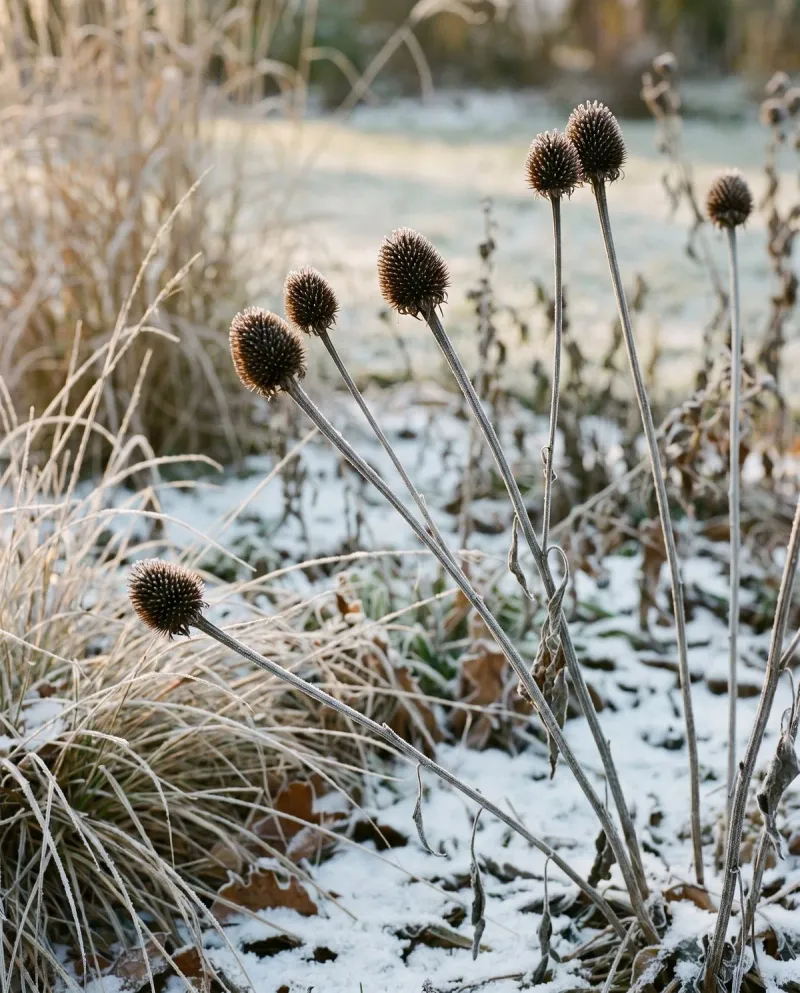
Purple coneflower (Echinacea purpurea) is a friendly plant to work with. NC State Extension describes it as easy to propagate by seed, and it can reseed itself in the garden.
That makes the dried heads in your beds worth a second look. A few minutes of collecting can give you a chance to raise more plants, whether you want to fill a bare corner or share seedlings with a neighbor.
Keep your expectations realistic, though. Seeds vary in how well they sprout, and not every seedling will survive to settle in.
Clemson Extension notes that seed-grown plants can take two or more years to become sizable, so flowers next summer are possible but not something to count on.
This advice is for purple coneflower specifically. Other coneflower species and some fancy cultivars may behave differently, so check what you are growing before you start.
Think of the harvest as a low-cost experiment with a nice possible payoff.
Check dry heads before you collect
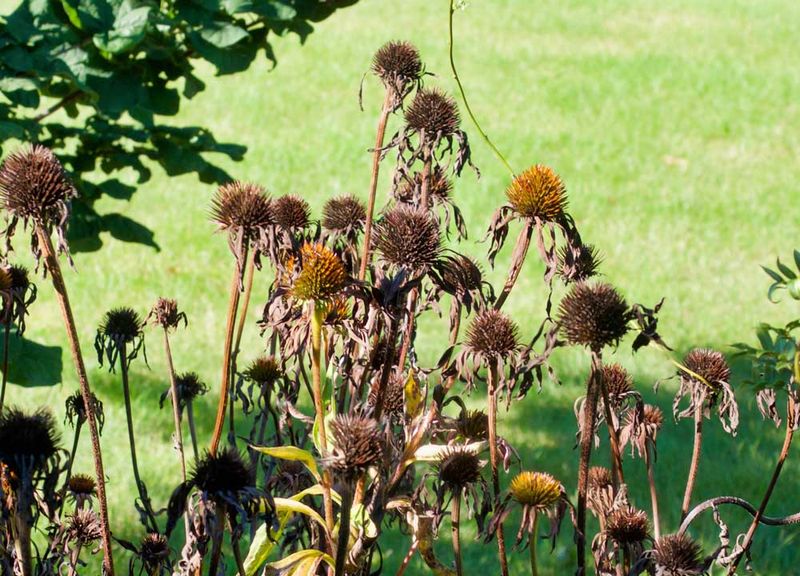
Walk your beds and look at each dried head up close. Rutgers Cooperative Extension lists late summer to early fall as the time to harvest purple coneflower seed.
If a head is still dry and standing in late October, it may be worth checking, but by then the seed may be mostly gone.
Look for a firm, dark brown, fully dry cone. Spiky scales cover the surface, and the seeds sit tucked between them.
If the head is soggy, moldy, or picked clean, leave it where it is.
Pull on a pair of gloves, because those scales are sharp. Rutgers suggests combing the seeds out of a dry head with your gloved fingers.
Hold the head over a bowl or paper bag so the seeds fall right in.
The University of Maryland Extension also advises harvesting only dry seed heads and using a clean container. Collect only what remains, and do not strip every head in the bed.
You will want to save some for wildlife, which we cover below.
Dry and label the harvest before sealed storage
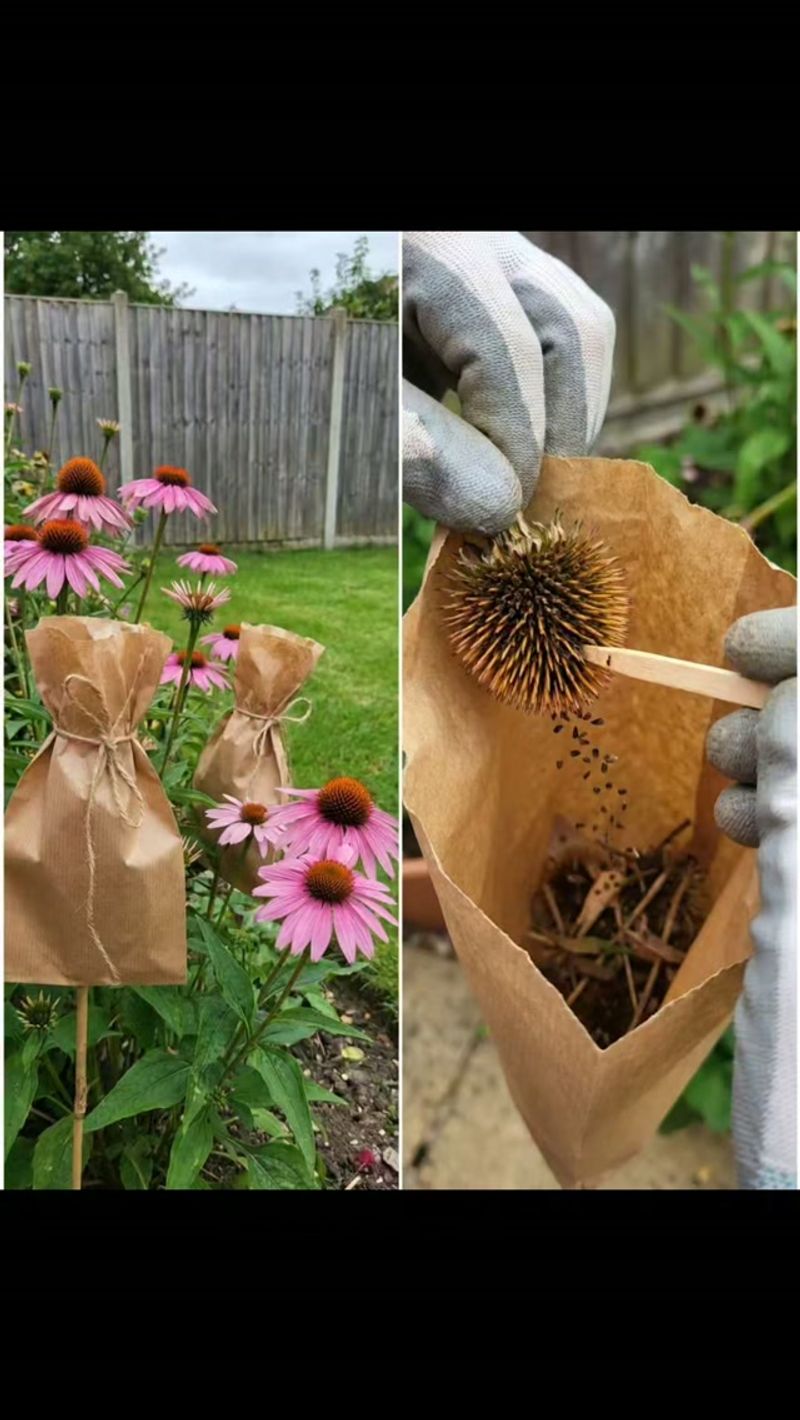
Freshly collected seed still needs time to dry out. Spread it in a shallow, breathable container such as a paper bag or an open tray, and keep it indoors away from damp spots.
The University of Maryland Extension recommends this kind of drying step before the seed goes into sealed storage.
Start with a clean container so you do not carry over mold or stray plant bits. Give each batch a label right away.
Write the plant name, the date, and where in the yard it came from.
That small habit pays off by spring. If you collect from more than one patch, you will know which seeds came from which plants.
It also helps if you later learn that one patch was a named variety.
Once the material feels fully dry, move it to a sealed container such as a jar or envelope kept in a cool, dry place. Skip any seed that looks moldy or damp.
A few minutes of careful handling now keeps your small harvest in good shape until sowing time.
Choose a sowing approach that fits your plans
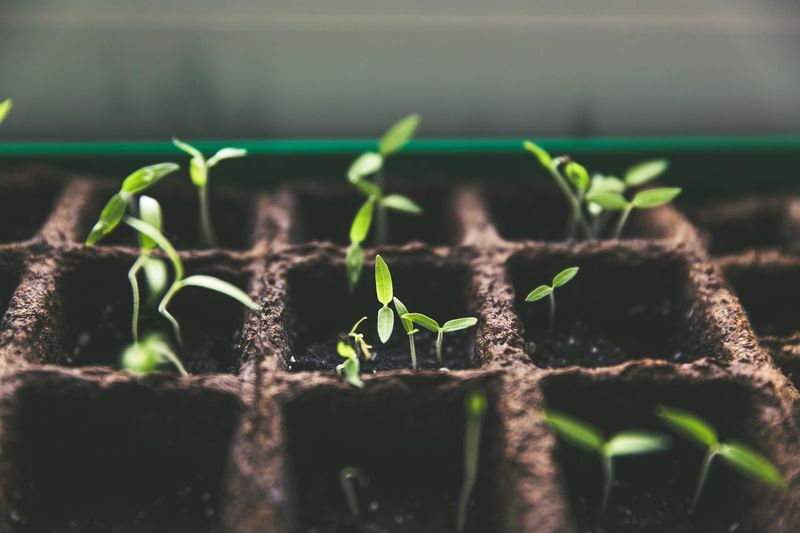
Extension sources describe more than one way to start purple coneflower seed, and neither is a universal rule. Your best choice depends on how much planning you want to do.
Rutgers lists a controlled option for E. purpurea. Keep the seeds moist and cold at about 40°F for 90 days, then move them to about 70°F.
That mimics a winter chill, and it suits gardeners who like a set schedule and have room to store seeds in a fridge. Details are in the Rutgers seed propagation guide.
Clemson takes a different route. Clemson Extension describes starting seed indoors at 65 to 70°F and keeping the seed bed misted.
It does not specify a cold step, so this can suit gardeners who would rather skip the fridge.
So the sources differ on whether to include cold treatment. Do not assume every seed must be chilled, and do not assume chilling guarantees sprouting.
If you have plenty of seed, you could try both methods on small batches and see what works in your yard.
Whichever approach you pick, be ready for uneven results. Some seeds may never sprout, and that is normal.
Keep notes on what you did so next fall you can adjust.
Seed-grown plants take time and may differ from the parent
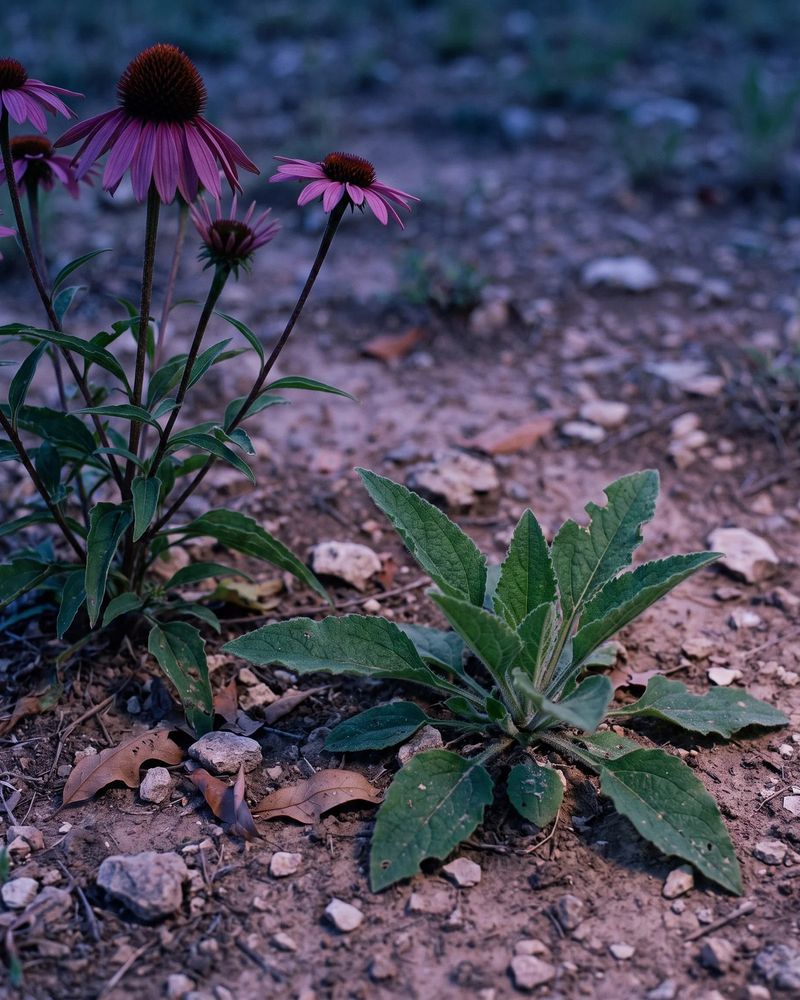
Patience is part of the deal. Clemson Extension says seed-grown coneflowers may take two or more years to become sizable.
A tiny seedling this spring may give you a modest plant, with fuller flowering coming later.
Another surprise is that seedlings may not look like the plant they came from. North Carolina gardens hold many coneflower cultivars, and some are hybrids, as the NC State Extension Gardener Handbook points out.
Iowa State Extension notes that hybridization can produce offspring unlike the parent.
That does not mean all cultivar seed is useless. Clemson identifies exceptions, since some cultivars can be propagated reliably from seed.
If you want an exact match to a named variety, dividing the plant is a more dependable path, but seed is still fine if you enjoy a surprise.
When seedlings show up in different shades or shapes, treat it as part of the fun. Label them, give them room, and wait to see what they do.
A plain pink seedling still feeds pollinators.
Leave some seed heads and stems for wildlife
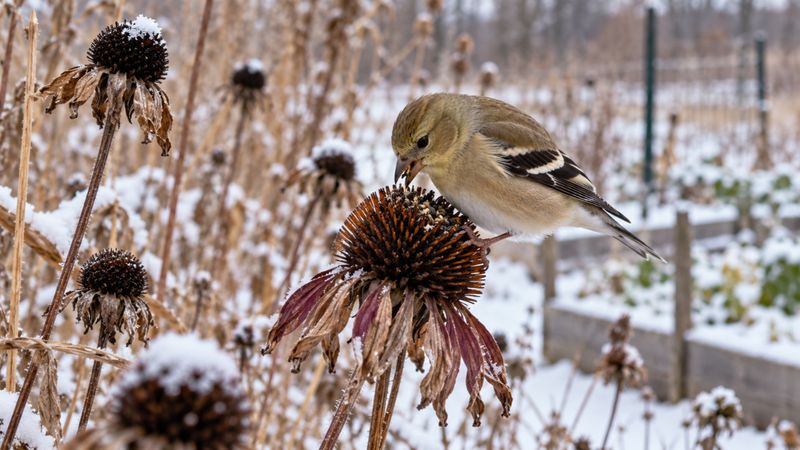
Winter wildlife depends on spots like your coneflower bed. NC State Extension says coneflower seeds feed birds, especially goldfinches, and that dead stems can provide nesting habitat for native bees.
Clemson also suggests delaying deadheading, since goldfinches visit the seed heads in winter. A bed left standing can bring bright, busy visitors on cold mornings.
So collect selectively. Take seed from a few of the best heads and leave the rest.
Choose a handful for your own sowing, and let the remaining heads stand where birds can reach them.
Leave some stems upright through winter as well. Cut them back in late winter or spring if you must tidy, and consider leaving a few stems taller to give bees a place to nest.
A mixed approach, with some heads picked and some left, keeps your yard useful to wildlife.
Your coneflowers can feed you a few seeds and feed the goldfinches too.