
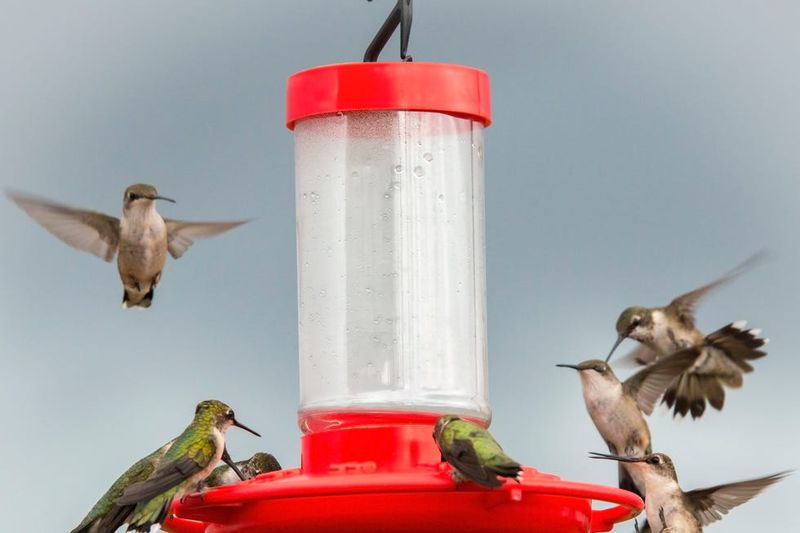
A tiny hummingbird zipping past your window in late fall can leave you wondering if the feeder should stay or go. Some of those visitors are just passing through, and a few may spend the whole winter in Southern yards.
Knowing when to take the feeder down, and how to keep it safe until then, takes only a few simple habits. Here is how to make the call for your own yard.
November is a checkpoint, not a cutoff
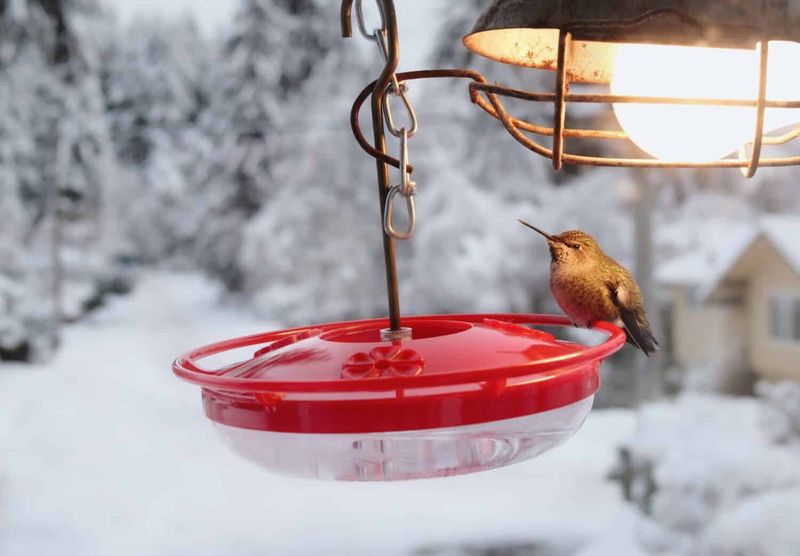
Hummingbird timing in the South does not follow a single calendar date. Texas has wintering hummingbirds, including Rufous, so a feeder in Houston or the Rio Grande Valley may see visitors long after a feeder in the Panhandle goes quiet.
Florida adds its own twists. According to UF/IFAS Extension, Rufous and Black-chinned hummingbirds occasionally show up in the state in winter, and some Ruby-throated hummingbirds may stay year-round in south Florida.
So think of November as a checkpoint. When it arrives, look at what is actually happening at your feeder and in your yard.
Sightings vary by region, by year, and even from one neighborhood to the next, and no feeder is guaranteed to attract a bird. Your own observations are the best guide you have.
Use sightings to decide when to take it down
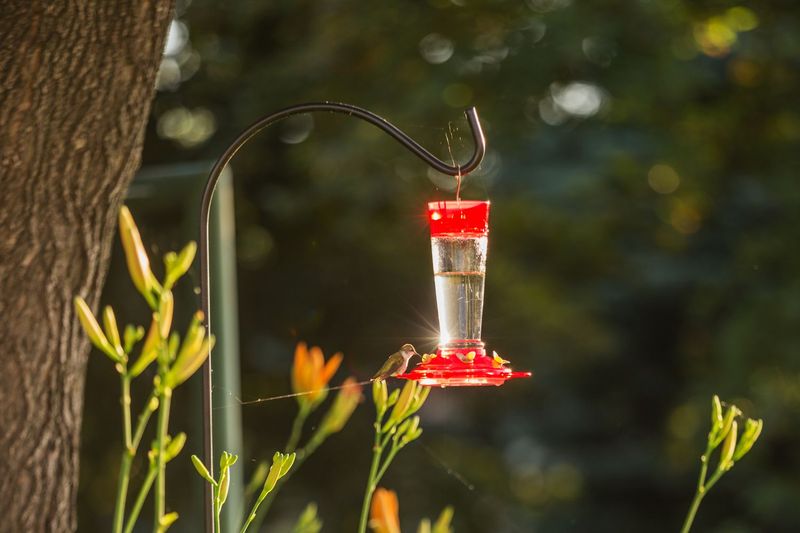
Keep the feeder up through November as long as hummingbirds are still stopping by. Once you stop seeing them, Texas Parks and Wildlife suggests leaving the feeder up for two weeks after the last sighting.
Cornell Lab of Ornithology gives a slightly longer window. It recommends keeping feeders up for several weeks as a precaution, in case a late straggler passes through.
A handy habit is to jot the date of each sighting on a calendar near the kitchen window. Then you will know exactly when your two weeks, or your several weeks, begin and end.
Worried that a feeder will keep birds from leaving? Both Cornell and Texas Parks and Wildlife say feeders do not stall migration.
Treat these timelines as helpful guides, not a promise that a bird will visit.
A feeder offers supplemental food
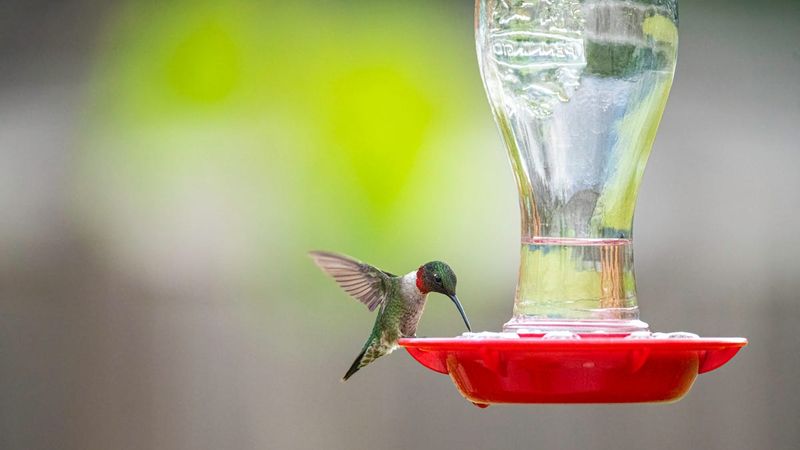
Picture a late migrant or a wintering bird arriving in your yard. A feeder may give it a little extra nectar to go with whatever else it finds.
That is the realistic benefit, and it is a possibility rather than a certainty.
Rufous hummingbirds, for example, are among the western species that now winter regularly in Gulf Coast states, and they will use sugar-water feeders. That does not mean they need them.
Hummingbirds also sip nectar from flowers and eat small insects, and UF/IFAS says feeders should not be the only food source. Bloom timing differs from yard to yard, so a feeder may help most where natural food is thinner.
Keep your salvias, coral honeysuckle, and other nectar plants growing, and leave some leaf litter and insect habitat around. The feeder is a helpful extra, never a replacement.
Mix a simple sugar-water solution
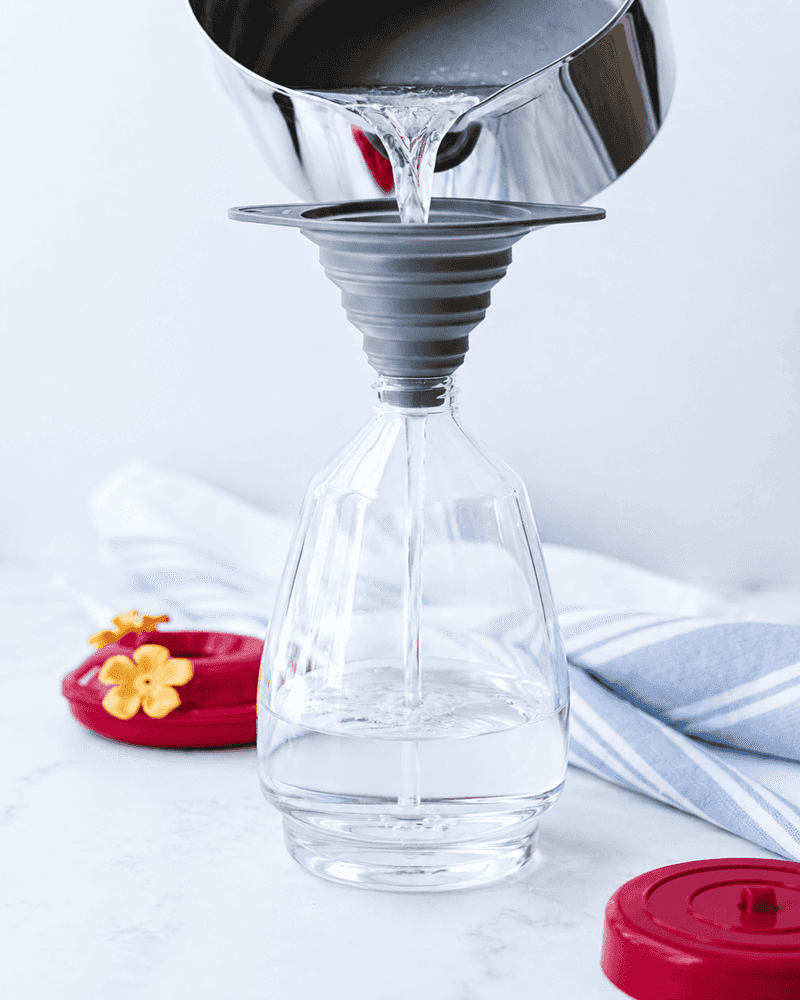
Homemade nectar takes about two minutes. Stir one part plain white granulated sugar into four parts water, such as one cup of sugar to four cups of water.
Texas Parks and Wildlife supports this ratio.
Skip the red dye, honey, and sugar substitutes. The nectar does not need color, and those other ingredients are not good choices for hummingbirds.
Cornell Lab explains that small batches mixed every day or two do not need boiling. Stir until the sugar dissolves and you are done.
If you want to make more at once, use boiling water to dissolve the sugar, let it cool, and store the extra in the refrigerator. Cool the nectar fully before filling the feeder.
Clean and refill on a short schedule
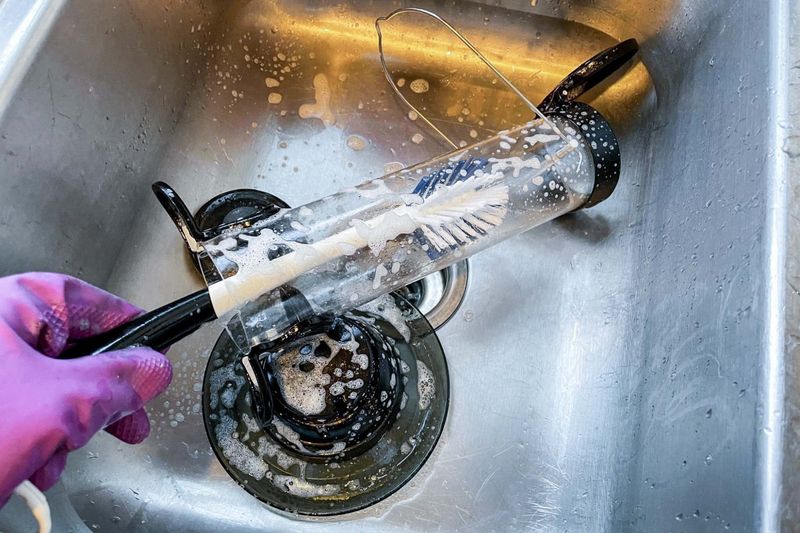
Sugar water spoils faster than most people expect. For much of the South, UF/IFAS recommends changing the nectar and cleaning the feeder every four to five days, even if the liquid still looks clear.
In warm South Florida, shorten that to every three to four days, as Tropical Audubon Society advises. A warm spell anywhere can speed up spoilage too, so replace the nectar sooner if it turns cloudy, moldy, or fermented.
Scrub the feeder with hot water and a brush, getting into every feeding port. A little soap is acceptable only if you rinse thoroughly before refilling.
Shop for a feeder that comes apart easily. As Cornell Lab points out, you can only clean what you can reach, and a removable reservoir and ports make that job simple.
Keep nectar available during freezing weather
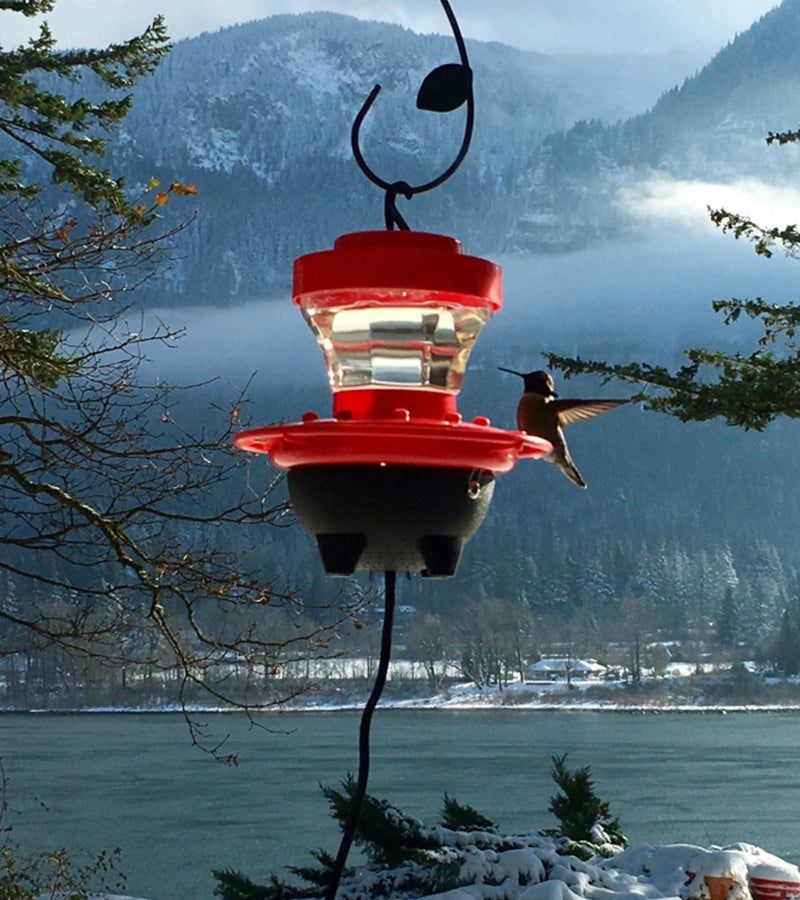
Cold snaps are an edge case. In colder parts of Texas and the broader South, a few nights each winter dip below freezing, but that is no reason to pull feeders down everywhere in November.
The key is that a feeder helps only when its nectar stays liquid. Audubon’s bird FAQ says to make sure nectar does not freeze, because frozen sugar water cannot be sipped.
One option is to bring the feeder indoors at dusk and put it back out at first light. Oregon State Extension offers this advice for frigid temperatures.
Check the forecast each afternoon. If the night looks mild, leave it out.
If a hard freeze is coming, carry it in, and keep up your regular cleaning schedule. Sometimes the smallest visitor is worth a little extra effort.