
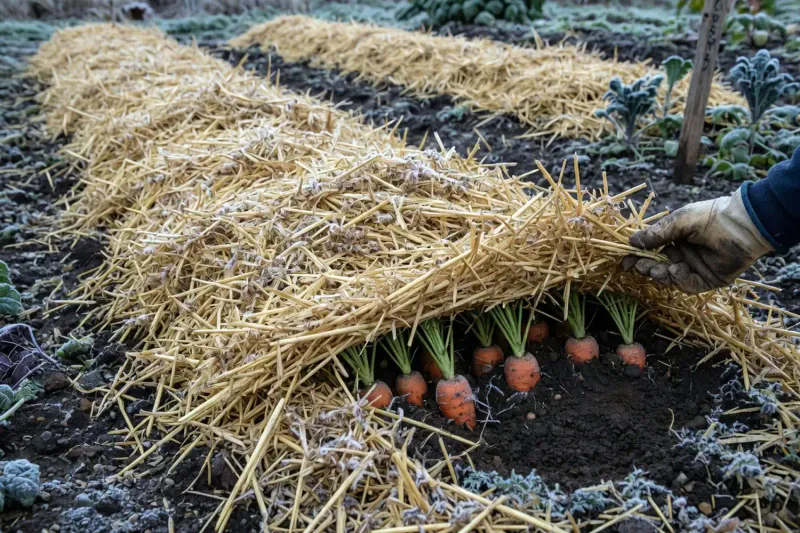
Pulling every carrot before the first cold snap feels like the safe move, but it may not be the best one. Cool weather can make carrots taste better, and a loose blanket of straw can give you extra time to harvest.
The method has real limits, though, and your soil, weather, and bed decide how well it works. Here is how to use it wisely, including what Florida and Texas gardeners should do instead.
Cool conditions may sweeten carrots—not one guaranteed frost
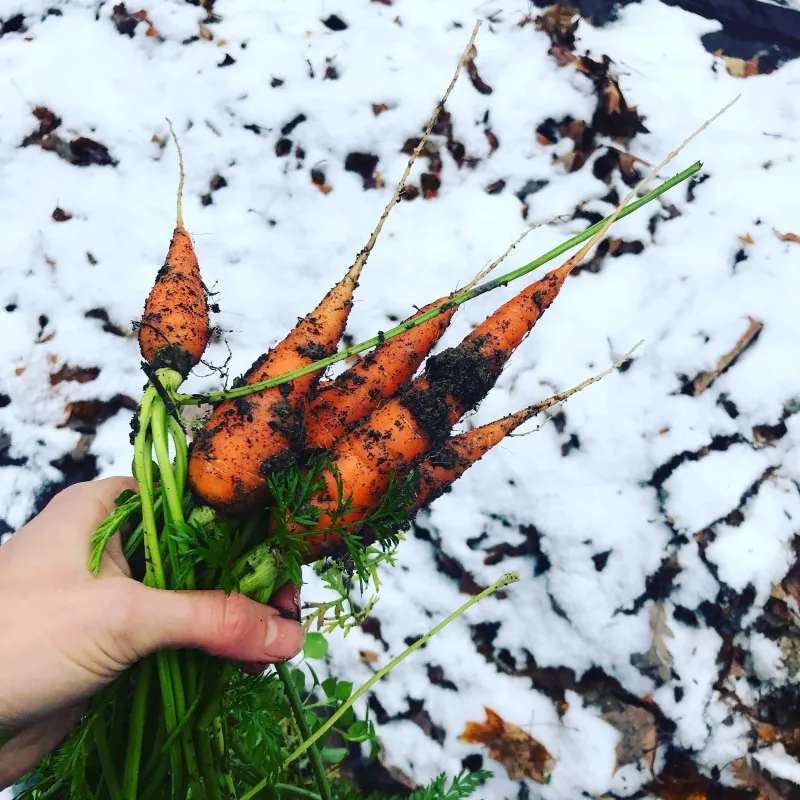
Gardeners have long said that a frost makes carrots sweeter. The useful part of that idea is cool temperature, not one icy night.
A controlled study found taste differences and more sucrose after carrots were stored at 2°C (about 36°F).
Garden guidance points the same way. Oklahoma State Extension links sweeter fall carrots with cool growing conditions.
Still, that research looked at cold storage, not a single frost in a backyard row. Variety, soil, and your own taste buds all matter.
Think of sweetness as a possible bonus of cool weather, not a promise from one frosty morning.
Decide whether your bed can hold carrots
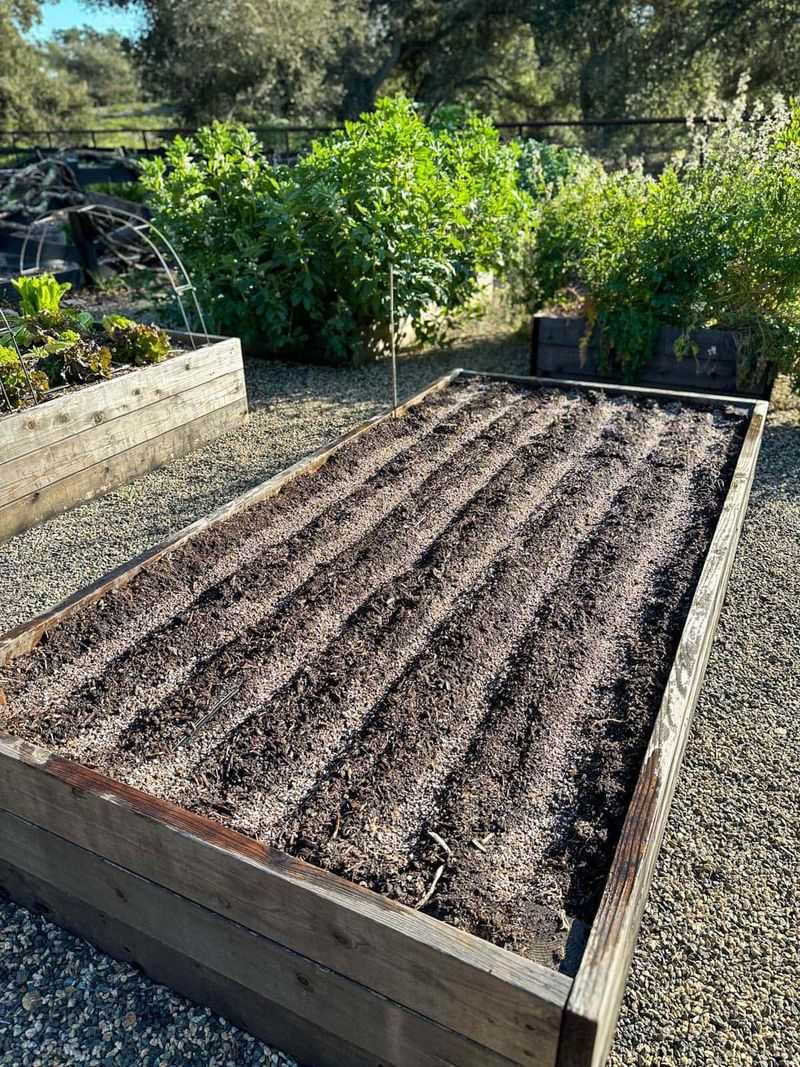
Before you reach for mulch, look at the bed itself. Standing water and mud are hard on roots, and UConn Extension says outdoor storage works when rodents are not an issue and the location drains well.
If voles or mice visit your garden, leaving carrots under cover may feed them instead of you.
Raised beds need extra thought. Minnesota Extension notes that raised-bed soil swings more in temperature than in-ground soil, so do not assume the sides shelter the roots.
Then think about your winters. In colder areas, Illinois Extension describes harvesting until the ground freezes solid.
If your soil rarely freezes, you may not need this method at all.
Insulate the row with loose, clean mulch
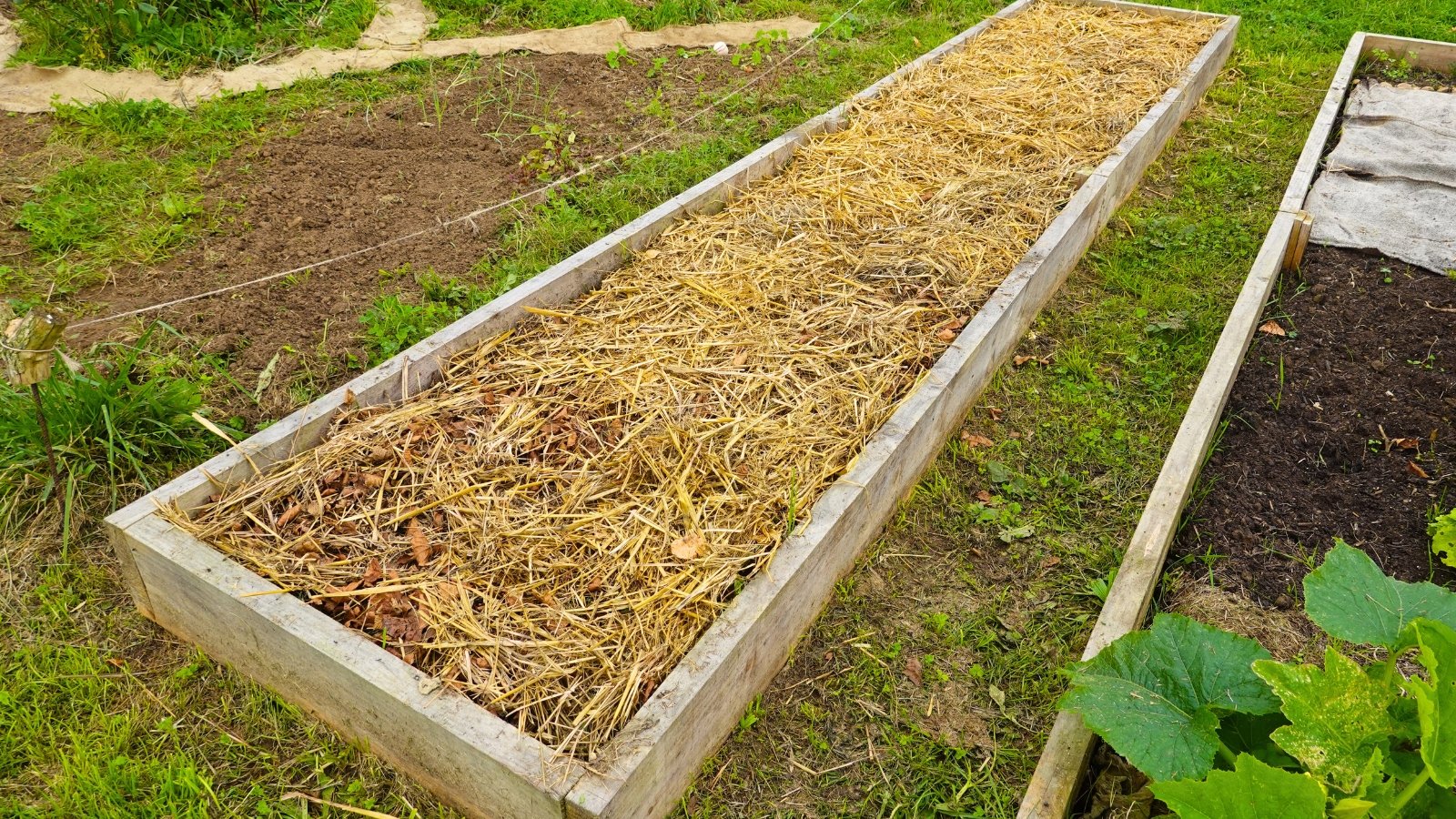
Once carrots are a usable size, cover the row with clean, loose straw or dry leaves. The goal is to insulate the soil so it freezes later and stays workable longer.
Illinois Extension suggests 6 to 8 inches, which is regional guidance for a cold Midwest climate, not a rule for every bed.
When you want carrots, pull the cover aside, dig what you need, and put the mulch back right away. Fluffy material works better than packed, soggy layers.
Mulch can delay freezing, but it cannot stop it in every winter. Utah State Extension also describes heavy mulch for overwintering, with results depending on local weather.
Harvest when the soil is workable
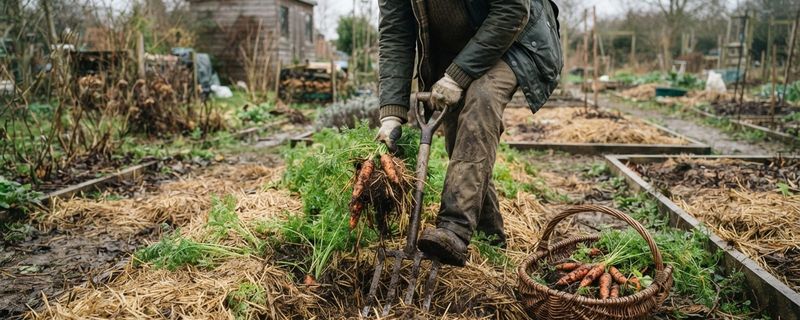
Take carrots as you need them while you can still get into the row. Illinois Extension advises digging winter carrots when temperatures are above freezing, so pick a mild afternoon.
Skip the tug-of-war with the tops. University of Minnesota Extension recommends loosening the soil first, and a garden fork a few inches from the row does that well.
Yanking often snaps the root and leaves the best part underground.
Check a few roots every week or two. UC IPM warns that carrots left too long can turn tough or crack.
A snappy, smooth root means keep going; a woody or split one means harvest now.
Know when cold or root condition ends the method
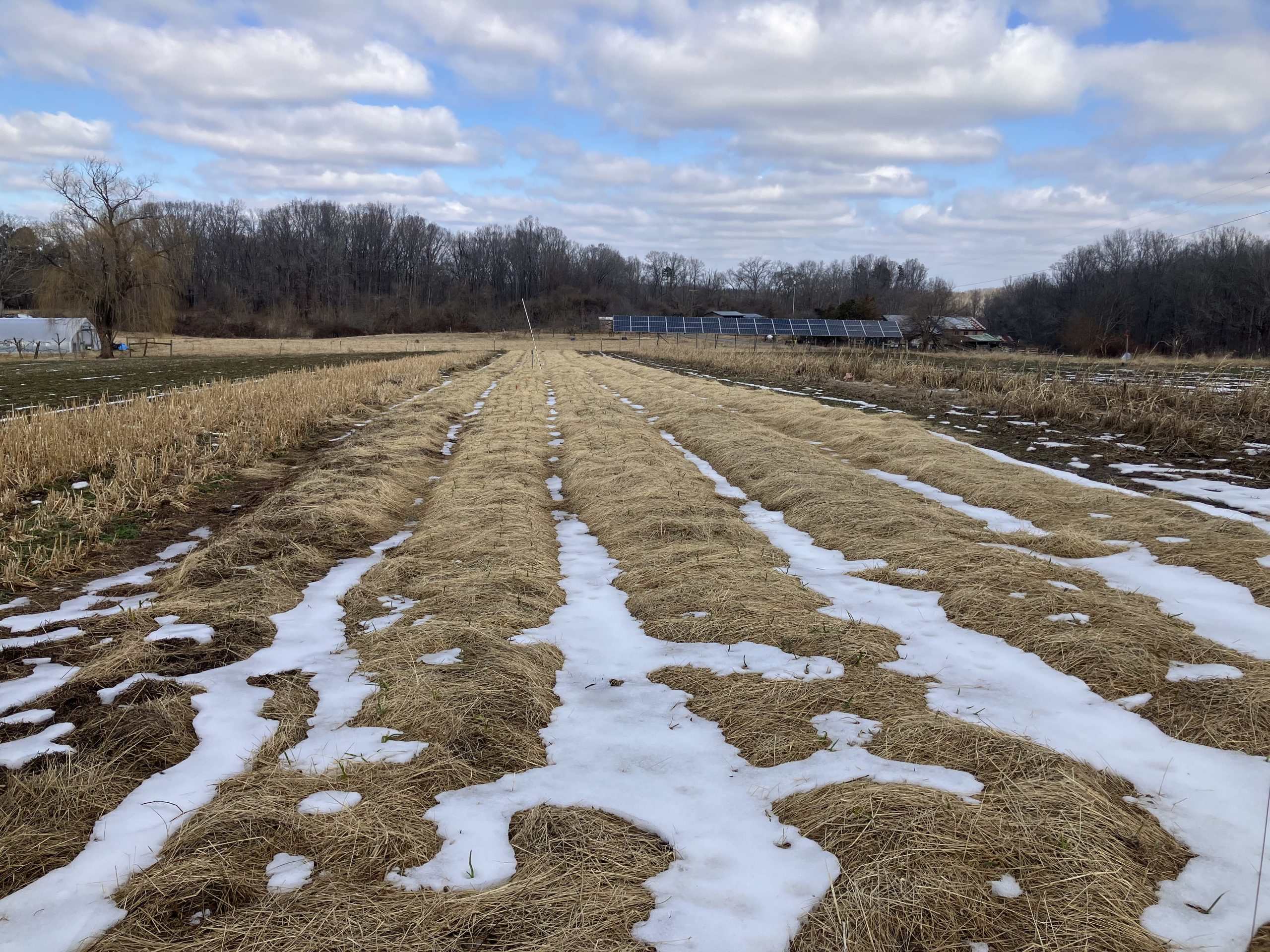
Some winters will beat your mulch. Arkansas Extension warns that carrots can be damaged or killed by temperatures below 20°F.
That figure comes from Arkansas guidance, so treat it as a warning sign, not a threshold for every garden.
Watch the soil as closely as the forecast. If you cannot get a fork into the ground, as Illinois Extension describes with soil that freezes solid, the bed has stopped being a pantry for now.
Roots tell the story too. Cracked, woody, mushy, or chewed carrots are past their best, which fits UC IPM advice to harvest while roots are tender.
Pull what is good and move on.
In Florida and Texas, plan around the cool season
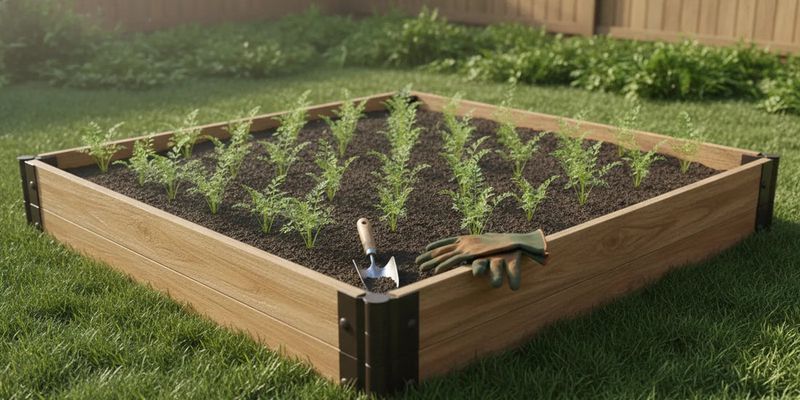
Southern gardeners usually have an easier path: grow carrots in the cool months and harvest them fresh. UF/IFAS lists planting windows of August through March in North and Central Florida and September through March in South Florida.
Texas works similarly. Texas A&M AgriLife Extension says carrots can grow all winter in many South Texas areas.
That means you can stagger plantings and pick as roots size up, with cooler weeks possibly improving flavor. A straw-covered frozen-ground stash is not something most Southern gardens need or can count on.
In a rare hard-freeze area, such as parts of North Texas, local conditions still call the shots.
Treat mulch as extra time, not a promise
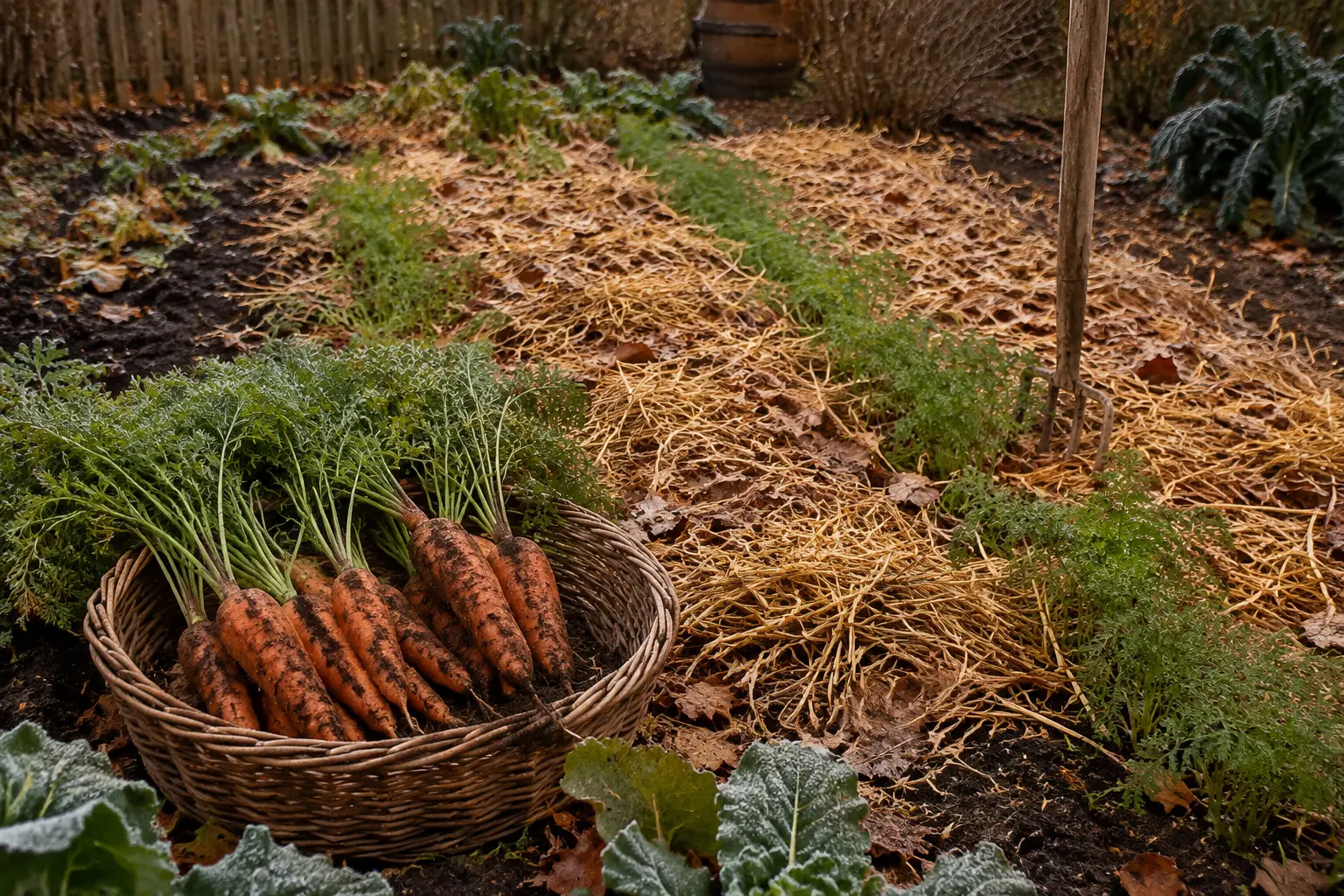
A simple rule keeps this method honest. Leave usable carrots under insulating mulch only if the bed drains well, pests are under control, you can still dig the soil, and the roots stay in good shape.
If any one of those slips, harvest.
Guidance from Illinois Extension, its storage tips, and UConn Extension all point to local conditions as the deciding factor.
Let the soil and the roots set your harvest date, not the calendar or the promise of sweeter flavor. Straw buys time, and the garden decides how much.