
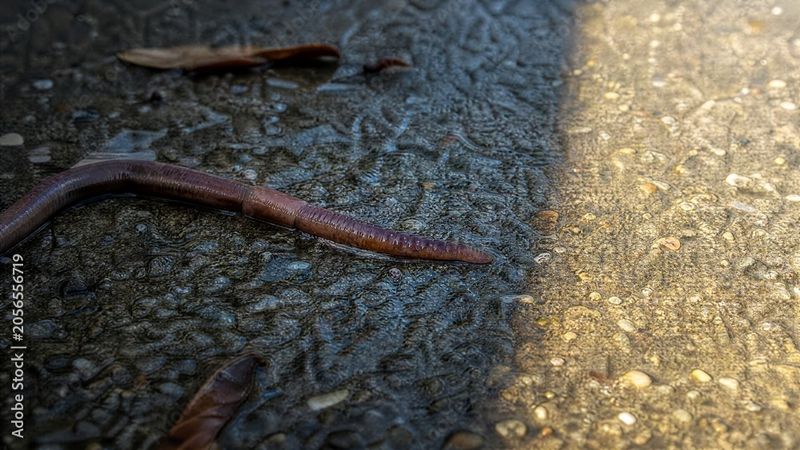
You step outside after a big winter storm and the driveway looks like it is wriggling. Dozens of earthworms are stretched across the concrete, and it is hard not to wonder if something is wrong with your yard.
The truth is more interesting, and a bit less dramatic, than most people expect. Here is what the sighting can tell you, what it cannot, and how to check your drainage the right way.
Heavy rain can send earthworms across pavement
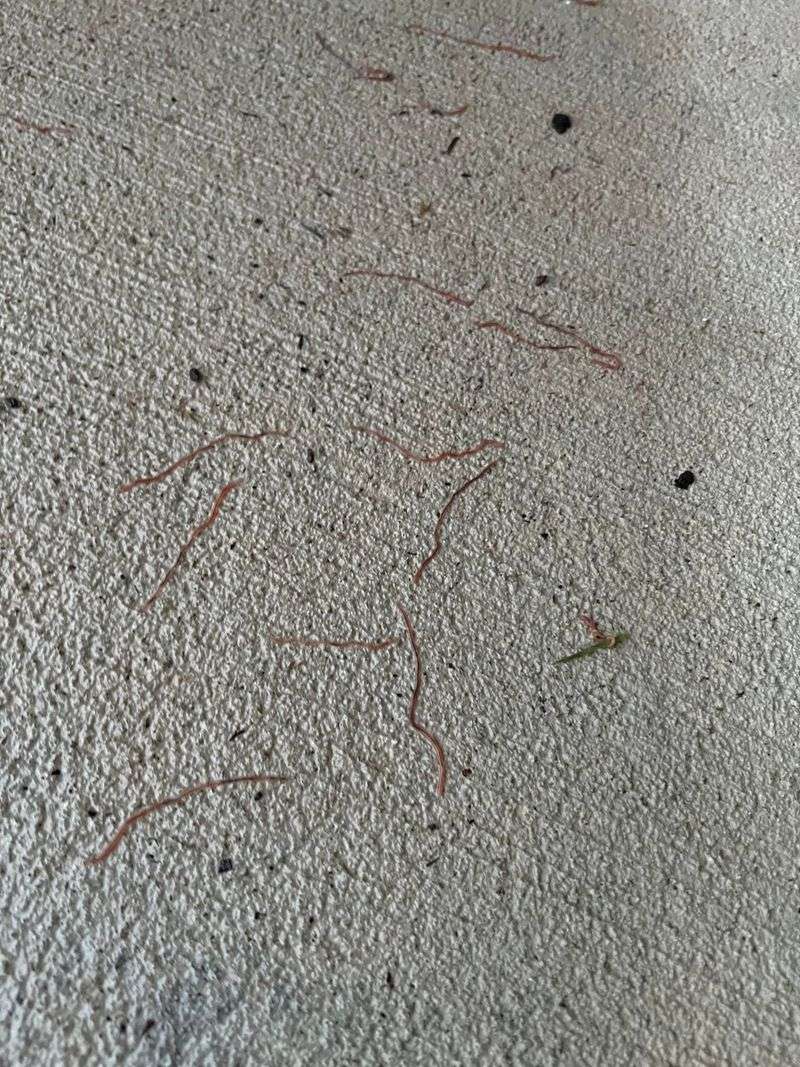
Soaked soil sometimes sends earthworms onto driveways, sidewalks, and patios. UC’s California lawn guidance notes that earthworms may rise to the soil surface or onto the sidewalk after rain or irrigation.
So the sight is a known, ordinary event, not a sign that something has gone wrong overnight.
Very wet conditions can make surface travel possible. A film of water on pavement lets a worm move without drying out, which is normally the big risk of being above ground.
That helps explain why worms often show up across hard surfaces right after a storm, when the ground and the concrete are both soaked.
Moisture is not the only explanation, though. The National Institute of Environmental Health Sciences also discusses why worms crawl on sidewalks after rain, and the explanations vary.
Waterlogged soil and low oxygen may push some worms up, while others may simply be moving through easy conditions. No single reason fits every worm in every yard.
That variety is the key idea to carry forward. Different earthworms respond differently to a flood of rain, so the crowd on your patio may be a mix of behaviors.
Think of the sighting as a snapshot of one wet night, and not as a message from your soil.
Why earthworms emerge depends on the species
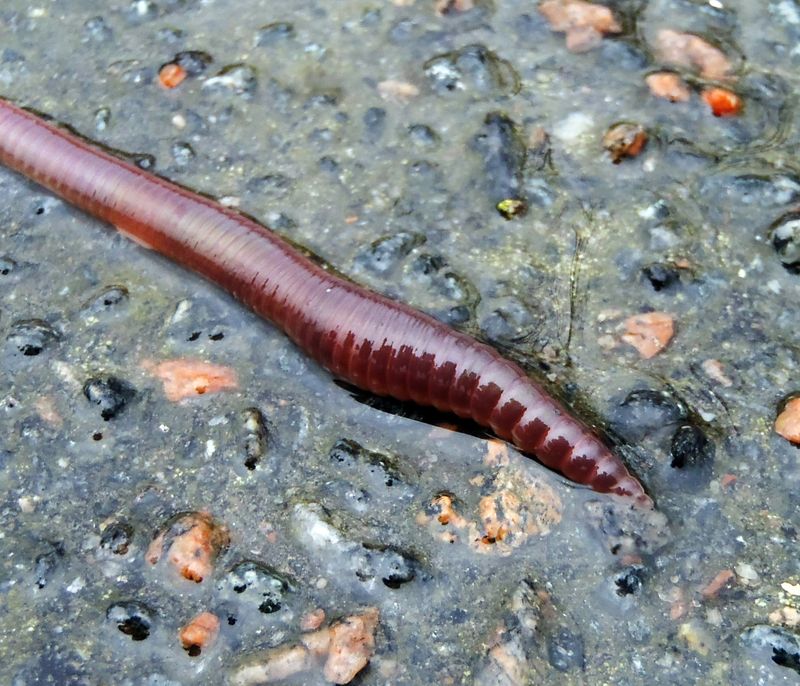
The popular line is that worms come up because they are drowning. A closer look shows it is not that simple.
In a two-species study, researchers Chuang and Chen found that the animals responded differently to heavy rain and immersion.
One species emerged from the soil at night after heavy rain and had lower tolerance for being underwater. The other survived longer submerged and was not seen emerging.
Same storm, two different strategies.
Waterlogged soil and low oxygen may be what prompts some species to leave the ground. That is a reasonable explanation for certain worms, but it is one possibility and not a settled rule for all of them.
It also helps to remember how small this evidence is. Two species tested in a study cannot speak for every earthworm, and they cannot describe what is happening in your particular California yard.
Your soil type, the species living there, and how much rain fell all play a part. So when someone says the worms on your patio are drowning, a fair answer is: maybe some, maybe not.
Worms are one clue, not a soil-health verdict
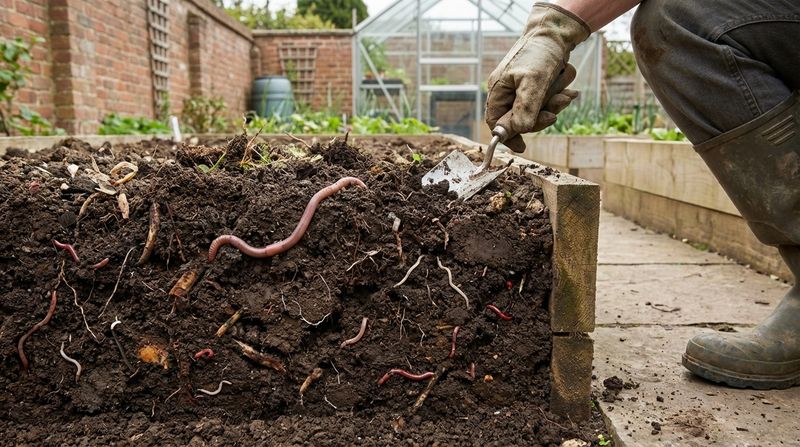
Earthworms do real work. According to UC, their activity helps with soil aeration and the movement of water and nutrients, and that is a good reason to be glad to have them.
Still, a handful of worms on your patio does not prove your soil is healthy.
Abundance depends on many things at once. USDA’s Natural Resources Conservation Service points out that some soils, including sandy soils and wet heavy clay, may naturally hold few earthworms.
It also notes that some soils can be productive without them. Moisture, food supply, soil texture, and disturbance such as digging or compaction all shape the numbers.
Where you live matters too. A UC overview of earthworm ecology in California explains that the state has native earthworms as well as introduced ones, and that communities vary with habitat and land use.
A coastal garden, an inland valley lawn, and an oak woodland lot can each have a very different mix.
One more limit: a worm on pavement cannot be identified from across the driveway. You cannot tell if it is native or introduced, so you also cannot say much about its ecological role.
A better soil check is hands-on. Look at how crumbly the soil is, whether it has organic matter, and how well plants grow, and treat the worms as one small clue among several.
Persistent standing water tells you more about drainage
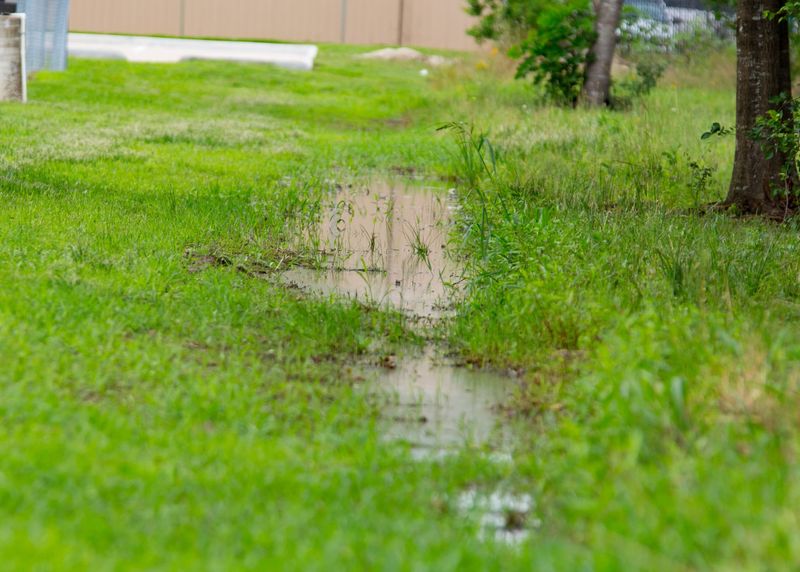
If you want to know about drainage, watch the water instead of the worms. A puddle that forms during a downpour and fades within hours is a different situation from a soggy patch that hangs around.
Brief puddling after heavy rain is common, even in yards that drain well.
The more telling signs are quieter. A UC Cooperative Extension drainage guide flags standing water after light-to-moderate rain, or water that remains for more than a day, as a more serious concern.
Try a simple routine. After the next storm, walk the yard at a few set times, such as an hour after the rain stops, the next morning, and the following evening.
Note where water collects, how deep it gets, and how long it stays. Photos on your phone make comparisons easy.
Treat what you find as a reason to investigate and not as a verdict. Standing water can come from compacted soil, a low spot, a downspout dumping in the wrong place, or a high water table.
One observation will not tell you which. If the same spot stays wet again and again, it is worth the next few steps.
A percolation test offers a limited local check
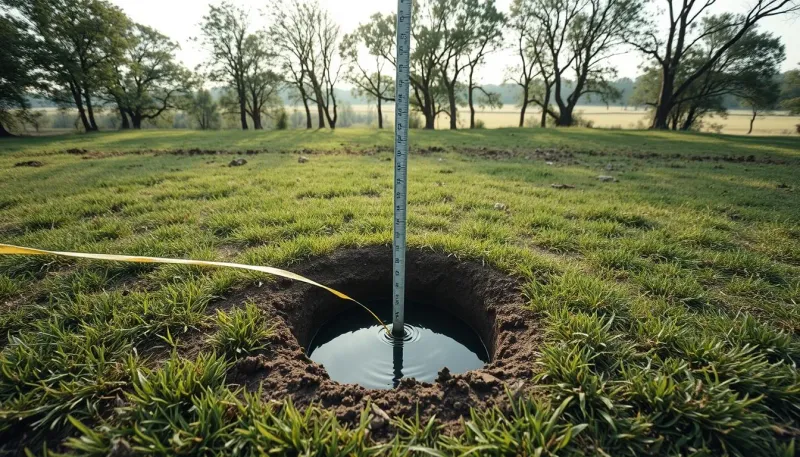
A percolation test is a simple way to see how fast water moves into one spot of soil. UC IPM describes digging a hole about 12 inches deep and soaking it with water.
Then you refill it after 24 hours and watch how quickly it drains.
If water is still sitting there after another 24 hours, that suggests slow drainage. UC gives about 1 to 2 inches per hour as an optimal rate for many landscapes.
That is a helpful benchmark, not a target every soil or site must hit.
Measure by marking the water level with a stick or ruler, then check it at set intervals. Try the test in the spot you care about, such as a planting bed or a low corner, and repeat it in a second location for comparison.
Keep the result in perspective. One small hole tells you about that small patch of ground.
It cannot account for slope, layers of compacted soil below the surface, the water table, rainfall intensity, or the paths runoff takes across your lot. The UC drainage guide makes the same point by encouraging you to look at the whole site.
Use the test as a rough clue to combine with what you see after storms.
Check runoff routes before choosing a response

When water keeps collecting, start with the roof. Follow each downspout and see where it sends the flow.
UC guidance on preparing for winter rains recommends directing downspouts somewhere appropriate, and not against the foundation or into a low spot.
Simple fixes often help most. Extend a downspout with a pipe, add a splash block, or aim it toward a planted area that can take the water.
If a low spot keeps filling up, correcting the grade may help. In some yards, a properly designed rain garden or swale can handle recurring runoff while supporting native plants.
It may be tempting to treat the worms themselves. Skip that.
UC IPM advises against using pesticides for earthworm control, and worms are not the problem anyway. They are a sign of wet weather.
There is also a runoff reason to keep chemicals away. UC cautions that products used on hard surfaces or before rain can wash into storm drains and waterways.
A treatment meant for your patio can end up in a creek or the ocean.
For stubborn problems, such as water against the foundation, a landscape professional or drainage specialist can assess the site.
Read the whole yard, not the pavement
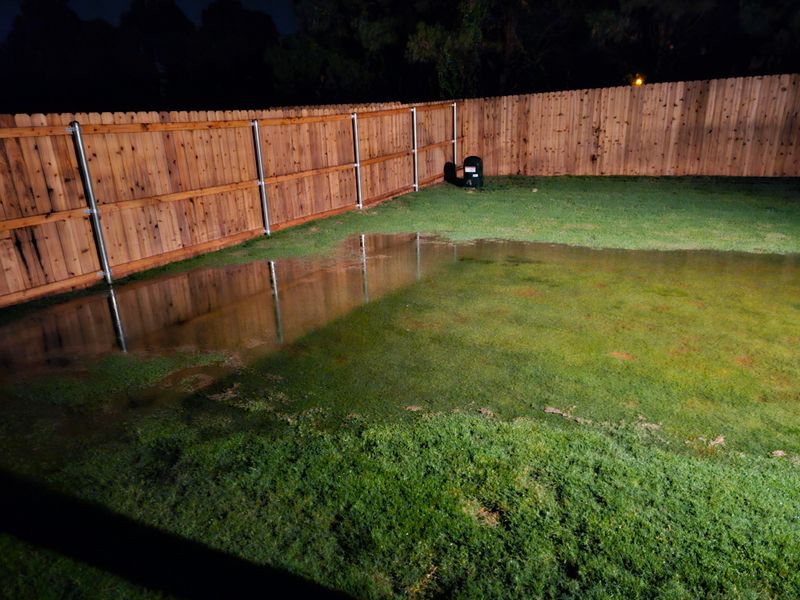
Worms on the patio after a storm are a natural sight with several possible explanations. They do not diagnose your soil or your drainage.
What counts is how water behaves over days, so watch for persistent standing water and follow the runoff paths.
A local percolation test can add one more clue. The worms, meanwhile, are just passing through on a wet night.