
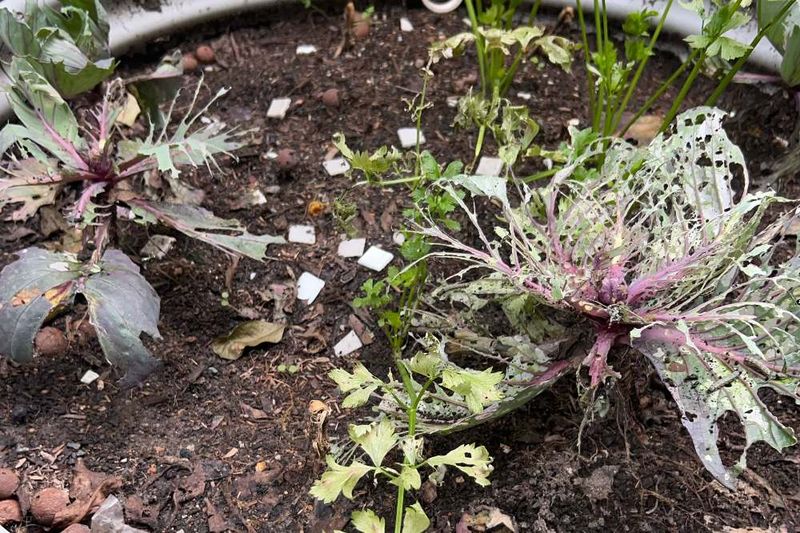
Your kale looked perfect last week, and now the leaves look like lace. Green caterpillars are hiding on the undersides, and the cooler air has not slowed them down.
In much of the South, fall pests keep feeding long after gardeners expect them to quit. A quick check and a few simple steps can protect the harvest without spraying the wrong thing.
Green caterpillars can point to more than one pest
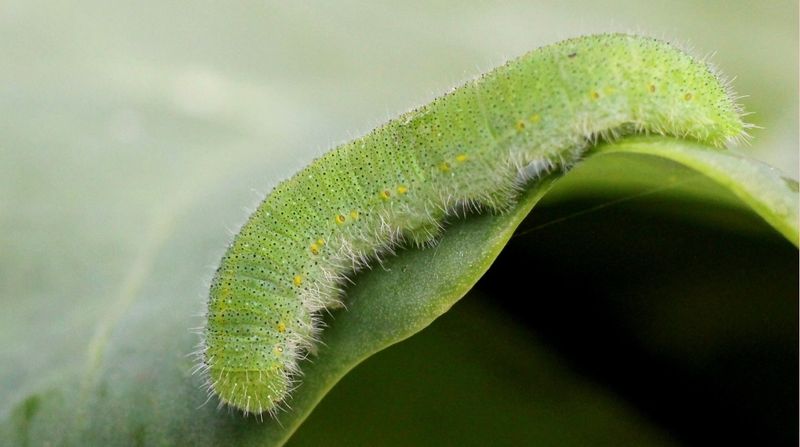
Holes plus a green caterpillar fit the pattern of brassica-feeding pests, but “cabbage worm” is not a precise diagnosis. Several caterpillars chew kale, and Clemson Extension describes how they differ in size and look.
Imported cabbageworms are fuzzy, velvety green, often with faint yellow lines, and can grow to about an inch. Cabbage loopers are larger and pale green, and they arch their bodies in a looping motion as they crawl.
Diamondback moth larvae are much smaller, and their feeding can leave a thin, see-through “windowpane” layer of leaf, as noted by University of Minnesota Extension.
Turn leaves over and follow the veins, since small larvae tuck into those spots. If you find holes but no caterpillar, hold off on blaming one pest.
UMass Extension notes that flea beetles make small holes, and slugs and other chewers can also damage leaves, so look for the culprit before choosing a fix.
Why frost may not end the chewing
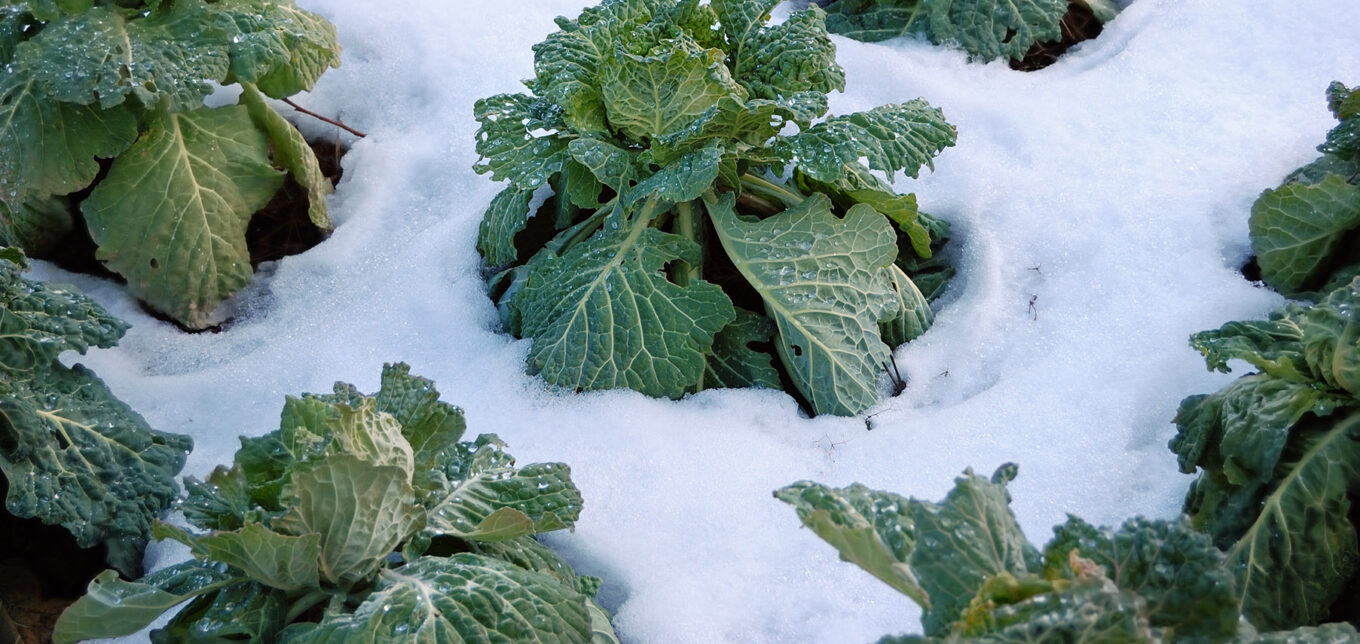
Many gardeners assume the first cool snap shuts down pest season. In warm parts of the South, that is a risky bet.
UF/IFAS Extension reports that imported cabbageworm occurs year-round in Florida, and cabbage looper numbers peak in early fall in central Florida. South of Orlando, loopers can keep reproducing through winter.
Kale also handles cold well. Texas A&M AgriLife Extension identifies kale as frost-tolerant, so a frost may end neither your crop nor the need to check it.
Treat these as regional examples, not a calendar. The sources do not give one fall schedule for every caterpillar or every backyard, so your own leaves are the best guide to what is happening.
How much damage means you should act?
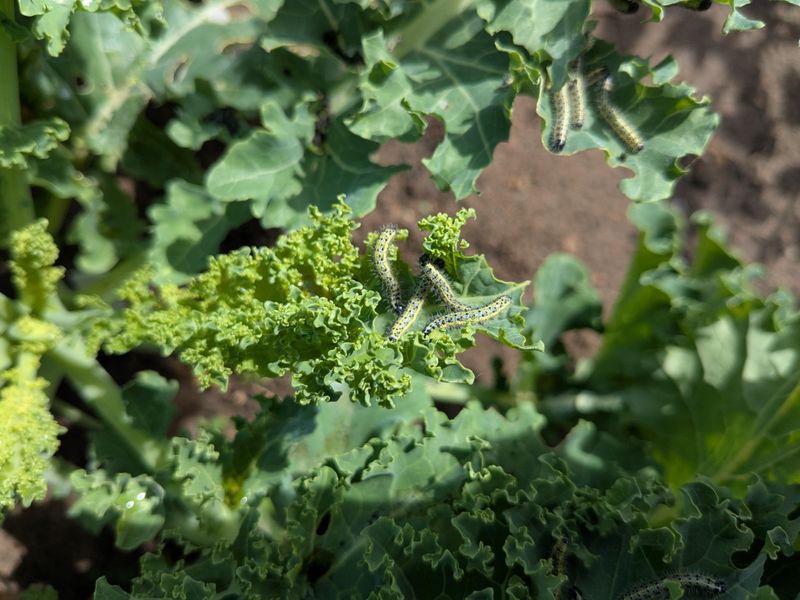
A few holes do not automatically call for a spray. Cole crops can tolerate some feeding, especially older, well-established plants.
Young plants are more vulnerable because they have less leaf to lose, a point made by Clemson Extension.
For older plants, University of Minnesota Extension advises not letting defoliation exceed 30 percent. Think of that as a regional yardstick.
It is not a tested limit for Southern kale, and it does not guarantee that lighter damage is harmless.
To decide what to do, weigh three things: how old the plant is, whether new damage keeps appearing, and whether you have actually found caterpillars. Fresh chewing plus confirmed larvae is a stronger reason to act than old holes with nothing in sight.
Start with frequent scouting and handpicking
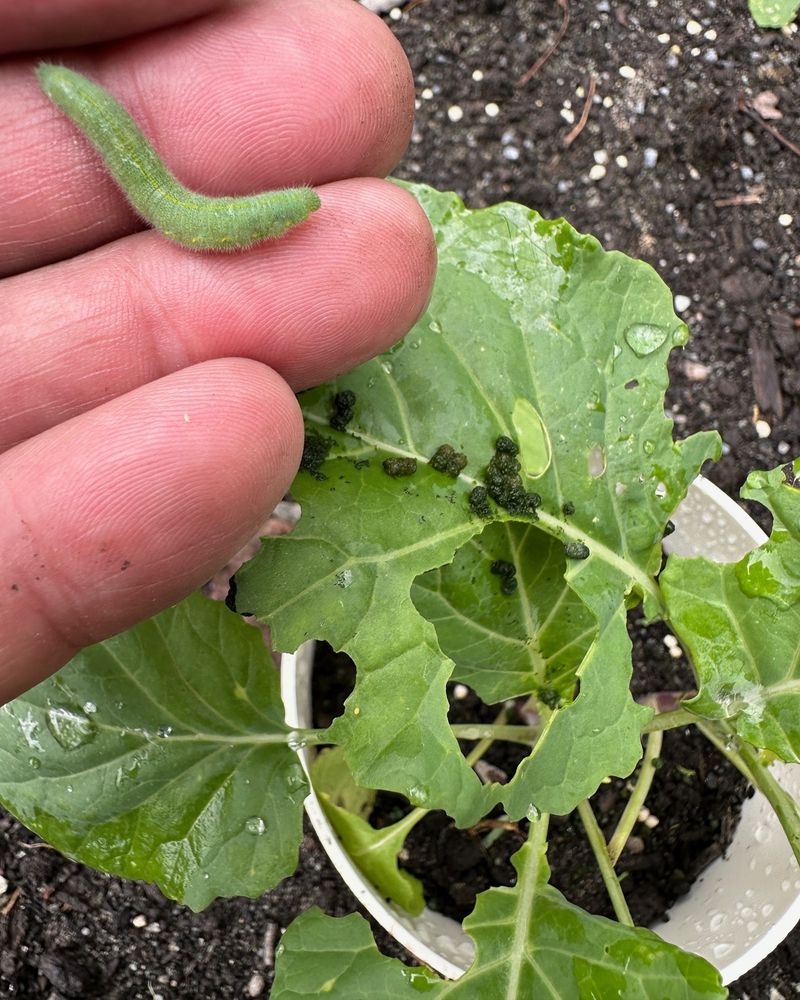
Your first tool is a close look. Check both sides of the leaves, especially along the veins, at least once a week.
Go more often when you see fresh damage.
Small larvae are easy to miss, and they are generally easier to control than big ones. Clemson Extension suggests scouting every few days and removing caterpillars soon after they hatch.
For a small planting, handpicking works well. Drop the caterpillars into a cup of soapy water, and check the leaf for tiny eggs or clusters of droppings too, which University of Minnesota Extension also covers.
Scouting will not guarantee a pest-free crop, since new moths can arrive anytime. It does let you keep damage manageable.
Row cover blocks new egg-laying, not existing larvae
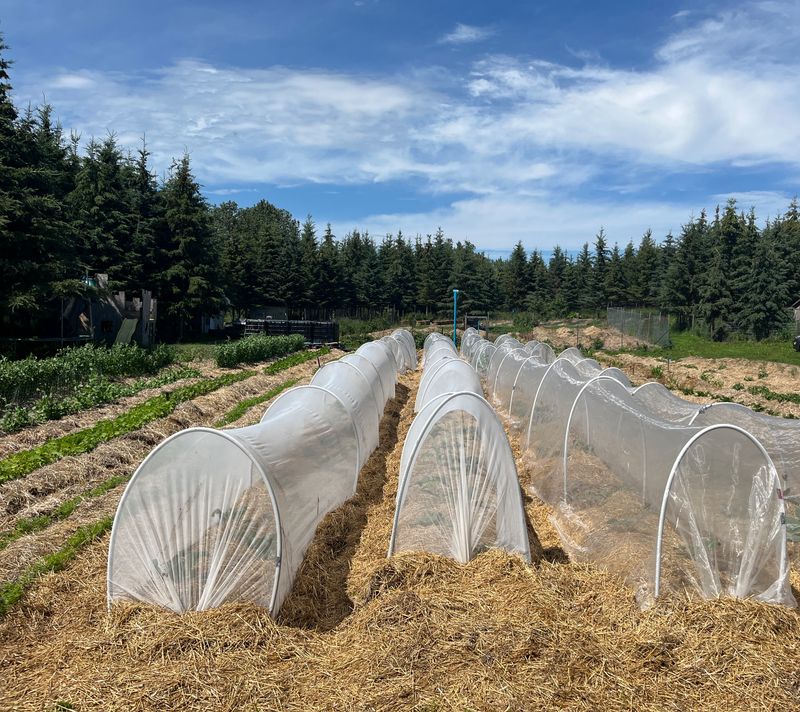
Floating row cover or fine mesh keeps egg-laying adult moths and butterflies from reaching your kale. That makes it a prevention tool, not a rescue.
As Cornell Cooperative Extension advises, install it before pests arrive and scout underneath.
Caterpillars already on the plants will stay there, and they may keep feeding under cover. Pick them off first, then seal the edges with soil, boards, or pins so no gaps remain.
Lift a corner now and then to check the leaves, as Clemson Extension also stresses regular scouting.
Covers can add some frost protection too, though the amount depends on the fabric and local conditions, as UGA Extension discusses. Do not count on it as your only cold defense.
Bt can target small caterpillars when removal is not enough
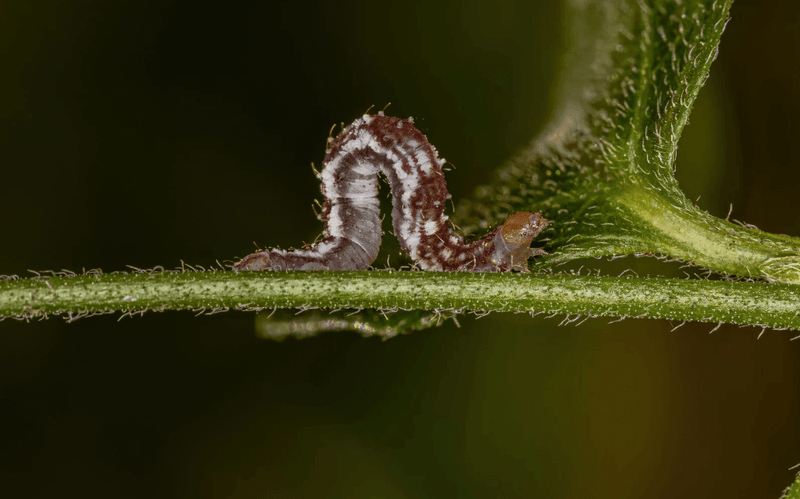
If handpicking cannot keep up, a caterpillar-targeting Bt product is one possible next step. These commonly contain Bacillus thuringiensis var. kurstaki, as listed by the Alabama Cooperative Extension System.
It is not a guaranteed cure.
Caterpillars must eat it, so coverage on the leaves matters. It is generally more useful on small larvae than on large ones, a point also reflected in University of Minnesota Extension guidance.
Read the label for your exact product. Look for kale directions, how often to apply, protective instructions, and the preharvest interval before you pick.
“Natural” does not mean harmless to everything. Cornell Cooperative Extension of Monroe County notes that Bt can affect non-target butterfly and moth larvae, so keep spray from drifting onto plants like milkweed that feed monarch caterpillars.
Reduce pest refuges while preserving natural enemies
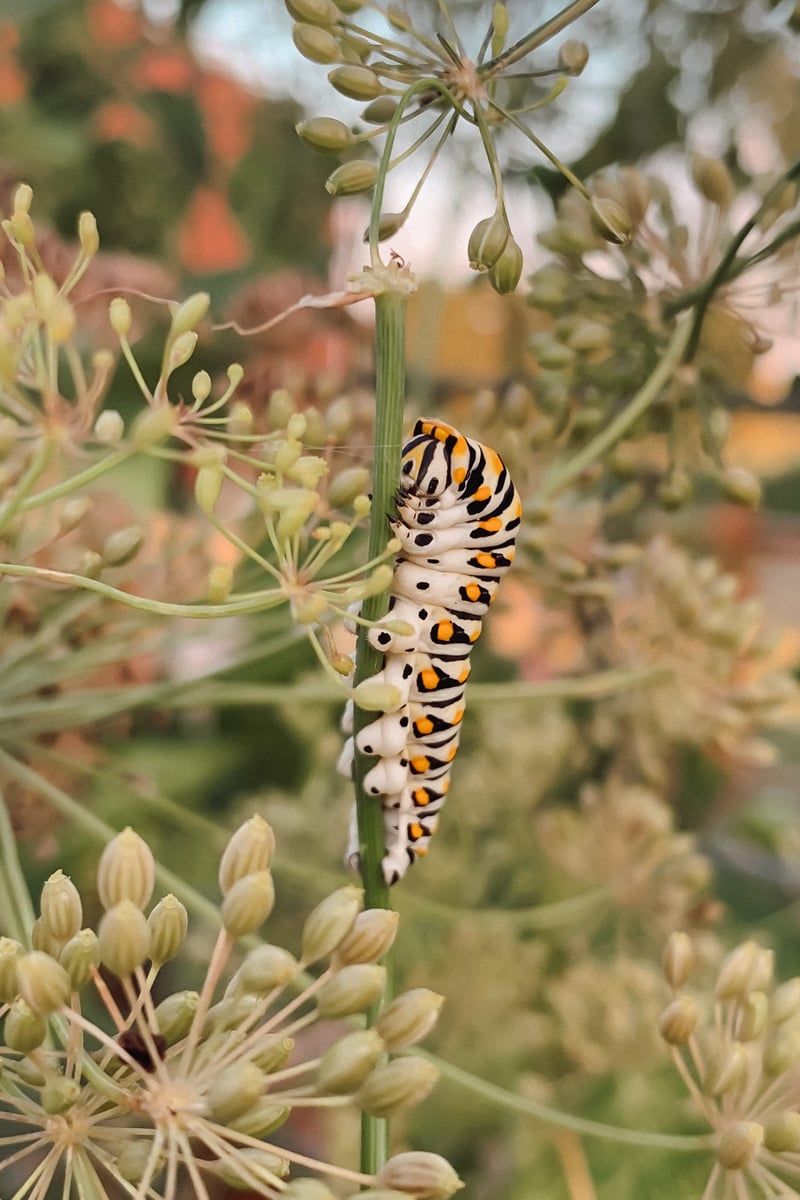
Cleanup can take away places where pests feed and hide. When practical, pull spent brassica crop residue and nearby brassica weeds such as wild mustard, since they can offer food or shelter.
University of Minnesota Extension includes this kind of sanitation among its cole crop tips.
It can reduce pressure, but it will not wipe pests out. Think of it as a background habit, separate from picking off larvae or covering plants.
Aim for balance rather than a spotless garden. Predators and parasitoids help hold caterpillars down, as Clemson Extension explains, so leave some flowering plants and avoid broad sprays that hit helpful insects.
Keep scouting as the kale crop continues

Work in order: confirm what is chewing, remove larvae you find, then add a row cover or a labeled treatment only if the damage calls for it. Holes alone do not settle the diagnosis, and a frost does not settle the question either.
As UF/IFAS Extension shows for Florida, some caterpillars stay active in warm winters. Your kale keeps growing, so a quick leaf check keeps paying off.