
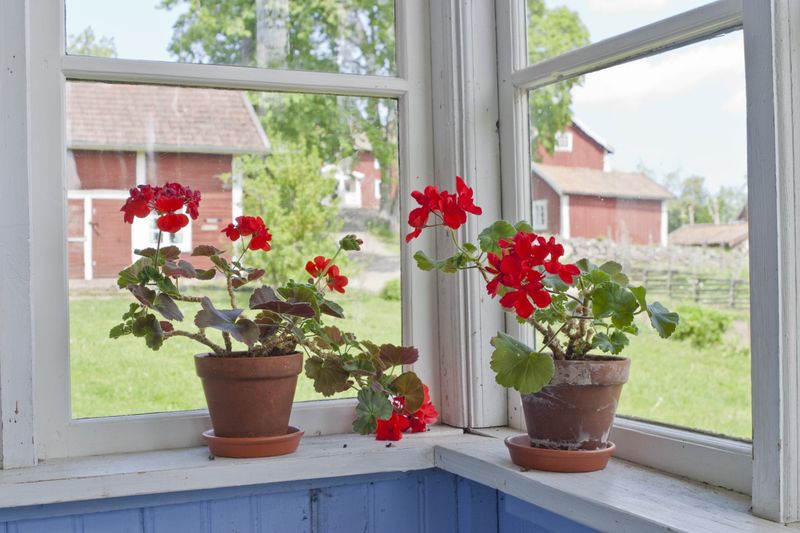
You hauled your potted geraniums inside before the first cold snap, and now the stems are stretched and some leaves have turned yellow. It is a common worry, and it is easy to grab the pruners and hope for the best.
Pruning can help a leggy plant branch, but it is only one piece of the puzzle. Here is how to figure out what your plant is telling you and what to do about it.
Yellow leaves after an indoor move do not automatically call for pruning
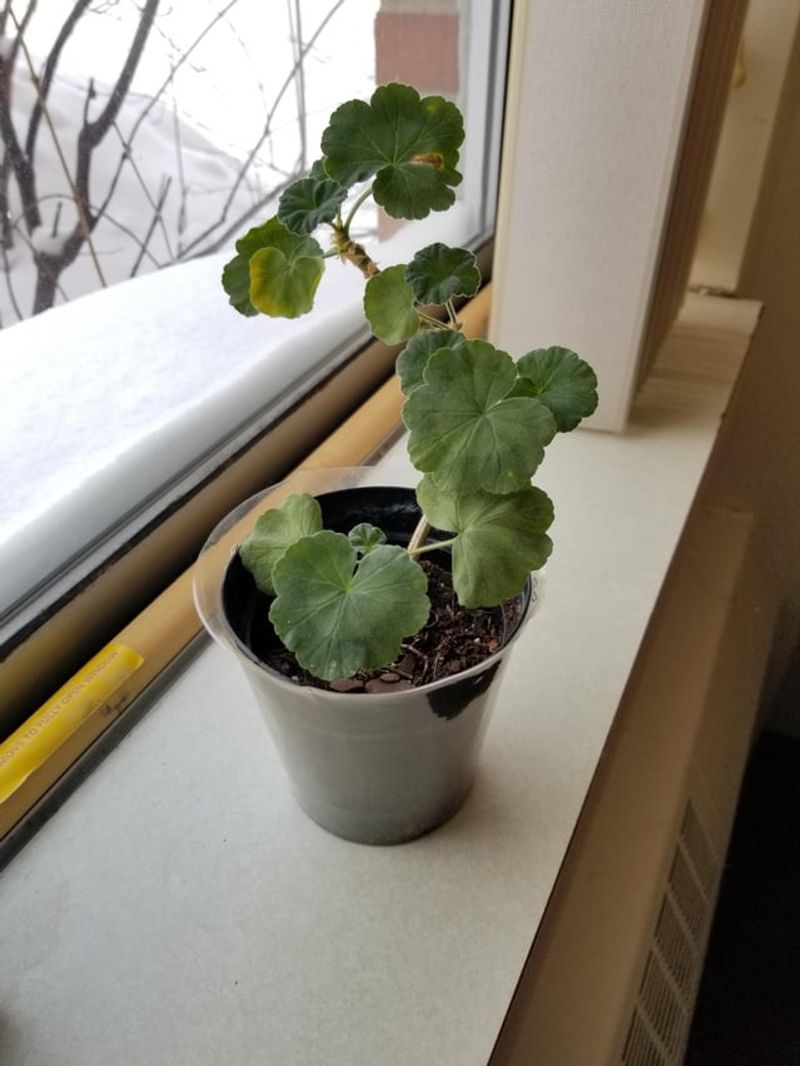
A few yellow leaves a week or two after you carry a plant inside are very common. Extension guidance on indoor geraniums notes that yellowing and leaf drop can follow the change in environment.
The plant is simply adjusting to a new spot.
Light is a big part of that change. UNH Extension points to a sudden drop in light as a common reason geraniums shed leaves after coming indoors.
So treat yellowing and stretched stems as two separate symptoms. Pruning does not fix a yellow leaf.
Instead, watch the plant for a couple of weeks. Is the yellowing limited to a few older, lower leaves, or is it spreading up the plant?
Limited yellowing that settles down is usually just adjustment. Yellowing that keeps going deserves a closer look, which comes up again in the watering and disease section below.
Pull off leaves that have fully yellowed, and hold off on any big cuts for now.
Improve the light to address stretched growth
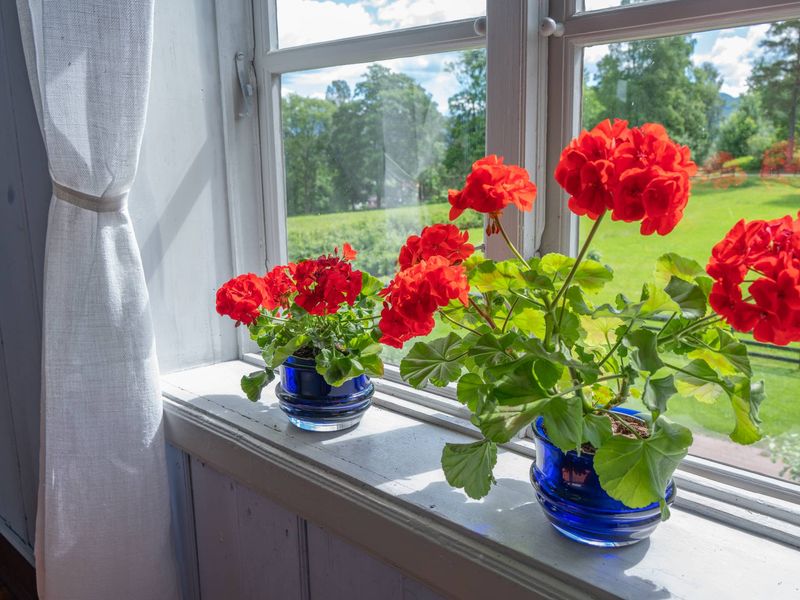
Stretched stems with wide gaps between leaves are a classic sign of too little light. University of Minnesota Extension links low light to leggy growth and notes that pruning above a node can prompt branching.
Pruning alone will not remove the cause, though.
Give plants that are actively growing the brightest spot you have. Clemson Extension suggests a south- or west-facing window, with supplemental artificial light if natural light falls short.
Even in sunny Texas or Florida, a plant moved indoors may get far less light than it had on the patio, as Texas A&M AgriLife points out.
Try turning the pot every few days so stems do not lean one way. If the window is dim or shaded by a porch roof or trees, a simple grow light set a short distance above the plant can make a real difference.
New growth that comes in short and sturdy is a good sign.
Choose pruning timing to match the overwintering plan
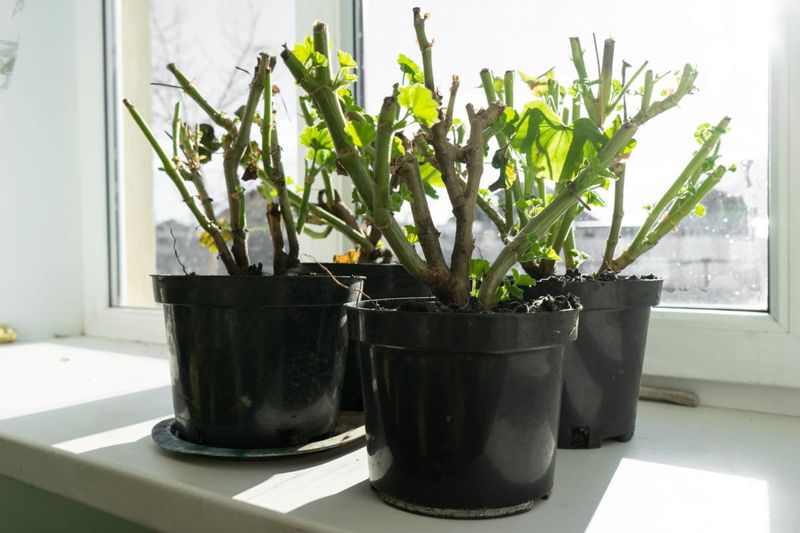
Reliable sources do not agree on one calendar date, and that is useful. Your plan for the plant decides the timing.
Minnesota Extension suggests trimming plants to about two-thirds of their size after they come indoors. Iowa State Extension notes that overwintered plants often get lanky by late winter, then recommends cutting them back by one-half to two-thirds in March.
The Royal Horticultural Society offers two paths for container plants: a hard cut in autumn, or a spring prune if the plants stay actively growing.
So ask yourself how you plan to keep the plant. If it will rest cool and slow, a stronger cut before or at the end of that rest fits.
If it will keep growing in a bright window, lighter shaping and a spring prune may suit it better. November is one option, not the rule.
Prune above a node and avoid treating half as a rule
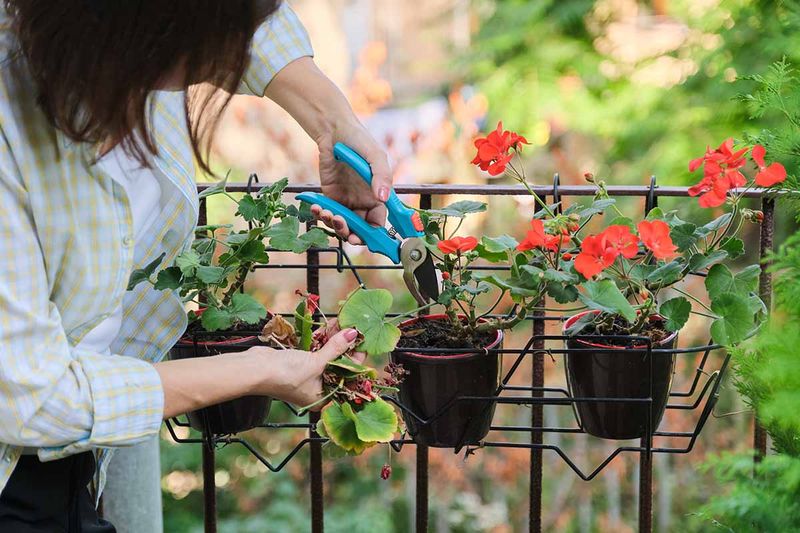
Look along a stem for the small bumps where leaves attach. Those are nodes.
Cut or pinch just above one, and the plant can send out new shoots from that point, as University of Minnesota Extension describes for stockier, better-branched growth.
How much should you take off? Advice runs from a modest trim after the move indoors to a bigger cut in March.
Iowa State describes removing one-half to two-thirds at that late-winter stage.
Let the plant guide you. A healthy, vigorous geranium tolerates a deeper cut better than a weak or stressed one.
For a plant that is only mildly stretched, snipping the longest stems is plenty. Use clean, sharp shears and leave a few leafy nodes on each stem.
Expect better branching, not a promise. A pruned plant in a dim room can stretch again, so keep the light bright.
Check moisture, drainage, and disease signs when yellowing persists
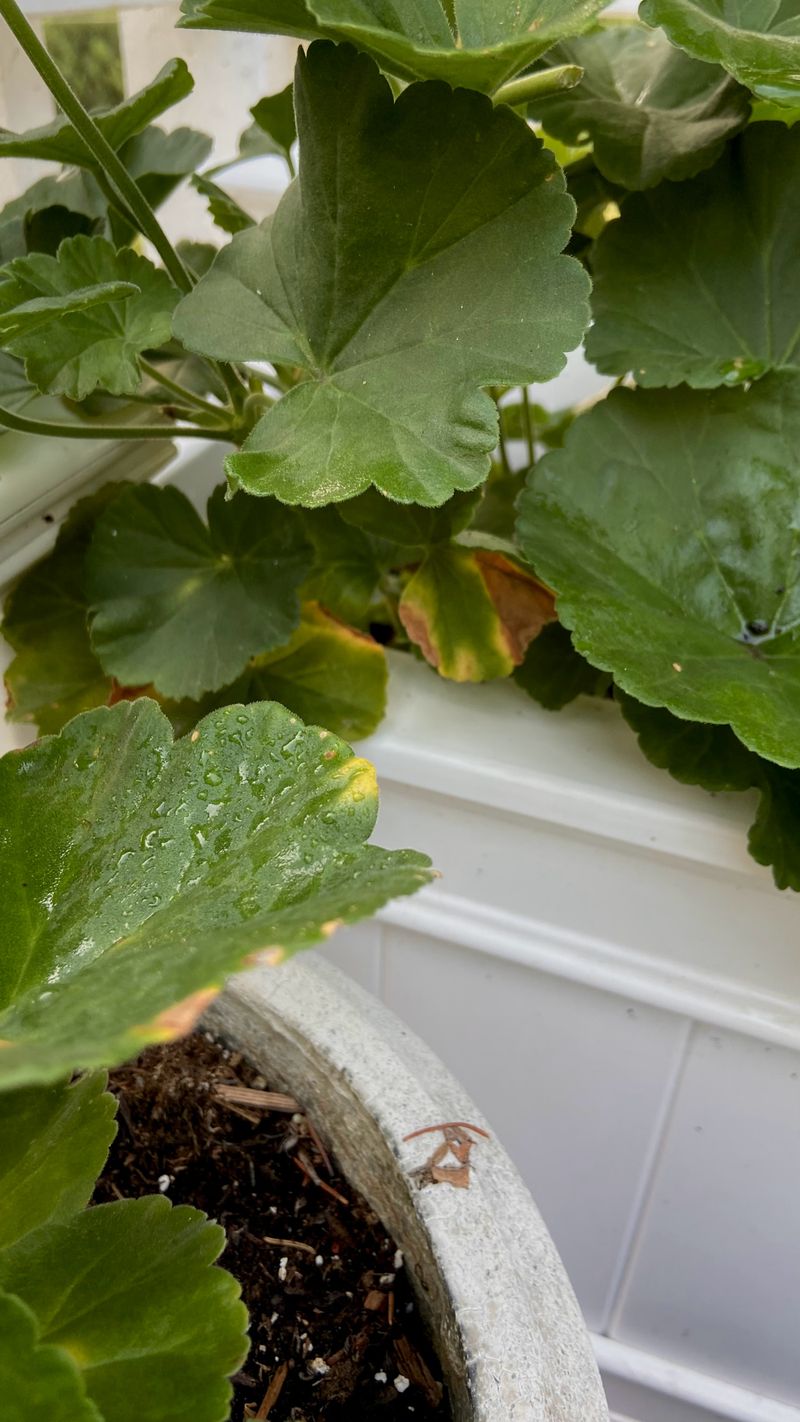
If yellowing keeps spreading, start with the pot. Push a finger into the soil.
Iowa State advises watering when the soil surface becomes dry, not on a set weekly schedule. Plants use less water indoors in winter, so the old summer routine can drown them.
Make sure the pot drains freely and empty the saucer after watering. Clemson Extension recommends letting the soil dry somewhat between waterings, and lists overwatering and high humidity as possible causes of leaf problems.
For blisterlike oedema, it suggests watering less and giving more light.
Disease can also cause yellowing. Cornell’s greenhouse guide describes several geranium diseases.
Look for spots, mushy stems, or fuzzy mold, and remove affected leaves.
Pruning will not solve any of these. Fix the likely cause first, and the plant has a better chance of recovering.
Confirm the plant type and its regional winter plan
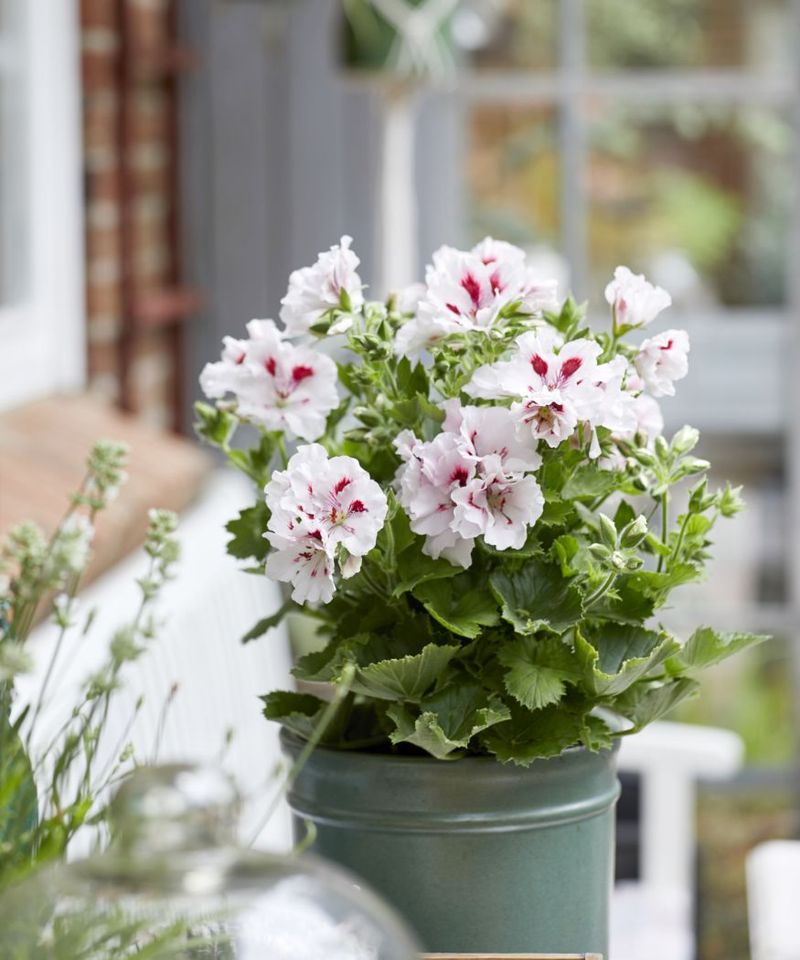
The word geranium covers two different plants. The potted favorites on patios are usually Pelargonium, while true hardy geraniums belong to the genus Geranium, as Minnesota Extension explains.
The advice here is for Pelargonium only.
Where you garden matters too. UF/IFAS describes Pelargoniums as winter annuals in South and Central Florida, while North Florida plantings are timed for cool spring weather.
A Florida gardener may not need an indoor plan at all.
Type matters as well. Martha Washington or regal geraniums are not heat tolerant, according to Clemson, and Illinois Extension says they are harder to rebloom than common bedding types.
Pruning will not guarantee spring flowers on every plant.
Match bright light, careful diagnosis, and well-timed pruning to your own plant. A geranium rarely needs a heavy hand, just a steady one.