
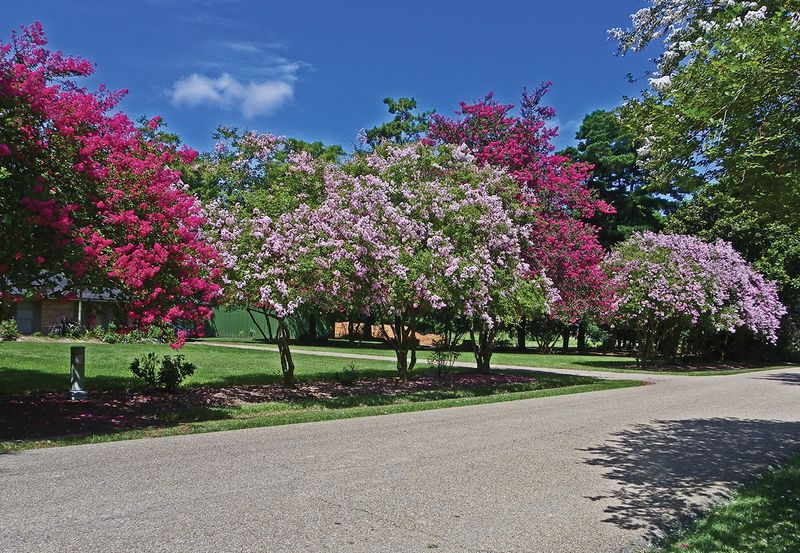
Fall brings a strong urge to grab the pruning shears and tidy up the yard. For crape myrtles, that urge can do more harm than good.
A healthy tree in Florida usually needs less work in November than you might think. Here is what to skip, what to do only if needed, and what really helps summer flowers.
Does your crape myrtle need a November task?
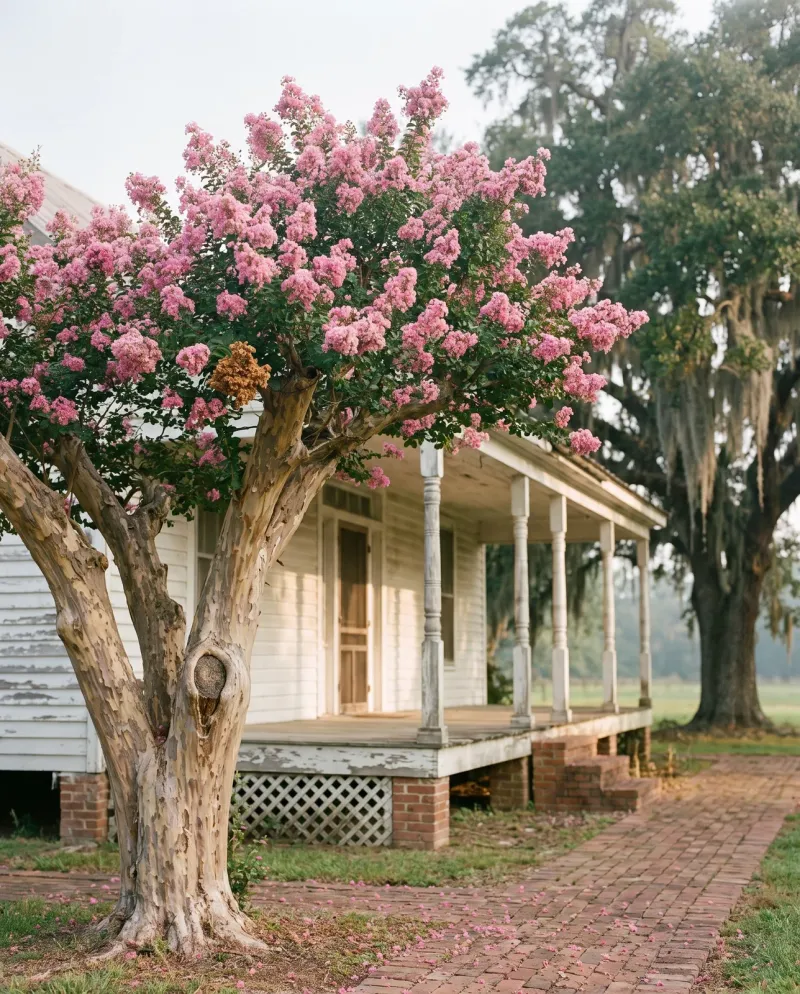
Here is the straight answer: a healthy, well-placed crape myrtle can usually be left alone in November. No November treatment has been shown to reliably produce more flowers next summer, so skip routine pruning and fertilizing.
Your tree is not asking for a fall makeover.
That may feel odd when the yard is changing and neighbors are out with saws. Still, crape myrtles are tough, low-maintenance trees.
UF/IFAS pruning research shows that heavy cutting is not needed for good flowering, and it can actually work against you.
Florida is a long state, and November looks different in Pensacola than it does in Miami. Because of that, pruning decisions should follow the tree itself, meaning whether it has gone dormant and how close spring growth is, instead of a fixed date on the calendar.
UF/IFAS Extension in Charlotte County places structural pruning in the dormant season for this reason.
Fertilizer follows the same logic. University of Georgia guidance points to spring feeding for established plants, not fall.
There is one conditional exception. If leaf spot hit your tree this year, cleaning up fallen leaves is a disease-control step.
We will cover that next, and it is not a bloom treatment.
Leaf cleanup is for disease control, not bigger blooms
Spotted, yellowing, or reddish-blotched leaves dropping early in summer are a clue worth noticing. That pattern often points to leaf spot caused by a fungus called Cercospora.
If your tree had it, the fallen leaves can carry spores through the winter.
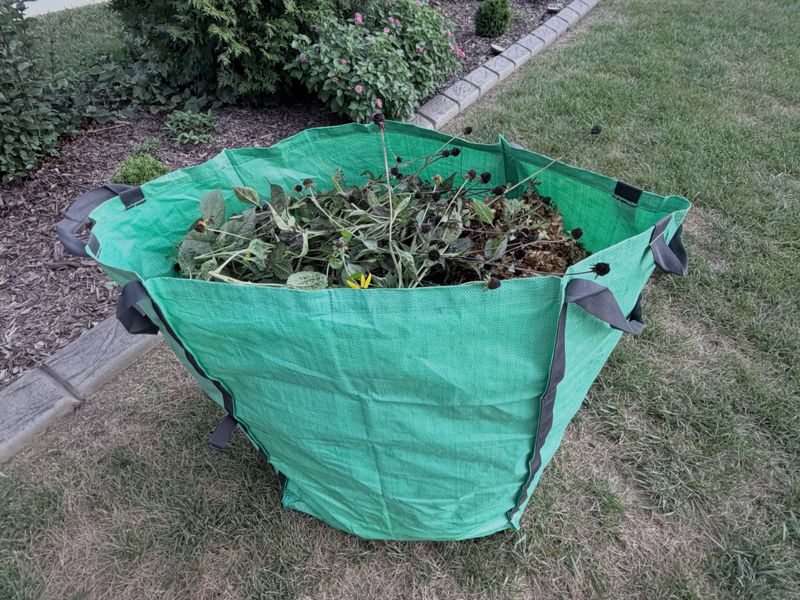
University of Maryland Extension advises disposing of shed leaves rather than composting them, so spores are not kept around for next season. Bag them and send them out with yard waste.
That is the whole job.
Be clear about what this does. Raking limits the disease source, and it may mean fewer spotted leaves later.
It does not make the tree flower more.
A healthy tree with clean, normal leaves has no need for this step. You also do not have to strip every leaf from the surrounding garden or chase leaves across the lawn.
Focus on the ones under the affected tree.
As a quick diagnostic, look back at last summer. Did leaves develop dark spots and drop while the tree was still blooming?
If so, rake. If not, leave the leaves alone and enjoy your weekend.
For general background on how pruning and flowering relate, see the UF/IFAS crapemyrtle pruning publication.
Why severe topping can cost you flowers
Crape myrtles bloom on new growth, so many people assume a hard cutback means more flowers. It is a logical guess, but it does not hold up.
A tree can flower well with little or no pruning, as University of Georgia extension guidance explains.
The numbers point the other way. UF/IFAS research found that flower number goes down as pruning gets more severe.
Topping and pollarding can also delay flowering, and some cultivars end up with a shorter bloom season.
There is a small twist. The UF/IFAS research PDF notes that pruned plants may produce somewhat larger flower clusters.
Bigger clusters and more flowers are not the same thing, so a hard cut should not be counted on to give you a fuller tree overall.
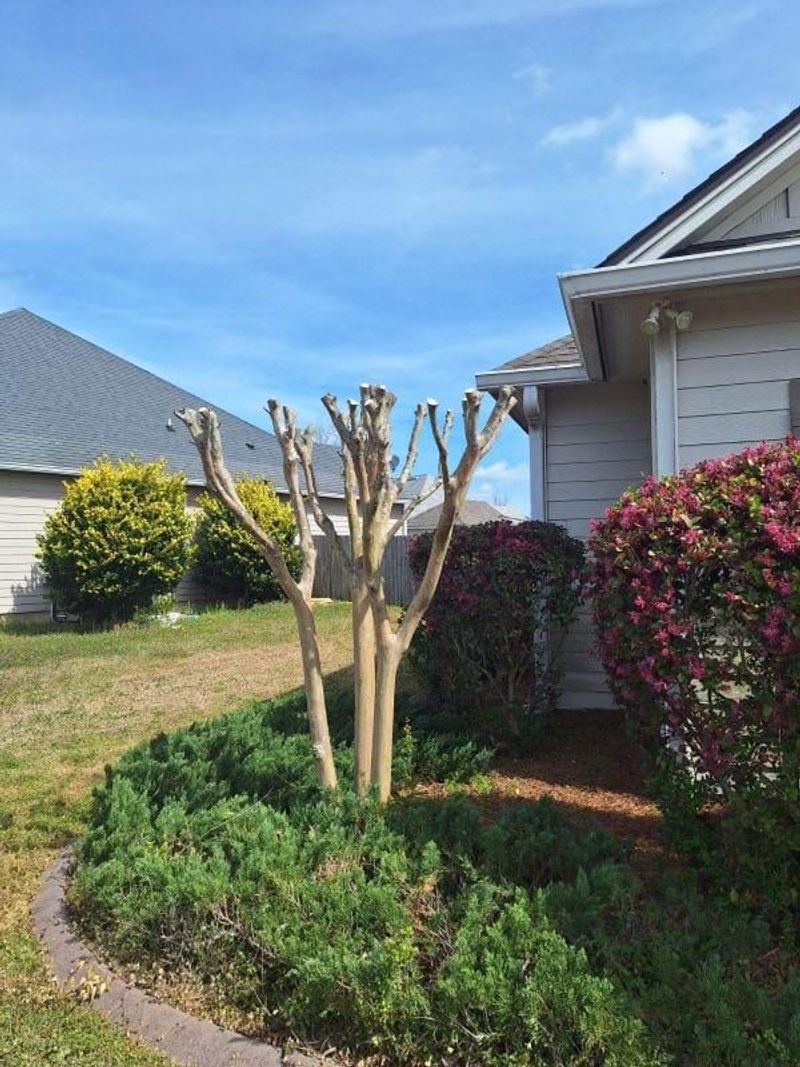
This is where the nickname crape murder comes from. It describes severe topping, where trunks are chopped into stubs and the natural vase shape is lost.
It does not mean the tree is certain to die. Many topped trees resprout, but they often look lumpy, need ongoing cleanup, and flower later than they would have.
So if you were hoping November shears would pay off next summer, you can put them back in the shed.
Prune only when needed, and time it by dormancy
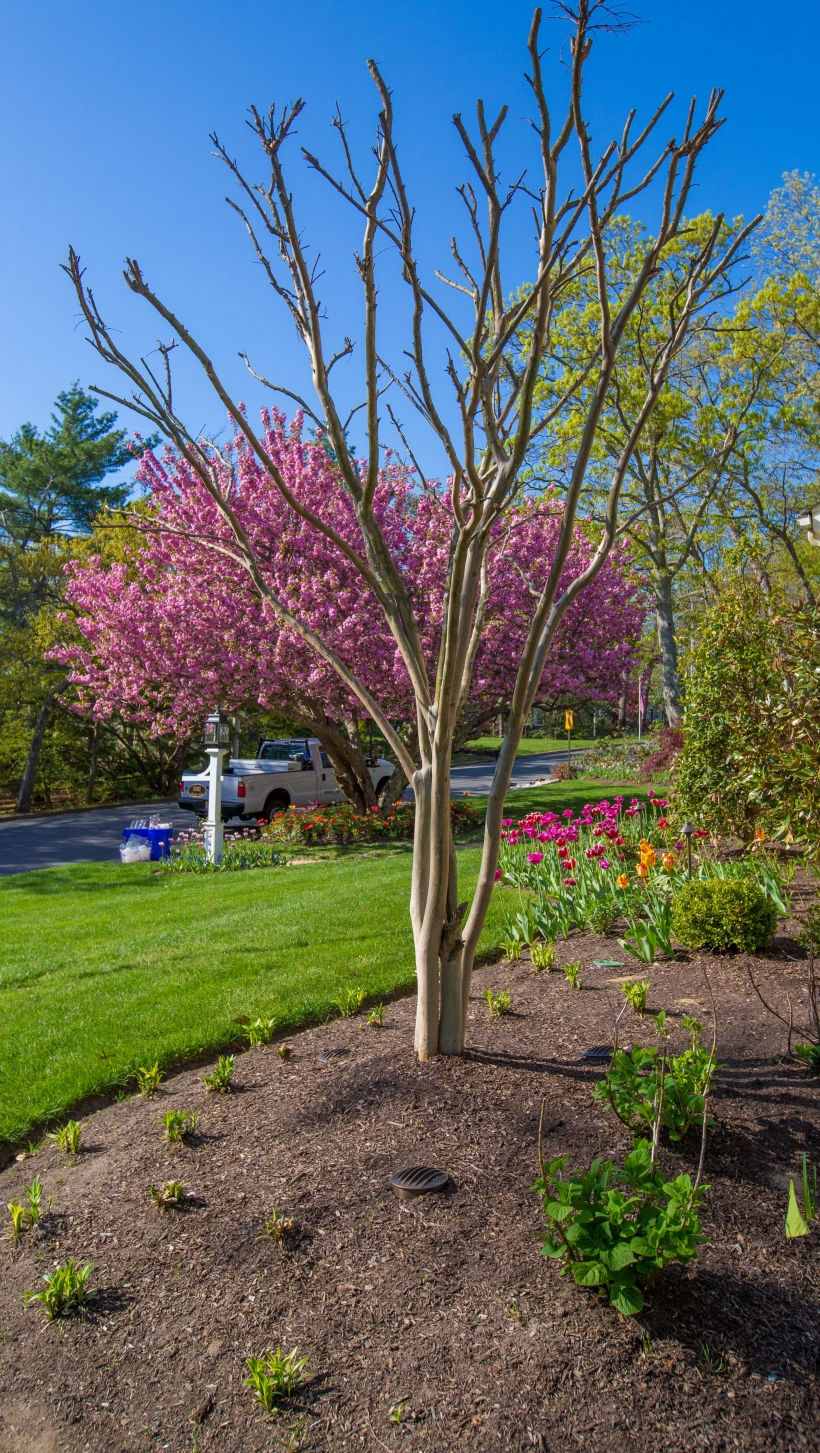
If your tree is well placed, the best plan is often no plan. Let it keep its natural form.
UF/IFAS Gardening Solutions calls a well-placed crape myrtle low-maintenance and suggests removing only poorly placed limbs while avoiding topping.
When pruning is warranted, aim for late winter to early spring, near the end of dormancy and before growth resumes. Pruning in early fall is a poor idea because it can prompt new growth before the tree has gone dormant, according to University of Georgia guidance.
In Florida, local conditions matter, so watch the tree for swelling buds rather than trusting a date.
A few jobs do not follow that schedule. Dead or decaying branches can come out whenever you spot them.
Safety pruning, such as storm-damaged limbs or branches blocking a driveway view, can be done whenever necessary, as UF/IFAS Extension in Charlotte County notes.
Suckers are another small exception. UF/IFAS Extension in Nassau County says basal suckers can be removed any time of year, preferably while small.
Think of it this way: hazards and tiny cleanups are fine now, while shaping waits.
Full sun matters more than a November intervention
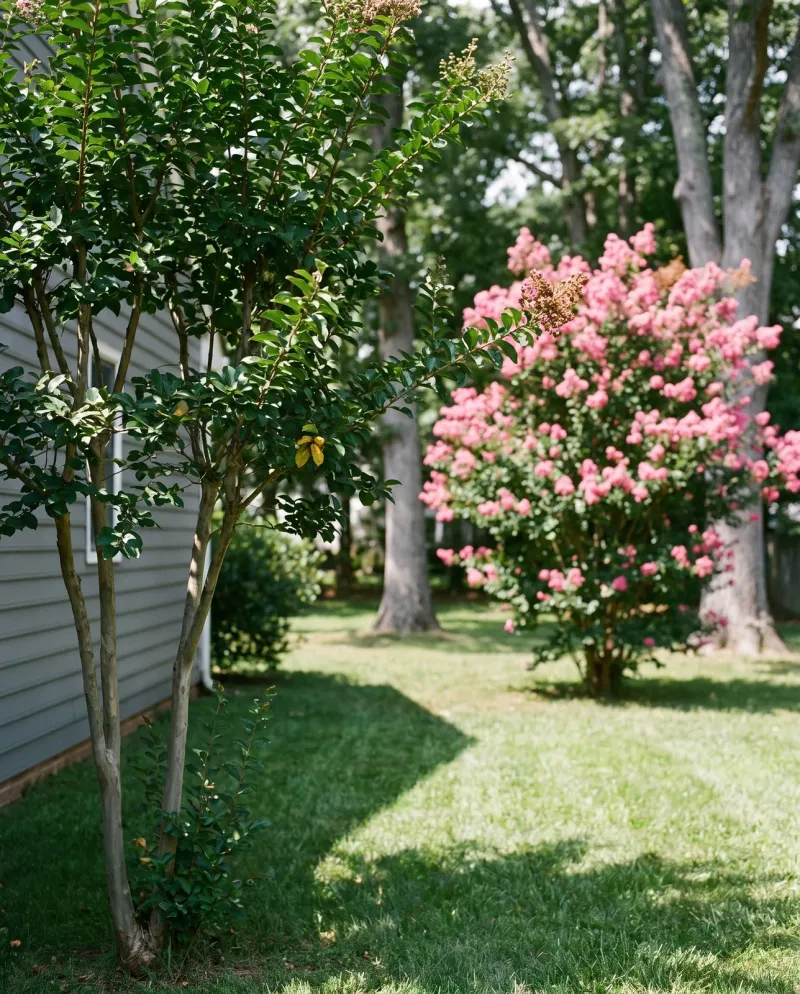
Want more flowers next summer? Look at where the tree is planted.
Sunlight is the growing condition most tied to good flowering. UF/IFAS Gardening Solutions names full sun as important, so a tree shaded by a growing oak or a new fence line may bloom less no matter what you do in November.
If shade is the problem, trimming the neighboring plants or choosing a sunnier spot for future plantings does more than any fall chore. That is a real fix, not a trick.
Established crape myrtles are also drought-tolerant and have low fertility needs, which suits Florida’s sandy, fast-draining soil. They do not need heavy feeding.
In fact, too much fertilizer can push leafy growth at the expense of flowers.
If you do fertilize, University of Georgia guidance recommends spring for established plants, not November. Even then, treat it as support for healthy growth, not a promise of a certain number of blooms.
Mulch is general tree care. A layer of 2 to 3 inches helps hold soil moisture and moderate soil temperature.
Keep it away from the trunk, and do not count on it for extra flowers.
Keep the November checklist simple
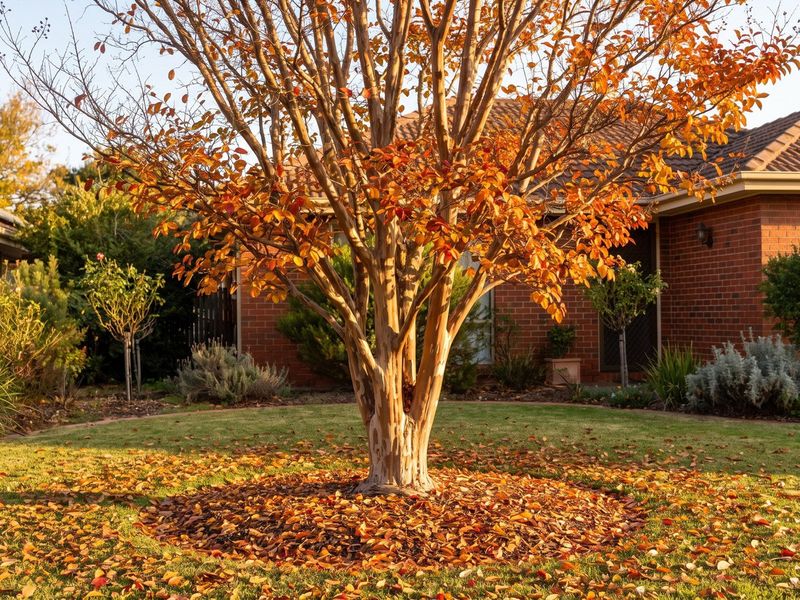
Here is the short list. Skip shaping and fertilizer in November.
Rake and bag leaves only if leaf spot hit, as University of Maryland Extension suggests.
Deal with true hazards like storm-broken limbs right away. Save needed structural pruning for the end of dormancy, before spring growth, in line with UF/IFAS Extension guidance.
None of this promises a heavier bloom. What you get is less work and a tree that keeps its graceful shape, which is the point of UF/IFAS pruning advice.
Sometimes the best gardening move is putting the shears down.