
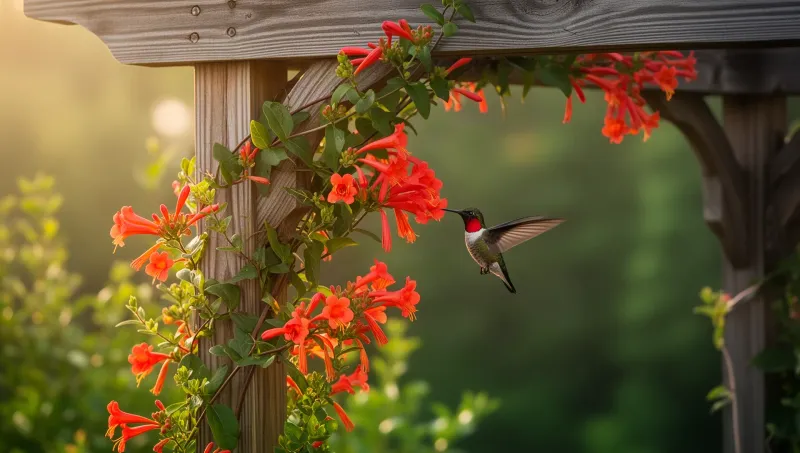
A red-orange trumpet flower hanging from a sunny fence is hard to miss, and hummingbirds tend to notice it too. Florida has its own native honeysuckle vine that fits a trellis well and offers nectar in spring and summer.
Planting it will not guarantee visitors, but it gives tiny birds a reason to stop by. Here is how to pick the right plant, place it well, and set realistic hopes for your yard.
A Native Vine Can Add Nectar to a Florida Trellis
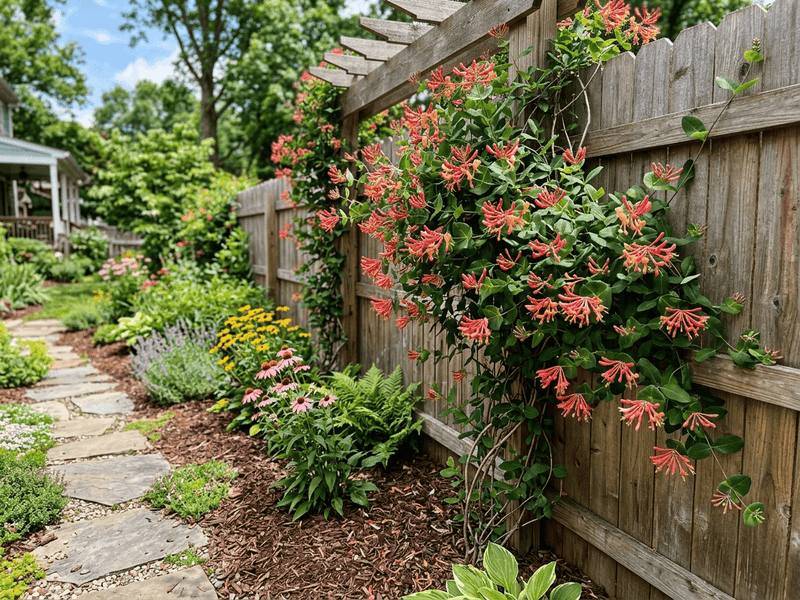
Picture a plain fence or bare trellis wrapped in green stems and dotted with red-orange trumpets. That is what native coral honeysuckle can bring to a Florida yard.
UF/IFAS describes the vine as native to Florida, with tubular flowers that attract hummingbirds and a main bloom season in spring and summer.
That tubular shape matters. Hummingbirds have long bills and tongues built for reaching nectar deep inside narrow blossoms, so this flower suits them well.
A vine in bloom can become one more food source in your yard, and you may get to watch a hummingbird hover beside it.
Notice the careful wording, though. A single vine can attract hummingbirds, but it cannot promise daily visits, and it will not bring birds the day it goes in the ground.
Bird numbers shift from place to place and year to year, so think of the vine as an invitation rather than a guarantee.
The garden payoff is real even on a quiet bird day. The vine softens hard lines, covers a bare structure, and adds color on a vertical surface where space is tight.
It also uses a plant that belongs in Florida instead of an import.
The sections ahead cover the details that decide success: telling the right honeysuckle from a problem one, choosing a spot with enough sun and the right soil, guiding the twining stems, and knowing when to expect flowers. Get those right, and the trellis has a good chance of becoming a pretty and useful part of your landscape.
Choose Lonicera sempervirens, Not Japanese Honeysuckle
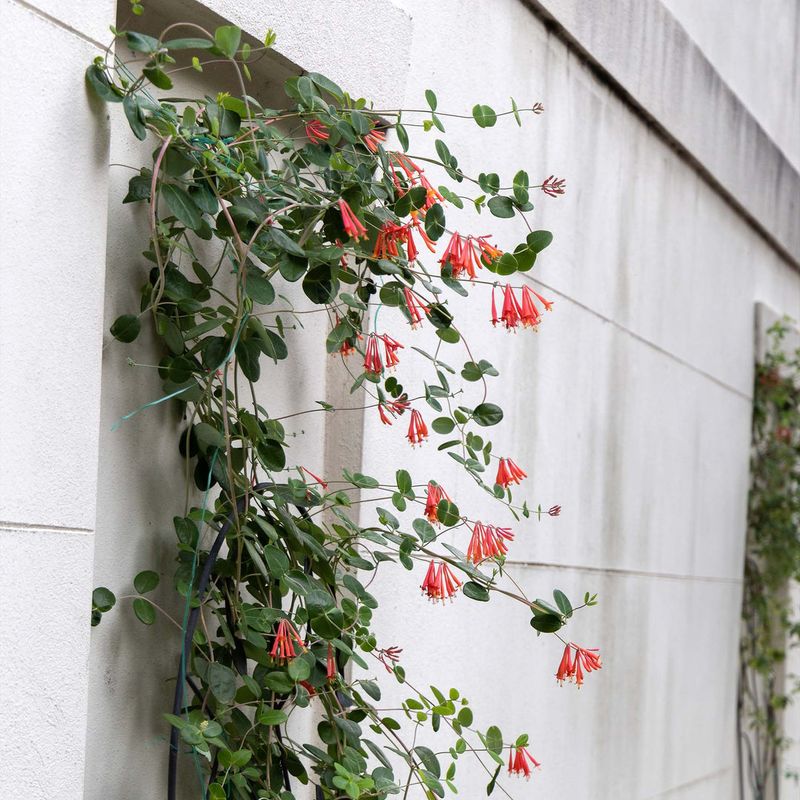
The word honeysuckle covers more than one plant, and one of them causes real trouble in Florida. The vine to look for is coral honeysuckle, with the botanical name Lonicera sempervirens.
It is a Florida native, and UF/IFAS lists it as a Florida-Friendly alternative to invasive Japanese honeysuckle.
Japanese honeysuckle, Lonicera japonica, is the one to avoid. The UF/IFAS Center for Aquatic and Invasive Plants identifies it as invasive in Florida and advises against planting it.
It can escape yards and crowd out native plants, which is the opposite of what a wildlife-minded gardener wants.
Here is a simple habit that protects you. Flip the plant tag or pot label and read the Latin name before you buy.
If it says Lonicera sempervirens, you have the native. If it says Lonicera japonica, or only says honeysuckle with nothing else, put it back or ask a staff member.
Common names can be sloppy at big box stores and roadside sales. A tag reading simply honeysuckle or fragrant honeysuckle is not enough to go on.
A native plant nursery is often a safer bet, since staff there tend to know exactly what they stock.
Also check the flowers once the plant blooms. Coral honeysuckle has tubular blooms in red-orange tones, often with a yellow throat.
If a vine in your yard already looks different and you are unsure what it is, a local UF/IFAS Extension office can help with identification.
Site the Vine for Sun and Soil That Will Not Stay Dry
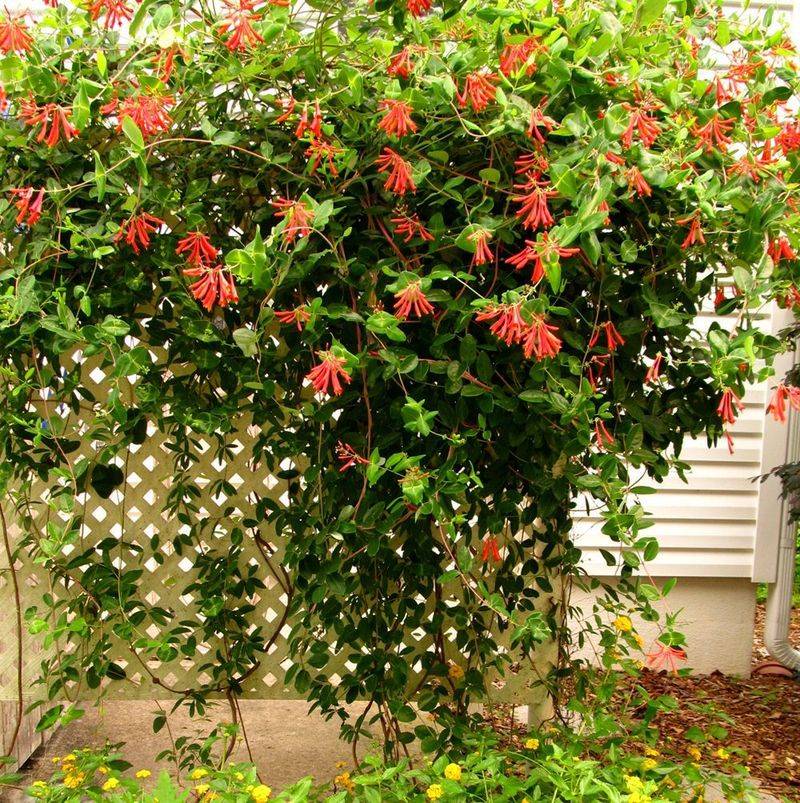
Where you plant matters more than almost anything else you do. Coral honeysuckle tolerates partial shade, but UF/IFAS says it blooms best in full sun and flowers poorly in shade.
If the nectar is the goal, give it the sunniest fence or trellis you have.
A vine in deep shade may still grow green leaves, which can fool you into thinking all is well. Then spring and summer pass with few or no flowers.
If that happens, the likely cause is light, so check how many hours of sun reach the plant before blaming anything else.
Soil is the Florida catch. The vine tolerates many soils, but it does not tolerate dry sands.
The UF/IFAS plant fact sheet makes the same exclusion, so it is worth taking seriously in a state with plenty of fast-draining sand.
Walk your yard and look for spots where soil stays at least a little moist, such as near a downspout area that does not flood, a low edge of a bed, or ground that has held organic matter for years. Skip the hottest, driest sand strip along a driveway or a hot wall.
Do not assume extra compost or a watering schedule will turn a persistently dry site into a good one. Water the new plant regularly while it establishes, and expect it to need that attention at first.
If your only sunny spot is truly dry sand, choose another native vine or another location instead.
Guide the Twining Stems Along Their Support
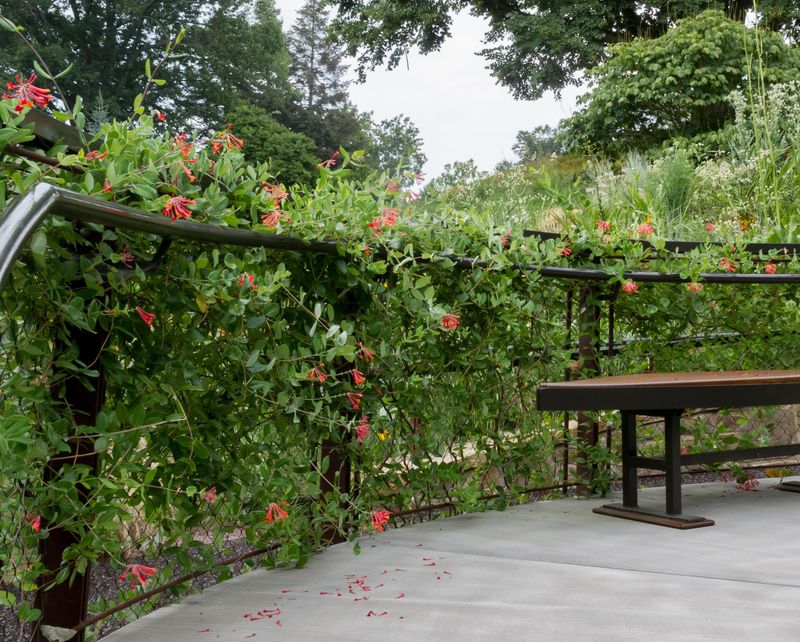
Coral honeysuckle is a twining vine, which means its stems wrap around a support instead of gripping it. It does not stick to a wall the way some climbers do.
UF/IFAS notes that stems can reach about 15 feet, so plan for a structure with some height or length.
Choose supports that stems can actually wrap around. Thin wooden slats, wire, cable, netting, or a lattice with open gaps all work.
Wide, flat boards and smooth, thick posts give the stems nothing to grab, so add string or wire if you are using one.
New shoots often need a hand at first. Every week or two while the vine is growing, look for loose tips waving in the air.
Gently wind each one around or through the support, heading in the direction it already wants to twist.
Weaving shoots through the structure, rather than leaving them in a pile, helps with coverage. UF/IFAS vine guidance says twining vines may need this kind of help and recommends threading shoots through the support for fuller growth.
Use soft ties if a stem refuses to stay put, and keep them loose so they will not cut into growing wood. Spread several shoots out across the trellis instead of letting all of them bunch at one point.
The result is more even cover, and more places for flowers to show up.
Expect the Main Flowering in Spring and Summer
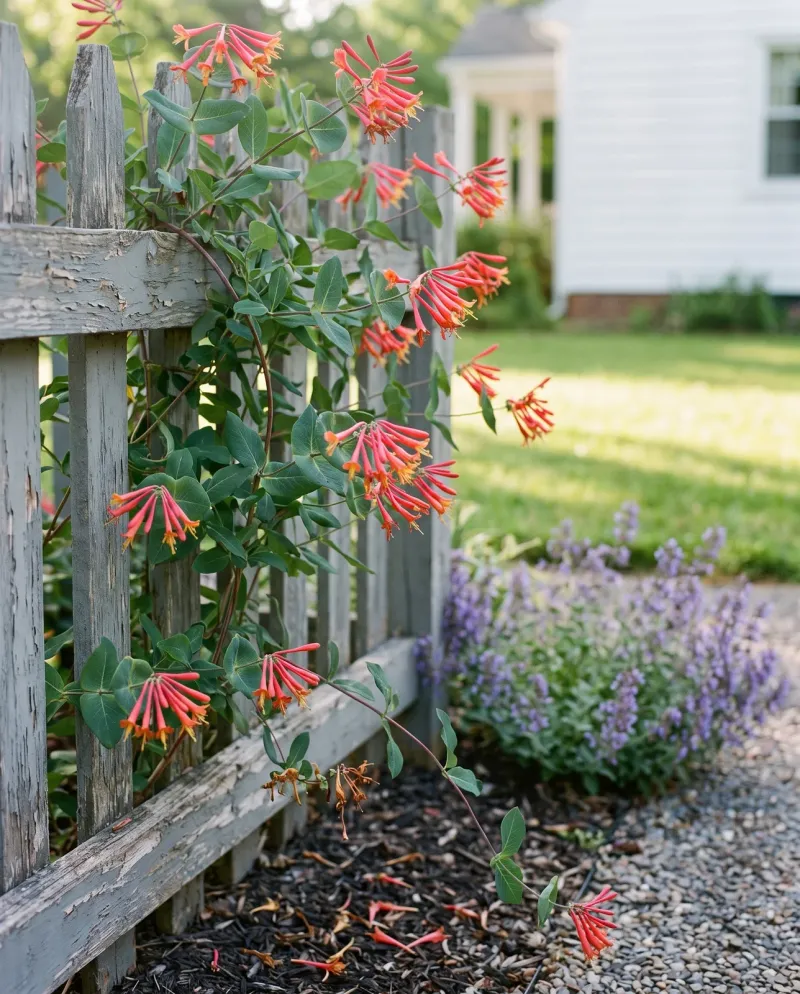
Flowers are the point of this plant, so timing deserves a clear answer. Coral honeysuckle blooms mainly in spring and summer, according to UF/IFAS.
Mark those months as your nectar season, and plan accordingly.
A newly planted vine may bloom lightly while it settles in. Give it time to grow roots and stems, and keep watering it as needed.
Patience pays off better here than extra fertilizer or constant fiddling.
Foliage tells a different story from flowers. In central and south Florida, the leaves are generally evergreen, so the trellis stays leafy through winter.
In North Florida, colder winters may make the leaves drop, leaving bare stems until warm weather returns.
Green leaves in January do not mean flowers in January. The vine is not a winter bloomer, and a fresh planting should not be expected to supply winter nectar.
If you see leaves but no blooms in the cool months, the plant is behaving normally.
If you want something blooming for hummingbirds in other seasons, plan other plants for those months rather than waiting on this one. Use this vine as your spring and summer anchor.
Take a few photos during bloom, too, so you can compare from year to year and see when your own vine tends to peak.
Winter Hummingbird Presence Varies Across Florida
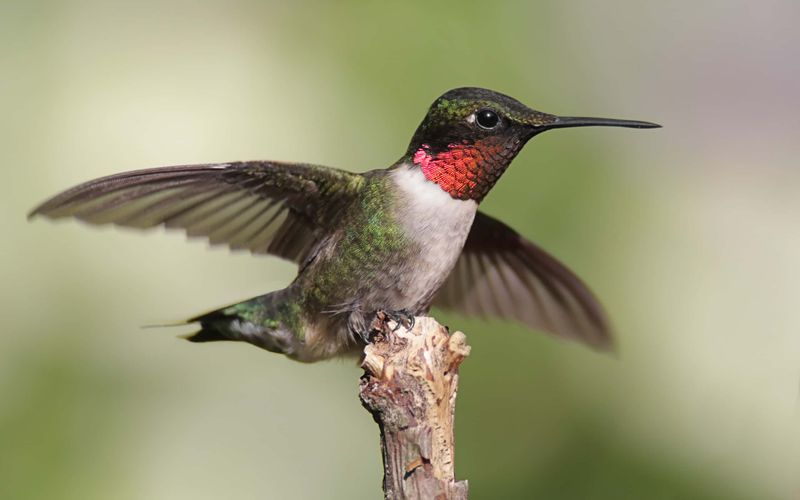
Late October can sound like a tempting time to expect new hummingbird arrivals, but the picture is more mixed than that. Audubon reports that some hummingbirds overwinter in south Florida and along the Gulf Coast.
That does not mean every yard in the state gets winter visitors.
For ruby-throated hummingbirds, Audubon gives an approximate Florida season from the second week of March through the second week of November. The fall influx is mainly in August and September.
That pattern applies to this species, not to every hummingbird or every yard.
So what does a gardener in Pensacola, Ocala, or Miami do with this? Pay attention to where you live.
Gulf Coast and south Florida yards have a better chance of seeing a winter bird than a yard in the northern or inland parts of the state.
Migration timing also cannot promise a visit to your trellis. Birds move along routes, and individuals choose different places from year to year.
A well-placed vine does not pull a passing bird off its path on a schedule.
Remember, too, that coral honeysuckle blooms mainly in spring and summer. A vine planted in fall will not offer flowers to any bird in winter.
Its value comes later, during the months when the plant itself is in bloom, so plant with next season in mind.
Pair the Vine With a Broader Hummingbird-Friendly Yard
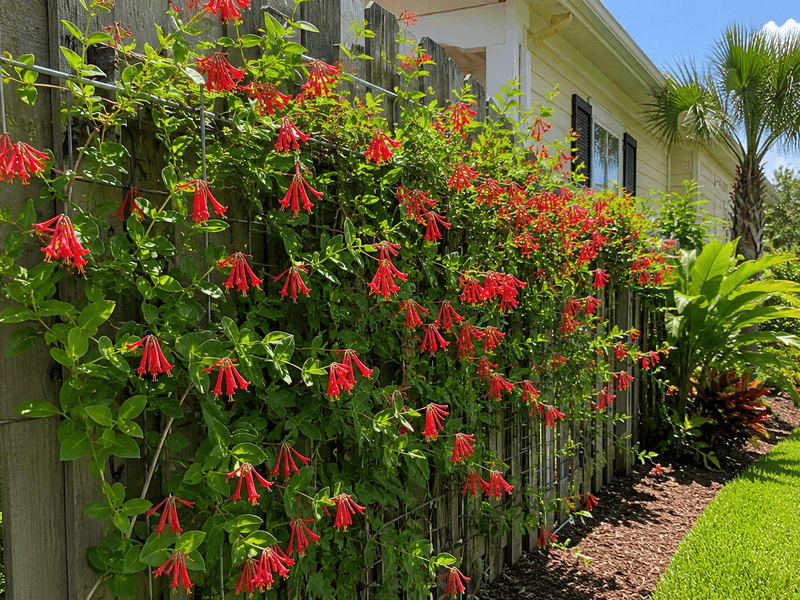
One vine is a good start, but a yard with several food sources works better. Audubon’s hummingbird yard guidance points gardeners toward native tubular flowers and general habitat.
Add a few other natives with trumpet-shaped blooms, and try to space them around the yard.
Layering helps, too. Combine your trellis vine with shrubs and perennials, and leave some shelter in the form of trees or dense plantings.
Pick plants that flower at different times, so nectar is available across more of the year.
Numbers still vary. Audubon notes that hummingbird abundance changes with location, year, food, and the movements of individual birds.
A broader planting gives you better habitat, but it still cannot guarantee regular sightings.
If you add a feeder, treat it as extra support, not a replacement for plants. Audubon advises cleaning feeders every two to three days, or daily in particularly hot conditions.
Change cloudy nectar right away, and never use red food coloring.
The practical path is simple. Identify Lonicera sempervirens correctly, choose a sunny site with soil that will not stay dry, and guide the twining stems onto the support.
Then count any hummingbird visit as a welcome bonus.
A trellis full of trumpets is worth planting for its own sake, and a hovering hummingbird is a lovely surprise when it happens.