
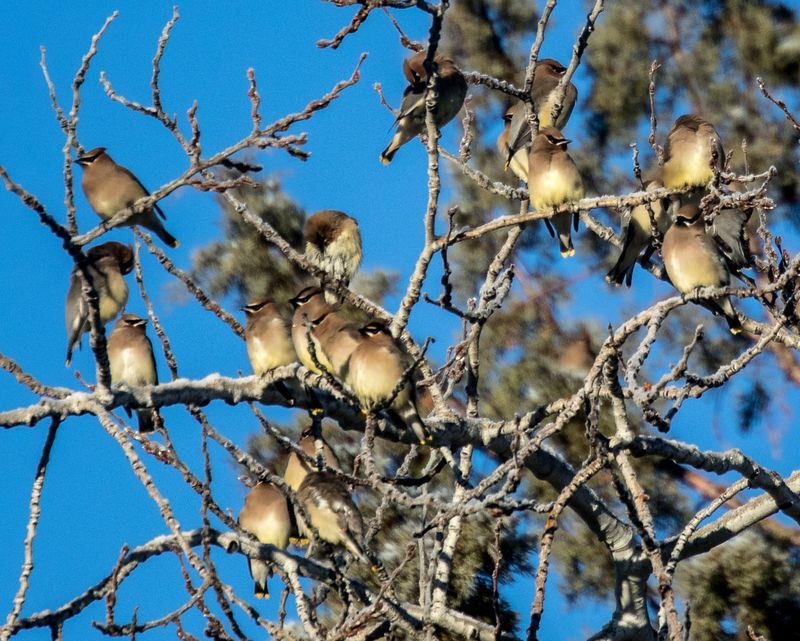
One morning the yard is quiet, and an hour later dozens of sleek, crested birds are lined up in a tree. Cedar Waxwings can seem to appear out of nowhere, and many people wonder what the visit means.
The answer is simpler and more useful than any weather legend. Here is how to read the clues the birds leave behind.
A Waxwing Visit Points First to Food
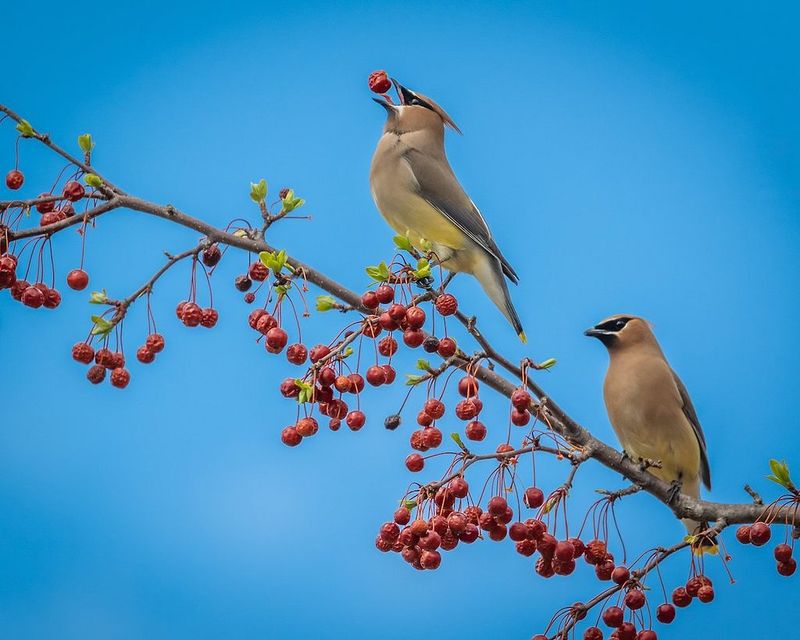
Most of the time, a flock of Cedar Waxwings means one thing: the birds found something to eat. That something is often fruit hanging on a tree or shrub.
National Audubon Society’s field guide describes these birds as flocking foragers that gather around berry-laden trees, and that habit explains the sudden crowd.
You may have heard that a waxwing flock predicts a hard winter or an early freeze. Nothing in the bird references backs that up.
The sources describe flocking, seasonal movement, and food supplies, and they say nothing about forecasting weather. A flock in your oak is a feeding story, not a thermometer reading.
It also helps to know that the food may not be yours. The birds could be working one fruiting plant in your yard, or they could be using a berry source down the street and stopping by to rest, drink, or move through.
Seeing a flock does not tell you that your yard has an unusually big berry crop.
Waxwings are known for shifting where they spend the colder months based on where food is available, as Cornell’s life history notes explain. That makes them wanderers that follow meals.
So when they land near you, the best question is not what the winter will bring. It is what they found nearby, and whether you can spot it from your window.
Why Do They Arrive in a Crowd?
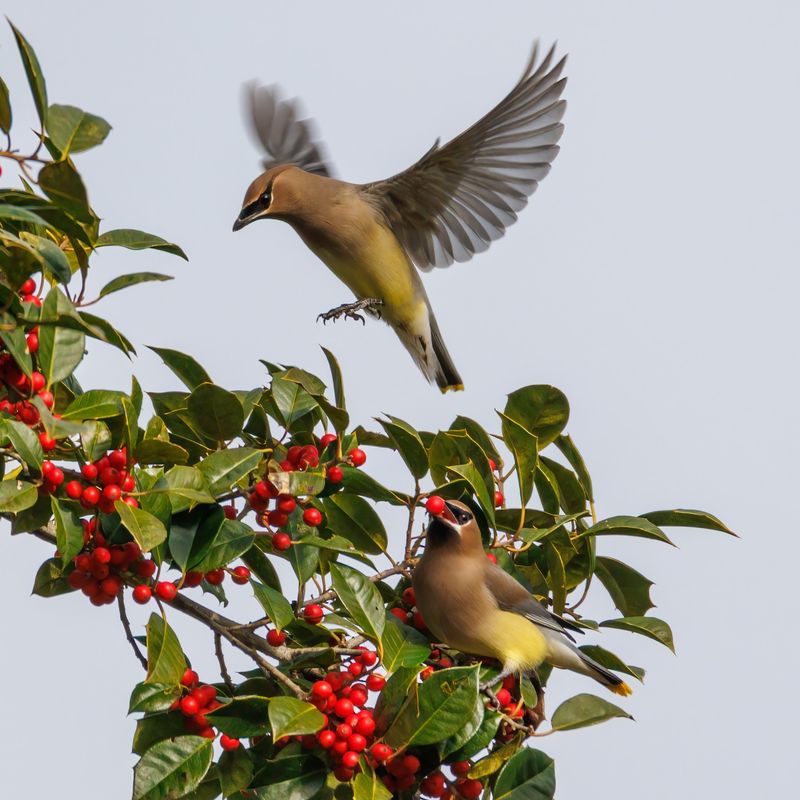
Cedar Waxwings travel and feed as a group, which is why their visits feel so dramatic. One bird finds fruit, others join, and within minutes a whole branch is full.
Audubon notes that waxwings eat a wide range of fruits, including juniper, dogwood, wild cherries, crabapples, and hawthorn.
That variety matters. A flock is not tied to a single plant, so it can move from one fruiting tree to another across a neighborhood.
You might see them in your yard for twenty minutes, then gone, then back again later in the day after visiting a few other spots.
Berries are not the whole menu either. According to Cornell’s life history page, waxwings also eat insects in summer.
So a flock sitting in your yard in warm months might be hawking bugs over the lawn rather than raiding a shrub.
Many mouths also mean fast work. A flock can strip the fruit from a plant in a short time, and that is simply what flock feeding looks like.
A bare branch the next morning does not mean the plant is sick. It means a hungry group found a good meal, finished it, and moved on to the next one.
Central Texas Timing Is Seasonal, Not Predictive
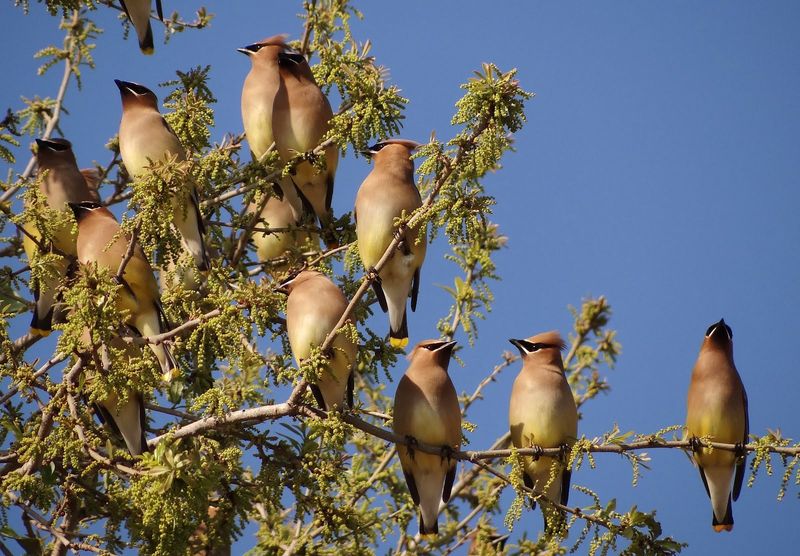
Cedar Waxwings are migratory, and Central Texas sits within the range where many of them spend the cooler part of the year. So a flock showing up in fall or winter fits a familiar seasonal pattern.
That is useful background, and it is all it is.
The eBird range map for the species uses broad categories. eBird’s Status and Trends data lists a post-breeding migration season of August 23 to December 20 and a non-breeding season of December 27 to March 29. Those dates describe the species as a whole across its range.
They do not work as an arrival schedule for your street. A neighbor three miles away may see waxwings weeks before you, or a season when none stop by at all.
Local food, weather on the move, and plain chance all shape who sees what and when.
Just as important, the calendar says nothing about the weather ahead. A flock in November does not signal a cold January, and a quiet winter without waxwings does not signal a mild one.
Think of the seasonal categories as a general backdrop, a bit like knowing that spring bluebonnets are likely in March. It helps you expect a visit, but it cannot forecast one, and it cannot forecast the thermometer.
Read the Tree Before You Redesign the Yard
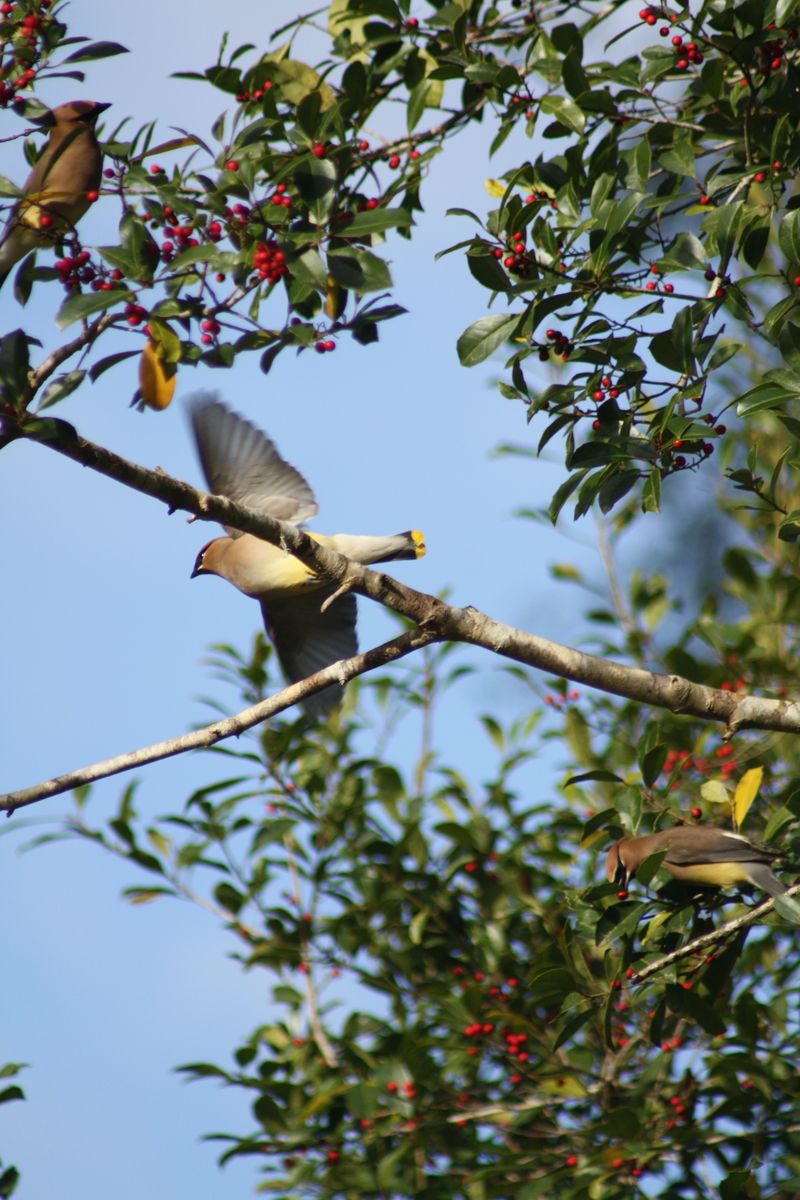
Before you change anything outside, take ten minutes and watch. Stand back from a window with a cup of coffee and notice exactly where the birds land.
Are they working the fruit on one particular tree or shrub, or are they just perching on branches between flights?
Feeding looks different from resting. Feeding birds reach, pluck, and swallow fruit, often passing quickly from branch to branch on the same plant.
Resting birds tend to sit in a tight row at the top of a tree, preening and calling, then lift off together.
If they are eating, note which plant it is. That tells you what is on the menu, and it reflects what Audubon describes as waxwings gathering around berry-laden trees.
If they never touch your plants, the food is probably nearby, and your yard is serving as a rest stop.
Then take a short walk around the block. A fruiting tree in a neighbor’s yard or along a fence line may explain the whole visit.
Because Cornell notes that waxwings move with food supplies, one productive plant can be enough to draw a flock for a day. A visit confirms a nearby meal.
It does not tell you every plant on your property is loaded with berries.
Choose Berry Plants for Regional Fit
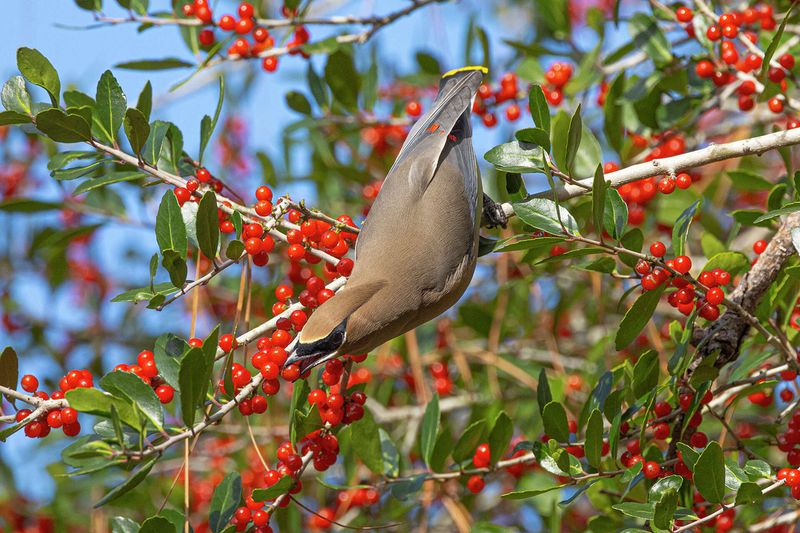
If the visit has you thinking about planting, start with what the sources actually say. Texas A&M’s rangeland plant profile identifies Eastern red cedar fruit as food for Cedar Waxwings and lists the tree in several Texas ecological regions, including the Edwards Plateau.
That is a real, specific link, but it is not a promise. Eastern red cedar grows large, so check that your site is suitable for it and that you have the space before planting one.
Local conditions and the plants already growing nearby will shape whether waxwings ever show up.
Yaupon holly is a different case. Texas A&M’s tree selector supports its value as a Texas native, and the rangeland profile notes that wildlife eat its fruit and that female plants produce red berries.
Neither source names Cedar Waxwings as consumers, so it would be a stretch to say yaupon will bring them.
A sensible approach is to treat these as good native options for wildlife in general, not as guaranteed waxwing magnets. Ask your county extension office which berry plants suit your soil and region.
Then plant for the whole ecosystem of your yard, and enjoy any waxwings that stop by as a bonus.
When Is a Berry-Eating Flock a Cause for Concern?
For nearly every flock, there is nothing to fix. Quick feeding is normal waxwing behavior, as Audubon’s description of their flocking habits suggests.
A shrub stripped bare in an afternoon is not a sign of disease, and the birds do not need you to put out supplemental food.
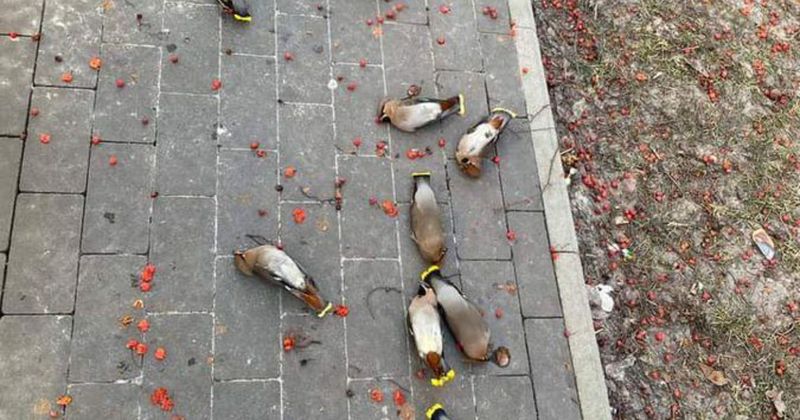
There is one narrow exception worth knowing. Overripe or freeze-affected berries can ferment, and Cornell’s overview notes that Cedar Waxwings eating them may become intoxicated or have trouble flying.
The California Department of Fish and Wildlife also covers ethanol poisoning in its avian investigations.
This is uncommon, and it is not what ordinary berry eating causes. Fresh fruit is a normal part of the diet.
The risk is tied to fruit that has sat too long or been altered by a freeze.
What might you see if it happens? Birds that wobble, flutter awkwardly, or have trouble holding a perch.
In that case, keep pets indoors and give the birds quiet space to recover. Most days, though, a busy flock is just a healthy group enjoying a meal.
Follow the Food, Not a Winter Forecast
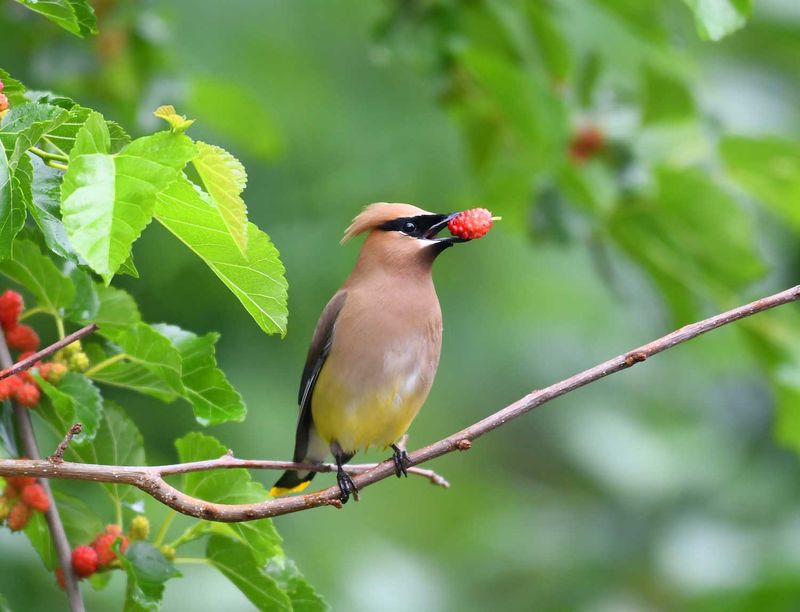
When waxwings drop in, look for the food. Watch which plant they work, glance around the neighborhood, and treat the season as background.
As Audubon’s field guide shows, these birds follow berries wherever they lead.
They are reading the menu, not the sky, so you can leave the winter forecasting to the weather service.