
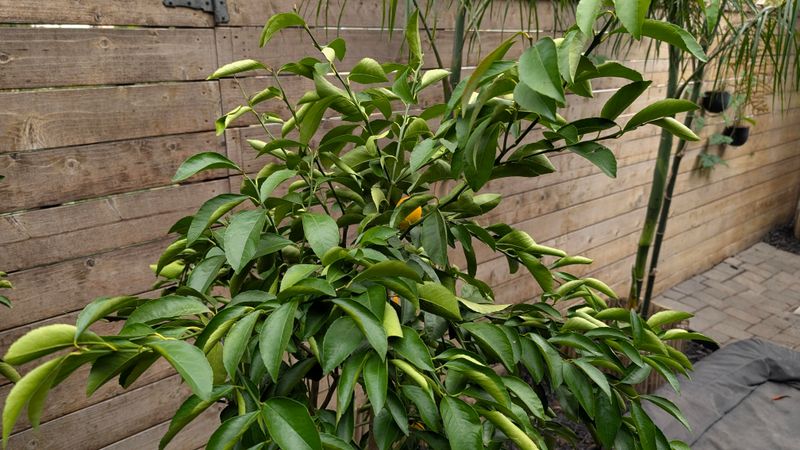
Your lemon tree put out fresh fall growth, and now some of the new leaves are twisted, curled, or marked with shiny streaks. It is easy to panic and reach for a spray.
But curled leaves can come from more than one pest, and a quick close look will tell you much more. A few minutes of checking can save your tree, and the helpful insects living on it, from needless harm.
Curl alone is not a diagnosis
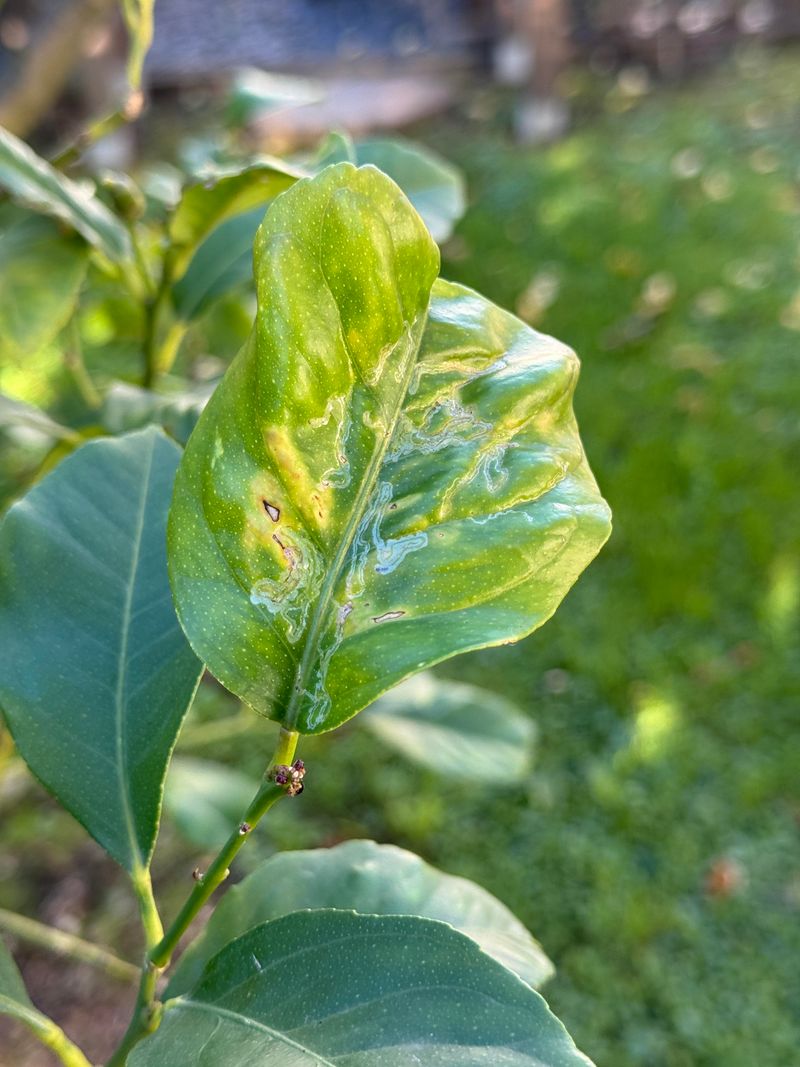
Start with the youngest, softest leaves at the tips of the branches, because that is where trouble usually shows up first. Turn each leaf over and look for three things: thin tunnels running inside the leaf, small insects sitting on the leaf or shoot, and a sticky shine on the surface.
Those three clues matter far more than the curl itself. A curled leaf is only a signal that something disturbed the new growth.
Several pests can cause it, so a curl by itself cannot tell you which one you are dealing with.
Here is the quick preview. Winding pale or silvery tunnels, often with a dark trail inside, point toward citrus leafminer, which is described in UC IPM leafminer guidance.
Visible colonies of small insects on young leaves or shoots, plus sticky residue, point more toward aphids, which UC IPM aphid guidelines say can curl leaves as they feed.
The next sections show you how to read each clue so you can match your response to what is really there.
Winding silver trails point to leafminer
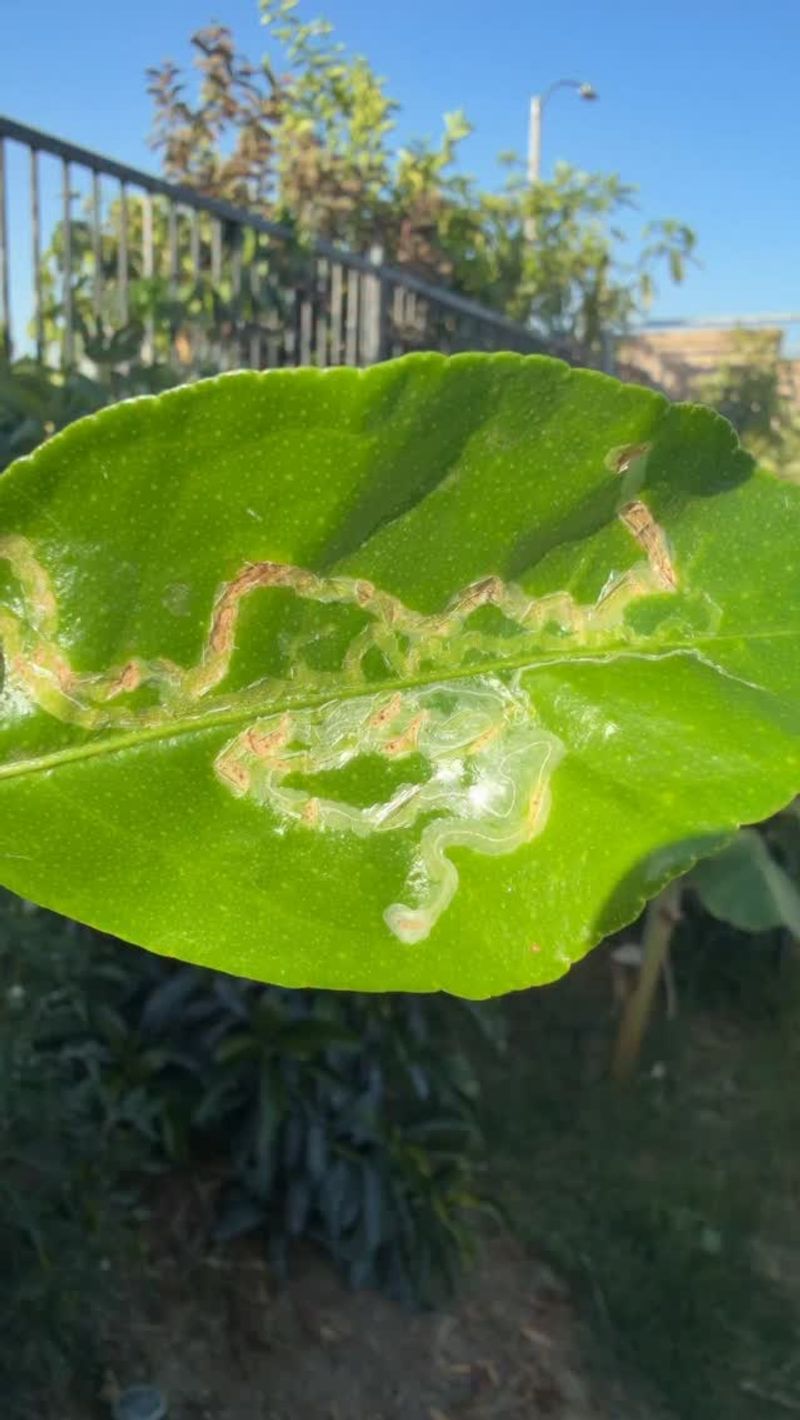
Picture a tiny larva living inside a leaf like a miner in a cave. Citrus leafminer larvae tunnel between the leaf surfaces, leaving winding pale or silvery lines that look like someone drew on the leaf with a pen.
Many mines show a darker thread of waste, called frass, running down the middle.
As the tunnels spread, the leaf can pucker, curl, or become distorted. That is why leafminer damage is sometimes mistaken for other problems.
The trail is the giveaway, so hold a leaf up to the light and follow the lines.
The key detail is that the tunnels are inside the leaf. You cannot wipe them off, and you will not find a pest sitting on the surface.
UC IPM’s guide to identifying citrus leafminer damage describes these mines and how they differ from other citrus miner damage.
Leafminers go after tender new growth. Mature, hardened leaves are generally not susceptible, so older dark green leaves on the same branch will usually look clean even when the new flush is marked up.
The UC IPM home and landscape page backs this up.
Are there colonies on the new growth?
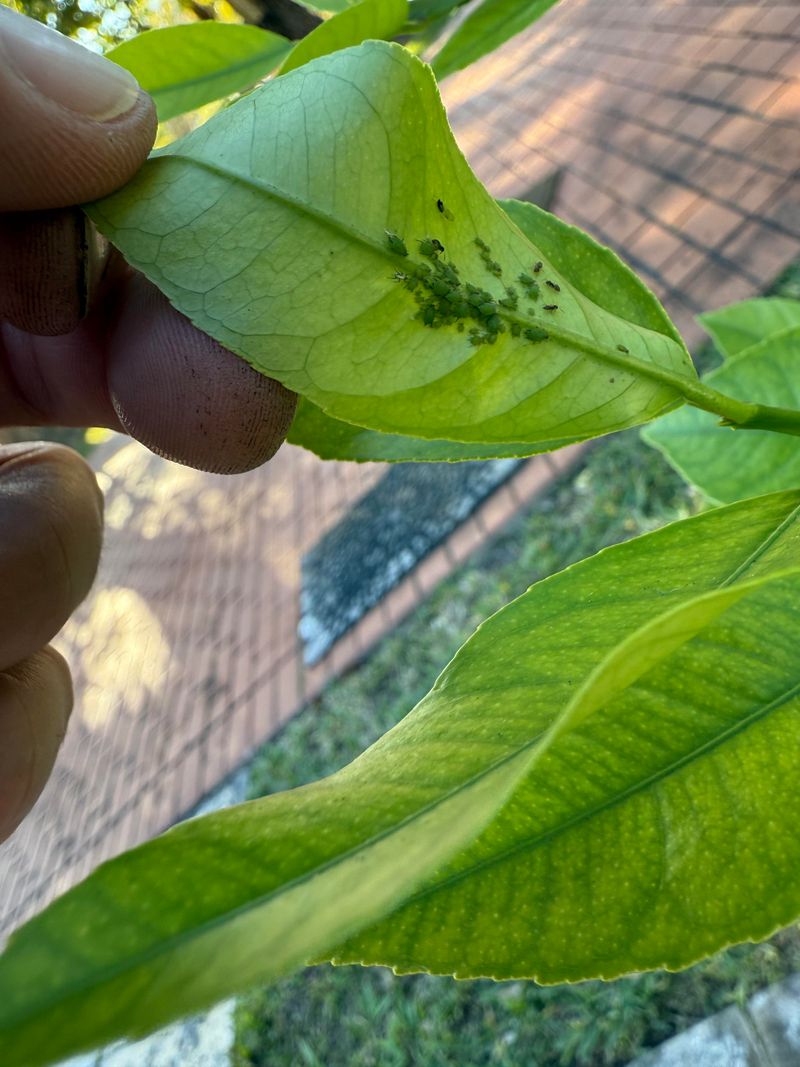
If you see no tunnels, shift your attention to the undersides of young leaves and the soft tips of shoots. Aphids tend to gather in clusters there, and they can be green, yellow, or dark.
Gently bend a curled leaf open, since colonies often tuck inside the fold.
Aphid feeding can twist and curl new leaves, as UC IPM citrus aphid guidelines explain. Once you find a colony, look for supporting clues: sticky honeydew on leaves or on surfaces below, ants walking up the trunk, and perhaps a dark sooty mold growing on the residue.
The UC IPM home and landscape aphid page lists these signs.
Treat those clues as hints, not proof. Honeydew is also made by whiteflies, soft scales, and Asian citrus psyllids, and ants visit all of them.
You can read more in UC IPM’s Asian citrus psyllid page.
The reliable test is simple. If you can see the insects themselves, you know what is feeding.
Sticky leaves with no insects in sight mean you need to keep looking.
When signs overlap, check for other pests
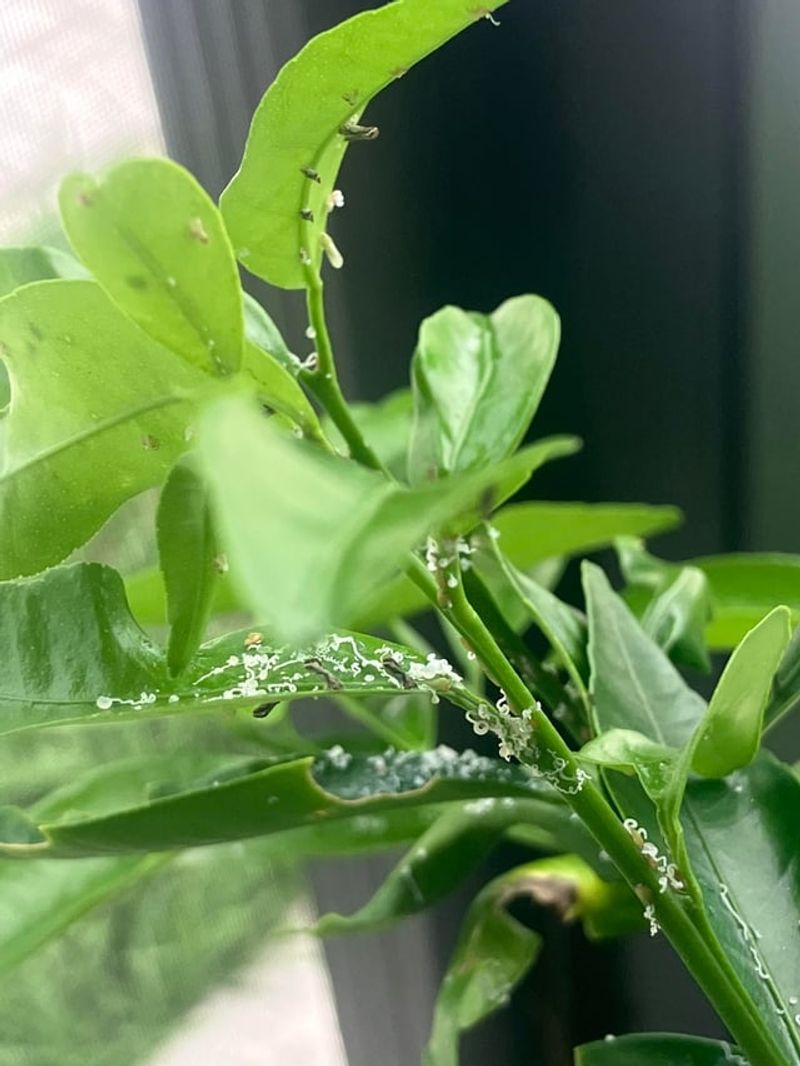
Real trees do not always show one tidy problem. A single flush can carry leafminer tunnels on some leaves and a few sap-feeding insects on others.
Compare what each leaf shows rather than forcing one answer for the whole tree. Tunnels suggest leafminer, as noted in UC IPM leafminer guidance, while visible colonies and sticky residue suggest sap feeders.
Remember that honeydew has several possible sources. Per UC IPM’s aphid guidelines, aphids are only one of the insects that leave it behind.
One lookalike deserves extra attention in California: Asian citrus psyllid. Watch for new flush that is twisted or notched, especially with waxy deposits or honeydew.
UC IPM describes psyllid nymphs as producing distinctive waxy tubules, which you can see in its psyllid and huanglongbing page.
If you suspect psyllid, do not spray or prune in a rush. Call the CDFA Exotic Pest Hotline at 1-800-491-1899 and describe what you see.
Leafminer damage usually calls for restraint
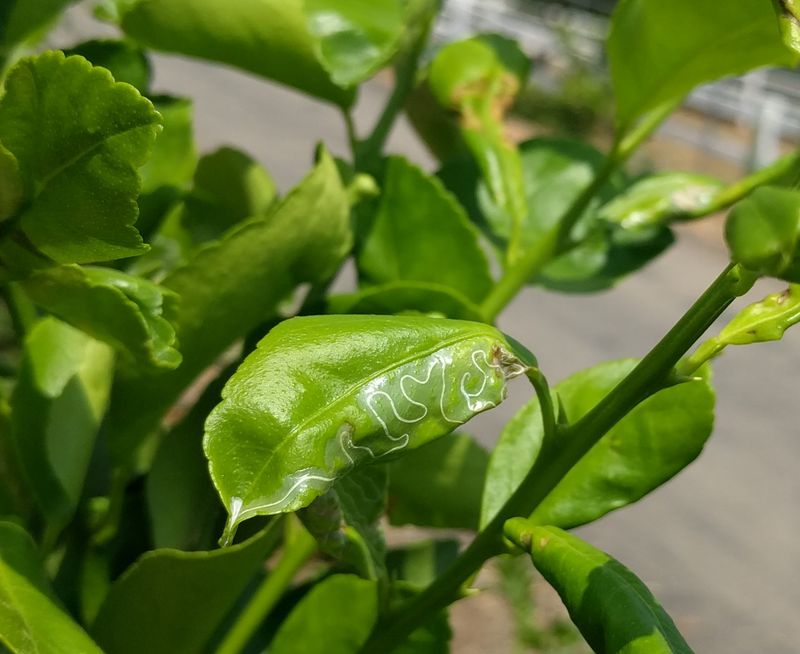
A well-established backyard lemon tree can usually shrug off leafminer. The damage looks untidy, but the tree keeps growing and fruiting, and the usual answer is to tolerate it.
UC IPM’s leafminer page supports this approach for residential trees.
Leave mined leaves where they are. The undamaged parts still make food for the tree.
Stripping leaves or pruning repeatedly can trigger a fresh flush of soft growth, which is exactly what leafminers want. For the same reason, skip nitrogen fertilizer while leafminers are active.
Young trees deserve a closer look because setbacks to their growth matter more. Check them every week or two during flushes.
Even so, UC IPM says heavily affected young trees are unlikely to die, so there is no need for alarm.
Sprays often disappoint here. Larvae sit protected inside the leaf, so many home insecticides never reach them, and broad-spectrum products can harm the beneficial insects that help keep pests in check.
Skipping the sprayer is the wildlife-friendly choice and, in most backyards, the effective one.
Aphids rarely need an automatic spray
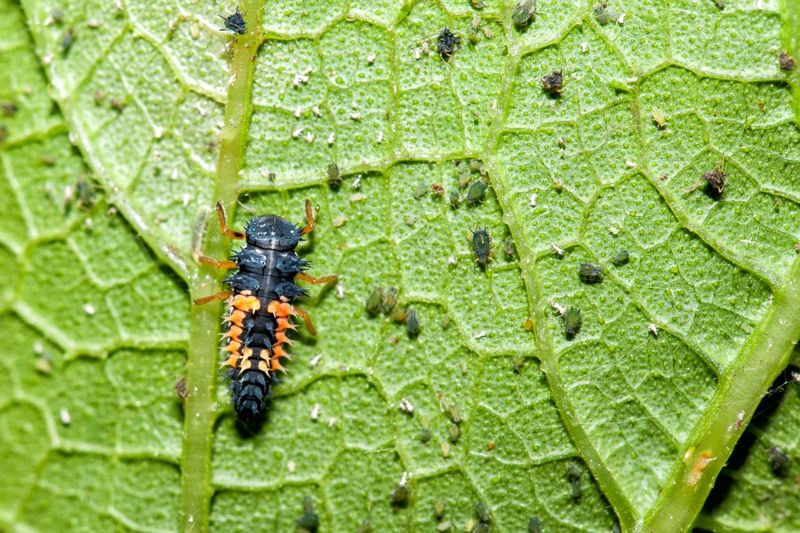
Ladybugs, lacewings, and other natural enemies often keep citrus aphids in check. According to UC IPM citrus aphid guidelines, treatment is usually not warranted, even when some leaves are curled.
A few weeks of patience, plus a look for ladybug larvae, may be all you need.
If colonies are large and you want to act, begin with water. On a sturdy tree, a strong stream from the hose can knock aphids off, and many will not find their way back.
Soaps and oils are the next option, as listed on the UC IPM home and landscape aphid page. They only kill insects they touch, so coverage must be thorough, including leaf undersides.
Read the product label, test a small area first, and wait a day to check for leaf damage.
Do not apply soaps or oils to drought-stressed plants or when temperatures are above 90°F. Remember too that curled leaves can shelter aphids from contact sprays, so even a careful application may miss some.
Use fall as an inspection window, not a spray deadline
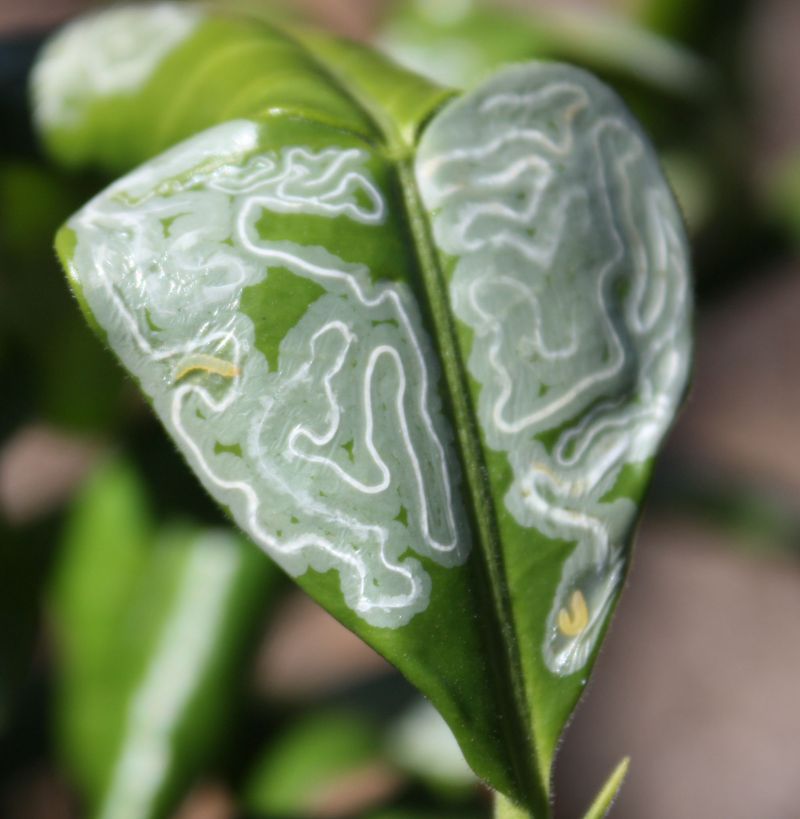
Think of fall as a good time to look, not a deadline to spray. Citrus can flush in summer and fall, and leafminer may stay active into fall in cooler coastal areas, while UC IPM notes that summer heat seems to suppress populations inland.
Your tree’s pressure depends on where you live.
Match the clue to the response. Winding tunnels on an established tree mean leave it alone.
Exposed colonies mean wait, rinse, or treat carefully if truly needed. Twisted, notched flush with waxy deposits means call the hotline.
No winter treatment is needed, and no step guarantees a clean flush next year.
The best tool you own is a close look at one small leaf.