

Rosemary smells great, feeds the bees, and shrugs off dry summers, so it ends up planted right beside many California front doors. In wildfire-prone areas, though, the spot where a plant grows can matter as much as the plant itself.
The first few feet around a house get special attention from fire officials. Here is what to know before that tidy herb stays where it is.
Rosemary can add fuel close to a home
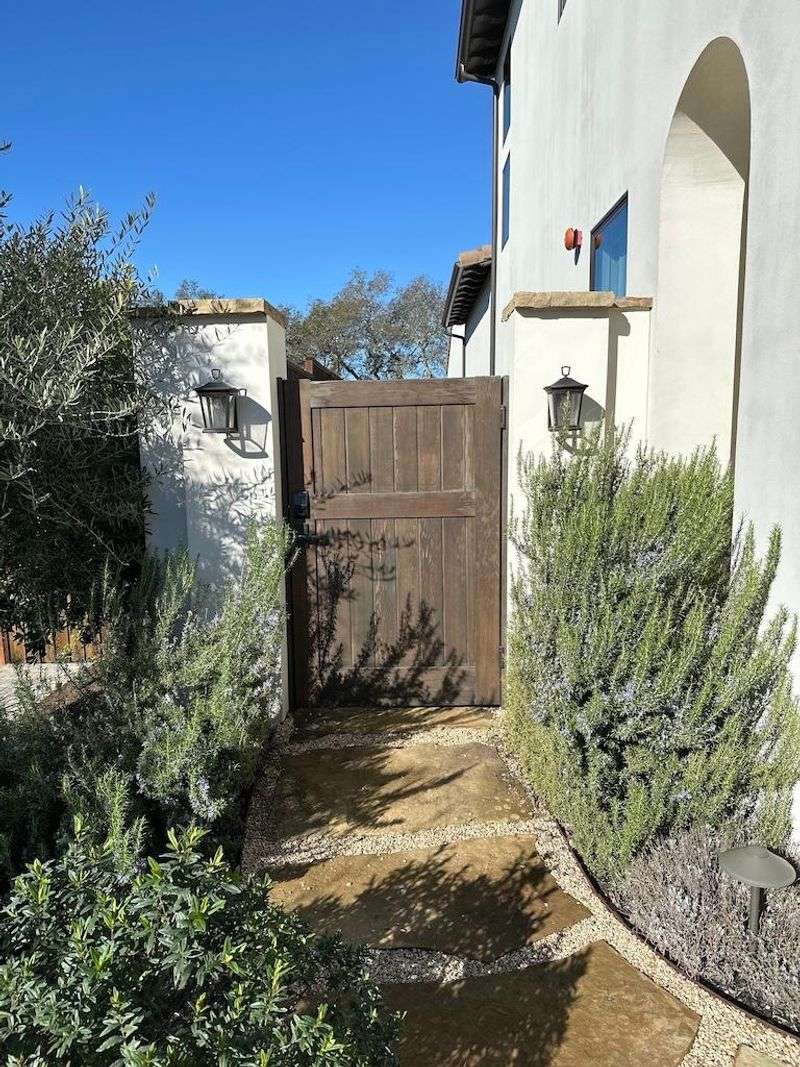
Picture an ember drifting down during a wildfire. Where it lands matters a great deal, and the strip of ground touching your house is one of the worst places for it to find something that burns.
That strip is called Zone 0, the first five feet around a structure. According to the Board of Forestry’s Zone 0 guidance, it is meant to be ember-resistant.
The guidance describes hazards such as embers igniting nearby plants or debris, and flames or heat reaching the building.
Plants close to a wall can feed those problems. Combustible vegetation next to a structure adds fuel right where embers, flame contact, or heat could threaten the siding, vents, and windows.
Rosemary is a good example of a plant to think twice about. UC Agriculture and Natural Resources lists it among the oily-resin plants that can catch fire easily.
Those oils are what make the leaves so fragrant in your kitchen.
None of this means a healthy rosemary bush is a ticking bomb. A live shrub is not automatically burning, and rosemary does not cause house fires on its own.
The point is narrower: in a wildfire-prone setting, a woody, resin-rich shrub pressed against the house is fuel in a spot where you want as little fuel as possible.
Homes in mild, low-risk settings face a different situation than a hillside house at the edge of wildland. Your own location shapes how much this matters.
What the rosemary research does—and does not—show
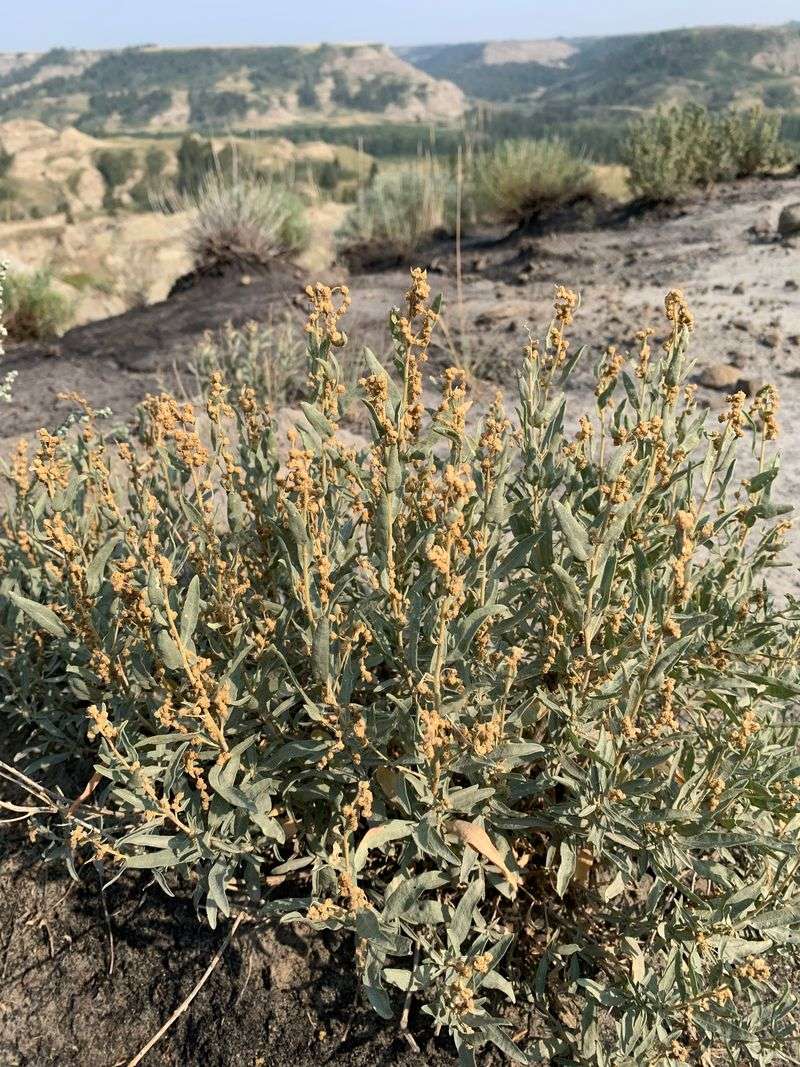
Researchers recently looked at rosemary growing in Mediterranean shrubland. They tracked how much water the plants held through the seasons and ran laboratory flammability tests.
In the study record on PubMed, the key result is simple: as rosemary dried out, it ignited sooner under test conditions.
That fits what UC describes. UC ANR’s firescaping guidance groups rosemary with oily-resin plants that can catch fire easily.
Dry, resinous foliage lights faster, and California summers are long and dry.
Now the limits. The study was done on plants in lab conditions, not on real houses.
It did not measure the odds that a California home will burn, and it did not rank rosemary against every other landscape plant. So you cannot say rosemary is the worst choice in a yard, and you cannot predict what will happen at your address.
What the findings do give you is a clear reason for caution. A shrub that gets easier to ignite as summer dries it out is a poor fit for the spot closest to the walls, where embers and heat do the most harm.
The same shrub farther from the house is a different question. Distance, health, watering, and clearing out dead branches all change the picture.
Think of the research as a nudge about placement, not a verdict on the herb itself.
Where Zone 0 excludes plants—and where it may allow them

Zone 0 is not one big rule. The Board of Forestry’s guidance splits the first five feet into spots where plants are out and spots where a few may be allowed.
According to the guidance document, vegetation is excluded in these places:
- Under eaves
- Within one foot of a wall that has no eave
- Within two feet of windows, doors, posts, and vents
- Within five feet of attached decks, stairs, and pergolas
Elsewhere in Zone 0, the guidance allows limited, maintained, non-woody plants and groundcovers. They must meet stated conditions for height, spacing, and placement.
A woody rosemary shrub does not fit that description.
Who has to follow this? The guidance says the state requirements apply in State Responsibility Areas and in Very High Fire Hazard Severity Zones within Local Responsibility Areas.
That is not the same as a rule for every California homeowner. Some cities and counties have their own Zone 0 ordinances, and local rules may be stricter.
Timing matters too. When this was researched, the Board’s webpage said the regulation package was still under final review by the Office of Administrative Law.
The guidance listed a future effective date that was not yet filled in. So it is fair to call it adopted guidance, but not to say the new statewide rules are already in force.
Move woody rosemary away from the structure where feasible

You do not need to banish rosemary from the whole yard. The practical fix is to relocate a woody shrub that sits against the house, where that is feasible.
Early fall or late winter, when it is cooler, is often a kind time for moving a shrub in much of California. Dig a wide root ball, replant it farther out, and water it in well.
Rosemary that is far from the walls, kept healthy and trimmed of dead wood, is a different situation from one pressed against a vent.
That leaves a bare strip, and it helps to plan for it. In spots where plants are excluded, the Board’s guidance points toward hardscape.
Gravel, stone, brick, and concrete all work, and a gravel band can double as a neat edge for your beds.
The goal is less fuel near the building. It is not a promise that one change will stop a fire.
UC IPM stresses that all plants can burn under the right conditions, and that health, moisture, dead material, placement, and upkeep all count.
Before you start, check your local rules. The Board’s project page is the place to see whether the regulation has been finalized, and your city, county, or fire agency can tell you what applies at your address.
Use low, non-woody plants only where Zone 0 allows them

Once the shrub is gone, you might miss having something green by the house. In some parts of Zone 0, you can have it, as long as you follow the conditions.
The Board’s guidance names examples of low, non-woody plants that may fit: creeping thyme, beach strawberry, blue-star creeper, mosses, and certain flowers. Creeping thyme even keeps a bit of the herb-garden feel.
The key word is conditions. The guidance sets limits on height, spacing, and placement, and it expects the plants to be maintained.
Patches should stay small and separate, and dead leaves and stems need regular removal. These plants also stay out of the exclusion spots, such as under eaves or within two feet of windows and vents.
Keep the claim modest. These are permitted choices in specified locations.
They are not fireproof, and they do not guarantee protection. As UC IPM explains, any plant can burn when conditions allow, so a dried-out, neglected groundcover is no better than a neglected shrub.
Water-wise gardeners should also match plants to their site. Check which ones suit your local climate and watering limits, and confirm with your local fire agency that your planting plan is allowed.
Beyond five feet, keep the landscape lean, clean, and green
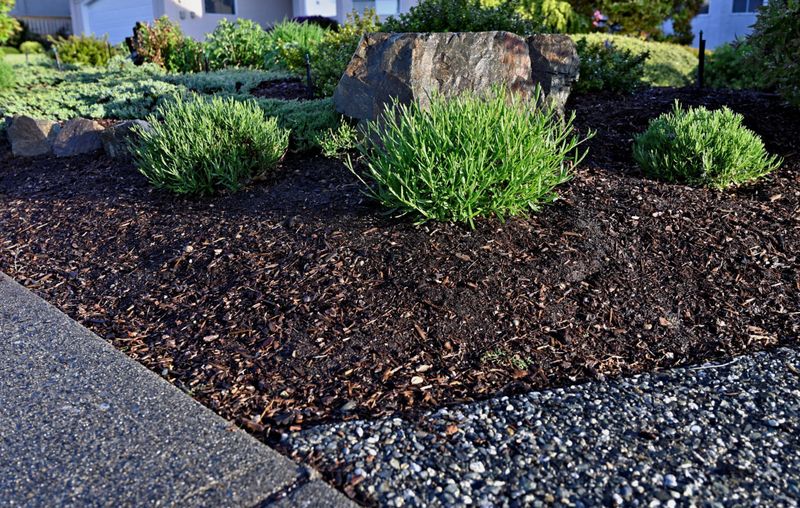
Past the first five feet, the advice changes. Zone 0 is about strict placement rules right against the house.
The next stretch, from 5 to 30 feet, calls for a looser approach.
For that area, UC ANR’s fire-smart landscape guidance recommends keeping things lean, clean, and green. In practice, that means three habits:
- Lean: choose lower plants and leave ample space between them, so fire has a harder time traveling from one to the next.
- Clean: remove dead leaves, branches, and other debris.
- Green: keep plants healthy and well irrigated.
This is where a rosemary shrub that you moved can live, with room around it and its dead wood trimmed out. A spacing plan that fits your slope and your water budget matters more than any single plant name.
Do not mix the two sets of advice. Lean, clean, and green is broader landscape guidance.
It does not replace Zone 0 placement rules for the first five feet, and it does not override any local requirements.
A handy test is to walk your yard in late spring. Look for gaps between plantings, dry stems hiding inside shrubs, and leaf litter along fences.
Those small jobs fit well into a regular weekend routine before fire season.
Check local rules and maintain the whole landscape

The takeaway is manageable. If woody rosemary grows beside your house in a wildfire-prone area, think about moving it.
Use hardscape where plants are excluded, and plant only where the guidance and your local rules allow.
Remember that all plants can burn under the right conditions, so upkeep counts as much as plant choice. Read the Board’s guidance, watch its project page for updates, and call your city, county, or local fire agency to learn what applies to you.
A fragrant herb is easy to love, and it can still be moved a few steps from the wall.