

You spot tiny pink buds on your Christmas cactus, and then a few days later they are lying on the table. It is a frustrating sight, and many gardeners blame the hour they watered.
Extension guidance points to other clues that are easier to check and fix. A few simple habits can help your plant hold on to more of its buds.
Does the hour you water matter?

Plenty of people swear that morning watering or evening watering is the secret. The extension sources reviewed here tell a different story.
None of them name a time of day as a cause of bud drop, and none recommend a preferred watering hour.
What they do point to is how much water the plant gets and how steady its surroundings stay. UF/IFAS says both dry soil and overly wet soil can cause problems, and it lists environmental changes, especially high temperatures, and improper watering as common reasons buds fall.
Iowa State Extension adds that sudden changes can also play a part.
So the clock is the wrong thing to watch. Your finger in the potting mix and a look at where the pot sits will tell you far more.
No single factor explains every dropped bud, but these are the ones you can actually control.
Moisture extremes can contribute to bud loss

A holiday cactus can get into trouble from both directions. Iowa State Extension says excessive dryness during budding or flowering can lead to bud or flower drop.
A plant left bone dry while it is loaded with buds may let some go.
Too much water causes its own trouble. UF/IFAS warns that overly wet soil can lead to disease, and University of Minnesota Extension notes that excess water can cause bud drop, wilting, and root rot.
Soggy roots cannot do their job, so the plant struggles even though the pot is full of water.
Avoiding dryness does not mean keeping the mix constantly wet. Think of the goal as a middle path where the mix dries a bit between waterings but never stays parched for long.
Notice that all of this guidance is about moisture conditions in the pot. None of it is about whether you water at breakfast or after dinner.
Limp, wrinkled segments can hint at dry roots or root trouble, so check the mix and the drainage before changing anything else.
Let the potting mix set the watering cue
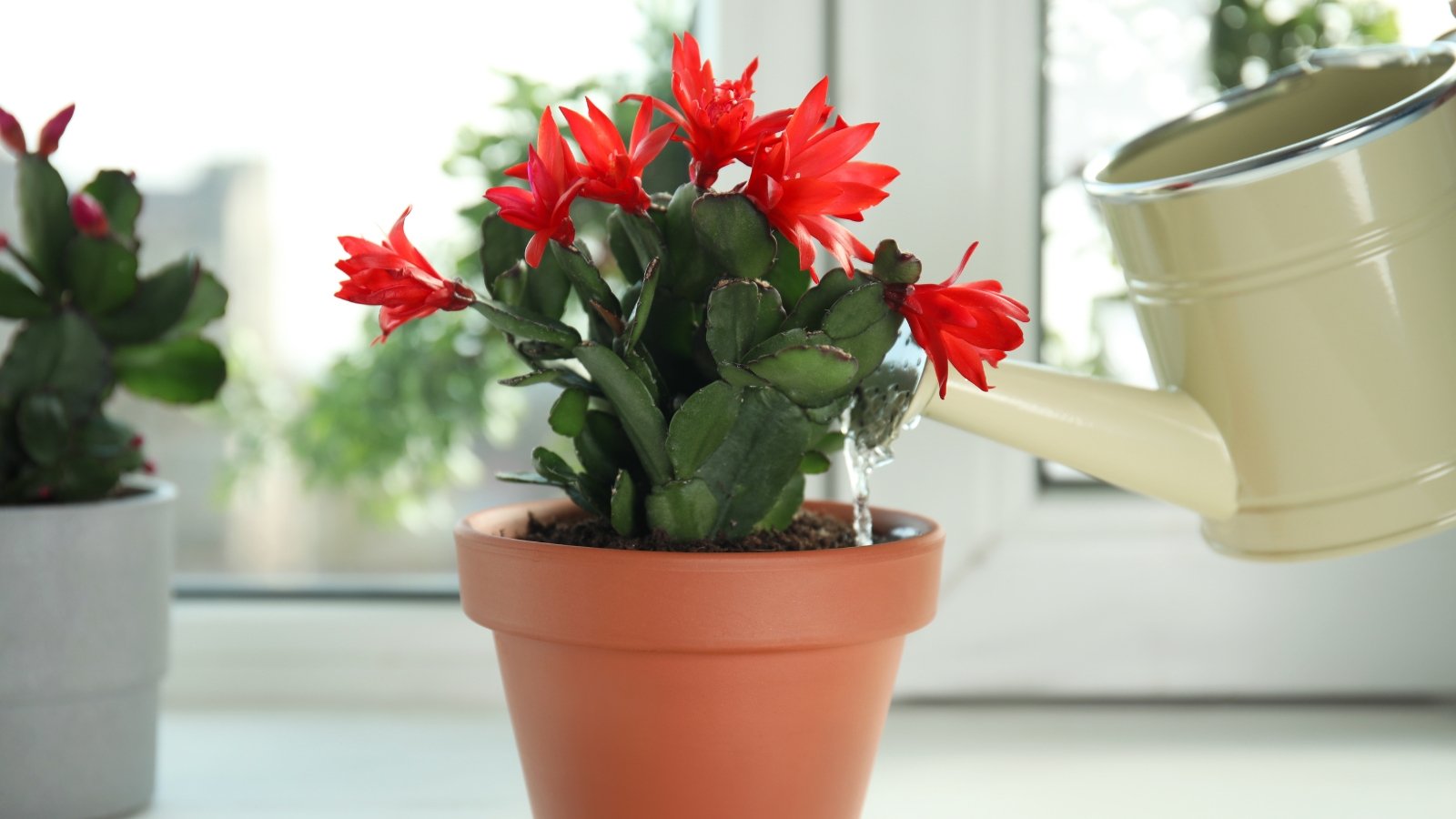
Skip the calendar and check the mix every few days. The easiest test is your finger.
UF/IFAS suggests watering when the top inch feels dry, and NC State Extension gives similar advice.
Iowa State phrases it a little differently. It advises keeping the soil evenly moist during budding and flowering and avoiding excessive dryness.
A sensible blend is to water when the mix is beginning to dry, rather than waiting until it is dust.
Treat the top-inch cue as a guide, not a law. Pot size, mix type, and room conditions all change how fast a pot dries, and a Florida sunroom will dry out faster than a cool spare bedroom.
UNH Extension also stresses that how often to water depends on the plant and its setting, so a fixed weekly schedule can lead you wrong.
Drainage is part of watering

Watering well means giving the pot a thorough drink and then letting the extra leave. UF/IFAS recommends watering thoroughly and emptying the saucer afterward.
Start with a pot that has drainage holes, and use a freely draining mix, which NC State Extension emphasizes. Water until it runs out the bottom, then let the pot drip for a few minutes in the sink.
Decorative cachepots and foil sleeves are common culprits for hidden puddles. Lift the plant out, pour off any water that collected, and set it back.
A pot sitting in a pool can keep its roots soggy for days.
These habits lower the risk of waterlogged soil, but they cannot promise that every bud stays put.
Keep conditions steady while buds develop

Once buds appear, the plant likes its surroundings to stay put. Iowa State Extension advises against moving the plant during bud development, and University of Minnesota Extension flags drafts and changes in temperature, humidity, and light as trouble.
In Southern homes, that means watching for hot windows, heating and air-conditioning vents, and doorways that blast cold or warm air. UF/IFAS specifically warns against placing the plant near a heat source or draft.
Even carrying a plant from a porch to an air-conditioned room can be a jolt.
Keep two jobs separate. Short days and certain temperatures help trigger flowering, which is how buds form in the first place.
Steady care, with no big swings, helps the plant hold the buds it already made.
Pick a bright spot with even conditions, then leave the pot where it is until the blooms finish.
A dropped bud does not prove a watering mistake
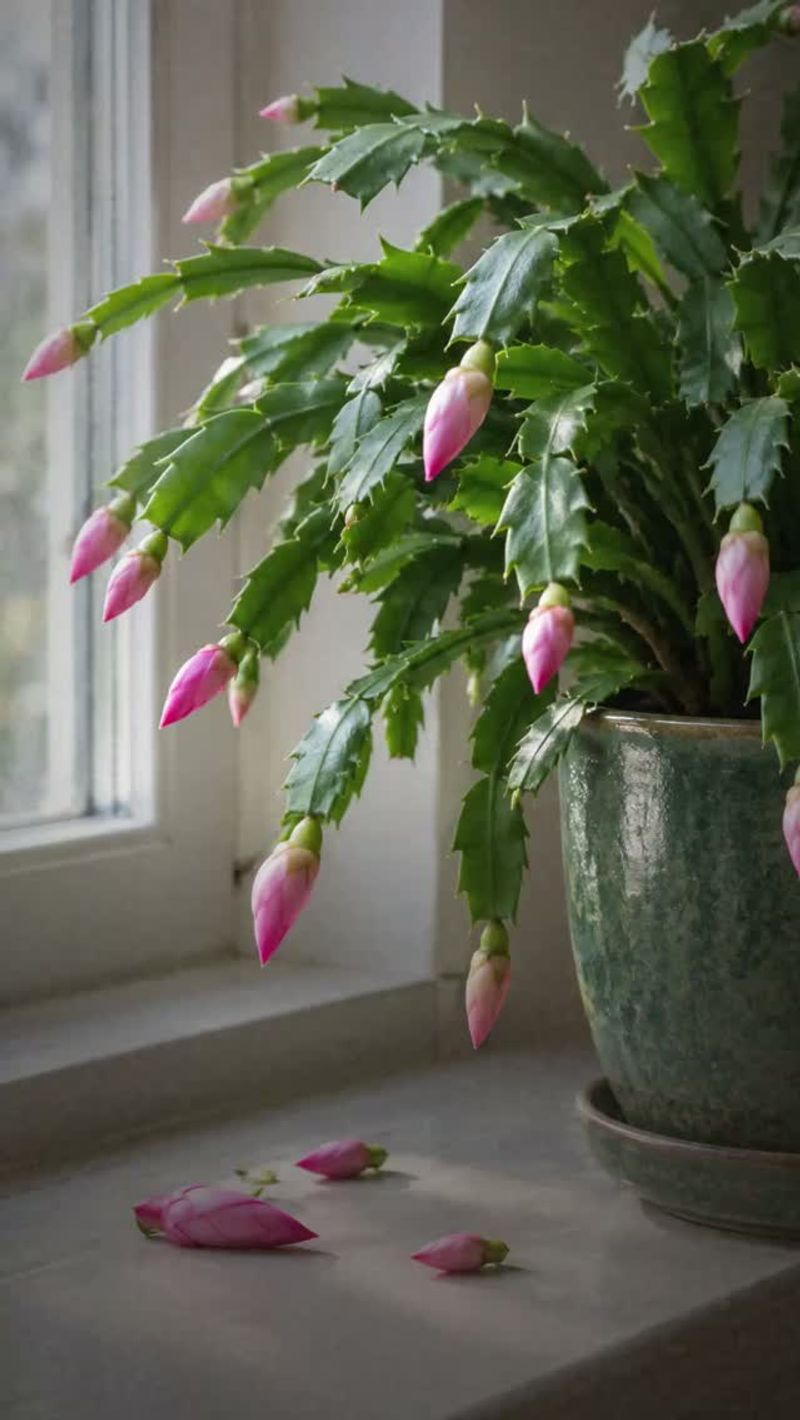
If a few buds fall, do not assume you watered wrong. University of Minnesota Extension lists having more buds than the plant can support as one possible reason, so some shedding can be the plant balancing its load.
Sudden changes can also contribute, as Iowa State Extension notes. A move, a chilly night, or a new vent blowing nearby can all play a role, alongside moisture.
If many buds drop at once, check the mix, the drainage, and anything recent that changed around the pot. Make small fixes rather than big ones.
There is no magic hour on the clock, just a plant that wants even moisture and a steady spot.