
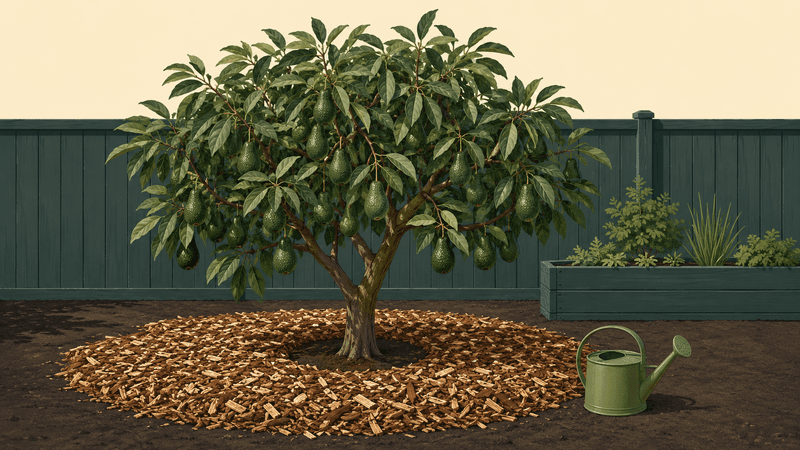
Your avocado tree drank deeply all summer, but October brings cooler days, shorter light, and maybe your first real rain. That is the moment many backyard growers wonder if they should keep the sprinklers on the same routine.
Avocados are fussy about water, and both dry roots and soggy soil can cause trouble. Here is how to read your soil and adjust as the season turns.
Check the shallow feeder-root zone before you turn on the water
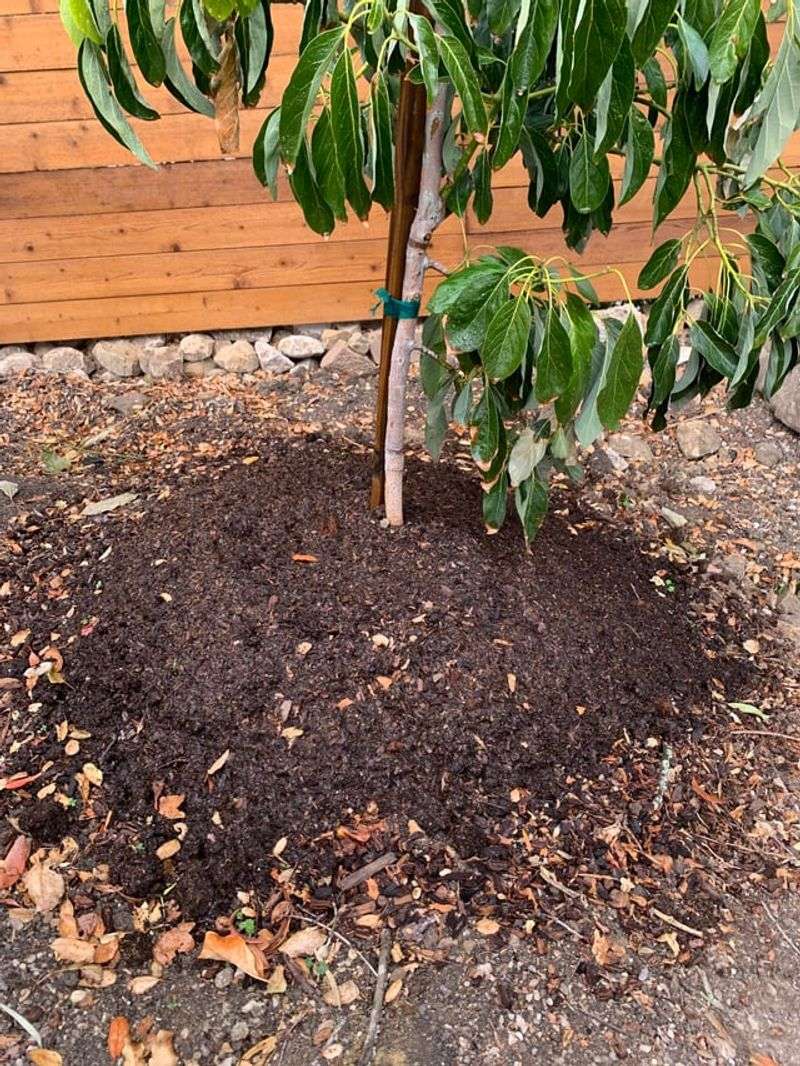
A calendar cannot tell you what is happening underground, but your finger can. Avocado trees have shallow roots, and UC ANR home-garden guidance describes the bulk of the feeder roots as sitting in the top 8 inches of soil.
That detail applies to the fine feeder roots that take up water, not to the entire root system. It also means the zone that matters is easy to check.
Start under the canopy, where the leaves drip, rather than right at the trunk. Push a finger into the soil and feel what is going on a few inches down.
Soil that feels cool and damp is holding water. Soil that feels dry and crumbly through the top several inches is a sign the roots may need a drink.
The surface can fool you. A crust of mulch or dry dirt on top may hide moist soil underneath, and a damp top layer after light rain may sit on soil that is still dry below.
Poke through the top layer every time before you decide.
Make this check your first step each time you think about watering. Try it in a few spots around the tree, since sun, shade, and slope can make one side drier than another.
If you find moisture in the feeder zone, skip the irrigation for now and look again in a few days.
Fall changes the watering decision, not the need to check
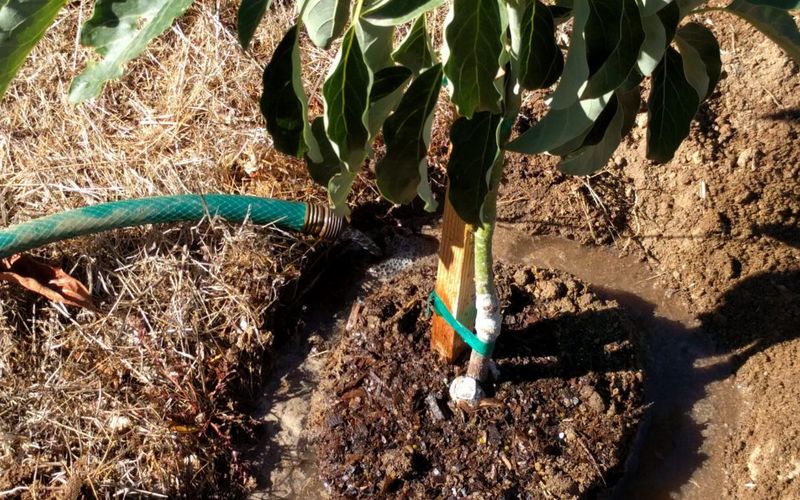
Summer in California is long and dry, so your tree depends on irrigation. By fall, shorter days and cooler air mean the tree uses less water than it did in July.
Lower use does not mean zero use, though, and a warm, dry October can still pull moisture from the root zone quickly.
Rain is the big variable. When a good storm leaves the feeder zone moist, you can reduce or pause irrigation and let nature do the work.
Check the soil again after a few days, because moisture left by rain fades at different speeds depending on weather and soil.
Winters differ a lot from year to year. UC ANR water-conservation guidance notes that adequate winter rain can replenish the root zone, while a dry winter may call for supplemental watering.
So a wet November does not settle the question for February.
Flexibility matters here. UC ANR notes that an older tree may go anywhere from a week to a month between irrigations depending on weather and rainfall.
Let what you observe, not the date, steer each adjustment.
A simple habit helps: after each rain, and after any warm dry spell, do a quick soil check before touching the irrigation controller. Some growers also keep a note on the timer about what they found, so the next adjustment starts from facts.
Tree size and site conditions rule out a one-size schedule
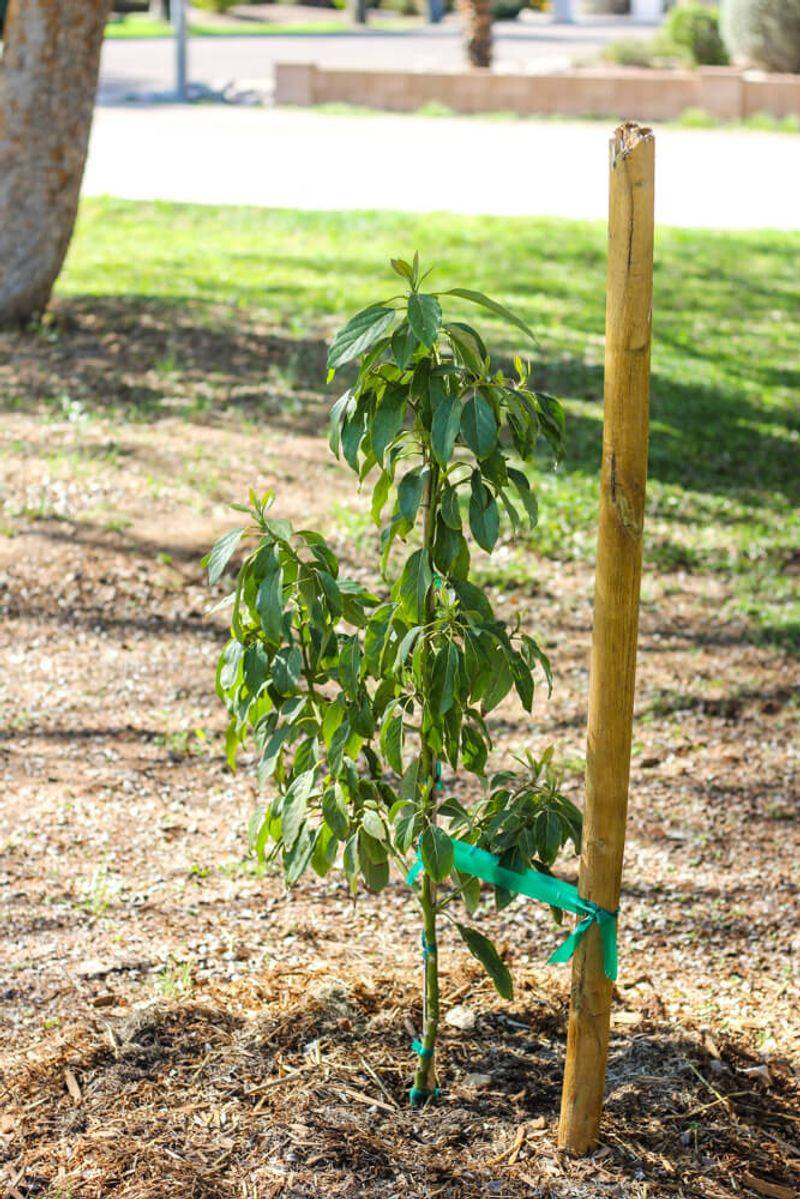
Two avocado trees on the same street can need very different care. A young tree has a small root system, so its feeder roots sit in a smaller patch of soil that may dry out sooner.
A mature tree has roots spread over a wider area and a bigger reserve. UC IPM irrigation guidance specifically advises against watering trees of different sizes alike.
Soil changes the picture too. Sandy soil drains fast and dries sooner, while heavy clay holds water longer and may stay wet for days after rain.
A tree at the bottom of a slope may collect runoff, while one on a sunny hillside may dry quickly.
Local weather adds another layer. A coastal yard with morning fog loses water more slowly than an inland valley yard with warm, dry Santa Ana winds.
Drainage and recent rain round out the list of things that shape how often your tree needs water.
This is why a fixed interval tends to miss. UC ANR warns that a set schedule can overwater at some times and underwater at others.
A timer set in August may be too generous by November.
Instead of one schedule for everything, treat each tree as its own case. Water a young tree on the frequency its soil calls for, and stretch the gap for an established tree when the root zone stays moist.
If you have several trees, check each one separately.
Keep water over the roots and away from the trunk
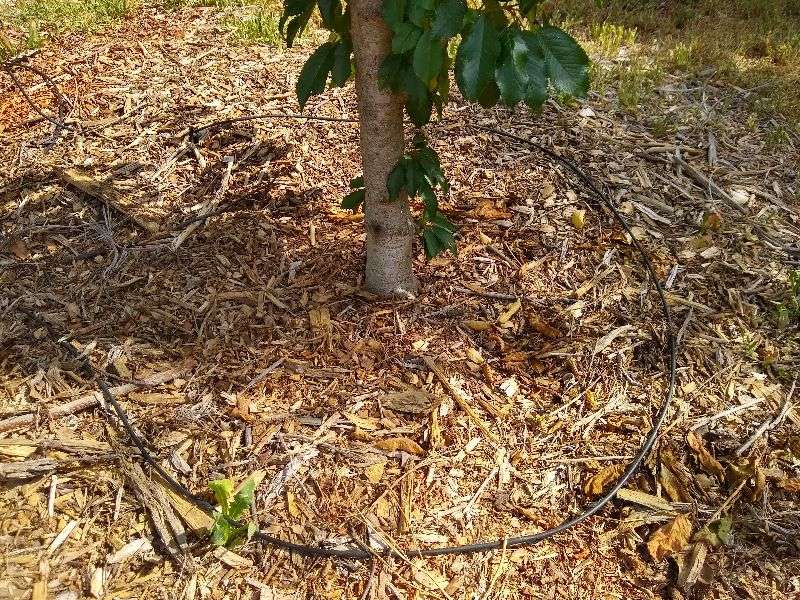
Where the water lands is as important as when it arrives. A newly planted avocado has roots close to the trunk, so early irrigation goes near the tree.
As the tree grows, the roots spread outward, and the watering zone should move with them. For an established tree, that means applying water under the canopy and out toward the drip line rather than in a small puddle at the base.
Spreading water across a wider area reaches more of the feeder roots. Drip lines with several emitters in a ring, or low-volume sprinklers that cover the area under the branches, are common ways to do it.
Adjust the ring outward as the tree gets bigger.
Keep the trunk dry. UC IPM home-landscape guidance advises avoiding wetting the trunk, since constantly damp bark and crown can invite disease.
UC IPM also warns against waterlogged conditions around the tree.
Walk your system once a season. Look for emitters that have shifted next to the trunk, sprinkler heads spraying bark, or spots where water pools.
A few minutes of adjusting can fix these problems.
Wet soil can be as harmful as dry soil
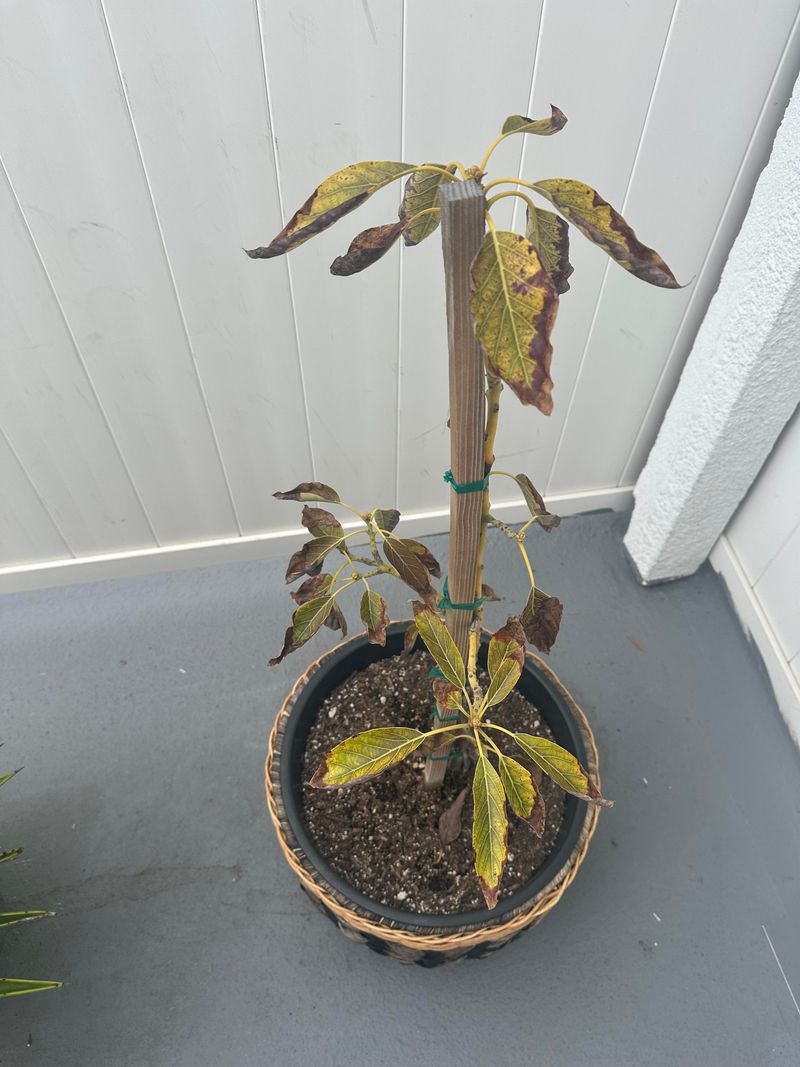
Avocados do not tolerate sitting in water. UC IPM explains that poor drainage and excess soil moisture favor Phytophthora root rot, and it advises avoiding overirrigation and standing water.
If soil under your tree is already wet, adding more water is the wrong move.
Wilting can mislead you. A droopy tree looks thirsty, but root-rot damage can cause wilting even when the soil is soaked.
UC IPM’s agricultural guidance and UCCE Ventura County both point to the same caution: extra water can make waterlogging worse.
So when you see wilt, pause before reaching for the hose. Push a finger into the feeder zone and feel the moisture.
Look at the ground for puddles, a soggy smell, or water that lingers for a day or more after rain or irrigation.
If the soil is dry, water as needed. If it is wet, hold off and look for a drainage problem, such as a low spot, compacted soil, or an emitter that runs too long.
Persistent wilt with wet soil is worth a call to your local Extension office or a certified arborist.
Use mulch to conserve moisture, but keep it clear of the trunk
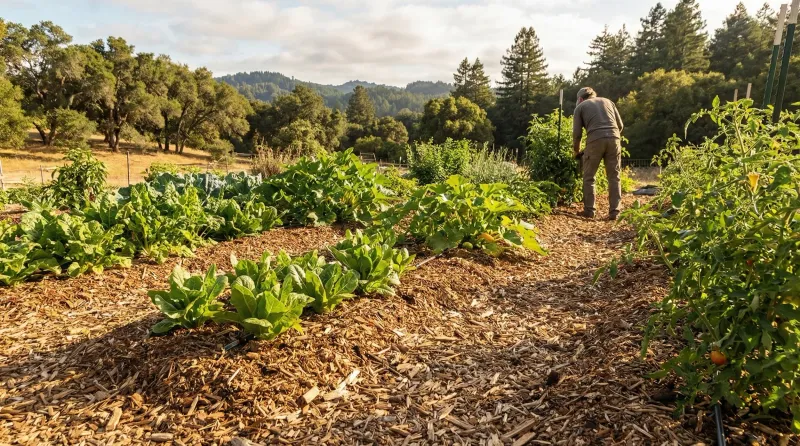
A layer of coarse mulch acts like a blanket over the feeder-root zone. It slows evaporation from the soil surface and can help the root zone hold moisture between rains or irrigations.
Wood chips and similar chunky material work well because they let air and water pass through.
UC IPM recommends a mulch layer of 4 to 6 inches beneath the canopy as part of root-rot management. The same guidance calls for leaving a gap of several inches between the mulch and the trunk, so the bark stays dry.
Spread it out to the drip line if you can, since that is where many feeder roots do their work. Top it up as it breaks down, and pull it back if it piles against the trunk after a windy week or garden cleanup.
Mulch is a helper, not a replacement for good habits. It will not tell you whether the soil is dry or soggy, so keep poking a finger through it to check the moisture below.
If the mulch stays wet and the soil underneath is soggy, cut back on irrigation.
Good watering supports a harvest but cannot promise a bigger one
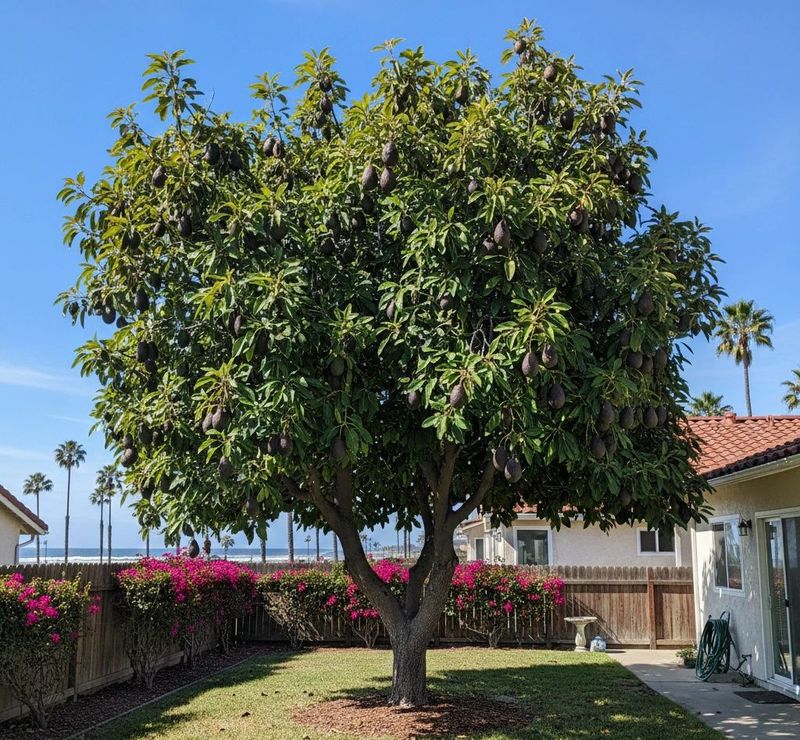
Sound watering keeps a tree healthy, but it is only one piece of the yield puzzle. UC Cooperative Extension in San Luis Obispo County identifies the period from flowering through fruit drop as the most water-sensitive stage.
Water stress around bloom and fruit set is a risk to flowering and fruit retention.
Even so, fall irrigation alone cannot guarantee next year’s crop. California Avocado Growers describes how avocado trees can alternate between heavier and lighter crop years, and how crop load, weather, temperature, pruning, nutrition, and water stress can all influence yield.
The practical rule is simple. Check moisture in the feeder-root zone, account for rain and your site, and avoid both drought stress and waterlogging.
A steady, observant gardener gives the tree its best shot, and the tree handles the rest on its own schedule.