
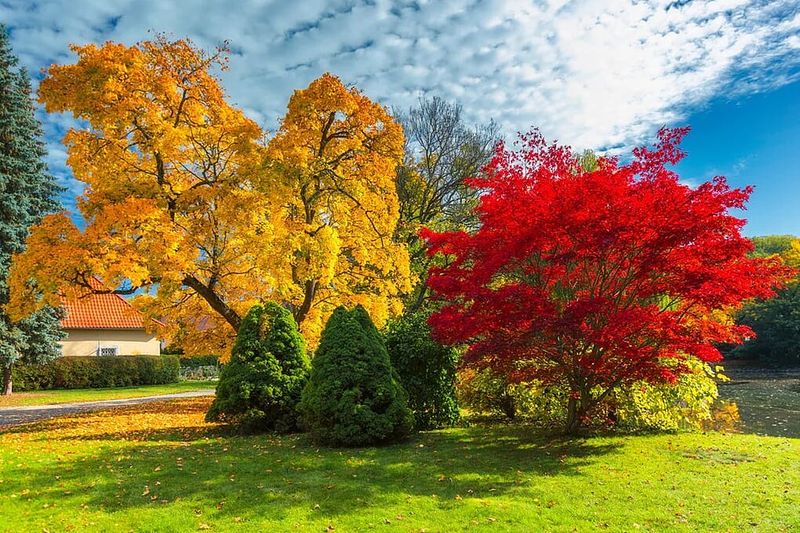
Fall is the season most North Carolina gardeners circle on the calendar for planting trees. But dry soil can turn a good plan into a risky one.
Before you grab a shovel, it helps to know what NC State recommends and how to read the conditions in your own yard. A few simple checks can save you a tree and a lot of work.
Fall can work, but NC State recommends waiting until drought subsides
Fall is usually a friendly time to put a tree in the ground, but drought changes the math. NC State’s drought guidance says newly planted trees are especially vulnerable when conditions are dry, and it recommends avoiding new plantings until drought subsides.
That is the starting point for every decision that follows.
There is a reason fall still gets so much praise. NC State Extension’s woody ornamentals chapter notes that container-grown trees can be planted year-round, but they generally need less watering when planted in late fall or early spring.
Cooler air means less stress on the leaves and less water lost from the soil. Fall is a generally favorable window under suitable conditions, not an automatically safe one.
Here is the honest part: there is no single yes-or-no answer for the whole state. Drought conditions vary from the mountains to the Piedmont to the coastal plain, and they can differ from one neighborhood to the next.
The sources here also do not tell us how long any drought has lasted, so it is best not to assume the worst or the best for your yard.
So think of it as a conditional decision. If drought has eased where you live, the soil at your site holds usable moisture, and you have a workable plan for watering afterward, fall planting can still make sense.
If not, waiting is the safer move, and that matches what NC State recommends.
Check local drought conditions and water rules first
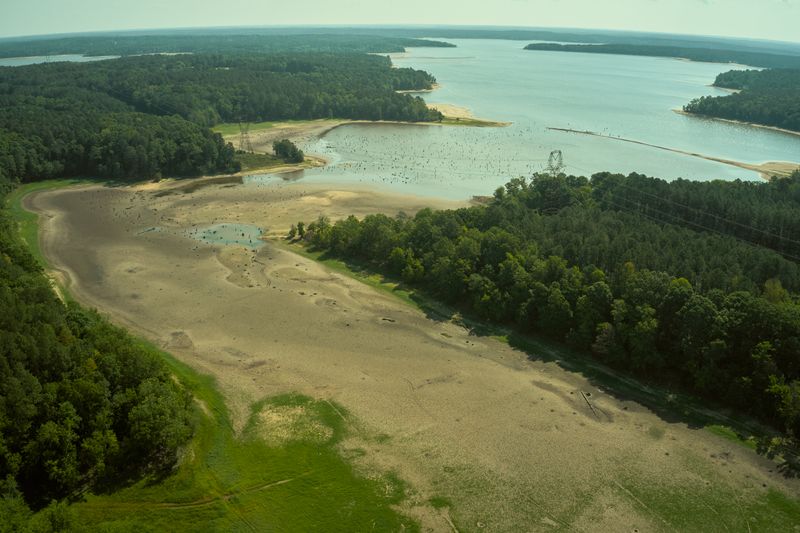
Start with the big picture, then zoom in. The North Carolina Drought Management Advisory Council posts a current advisory at ncdrought.org, and its latest update reflects conditions as of October 27.
It is updated against weekly U.S. Drought Monitor conditions, so it gives you a county-level view of how dry things are.
Look up your own county rather than relying on what you heard about the state as a whole. A statewide drought response can still look very different in a mountain valley than on the coast.
Do not assume your yard matches the headline, and do not assume it is better off either.
The second check is local. Your water utility or town may have its own response plan, and those rules can limit when or how you irrigate.
The state advisory tells you about drought conditions, while your water system tells you what you are actually allowed to do with a hose or sprinkler. They answer different questions, and you need both answers.
Call or check the website of your utility before you plant, not after the tree is in the ground. If watering is restricted and you cannot work within those rules, that is a strong sign to hold off.
Never assume irrigation is permitted everywhere.
Assess the planting site before deciding
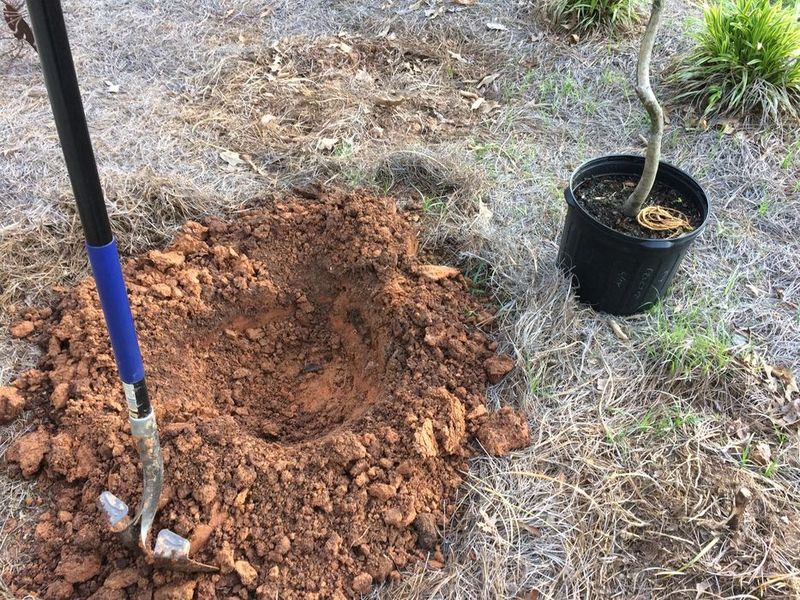
The calendar says fall, but your soil makes the call. Walk out to the exact spot where the tree would go and dig down several inches with a trowel or a shovel.
If the soil is dusty, hard, or crumbly well below the surface, the root zone is still very dry.
Newly planted trees are especially vulnerable during drought, as NC State’s drought guidance explains, and NC State recommends waiting until drought subsides. A small root ball has not had time to reach out into surrounding soil.
It depends on you and on whatever moisture the ground can offer.
Next, be honest about follow-up. Can you reach the spot with a hose or watering cans on a regular basis?
Will you be home, or will someone cover for you? NC State Extension stresses checking soil moisture and adjusting care, which is hard to do from a distance.
Drainage matters too. Sandy coastal soils can dry out fast, while heavy Piedmont clay can crack in a dry spell and then hold water in puddles after a storm.
Both can fool you.
One good rainstorm does not prove the site is ready. Dig again a few days later and check the depth of the moisture.
If the soil stays very dry or you cannot water dependably, postponing is the safer choice. The tree will still be available when conditions improve.
Plant carefully if local conditions support proceeding
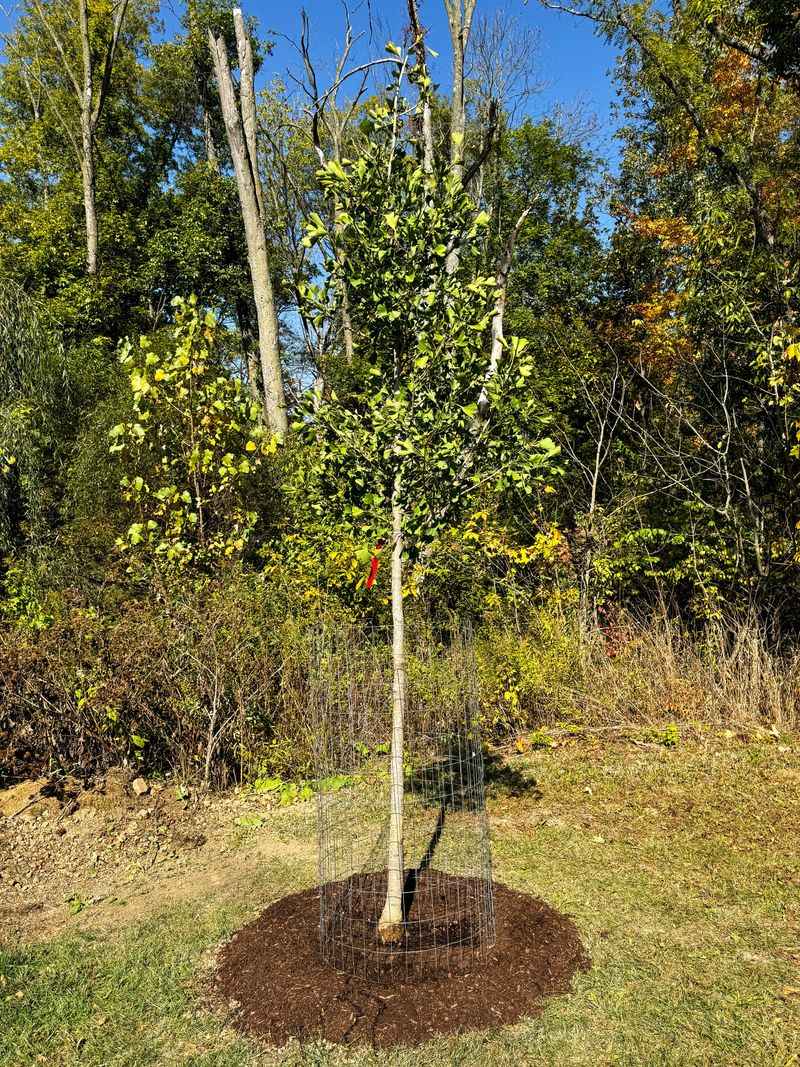
If your county conditions, soil, and watering plan all line up, good installation gives the roots their best chance. Per NC State Extension, dig a hole two to three times wider than the root ball.
A wide hole loosens the soil where new roots will spread.
Set the tree at or slightly above grade, not below it. Planting too deep is a common way to stress a young tree.
Backfill, then water it in thoroughly so the soil settles around the roots.
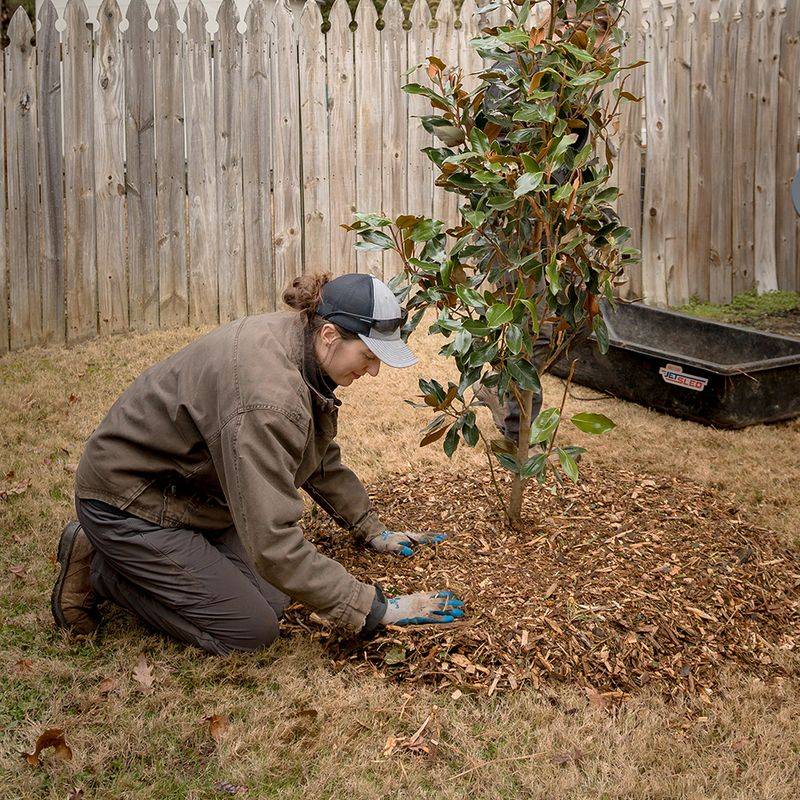
Finish with 2 to 3 inches of mulch over the planting area. Keep the mulch at least 6 inches away from the trunk so the bark stays dry and healthy.
A pulled-back ring looks like a donut, not a volcano.
Bare-root trees are a separate case. NC State advises planting them while they are dormant and keeping the roots from drying out.
Keep them wrapped or in a bucket of water until the hole is ready, and do not leave them sitting in the sun or wind.
Container-grown trees are more flexible about timing, but they still need the same careful hole and mulch. Check the roots before planting and loosen any that circle the pot.
Water according to soil conditions, not a universal quota

After planting, watch the soil, not just the clock. Check both the original root ball and the soil around it.
A root ball can dry out while the surrounding ground stays damp, or the other way around, and the tree needs moisture in both places as roots grow outward.
NC State gives one example. For 1- to 3-gallon trees, NC State Extension’s handbook describes 3 to 5 gallons twice a week when there is no rain for roughly three to four weeks.
Cooler conditions may reduce how much water the tree needs. That is a guide for a specified size range, not a rule for every tree.
Your own needs will shift with weather, soil, drainage, and tree size. A larger tree is not covered by that example.
Sandy soil may need attention sooner than clay, and a cool, cloudy week may call for less than a warm, windy one.
A simple habit helps. Push a finger or trowel a few inches into the soil near the root ball and ask whether it is dry, damp, or soggy.
Water when it is dry, and back off if it stays wet, since too much water can harm roots too. NC State’s drought guidance points the same way: check moisture and adjust.
Follow local water-use rules the whole time. If restrictions limit when you can irrigate, plan around them, such as hand-watering at an allowed time.
Plan for root establishment beyond the first season
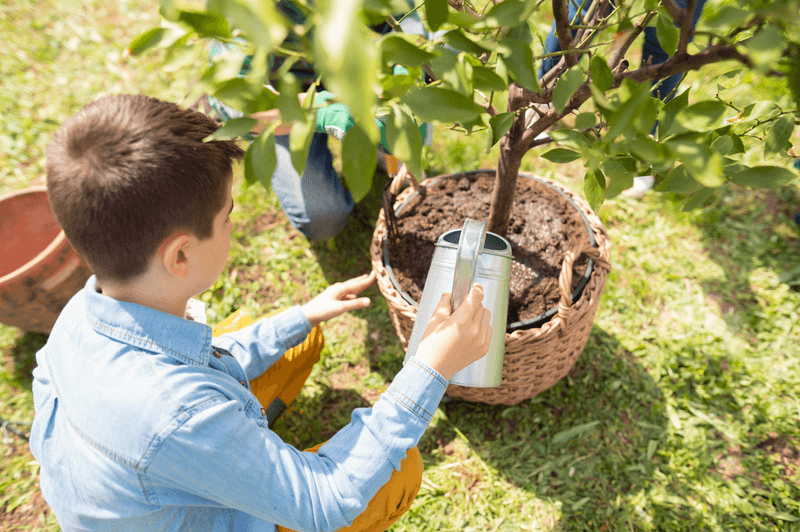
Planting day is only the start. According to NC State, newly planted trees may need supplemental water for their first one to two years while roots establish.
Roots spread slowly, and a young tree has far less reach than a mature one.
That includes trees labeled drought-resistant. Drought tolerance describes how a tree handles dry spells once its roots are settled in, and it does not erase the establishment period.
NC State also notes that no tree is drought-proof during exceptionally hot or prolonged drought.
So what does that look like in practice? Think of a seasonal habit instead of a fixed calendar.
In the first spring and summer after planting, check the soil during dry stretches, especially when rain has been missing for a couple of weeks and temperatures climb.
Let the tree guide you. Wilting, scorched leaf edges, or early leaf drop can be clues that it needs attention, though they can have other causes, so check the soil first.
Keep the mulch layer in place and the trunk area clear.
Over time, as roots reach deeper and wider, the tree needs less help from you. How fast that happens depends on soil, weather, and the tree itself.
Let local conditions and NC State’s guidance make the call
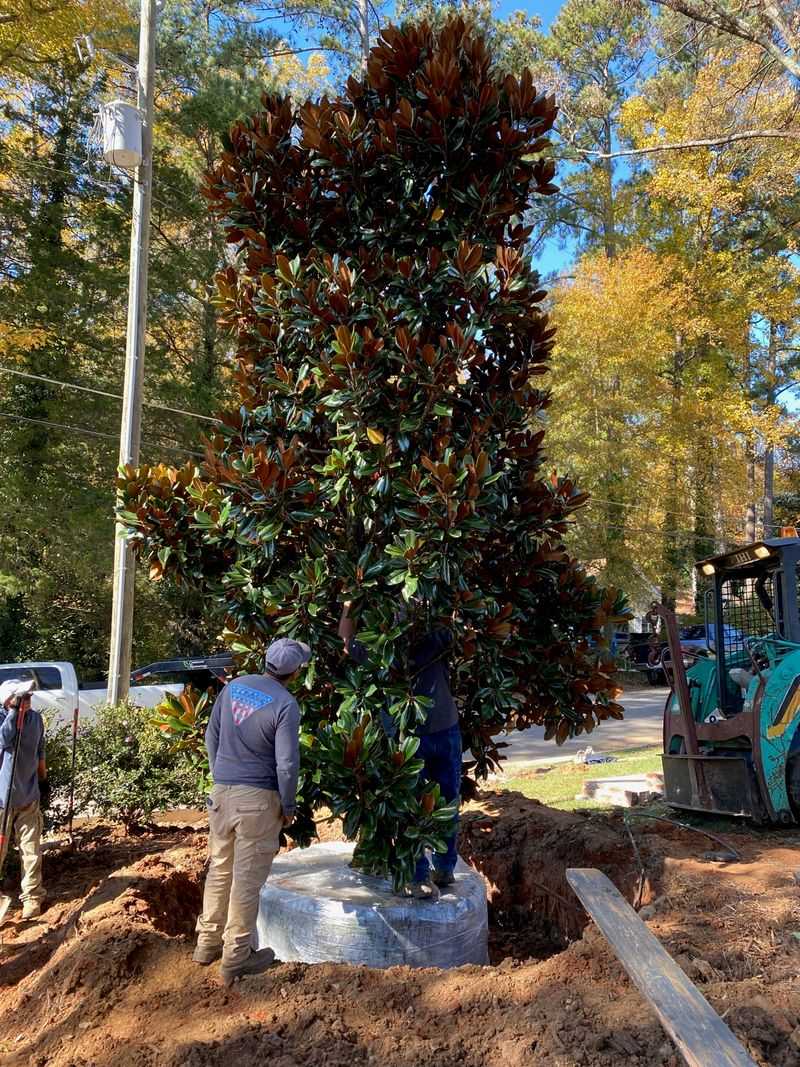
NC State recommends delaying new plantings until drought subsides, so that is the default. Check your county on the state drought advisory, confirm your water rules, and test the soil where the tree would go.
If conditions have eased, moisture is adequate, and you have a workable watering plan, fall planting may be suitable. If not, postpone.
A tree that waits a few weeks costs you very little, while a tree that dries out costs you the whole investment.