
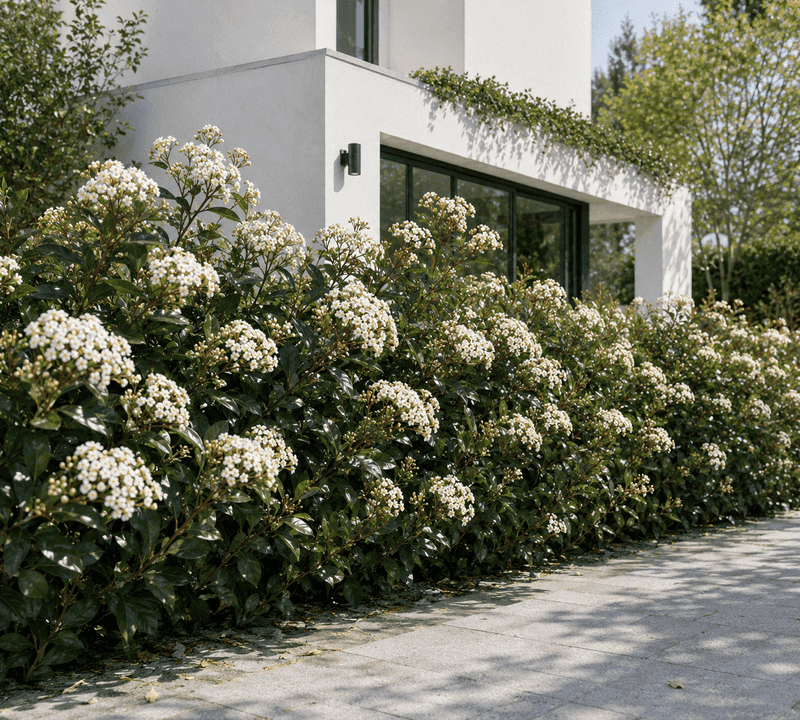
A bright white fence can look tired fast under Florida’s sun, but a living border brings shade, movement, and birds to the same space. Native shrubs will not warp like fence panels, though they still need the right soil, water, and room to grow.
These eight choices offer different ways to build privacy, from tidy evergreen hedges to loose, wildlife-friendly borders. Match each plant to your part of Florida, and remember that a hedge cannot replace a required pool barrier or secure fence.
1. Wax Myrtle
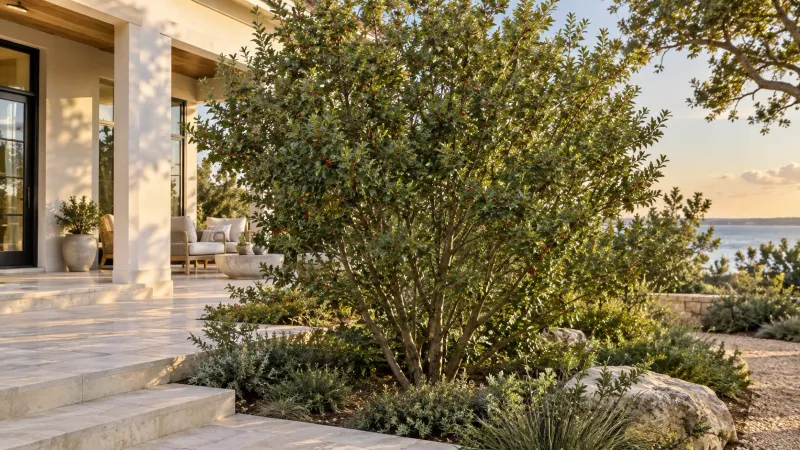
Need height without waiting forever? Wax myrtle earns its place with fairly quick growth and soft, olive-green foliage that makes a boundary feel less like a wall.
This Florida native grows across much of the state and commonly reaches 10 to 20 feet tall, sometimes more. It suits a roomy backyard edge better than a narrow strip beside a walkway, especially if you want to avoid constant trimming.
Choose sun or partial shade, and allow roughly 6 to 10 feet between plants depending on the size and density you want. Wax myrtle handles a range of soils, including sandy ground and sites that are occasionally wet, but young plants still need regular watering while roots spread.
Female plants produce small, waxy fruits that feed birds when pollination is available. Ask a native nursery about fruiting plants if wildlife value is a priority.
Use selective pruning rather than repeatedly shaving the outside into a tight box. Its naturally airy branches make a useful tall screen, but they will not provide the solid security or instant coverage of a fence.
2. Simpson’s Stopper
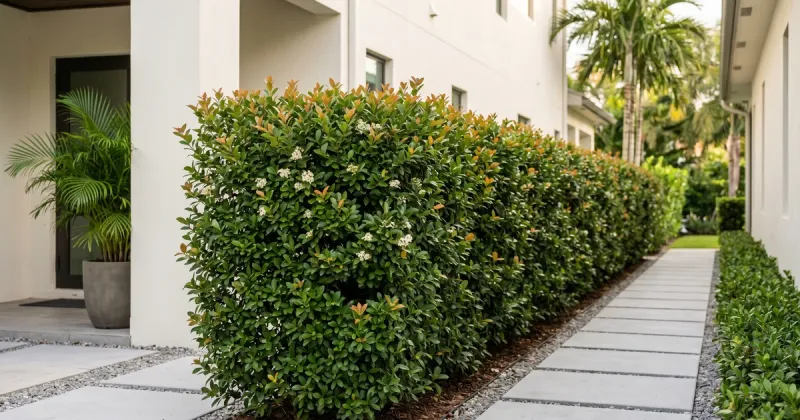
A privacy hedge can do more than hide the neighbor’s driveway. Simpson’s stopper adds fragrant white flowers, colorful fruit, and attractive bark to an evergreen screen that looks at home near a patio.
Myrcianthes fragrans is especially useful in Central and South Florida, with suitability farther north depending on winter exposure. It can become a large shrub or small tree, often reaching 10 to 20 feet, so check the expected size of the nursery selection before buying.
Give it full sun to partial shade and well-drained soil. Space standard plants about 5 to 8 feet apart for a substantial border, adjusting for the cultivar and how much pruning you plan to do.
The flowers attract pollinators, and birds eat the orange-red fruit. Light, selective trimming lets you keep those benefits instead of cutting away each new round of blooms.
For a neat yard without a rigid green rectangle, leave the upper branches slightly loose. Water through establishment, mulch without burying the stems, and keep enough space behind the row for maintenance access.
3. Cocoplum
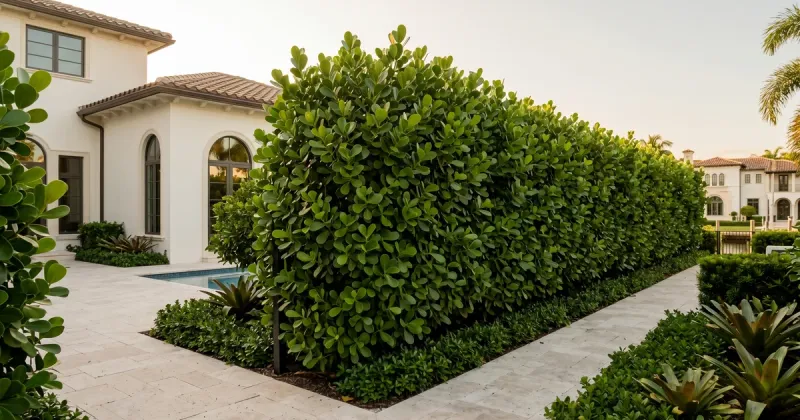
For a fuller, more polished look, cocoplum brings broad, rounded leaves that overlap into a dense green backdrop. Its bold texture works especially well beside stucco homes and sunny South Florida patios.
Chrysobalanus icaco is a native evergreen shrub best suited to South Florida and warmer parts of Central Florida. Cold damage limits its usefulness farther north, so do not treat it as a statewide replacement for vinyl.
Plant an upright selection in sun or partial shade for a hedge, and confirm its mature dimensions at the nursery. Standard upright plants can grow well beyond 10 feet, while spreading coastal forms behave differently and are not interchangeable with tall screening selections.
Allow about 4 to 6 feet between upright hedge plants, with enough bed width for leafy growth on both sides. Water regularly during establishment, then adjust irrigation to rainfall and soil conditions.
Light pruning encourages fullness, but frequent hard shearing can remove flowers and fruit. Coastal gardeners should ask specifically about salt tolerance, since exposure tolerance varies among forms and growing conditions.
4. Florida Privet

Do not let the word privet send you toward the wrong nursery bench. Florida privet, Forestiera segregata, is a native plant, not one of the invasive nonnative privets that cause trouble in natural areas.
Its strength is flexibility: you can maintain a leafy hedge or let it develop into a loose, branching screen. Mature plants often reach 10 to 15 feet, sometimes taller, making this a practical option where a low border will not block the view.
Florida privet suits many Central and South Florida landscapes, including some coastal settings. Give it sun to partial shade and room to spread, generally starting with about 5 to 8 feet between plants for an informal screen.
Once established, it tolerates drought and a range of soils, but that does not mean a newly planted row can skip watering. Female plants bear dark fruit when a male plant is available for pollination, giving birds another reason to visit.
Expect its foliage density to change with stress and cold. Before buying a full row, ask your county Extension office whether it stays leafy enough for your local privacy needs.
5. Yaupon Holly
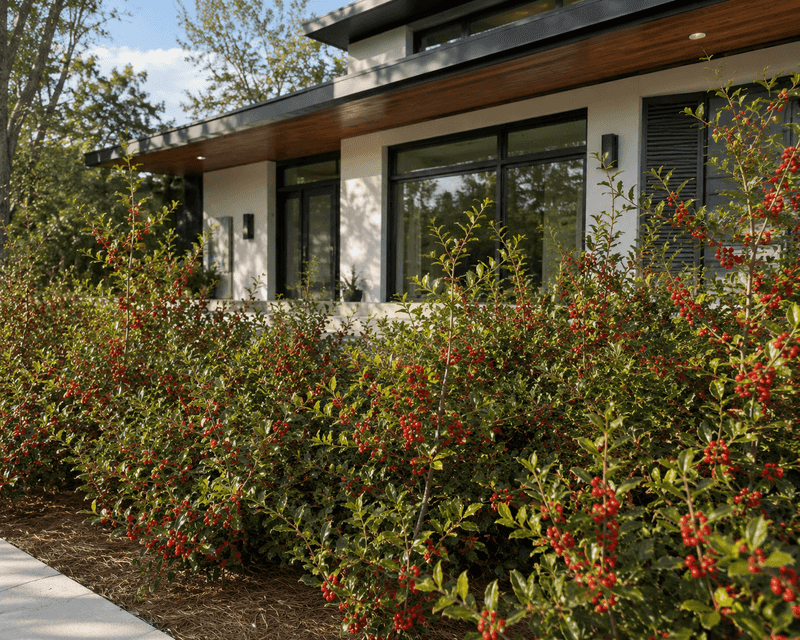
Red berries against small green leaves give a boundary some welcome color when many other plants look quiet. Yaupon holly offers that seasonal show while keeping its evergreen structure through North Florida winters.
Ilex vomitoria works particularly well in North and Central Florida. Standard forms can grow 15 to 20 feet tall or more, while dwarf cultivars stay much shorter, so a label that simply says yaupon is not enough when shopping for privacy.
Choose a full-size, leafy selection rather than a low mound or a tree already pruned bare at the base. Plant in sun or partial shade, allowing roughly 6 to 8 feet between standard plants and enough width for their branches.
Female plants need a nearby male for dependable berry production. Birds eat the fruit, but the berries are not for people and can cause stomach upset if swallowed.
Yaupon tolerates sandy soil, heat, and drought after establishment. Selective pruning preserves its branching pattern, while removing occasional suckers keeps the hedge from spreading beyond the bed you planned.
6. Walter’s Viburnum
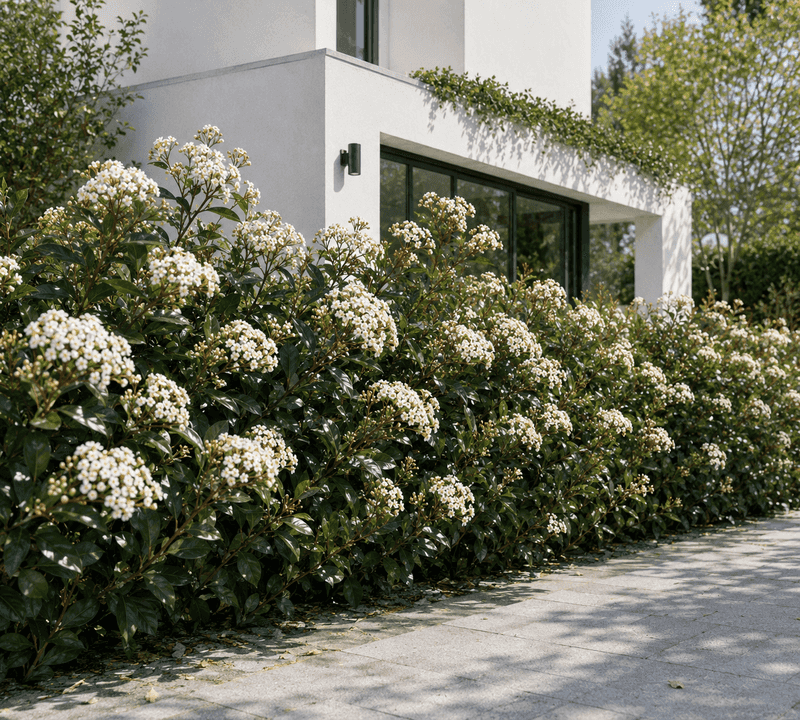
Spring flowers can turn a plain property line into the best-looking part of the yard. Walter’s viburnum covers its branches with clusters of small white blooms, then settles back into a useful green screen.
Viburnum obovatum is native to Florida and is especially useful in North and Central Florida landscapes. Standard plants may reach 10 to 20 feet, while compact cultivars can be much smaller, so select for the height you actually need.
Sun encourages fuller growth and stronger flowering, though partial shade is acceptable. This shrub naturally occurs in moist habitats and can handle periodically wet ground, making it worth considering where a dry-site hedge would struggle.
Allow about 5 to 8 feet between full-size plants, adjusting for the selected cultivar. Water during establishment and watch dry, sandy sites closely rather than assuming native status means no irrigation.
Prune after flowering if shaping is needed, and expect occasional suckers. Foliage can thin or drop in colder weather, so this is not a guaranteed year-round visual wall in every Florida location.
7. Saw Palmetto
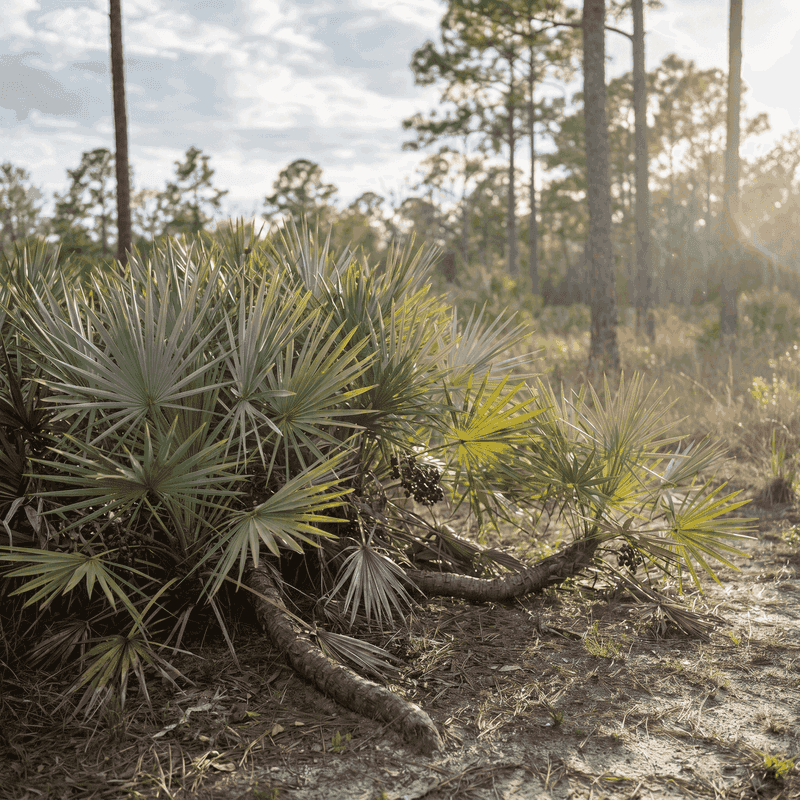
Not every boundary needs to look like a clipped hedge. Saw palmetto builds a rugged, fan-leaved border that suits sandy Florida yards and brings a strong sense of place to the landscape.
Serenoa repens grows naturally across Florida and tolerates heat, drought, and coastal conditions once established. It commonly forms broad clumps around 5 to 10 feet tall, though height and growth habit vary considerably.
The catch is speed: this is a patient gardener’s choice, not a fast fix for an exposed patio. Buy nursery-grown plants, and avoid removing established palmettos from the wild or assuming large transplanted specimens will settle in easily.
Give each clump generous space, often 6 to 10 feet or more depending on its expected spread. The leaf stalks have sharp teeth, so keep plants well back from gates, play spaces, and narrow paths.
Flowers support insects, and the fruit feeds wildlife. Use saw palmetto for lower, informal screening or as the front layer of a taller native border, rather than expecting fence-like coverage at eye level immediately.
8. Wild Coffee
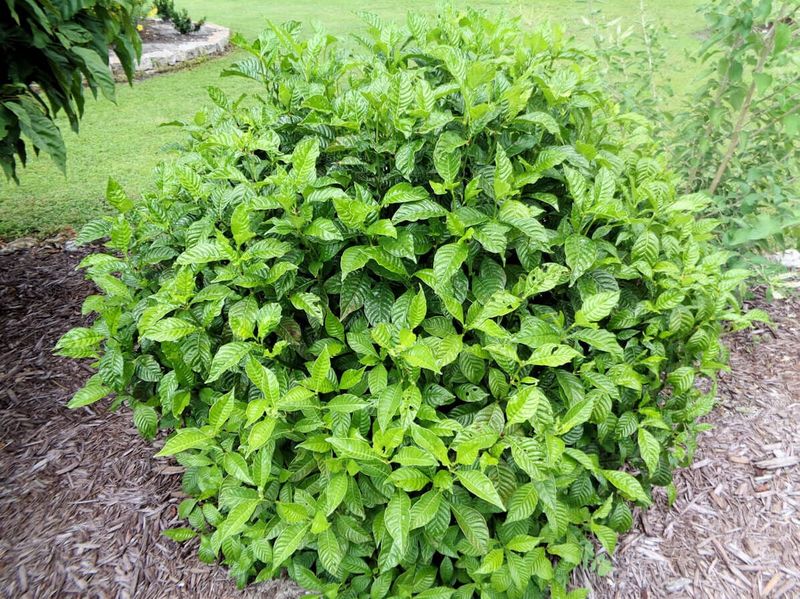
That shady strip beside the patio needs a different plant than the blazing driveway edge. Wild coffee fills this niche with glossy, deeply veined leaves that bring rich texture to a sheltered border.
Psychotria nervosa is best suited to South Florida and protected parts of Central Florida. It usually grows about 4 to 8 feet tall, making it more useful for screening a seated view than hiding an entire two-story house.
Choose partial to full shade with well-drained soil, and provide moisture while plants establish. Strong afternoon sun can leave the foliage looking stressed, especially where sandy soil dries quickly.
Space plants roughly 3 to 5 feet apart, guided by their expected mature width. Small white flowers attract pollinators, followed by red fruits that birds eat; despite the common name, this is not the plant used to make ordinary drinking coffee.
Let the shrubs keep their loose shape, using light pruning to guide growth away from chairs and paths. In cold-prone yards, choose a hardier species from this list rather than relying on wild coffee for permanent winter privacy.