
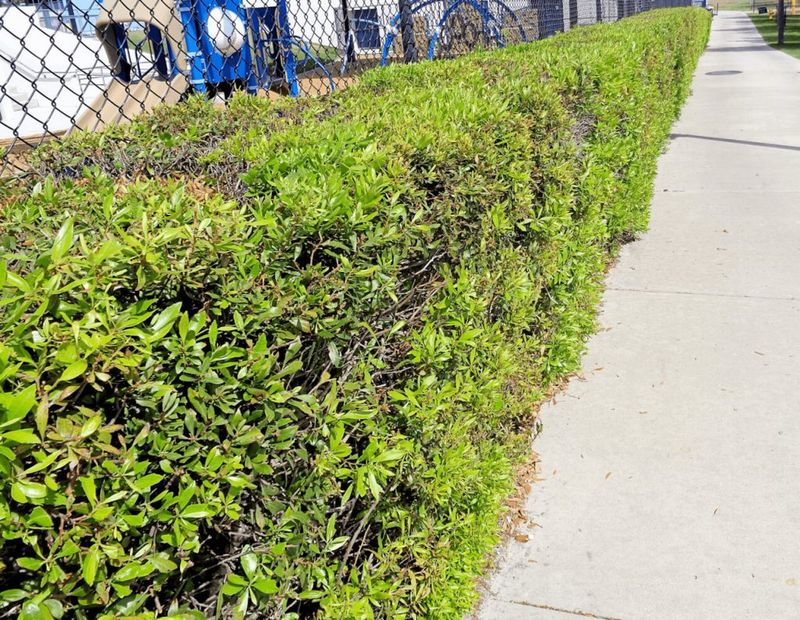
A neat green border can lose its good looks fast when winter brings a surprise freeze. Florida natives offer useful alternatives to boxwood, from tidy little shrubs to bold, leafy clumps.
No plant can promise to never brown after cold, but the right native in the right spot can keep your edging looking better through ordinary winter weather. These eight choices offer different looks, so you can match your border to your soil, space, and part of Florida.
1. Dwarf Yaupon Holly
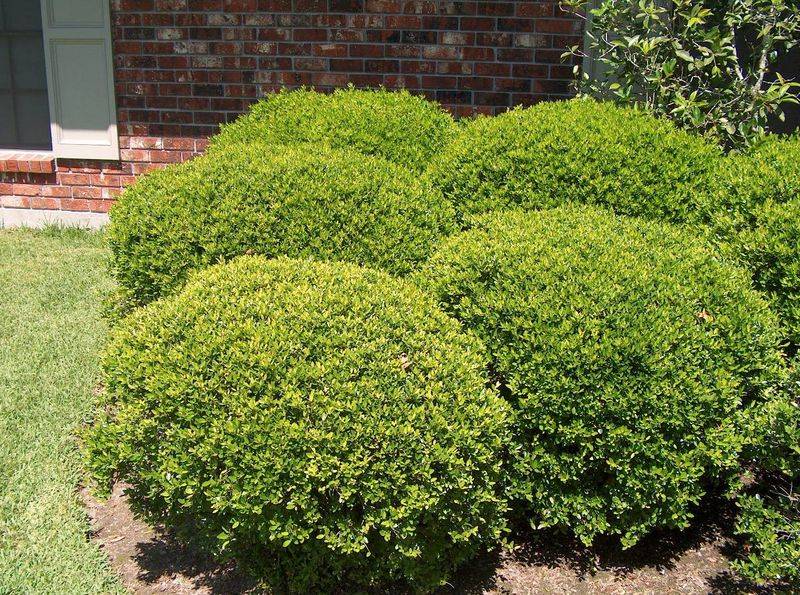
A crisp little hedge does not have to mean a weekly date with the clippers. Dwarf yaupon holly gives you small evergreen leaves and a naturally rounded shape that comes close to the familiar boxwood look.
Look for compact selections of Florida-native Ilex vomitoria, such as ‘Schillings Dwarf’ or ‘Nana’. Many grow about 3 to 5 feet tall and spread wider with age, so check the nursery label rather than assuming every dwarf stays ankle-high.
Plant in sun or partial shade, preferably in well-drained soil. Established yaupon handles Florida’s sandy ground and dry spells well, making it especially useful along driveways and sunny front walks.
For a connected border, space plants according to their expected mature width. Light trimming keeps the outline tidy without turning every shrub into a hard green cube.
Its cold tolerance makes this one of the strongest choices for North and Central Florida. Severe freezes can still injure new growth, so avoid late-season pruning that encourages tender shoots.
2. Inkberry Holly
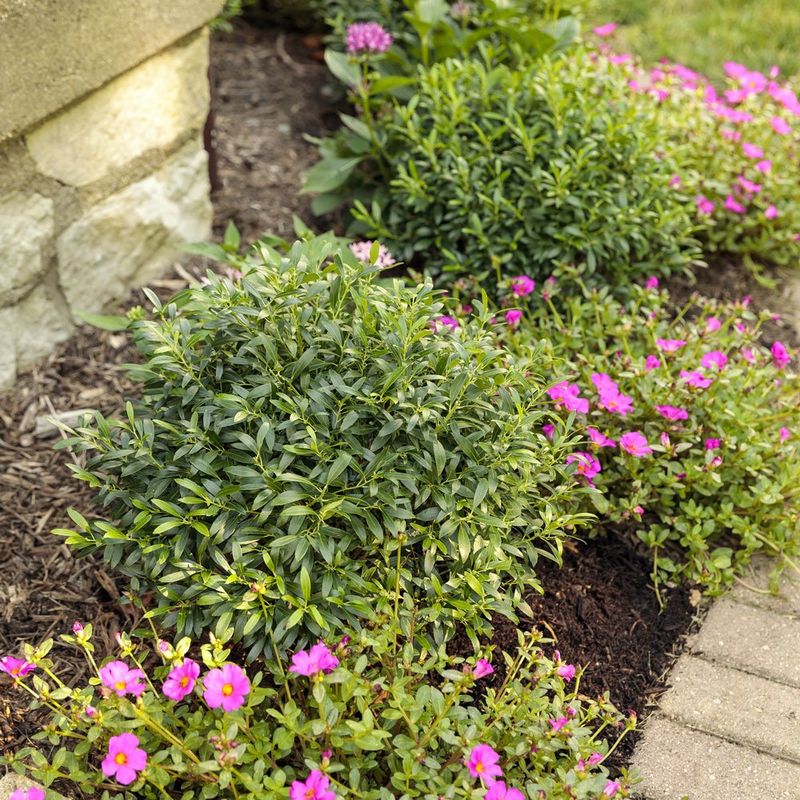
That damp stretch beside the path needs a different answer than a hot, dry driveway. Inkberry holly belongs on the shortlist when your soil stays moist and acidic rather than drying into loose sand.
The Florida-native species, Ilex glabra, has small evergreen leaves and a quiet, orderly appearance. Choose a compact selection with good branching near the ground, since ordinary plants can become taller and lose lower foliage as they age.
Give it sun to partial shade and enough room for its listed mature spread. Many compact selections reach roughly 3 to 4 feet, though size varies by cultivar and growing conditions.
Inkberry is notably cold-hardy, making it a useful option for North Florida borders. Its bigger weakness is a poor soil match: alkaline fill, limestone-heavy ground, and prolonged drought can cause disappointing growth.
Keep the root area mulched and water during establishment and extended dry weather. If berries matter to you, ask the nursery about female plants and a compatible male pollinator; a row of one cultivar may not produce fruit.
3. Dwarf Walter’s Viburnum
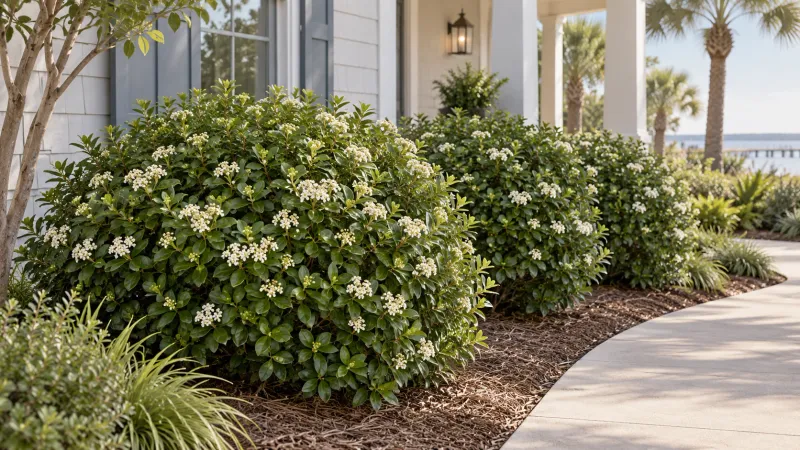
White flowers can turn a plain green border into the prettiest part of the front yard. A dwarf Walter’s viburnum adds that seasonal lift while keeping the small leaves and dense branching that make a hedge feel finished.
Choose a named compact form of Viburnum obovatum, such as ‘Mrs. Schiller’s Delight’. The straight species can become a large shrub or small tree, so buying the correct selection is essential for a low border.
Expect many dwarf forms to finish around 2 to 4 feet tall, depending on the selection and site. Sun encourages dense growth and good flowering, while partial shade can work where the border receives several hours of light.
Water regularly while roots establish, then adjust irrigation to rainfall and soil moisture. This native tolerates a useful range of Florida conditions, including occasional wet periods, but a newly planted hedge still needs attention.
Trim lightly after flowering rather than repeatedly shearing away developing buds. Foliage can thin or drop during colder winters, especially in North Florida, so regard it as evergreen to semi-evergreen rather than completely freeze-proof.
4. Dwarf Wax Myrtle
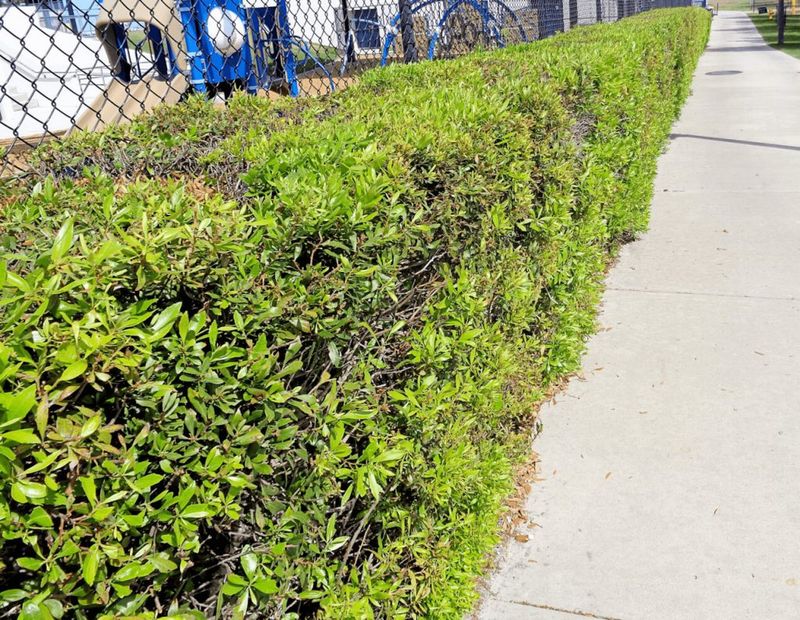
Along a sunny coastal walk, a slightly loose border often looks more at home than a sharply clipped hedge. Dwarf wax myrtle supplies that softer outline, with narrow evergreen leaves that release a pleasant scent when crushed.
Shop carefully for a genuinely dwarf selection of Florida-native Morella cerifera. Standard wax myrtle grows far too large for edging, and even compact plants vary in height, width, and tendency to send up shoots from the roots.
Many dwarf forms fit a border roughly 3 to 5 feet tall, making them better for a broad bed edge than a narrow strip beside the doorstep. Ask the grower for the mature dimensions of the exact plant being sold.
Sun to partial shade suits it, and established plants tolerate sandy soil, some salt exposure, and periods of drought. Water new plants deeply as needed rather than assuming coastal toughness starts on planting day.
Use selective cuts to manage stray branches and remove unwanted suckers. Cold tolerance is generally good within its adapted range, but exposed foliage can still suffer in an unusually hard freeze.
5. Coontie
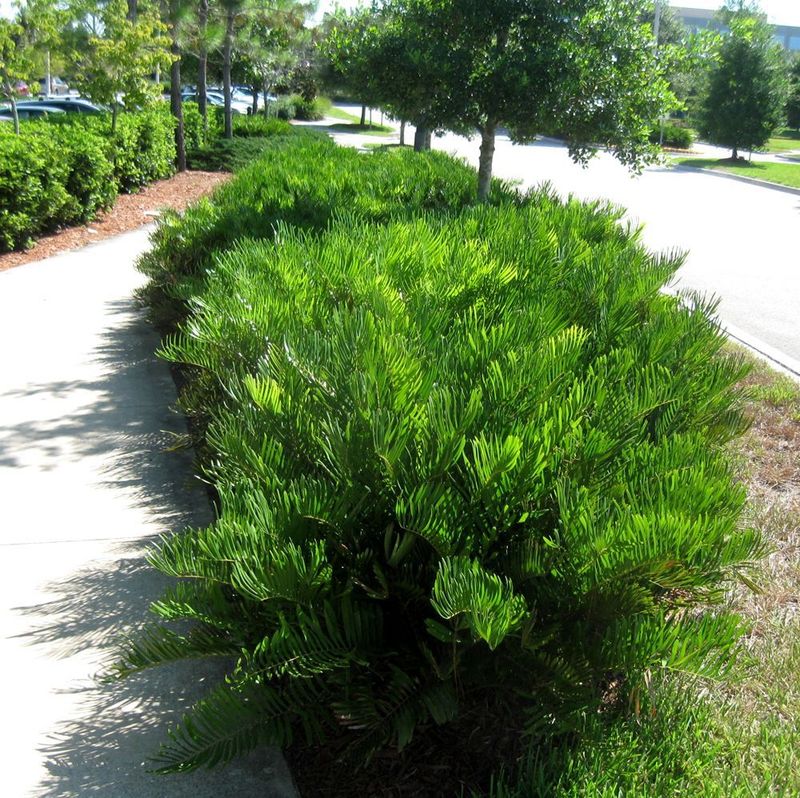
Forget the hedge trimmers for a moment. Coontie’s sturdy, featherlike leaves create a low border through repeated clumps, not a wall of tiny clipped leaves.
This Florida-native cycad, Zamia integrifolia, usually grows about 2 to 3 feet tall and spreads wider over time. Its bold texture works especially well beside a simple walkway or against a plain house wall, where each arching leaf has room to show.
Choose well-drained soil in sun or partial shade. Once established, coontie handles dry conditions well, but soggy planting holes and constant irrigation can damage its roots.
Cold tolerance has limits: established plants often withstand ordinary cold snaps, while hard freezes can scorch foliage, especially in colder North Florida locations. Wait until freeze danger has passed before removing damaged leaves.
Coontie also supports larvae of the rare atala butterfly where that butterfly occurs. However, all parts are poisonous if eaten, particularly the seeds, so avoid locations where children or pets might chew them.
Space plants for their mature spread and let their natural shape provide the edging. Regular shearing ruins the effect.
6. Dwarf Palmetto
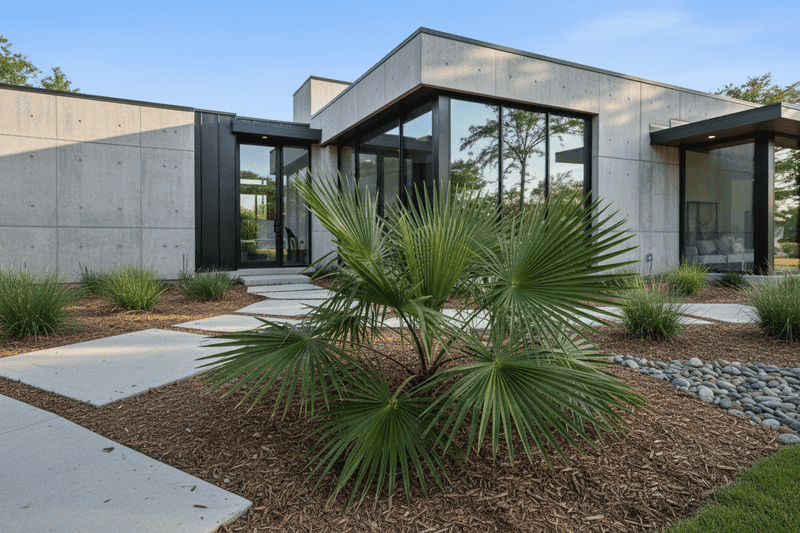
A fan-shaped leaf brings a bit of Florida character that boxwood simply cannot match. Dwarf palmetto is the bold choice for a wide border where winter toughness matters more than a perfectly straight hedge top.
Sabal minor is a Florida-native palm with excellent cold tolerance. It usually keeps its trunk underground or close to the ground, creating a clump of large green fans rather than a tall palm silhouette.
Allow plenty of space, often 4 to 6 feet or more across as plants mature. Despite the word dwarf, it is not a substitute for a one-foot edging strip beside a narrow sidewalk.
Use it along a broad path, under an open tree canopy, or at the edge of a rain garden. It handles moist ground and partial shade well, though established plants can also manage drier periods.
Plant repeated clumps with enough setback that leaf tips will not crowd passing legs. Remove only dead or badly damaged fronds, leaving healthy green fans intact.
Among these choices, dwarf palmetto is particularly dependable in North Florida cold. Extreme weather can still mark leaves, but routine freezes are far less troubling than they are for tender tropical palms.
7. Florida Privet

Need an edge with a little more height and privacy? Florida privet can define a broad front bed while screening low windows or hiding an unattractive view beyond the garden.
Forestiera segregata is a Florida native, not one of the invasive exotic privets that cause trouble in natural areas. Check the botanical name before buying, because the common name alone does not tell you what is in the pot.
Left alone, it can become a large shrub or small tree. Plan on a maintained medium-height hedge rather than expecting a naturally knee-high mound, and give it enough bed width to avoid constant cutting.
Sun to partial shade suits this adaptable plant. Established specimens tolerate drought and coastal conditions, making it useful in many Central and South Florida landscapes with sandy soil.
Small flowers attract insects, and female plants can produce dark fruit when pollinated. Frequent shearing reduces those wildlife benefits, so selective pruning is the better compromise where space allows.
Its foliage is evergreen to semi-evergreen, with leaf loss possible in cold weather. For colder inland North Florida sites, yaupon or inkberry is usually a more dependable choice for winter greenery.
8. Fetterbush
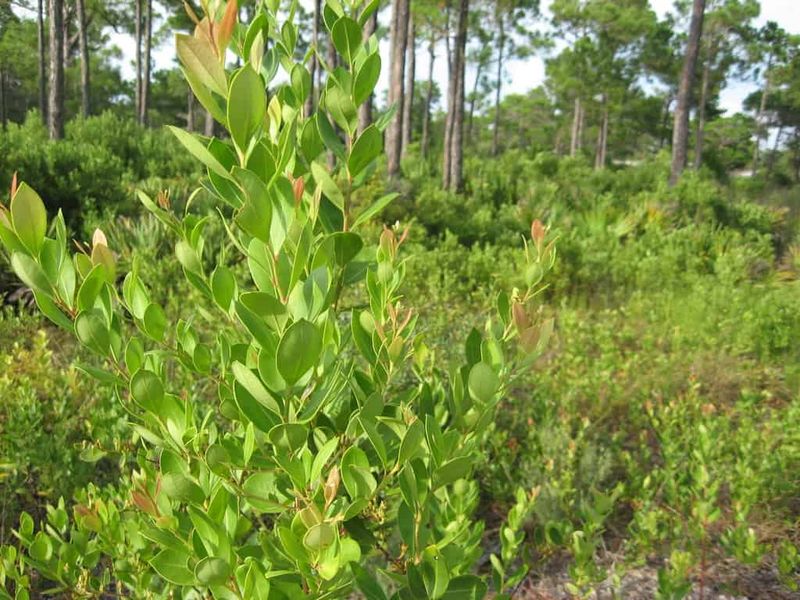
Under pines, a glossy green border can look good without fighting the character of the yard. Fetterbush brings shiny leaves and small, hanging bell-shaped flowers to moist, acidic sites where many ordinary hedge plants struggle.
Lyonia lucida is native to Florida and commonly reaches about 3 to 6 feet tall, sometimes more. Think of it as an informal woodland edge rather than a tightly clipped replacement for miniature boxwood.
Partial shade and naturally acidic soil are a good starting point. Moisture matters, too: this is not the plant for a dry, shell-filled strip beside a sun-baked driveway.
Set plants where their arching stems can develop without blocking the path. A bed under an open pine canopy or along a moist woodland boundary lets the foliage and flowers do most of the decorating.
Prune selectively after flowering if a branch needs shortening, and avoid forcing the shrubs into rigid balls. Established plants are cold-hardy within their adapted range, though extreme freezes can still cause injury.
Before replacing an entire hedge, confirm your soil and mature space match the plant. Fetterbush rewards a suitable site with evergreen structure, not with tolerance for every Florida yard.