
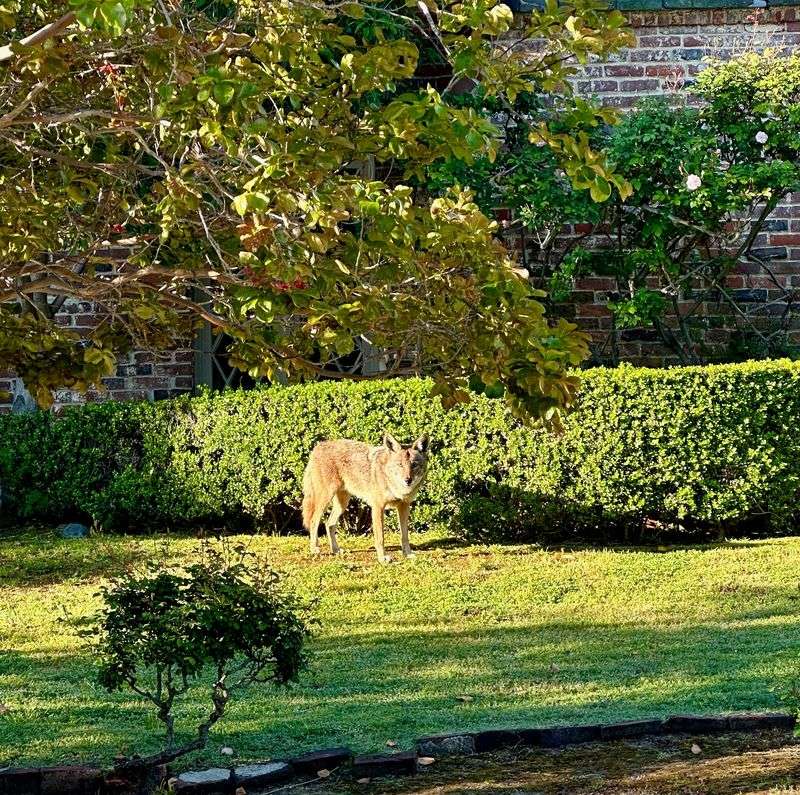
You step outside with your morning coffee and spot a lean, gray-brown animal staring back at you from the edge of the garden. Coyotes now live in nearly every Southern city and suburb, from Houston to Tampa, and fall is when young ones roam looking for new territory.
Running can actually make things worse, because it may trigger a chase response. Here is what to do instead, step by step, so you stay safe and your yard becomes a place coyotes would rather skip.
1. Stand Your Ground and Stay Calm
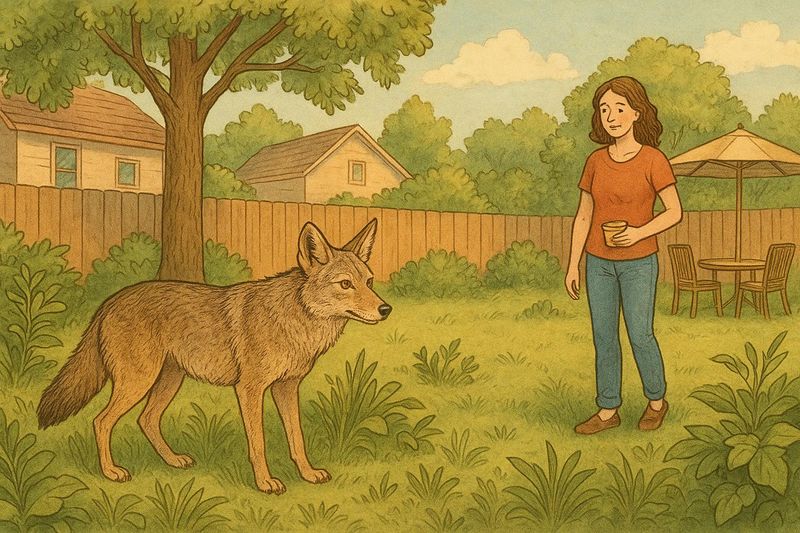
Picture a dog that chases a squirrel the second it bolts. Coyotes share that same instinct, so a person who turns and sprints may look a lot like something worth following.
Your first job is simply to stop. Plant your feet, keep your shoulders square, and take a slow breath.
Most coyotes that wander into Southern backyards are curious or hunting rodents, not looking for trouble with people, and many will leave on their own once they notice you.
Keep your eyes on the animal without staring it down in a frozen panic. Note where it is, whether it seems relaxed, and which way it could exit.
A coyote that is trotting along a fence line is behaving very differently from one that is approaching you directly.
Staying calm also helps you think. You can scan for kids, pets, or tools nearby and plan your next move instead of reacting blindly.
Attacks on adults are rare in Florida and Texas, according to state wildlife agencies. That does not mean you should relax completely, but it should lower your heart rate enough to handle the moment well.
Steady and alert is the goal here.
2. Make Yourself Look Big
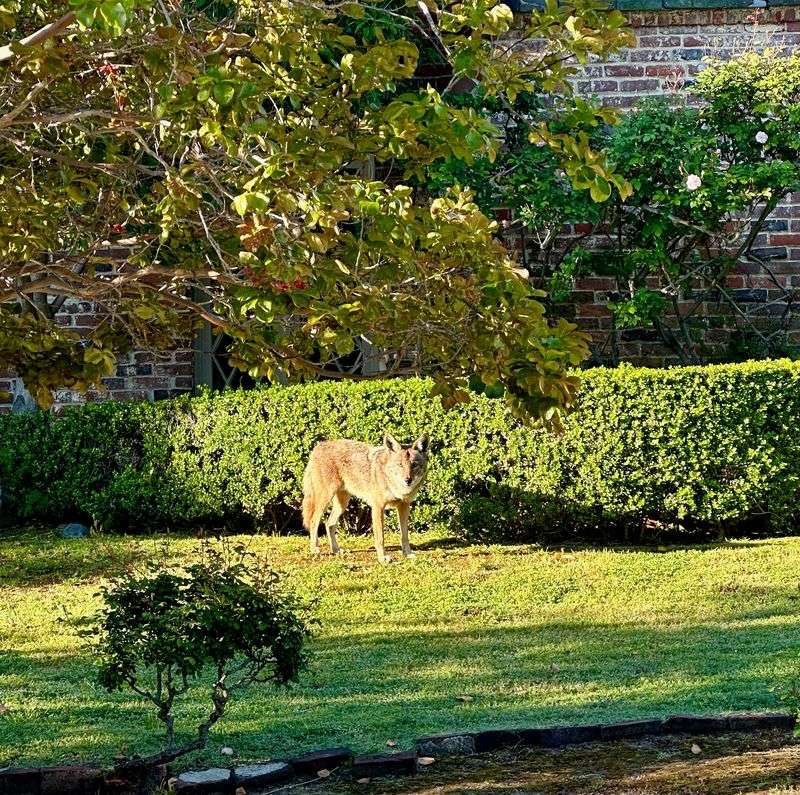
Size matters in the animal world. A coyote usually weighs 20 to 35 pounds in the South, and it sizes up threats quickly, so you want to look like the biggest thing in the yard.
Raise both arms high over your head. If you are wearing a jacket or flannel shirt, hold it open wide like a cape.
Standing on a step, a garden bench, or a low retaining wall can add even more height.
Avoid crouching, kneeling, or bending down to grab something off the ground if you can help it. Getting low can make you look smaller and less confident, which is the opposite of the message you want to send.
Kids should get behind you or be picked up right away. Small children are closer to the size of the prey coyotes normally hunt, so lifting them up both protects them and makes your silhouette larger.
Fun fact: coyotes are excellent at reading body language, partly because they communicate with each other through posture and tail position. A tall, wide human shape often tells them this yard is not worth the risk.
Combine that pose with steady eye contact and you have already started winning the standoff.
3. Get Loud With Your Voice and Noisemakers
Quiet gardeners, this is your moment to break the rule. Yelling in a deep, firm voice is one of the simplest ways to tell a coyote it has overstayed its welcome.
Shout something like “Go away!” or “Get out!” over and over. Clap your hands, bang a trowel on a metal watering can, or stomp on the deck boards.
Sudden, unpredictable noise can make the animal uneasy.
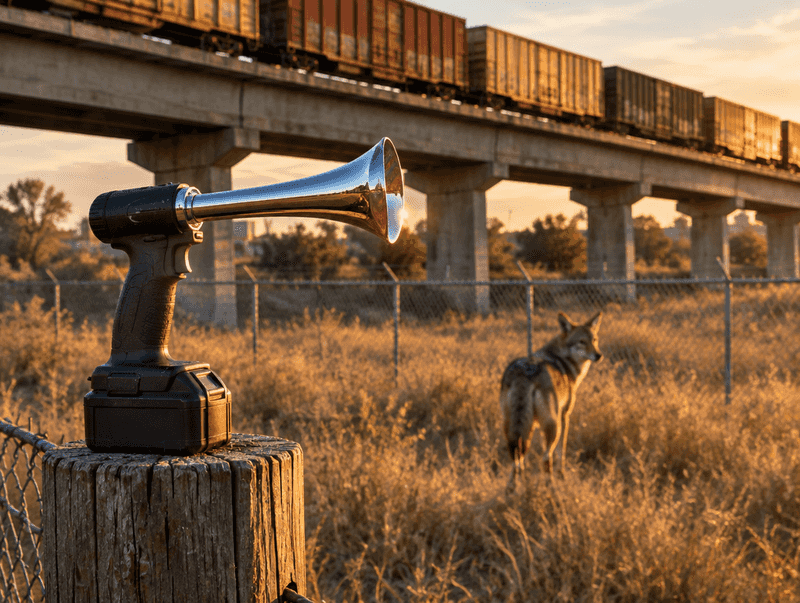
Many Texas and Florida homeowners keep a shaker by the back door, made from an empty soda can filled with a handful of pennies and taped shut. An air horn or a loud whistle works too.
Keeping one near the garden shed means you are never empty-handed.
Wildlife biologists call this technique hazing. The idea is to make human spaces feel uncomfortable so coyotes keep their natural wariness of people.
When neighbors all haze consistently, coyotes may learn to avoid the whole street.
Keep the noise going until the coyote fully leaves, not just until it steps back a few feet. Stopping too early can teach it that a little patience earns it the yard back.
4. Back Away Slowly If It Holds Its Ground
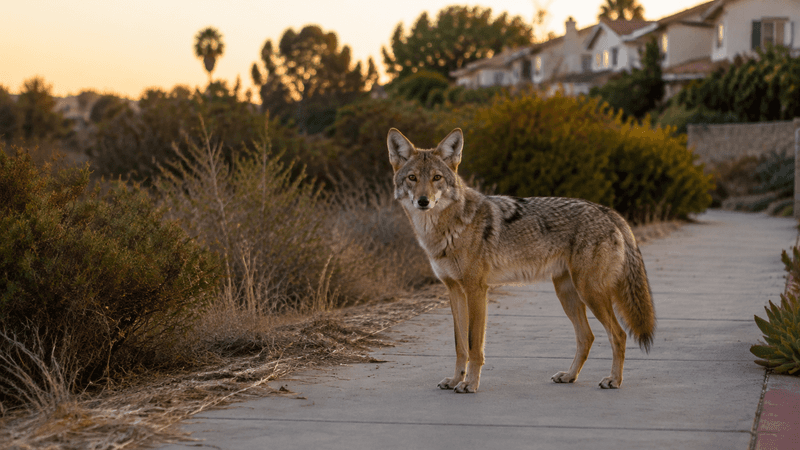
Sometimes a coyote does not budge. Maybe it is a bold young male, or maybe there is a den nearby.
Either way, you still should not run.
Keep facing the animal and step backward slowly toward your door, garage, or car. Continue making noise and keeping your arms raised as you move.
Glance behind you only briefly so you do not trip over a hose or a raised bed corner.
Give it room to escape, too. A coyote that feels cornered between a fence and a shed may act more defensively than one with a clear path out.
Leaving a gate or open side yard available can help it decide to go.
If it follows you closely, stop, get big again, and throw something toward it, like a small stick or a tennis ball. Aim near it rather than trying to hurt it.
A coyote that keeps approaching after strong hazing is unusual behavior. Once you are safely inside, make a note of the time, the location, and what it did.
That information will be useful if you later need to contact local wildlife officials or animal control.
5. Bring Pets and Kids Inside Right Away
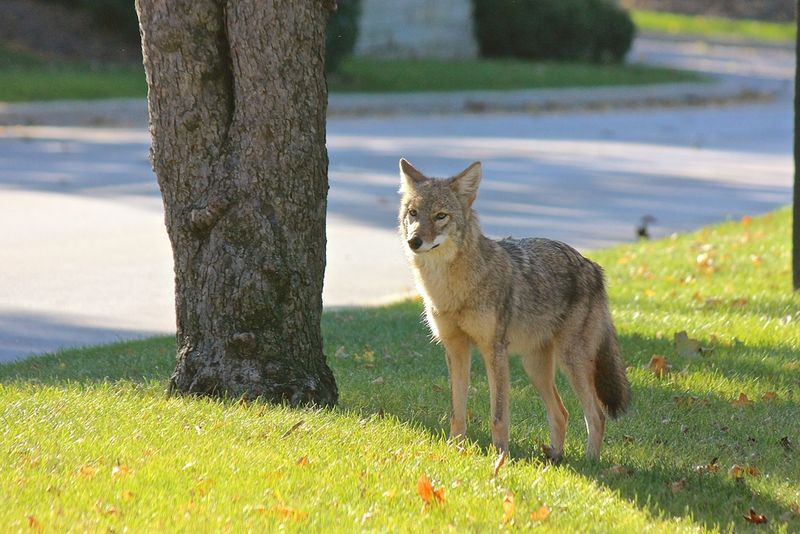
Small dogs and outdoor cats top the list of what coyotes may target in suburban yards. Once the coyote is moving off, round up everyone who is smaller than you.
Scoop up little dogs instead of calling them, since a barking pet that charges toward a coyote can turn a calm moment into a scuffle. Larger dogs should be leashed and led in, not left to defend the yard on their own.
Fall is an especially busy season. Coyote pups born in spring are now striking out on their own and testing new territory, so sightings often increase from September through December across the South.
Going forward, walk pets on a short leash, especially at dawn and dusk when coyotes are most active. Retractable leashes give a coyote too much room to grab a small animal.
A flashlight and a whistle clipped to the leash are cheap insurance.
Cats are safest indoors full time. If yours insists on going out, a covered catio can let it enjoy fresh air without being exposed.
Feeding pets inside also keeps bowls from drawing hungry wildlife.
6. Clean Up Fallen Fruit and Garden Scraps
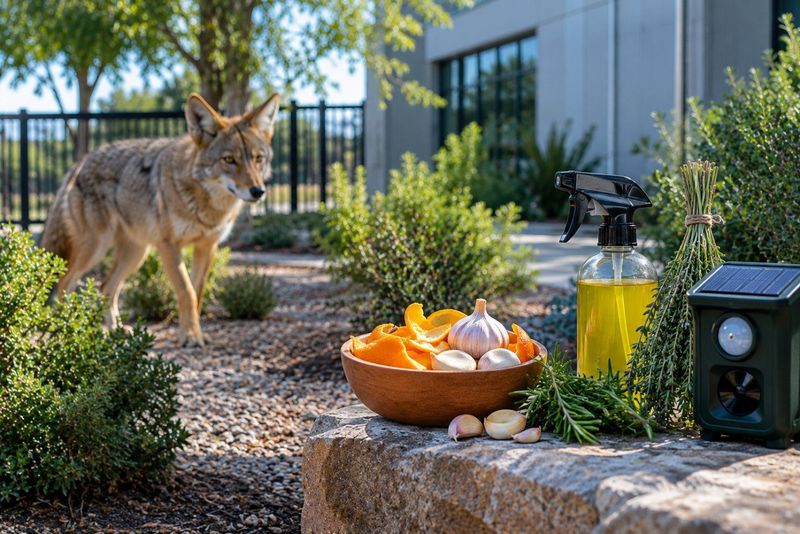
Here is something many gardeners never suspect: coyotes love fruit. Fallen persimmons, figs, citrus, pecans, and even overripe tomatoes left on fall vines can bring them right into your beds.
Walk your yard every couple of days during harvest season and pick up dropped produce. A rake and a five-gallon bucket make quick work of it.
Toss the scraps into a closed bin rather than leaving them in the open.
Open compost piles can be another attraction, especially if kitchen scraps like meat or dairy end up there. A sealed tumbler or a lidded bin may help reduce smells that drift across the neighborhood.
Finished fall veggie beds deserve a look too. Pull spent squash, melons, and split tomatoes before they rot.
Southern fall gardens with collards and broccoli are usually less tempting, but rotting produce of any kind can still pull in rodents.
That last point matters because rodents are a coyote favorite. When mice and rats find steady food in your garden, coyotes may follow the buffet.
A tidy yard can quietly reduce both problems at once.
7. Secure Trash, Pet Food, and Bird Feeders
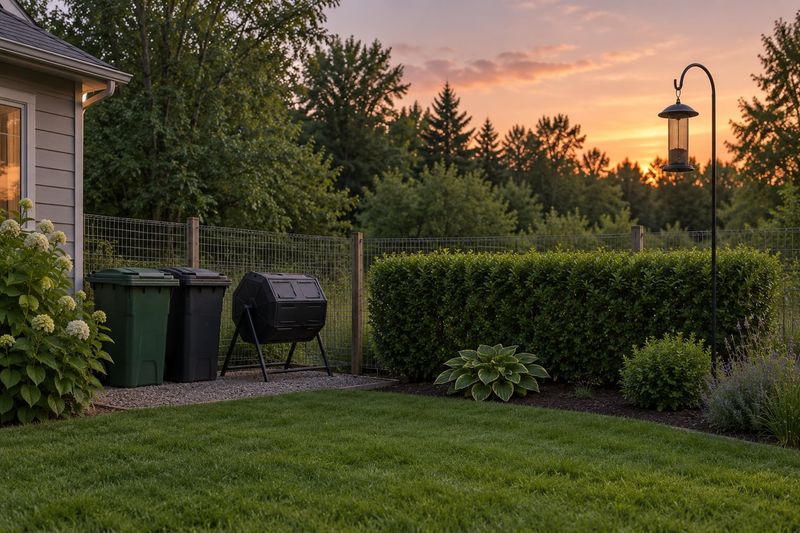
Think of your yard as a restaurant menu. Every unsecured trash can, bowl of kibble, or pile of spilled birdseed adds another item a coyote might want to try.
Store garbage cans in the garage or use lids that latch or strap down. Put trash out the morning of pickup instead of the night before when possible.
Rinsing food containers before tossing them can cut down on odors.
Pet food should never sit outside overnight. That includes the bowl for the outdoor cat and the bag of dog food in an open carport.
Coyotes that find easy meals may return again and again, growing bolder each visit.
Bird feeders are trickier. The birds are not the issue, but seed on the ground draws squirrels and rodents, which in turn may draw coyotes.
A catch tray under the feeder and regular raking can help. Some homeowners bring feeders in at night during busy coyote seasons.
Chickens are a big draw as well. A sturdy coop with hardware cloth, a covered run, and doors closed at dusk can make a real difference for backyard flocks.
8. Close Off Hiding Spots and Fence Gaps

Coyotes are den diggers and opportunists. A gap under the deck, a dense thicket of overgrown shrubs, or a pile of brush behind the shed can look like prime real estate.
Start with a slow walk along your fence line. Look for holes at the bottom, loose boards, or spots where dirt has been scraped away.
Burying hardware cloth or wire mesh about a foot deep along the base may discourage digging.
Height helps too. Wildlife experts often suggest at least six feet, since coyotes can jump and climb surprisingly well.
A roller bar or angled extension on top makes it harder for them to grip and pull themselves over.
Trim back thick ligustrum, wax myrtle, or overgrown palmetto clumps near the house so there is less cover. You do not have to strip your landscape bare.
Just open up sightlines and remove the cozy spots right next to patios and play areas.
Seal off crawl spaces under porches and sheds with lattice backed by wire. Doing this before late winter matters, because that is when coyotes start looking for den sites for spring pups.
9. Add Motion Lights and Report Bold Behavior
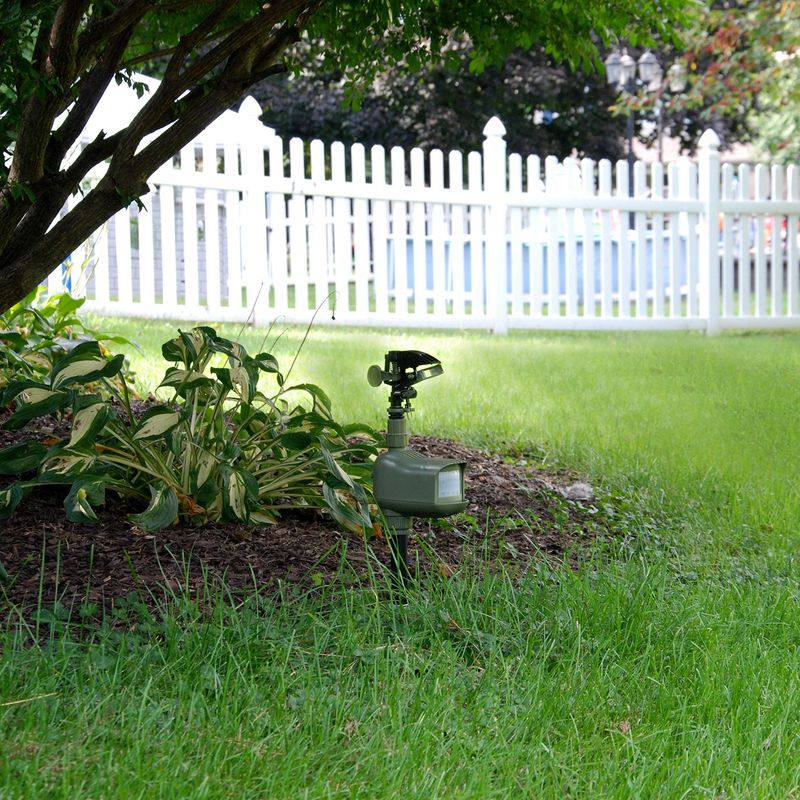
Night is when coyotes do most of their prowling, so a little technology can work while you sleep. Motion-activated floodlights may startle them and make your yard feel less secure.
Place lights near gardens, coops, and the spots where you have seen tracks. Motion-activated sprinklers are another popular option in hot Southern climates, giving an unexpected blast of water that can send wildlife scrambling.
Rotating where devices sit every few weeks helps keep coyotes from getting used to them.
No device is a guaranteed fix, though. Coyotes are smart, and some learn that a flashing light is harmless.
Combining lights with cleanup and fencing usually works better than relying on one trick.
Finally, know when to call for help. A coyote that approaches people, acts sick, stumbles, or attacks a pet should be reported.
In Texas, contact Texas Parks and Wildlife or local animal control. Florida residents can reach the Florida Fish and Wildlife Conservation Commission.
Sharing sightings with neighbors helps the whole block. When everyone hazes, secures food, and stays alert, coyotes often move on to wilder spaces where they belong.