
Your mower deserves a winter break, and parts of your Florida lawn might not need grass at all. Native groundcovers and low shrubs can replace those spaces with greenery that needs no routine mowing.
These seven plants suit different spots, from sunny sand to shady corners, though some lose leaves after a freeze. Choose for your part of Florida, and you can trade weekly lawn chores for a yard with more texture and wildlife value.
1. Frogfruit
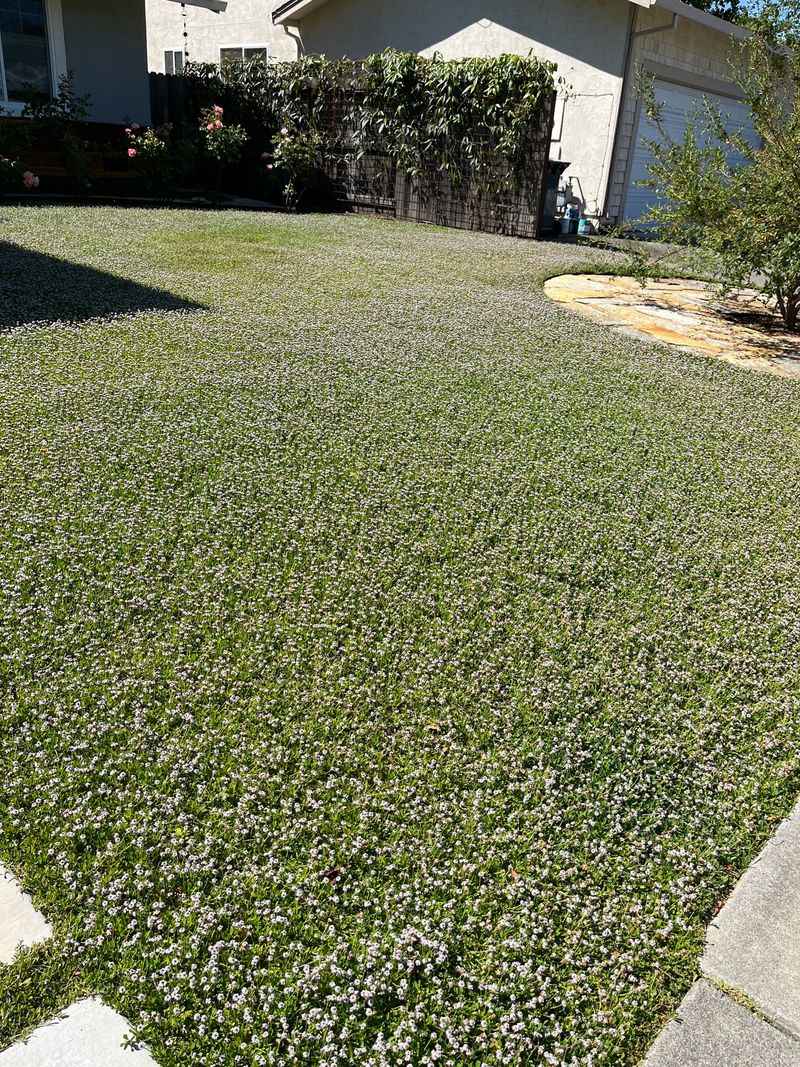
A patch of tiny flowers can do more for butterflies than a closely clipped strip of lawn. Frogfruit, Phyla nodiflora, spreads on creeping stems and makes a low cover where you want a relaxed, meadow-like look rather than a formal carpet.
Give it sun to partial shade and room to wander. It handles a range of Florida soils, including spots that get briefly wet, and established plants can manage dry spells better than newly planted plugs.
The foliage often stays green through mild winters in Central and South Florida. Freezes can brown it farther north, so treat winter color as a local benefit, not a statewide guarantee.
Use frogfruit along a driveway, between widely spaced stepping stones, or in a sunny lawn section with only occasional foot traffic. Its flowers feed small pollinators, and its leaves support several butterfly species.
Remove existing turf before planting, water while roots establish, and pull weeds until the stems fill in. Routine mowing is unnecessary, although an occasional edge trim keeps it out of nearby beds.
2. Sunshine Mimosa
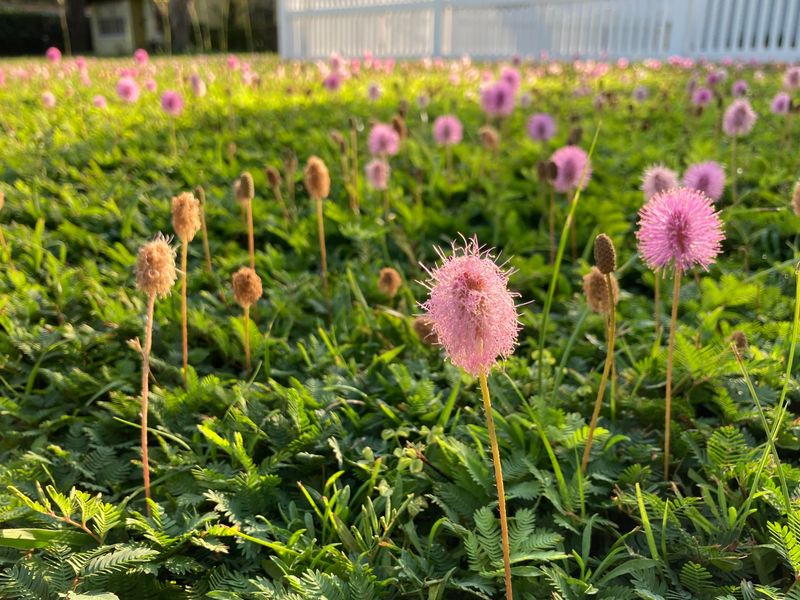
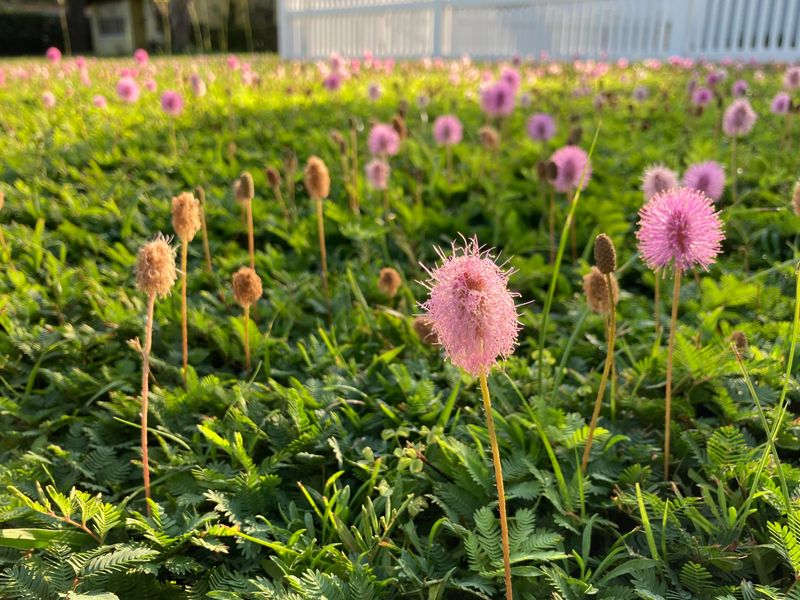
Pink powder-puff flowers give an ordinary sunny strip a surprisingly playful finish. Sunshine mimosa, Mimosa strigillosa, pairs those blooms with fine leaves that fold when touched, making it a fun choice near a path.
Its strongest role is covering open ground in full sun, although it tolerates some light shade. Once established, its deep roots help it cope with Florida’s dry periods, and spreading stems can gradually knit separate plants together.
Winter appearance needs an honest warning: foliage can thin or brown during cold weather, especially in North Florida. In warmer locations and protected sites, it can hold greenery much longer, but it is not a freeze-proof lawn substitute.
Plant it where you can accept a natural-looking patch rather than a perfectly even surface. Occasional footsteps are usually manageable, but a busy dog run or daily play area calls for a tougher surface.
Keep grass and weeds out while young plants spread, and water during establishment. Skip routine mowing if you want flowers, then trim runners at sidewalks or bed edges when needed.
3. Twinflower
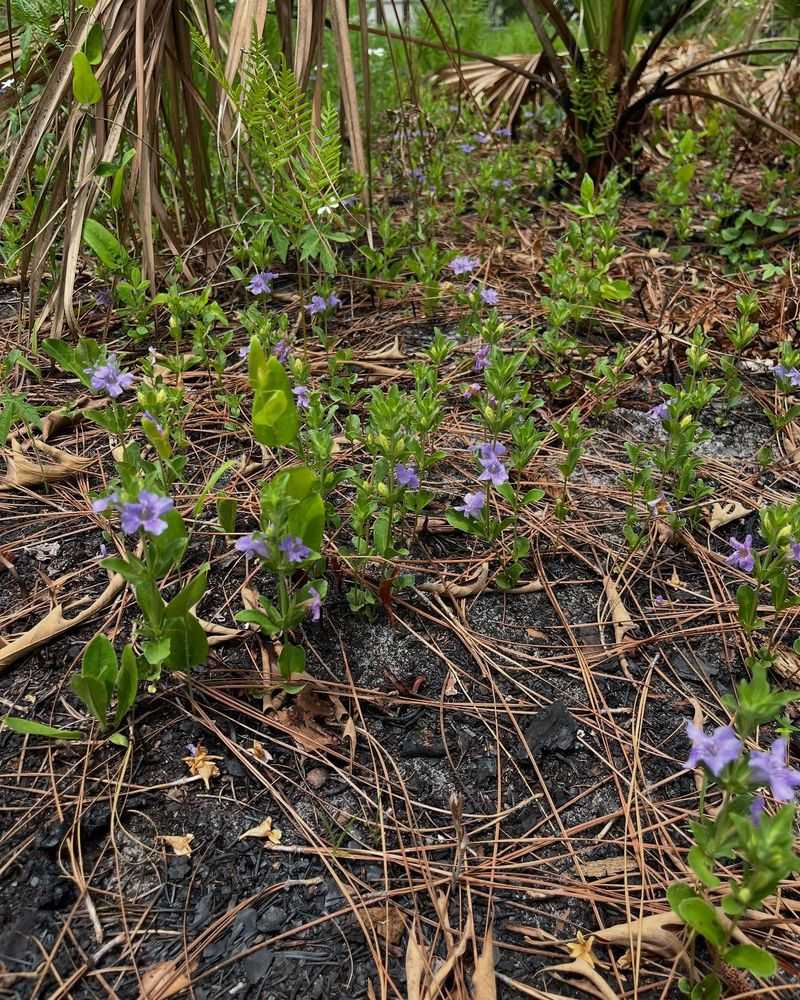
For a softer edge beneath an open tree canopy, small lavender flowers beat another awkward pass with the mower. Twinflower, Dyschoriste oblongifolia, creates a low planting that works especially well where lawn meets a lightly shaded bed.
Choose a site with sun or partial shade and well-drained soil. Its growth is usually fuller with good light, while deep shade can leave a thinner patch that gives weeds more room.
Expect plants roughly 6 to 12 inches tall, rather than the clipped height of turf. The foliage can remain evergreen in mild conditions, though hard freezes may damage the top growth.
Twinflower also earns space as a host plant for common buckeye butterfly caterpillars. A few chewed leaves are part of that benefit, so avoid treating every nibble as a pest emergency.
Set nursery plants in a clearly edged bed, water them through establishment, and leave space for spreading growth. A light trim can tidy an uneven patch, but regular mowing would sacrifice much of its appeal.
Use stepping stones wherever people need to cross. Twinflower belongs in a planted area, not under daily foot traffic.
4. Creeping Sage
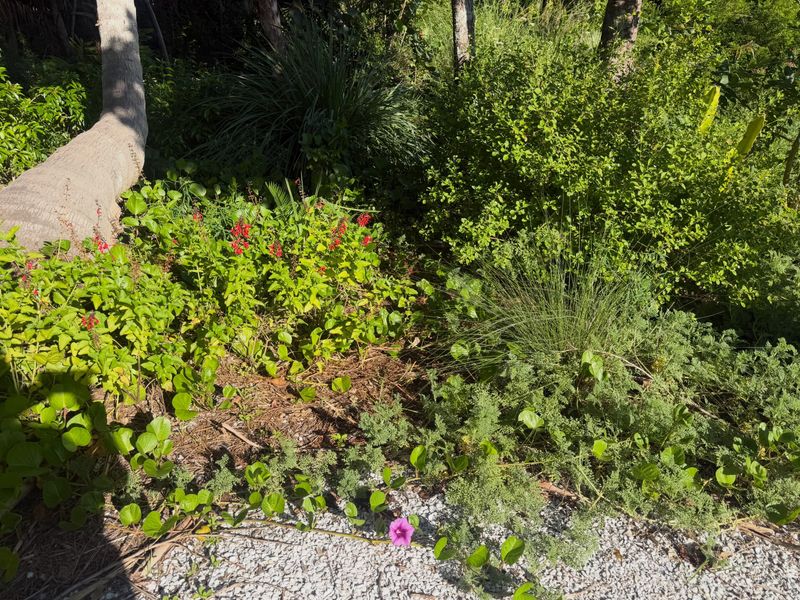
That shady corner where St. Augustine keeps thinning may be better off as a planted bed. Creeping sage, Salvia misella, offers low green foliage and tiny blue flowers without asking you to steer a mower around tree trunks.
Use it in partial shade or bright, filtered light, especially in a sheltered Central or South Florida garden. It can spread into an informal cover beneath shrubs, where its small flowers are best appreciated up close.
Its winter-green value is strongest in frost-free or protected locations. Cold weather can damage foliage, so North Florida gardeners should not rely on it for an untouched green carpet all winter.
Give new plants regular water until rooted, then adjust irrigation to rainfall and soil moisture. A shaded bed may dry more slowly than the sunny lawn beside it, even when both sit on sandy soil.
Keep the planting away from busy walking routes and use a border to define its space. Hand-weeding and occasional trimming replace mowing, making it a useful choice for awkward corners rather than large recreation areas.
5. Coontie
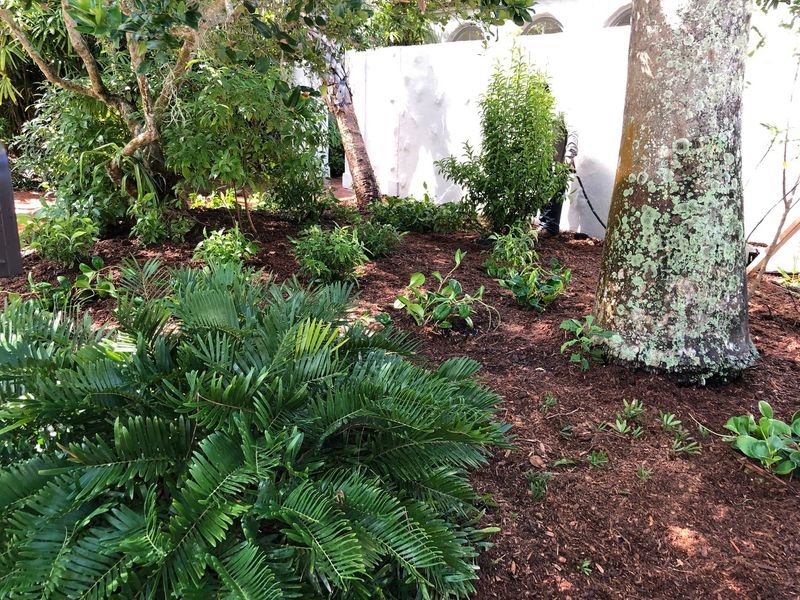
Sometimes the easiest lawn replacement is not a carpet at all. A group of coonties, Zamia integrifolia, brings dark green, palm-like foliage to a front yard while removing an entire patch from the mowing route.
Coontie is a native cycad, not a grass or true palm. Its slow-growing clumps suit foundation beds, walkway borders, and islands around established trees, provided the soil drains well.
Sun to partial shade works, and established plants tolerate drought. Their evergreen foliage offers more dependable winter structure than many soft groundcovers, although severe cold can still mark the leaves.
Plan for mature clumps that can reach roughly 2 to 3 feet tall and several feet wide. Leave enough room between plants and pavement so you do not have to keep cutting back healthy fronds.
Coontie supports the atala butterfly where that species occurs, especially in South Florida. Buy nursery-grown plants, never wild-collected specimens.
All parts are toxic if eaten, with seeds posing a particular concern around children and pets. Choose another plant where chewing or seed handling is likely, and remove only damaged or dead foliage when tidying.
6. Golden Creeper
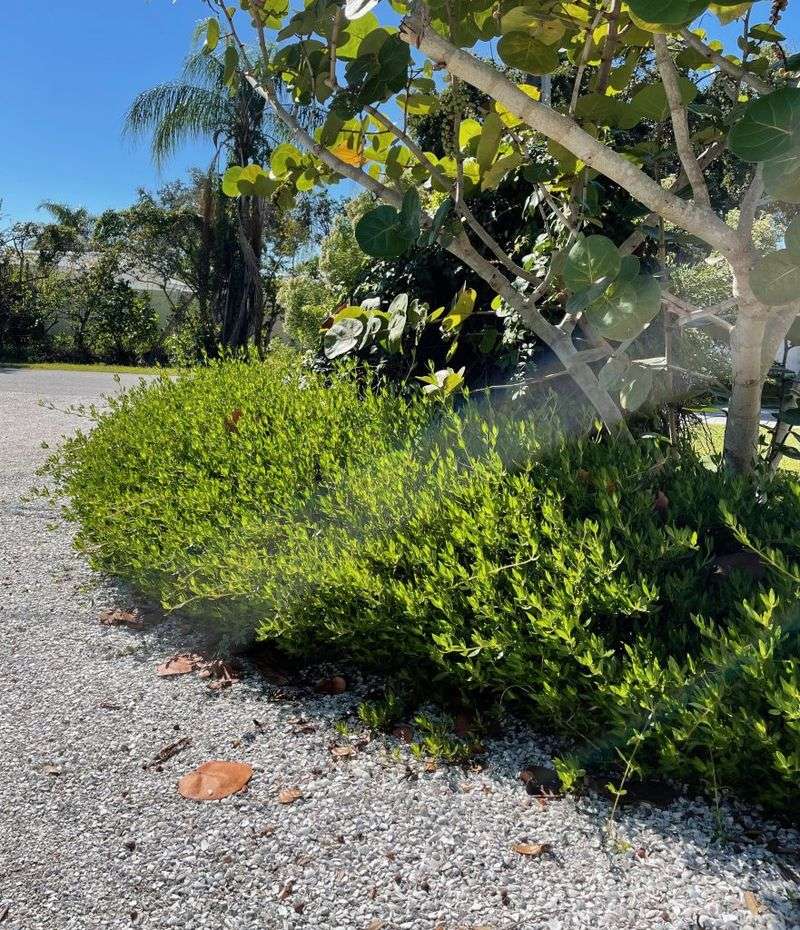
Salt spray and sandy soil narrow the choices for a coastal yard, but they give golden creeper a reason to shine. Ernodea littoralis is a low, spreading native shrub that suits warm coastal Florida landscapes.
Its small leaves provide year-round greenery in suitable frost-free locations. Tiny flowers and golden fruits add detail, though the main payoff is a planted surface that does not need a mower.
Reserve it for South Florida and other locally suitable warm sites rather than treating it as a statewide option. Cold exposure is a real limit, particularly in inland yards that experience freezes.
Plant in full sun or light shade with freely draining soil. Established plants tolerate coastal conditions and dry periods, but fresh nursery plants still need watering while their roots move into the surrounding ground.
Golden creeper makes sense along a sunny walkway, beside a coastal patio, or across a small sandy slope. It is a shrub bed, not a walkable lawn.
Allow room for its spreading habit and use selective pruning when stems cross an edge. Avoid constant shearing, which turns a low-care planting into another recurring chore.
7. Horizontal Cocoplum
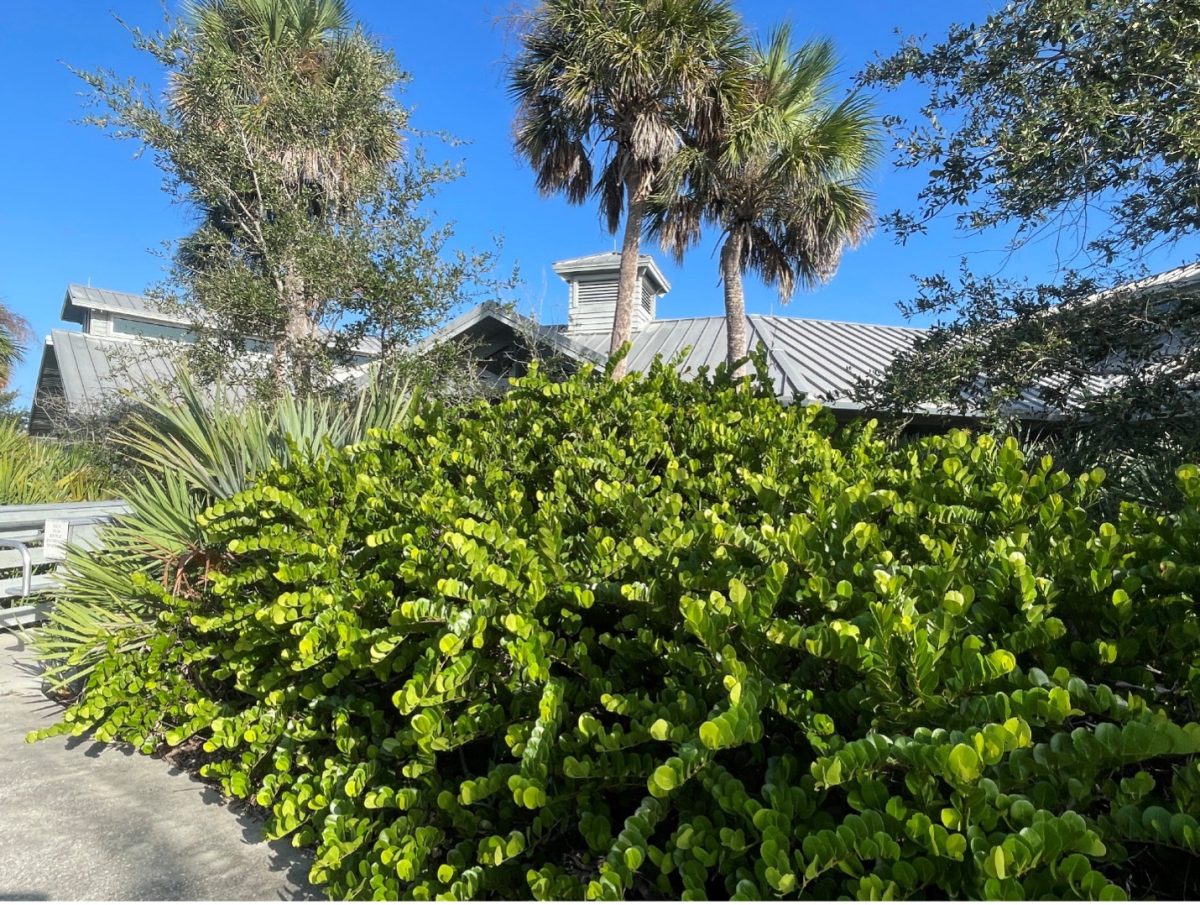
A broad sweep of glossy leaves can make a front yard look finished without a single stripe of freshly cut grass. Horizontal cocoplum offers that effect in warm Florida landscapes, especially where a larger planting can replace a hard-to-mow lawn edge.
Ask specifically for a low-growing horizontal selection of Chrysobalanus icaco. Standard cocoplum forms can become substantial shrubs or small trees, so the name on the nursery label matters.
Even horizontal plants need room: expect a spreading shrub several feet tall, not an ankle-high turf substitute. Use it along a property edge, on a broad bank, or in a generous foundation bed.
Sun encourages dense growth, and well-drained soil helps roots stay healthy. Coastal selections tolerate salt exposure, but confirm the nursery stock suits your site rather than assuming every cocoplum performs identically.
Evergreen foliage is most reliable in South Florida and other warm, protected locations. Freezing weather can damage plants, making this a poor promise of winter green for colder inland yards.
Water during establishment, mulch the open soil without piling mulch against stems, and prune selectively as needed. With enough space, it can replace both mowing and frequent hedge trimming.