
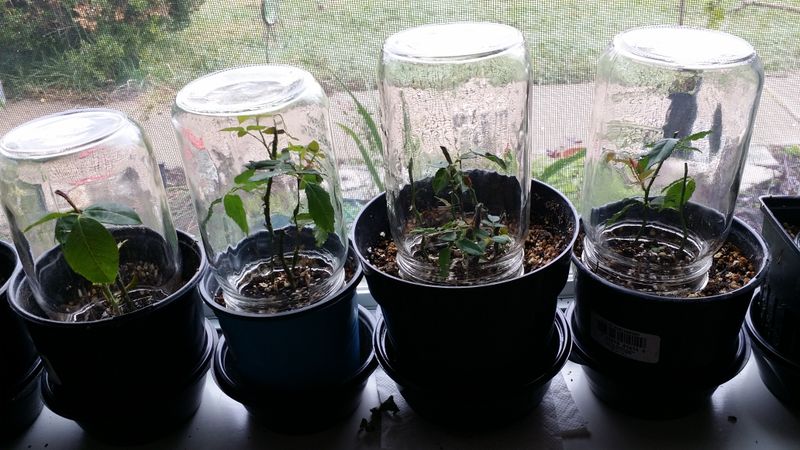
A snipped rose stem, a small pot, and a clear mason jar can make a cheap experiment for a North Carolina yard. The jar works as a little humidity cover, and it is fun to watch.
Rooting is never certain, and a cutting will not turn into a garden-ready bush overnight. Here is how to give a cutting a fair try this fall and winter.
When fall timing may fit North Carolina
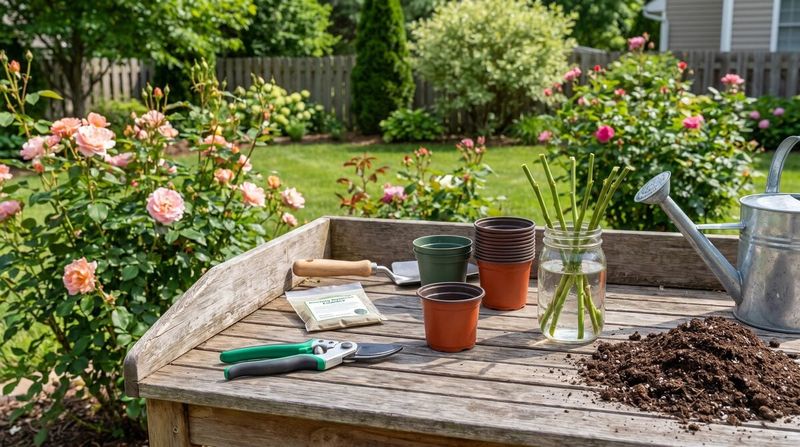
Local advice points toward the cool months. N.C.
Cooperative Extension in Beaufort County says roses can be propagated year-round, and it reports its best results from November through February. That makes late fall a reasonable time to try, especially if you are already tidying your beds.
It is not the only opinion, though. Georgia Extension lists spring and summer for softwood cuttings under mist.
Those sources describe different material and different conditions, so neither one settles a single best season for every rose and every setup.
North Carolina also does not share one fall. NC State’s freeze table lists an average first freeze of October 25 for Asheville and November 18 for Wilmington.
Those are station averages, and your own yard in the mountains, Piedmont, or coastal plain may run earlier or later.
Think of the November through February window as a sensible time for an attempt, not a promise. Watch your local weather, keep the pot out of hard freezes, and treat the first season as a test run.
Choose a healthy stem before you reach for the jar
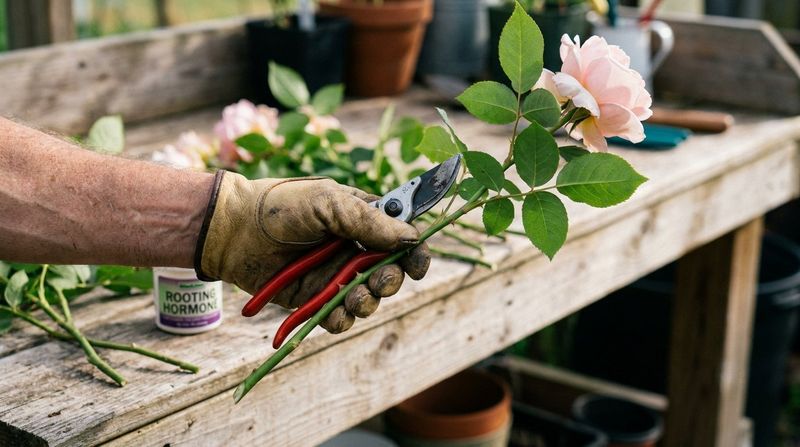
Cutting quality matters more than any gadget. Pick a healthy, disease-free stem from a growing tip, and take it in the morning when the plant is full of moisture.
N.C. Extension recommends a cutting about 6 to 8 inches long.
Remove any flower or hip, then strip the lower leaves so none sit below the surface of the medium. Keep the stem from drying out, for example by wrapping it in a damp paper towel until you are ready to pot it.
A wilted cutting starts at a disadvantage.
Next, lightly scrape the bottom inch of the stem. Rooting hormone can go on after that if you want to use it, but it is optional.
Texas A&M says hormone is not essential.
Clean tools help too. UC ANR’s rose propagation guide warns that viruses in a mother plant can be passed along, so start with healthy stock and wipe your pruners before each cut.
None of these steps guarantees roots, but they remove avoidable problems.
Use a small pot to monitor moisture
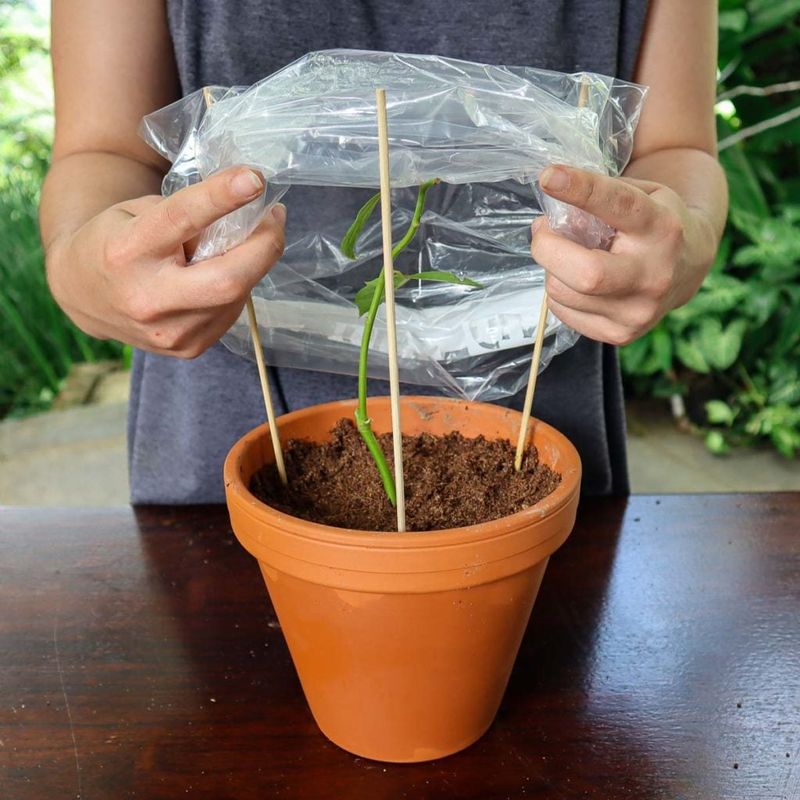
Fill a small pot with a loose rooting medium and moisten it before you plant. Push the prepared end of the cutting in so the scraped inch is buried and the stem stands upright.
Firm the mix gently around it.
A small pot has two real advantages. It makes moisture easier to monitor, since you can lift it and judge its weight or poke a finger into the mix.
It also lets you move the cutting if a cold snap or a sunny spell threatens it. N.C.
Extension recommends a moist medium and a cover to hold humidity.
You may wonder about a glass of water instead. Some gardeners try it, but Arkansas Extension reports that rose cuttings root less successfully in water than in potting medium.
That does not mean every water attempt fails, only that the odds look better in a pot.
Label the pot with the rose name and the date. If you plan several cuttings, give each its own pot so one rotting stem does not spoil the others.
What the mason jar actually does
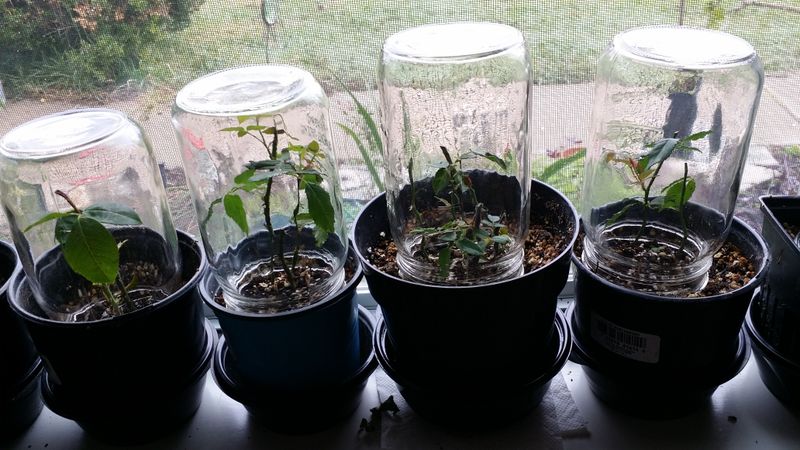
Here is the fun part. Turn a clear mason jar upside down over the pot, and it becomes a tiny greenhouse.
Moist air stays trapped around the leaves, which matters because an unrooted cutting cannot drink much yet.
That is the jar’s whole job. As Texas A&M AgriLife Extension explains, high humidity helps limit water loss from cuttings.
The jar does not make roots grow. The stem, the medium, steady moisture, and time still do the work.
Light needs care. Set the jar in bright shade or indirect light, such as a north-facing porch or a spot beside a bright window.
Direct sun can overheat the air under the glass and cook the cutting.
Check under the jar every few days. If the glass drips constantly or you see mold, lift the jar for a while to let air move.
N.C. Extension advises a humidity cover, and a mason jar is simply one handy way to provide it.
Treat spring as a checkpoint, not a finish line
Plan on patient, boring care. Keep the medium moist but not soggy, and keep the jar in place.
If the mix feels dry an inch down, water lightly. If it stays wet for days, ease up.
Timing needs realistic expectations. UC Davis Foundation Plant Services says good top growth and roots may take about six months.
A cutting started in November may therefore still be a work in progress in spring.
New leaves are encouraging, but they are not proof. A shoot can push out on stored energy while roots stay thin or absent.
A gentle tug that meets resistance, or roots showing at the drainage hole, tells you more.
Do not rush the plant into a bed. N.C.
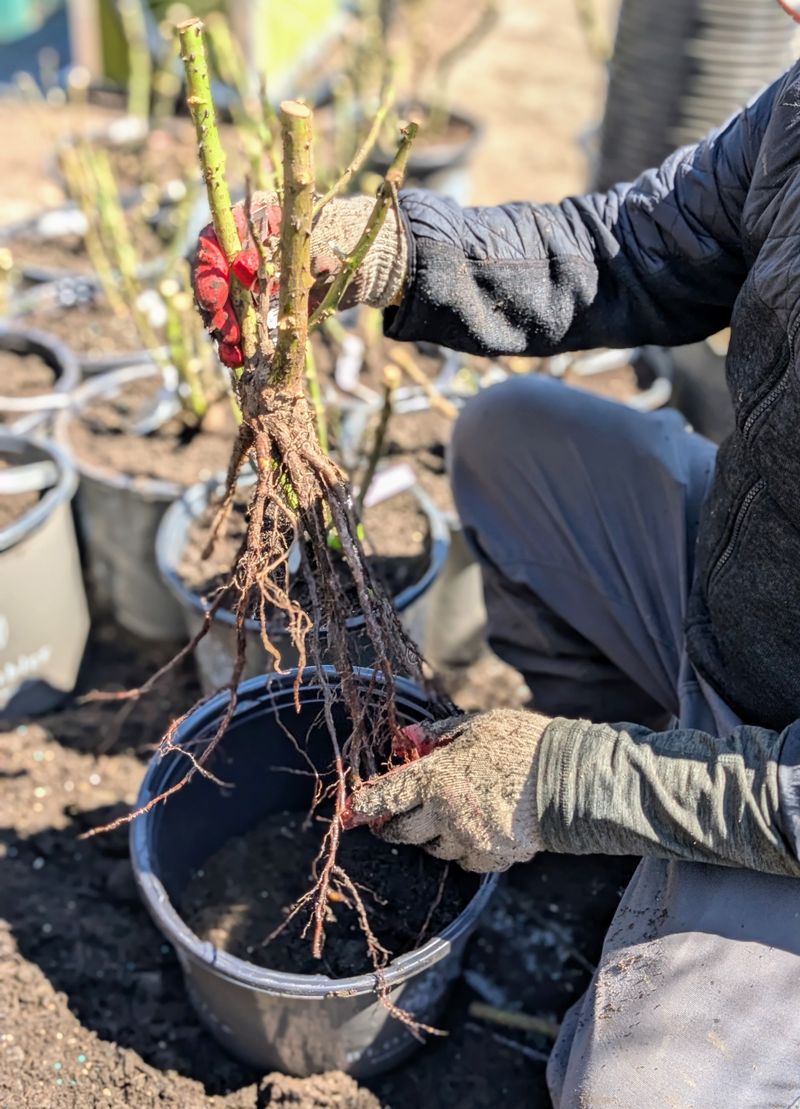
Extension advises growing potted cuttings through the season and planting them in beds the following fall. Spring is a good time to check progress, harden the plant off to fresh air, and keep it watered.
Check the rose’s identity and health
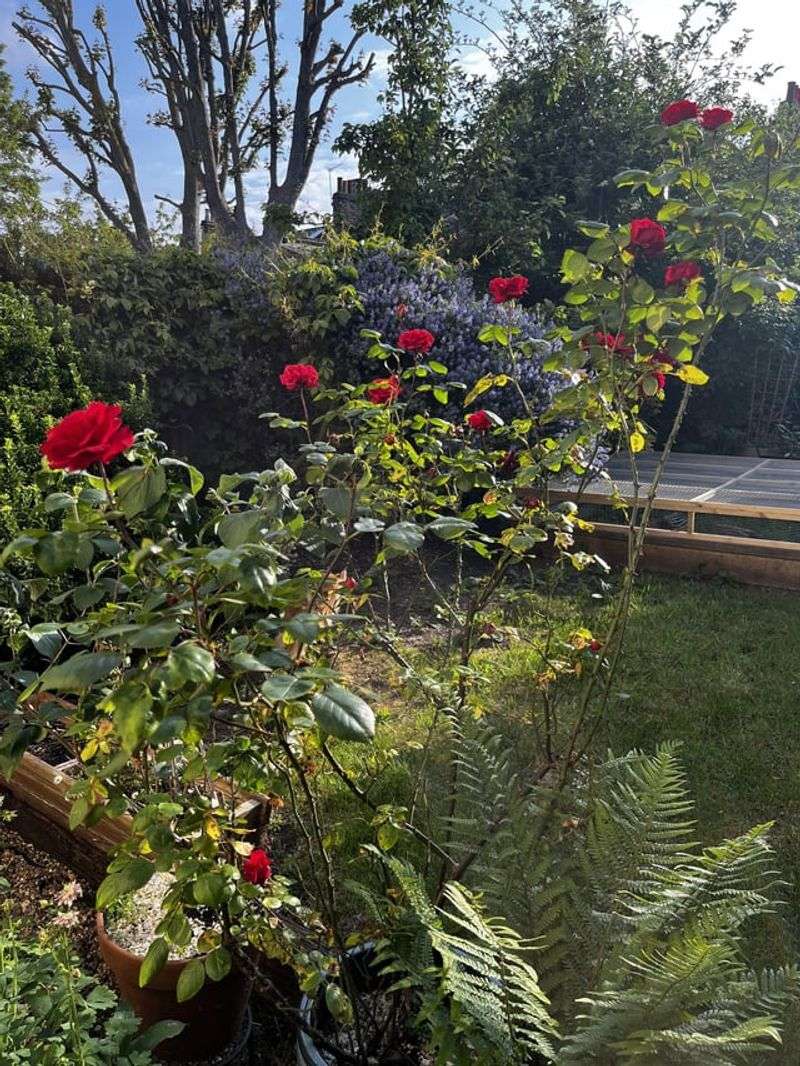
Not every rose roots equally well. UC ANR notes that some roses respond better to cuttings than others.
If one variety fails, that may say more about the rose than about your technique.
Grafting adds a twist. Many roses are grafted onto a rootstock chosen for vigor or disease resistance.
A cutting grows on its own roots, so you get the cultivar, not a copy of the original rootstock, and it may behave differently from the plant you bought.
Health travels with the stem. UC ANR’s propagation guide warns that viruses in the mother plant can be propagated too.
Skip stems with spotted leaves, odd streaking, or twisted growth.
Finally, read the label. Rooting a cutting is asexual reproduction, and the USPTO says a plant patent can prevent others from asexually reproducing the plant during the patent term.
Check the cultivar name and patent status, and get permission before propagating a currently patented rose.
Try more than one eligible cutting
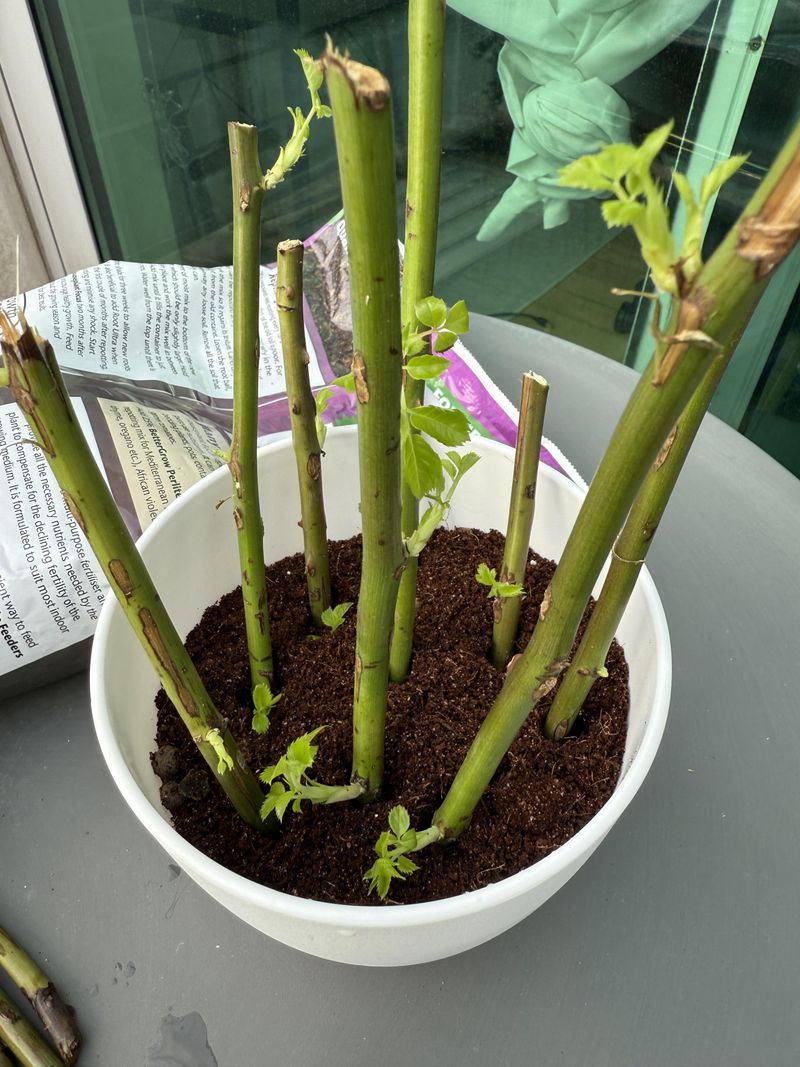
Start with healthy stems from roses you are free to propagate, pot them in moist medium, and cover them with a jar in bright shade. Then treat the whole project as an experiment.
Success varies by rose, so a few cuttings give you better footing than a single hopeful stem.
Spring may bring roots, or it may bring a lesson. Either way, you will know your roses a little better, and Extension guidance leaves plenty of time to grow them on.