
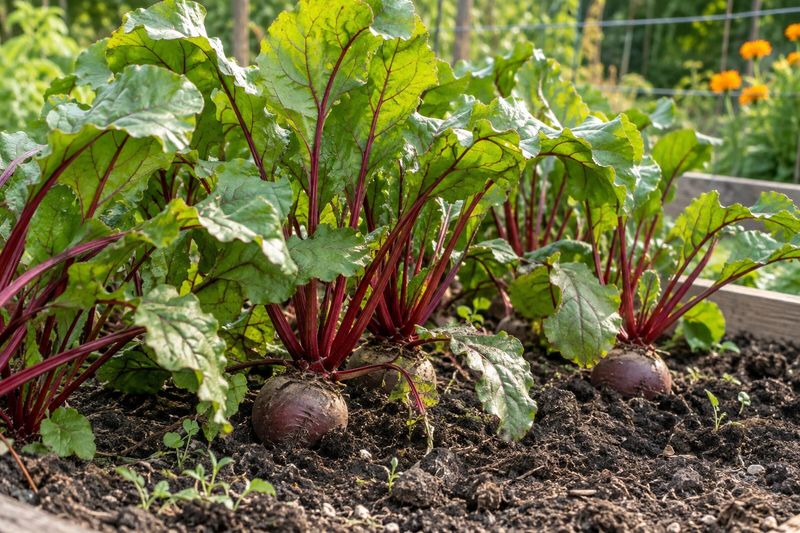
Few things feel more puzzling than a fall bed of beets with big, glossy leaves and roots the size of marbles. Before you give up on the row, there is one quick check that may turn things around.
If the plants are packed too tightly, thinning them late can give the survivors room to swell. It is not a guaranteed rescue, so here is how to tell whether it fits your garden.
Check spacing before you blame the roots
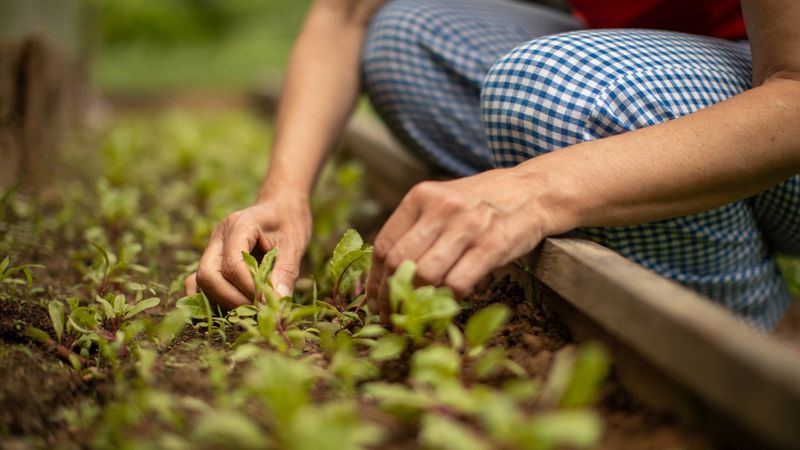
Here is something many beet growers never learn: each beet “seed” is really a dried cluster that can sprout several seedlings at once. Sow a row and you may end up with little bunches of plants elbowing each other for room, as UC Statewide IPM guidance explains.
To check your row, crouch down and look at the base of the plants. Are the shoulders touching?
Are several stems coming from one spot? A ruler helps.
Extension recommendations, including University of Maryland Extension, commonly leave about 2 to 4 inches between plants, though the right gap can vary with the variety and your growing conditions.
If your plants are packed closer than that, crowding is a real possibility. If they already have elbow room, crowding is probably not your problem, and you can move on to other clues.
Lush tops with small roots is a symptom, and it does not point to one single cause by itself.
Thin crowded beets without disturbing the plants you keep
Removing extras gives the remaining beets more room to bulk up, even if you are doing it later than you planned. What thinning cannot do is add growing days or promise full-sized roots before a hard freeze.
Think of it as a fair shot, not a guarantee.
Start by choosing the sturdiest seedling in each cluster, and aim for roughly 2 to 4 inches between keepers. Iowa State Extension recommends thinning for a better crop.
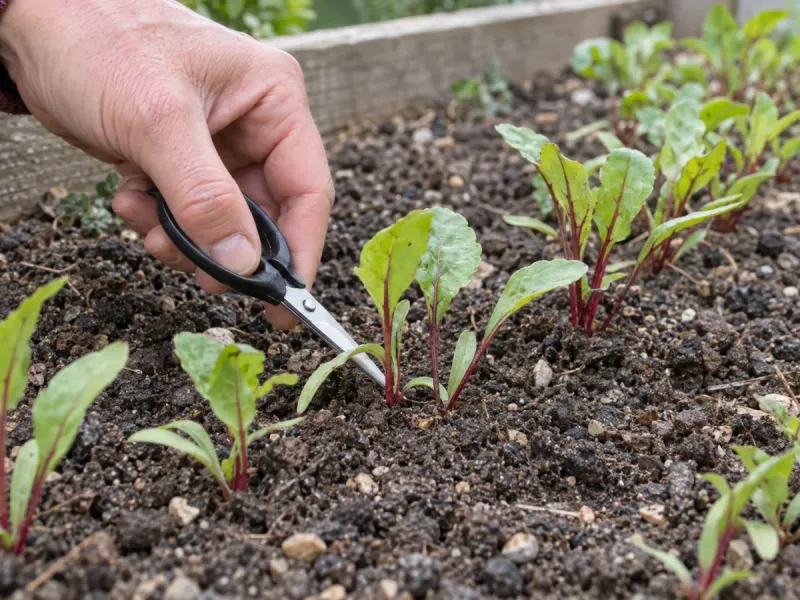
Then grab small scissors and snip the extras at soil level instead of pulling them. Tugging can loosen or nick the roots of the neighbors you want to keep.
Nothing needs to go to waste. The thinnings make tasty greens for a salad or a quick saute, and any small beets you remove can be cooked whole.
In fact, University of Maryland Extension notes that final thinning can wait until the small beets are big enough to use, so late thinning can double as an early baby-beet harvest.
If spacing is right, check the growing conditions
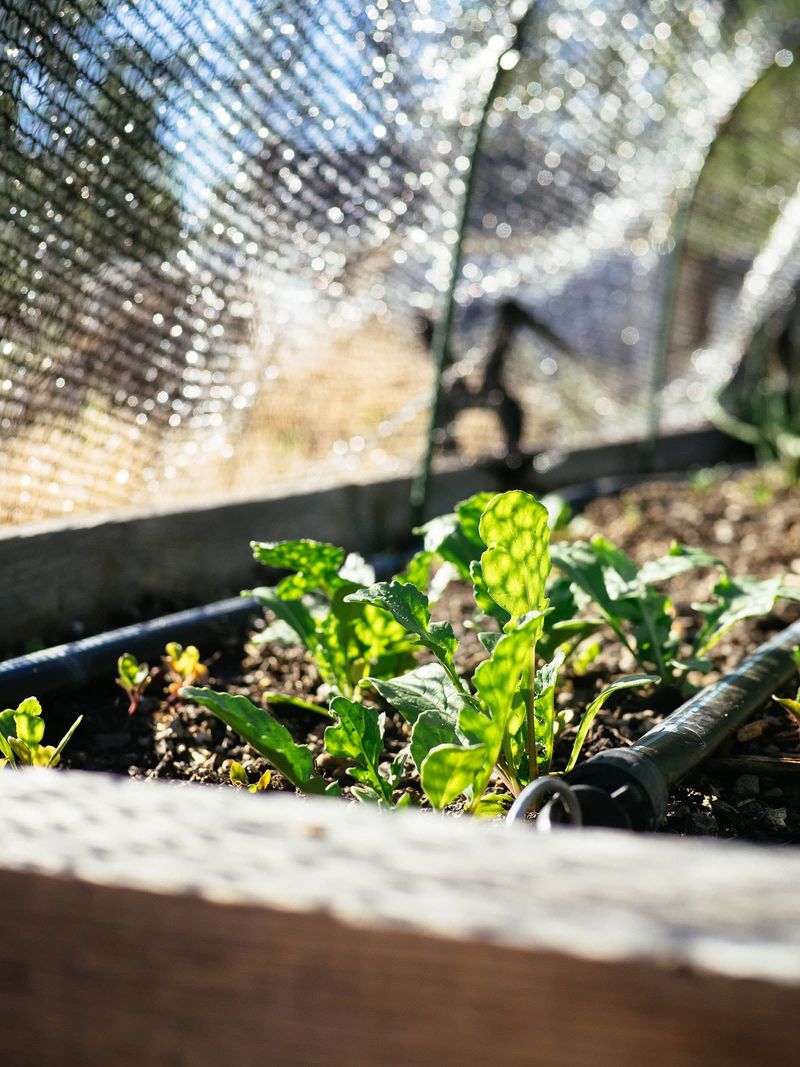
Plenty of well-spaced rows still produce tiny roots, so widen the search. Hot weather is one suspect, since heat can slow root growth and even leave roots tough and woody, according to Virginia Cooperative Extension.
Early fall in Florida and Texas can still run warm.
Water is another one. Swings between dry spells and soaking can stress beets, so aim for reasonably even moisture, and a layer of mulch may help hold it steady.
Root injury matters too. Hoeing too close to the row can damage the roots, so weed by hand near the plants.
Finally, think about the crop itself. Some varieties size up slowly, and beets that were planted late may simply need more time.
Utah State University Extension lists overcrowding, water stress, and heat among the things that can hold roots back. Your garden may have one of these, a few, or a mix, and the leafy tops alone cannot tell you which.
Leafy tops do not prove a nitrogen problem
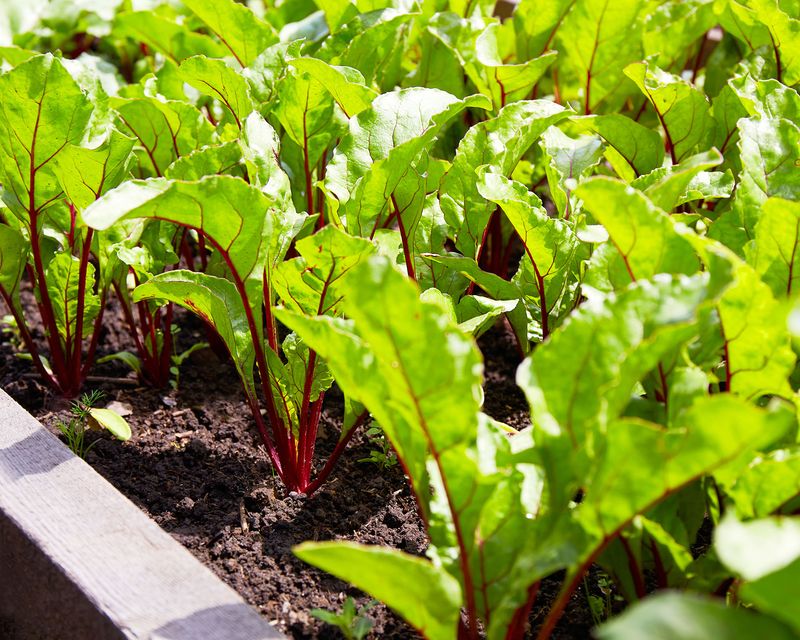
A jungle of beet leaves makes it tempting to blame too much nitrogen. It is a fair suspect, since University of Delaware Cooperative Extension notes that excess nitrogen can push plants toward foliage at the expense of the part you want to eat.
Still, lots of leaves does not prove that nitrogen is the culprit. Crowding, heat, and uneven watering can all leave you with the same look.
Guessing wrong can make things worse, because more fertilizer on a leafy crop may only produce more leaves.
So skip the fertilizer for now. Your next step is to test the soil or call your county Extension office for advice.
UF/IFAS Extension recommends checking soil or local guidance before you fertilize. A test result gives you facts, and that beats a hunch every time.
Use regional calendars for fall planting
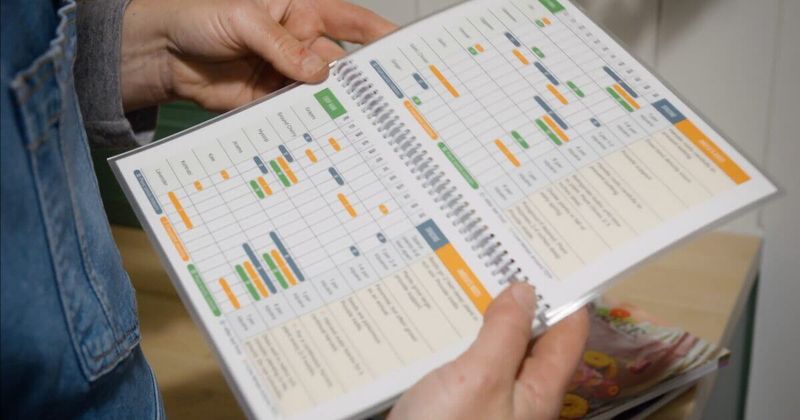
Fall planting dates for beets are far from one-size-fits-all across the South. Florida alone has three different windows.
UF/IFAS Extension lists August through February in North Florida, September through February in Central Florida, and October through January in South Florida.
Texas shifts even more. Texas A&M AgriLife Extension gives fall dates that range from August 15 in Region I to December 15 in Region V.
Treat these as examples of how much the calendar changes from place to place, not as dates for the whole South.
For your own yard, look up guidance for your county or region, and keep a note of when you sowed this year’s row. Next season, that note will help you compare.
Keep in mind that a planting date alone does not explain why your current beets have small roots, so use it as one clue among several.
Harvest by root size and local freeze conditions
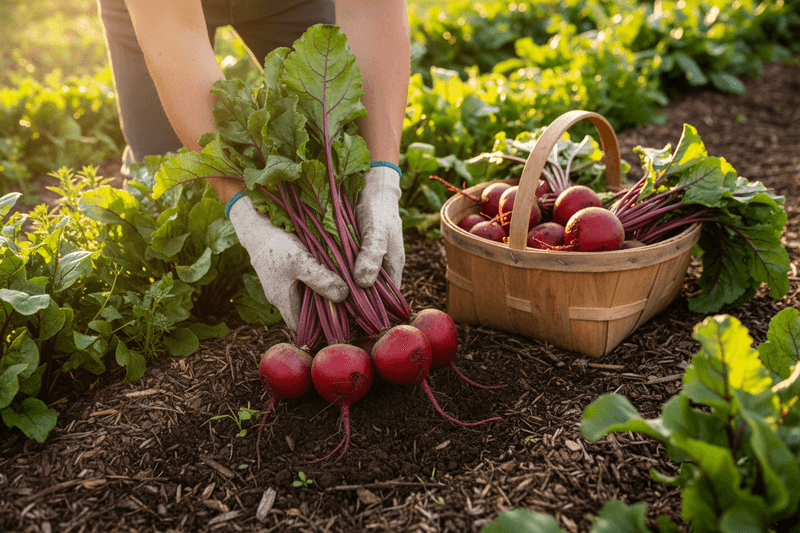
Once roots reach a usable size, you can start pulling them. A typical harvest range is about 1 to 3 inches across, and beets commonly take roughly 45 to 80 days to mature, according to Utah State University Extension.
Those are typical figures, so your beets may differ.
First frost is not an automatic deadline. Texas A&M AgriLife Extension classifies beets as frost-tolerant, and Iowa State Extension says they can be harvested after the first frost.
A heavy frost or a long, hard freeze is a different story and may end growth or damage the crop.
Each week, check a few roots and watch your local forecast. If a serious freeze is coming and the beets are usable, harvest them.
If it looks mild, they may keep sizing up a little longer.
Beets are patient, so let the weather and the roots tell you when.