
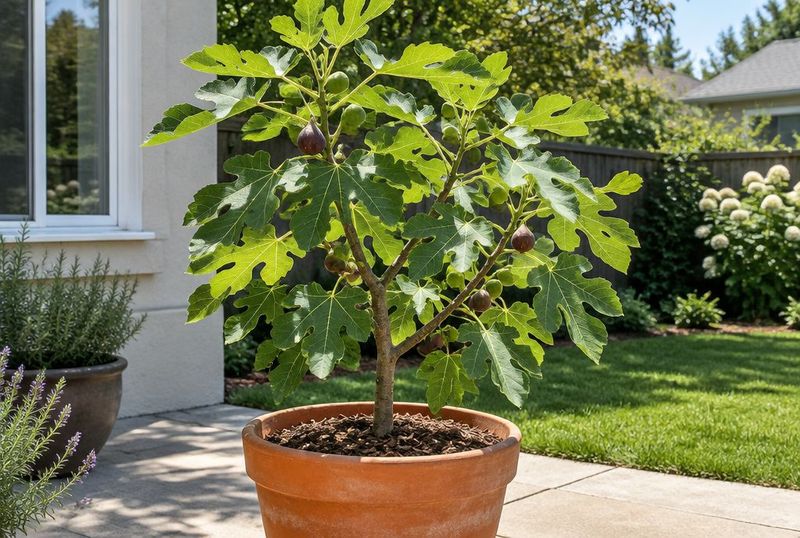
You carry your potted fig into the garage to keep it safe, then a warm spell hits and tiny green shoots start to poke out. A later freeze could nip that soft growth, and all your good intentions go to waste.
The garage is not the villain, though. What matters is how warm the space is, what the tree is doing, and what the forecast says, and this guide helps you sort that out.
The garage is not the trigger by itself
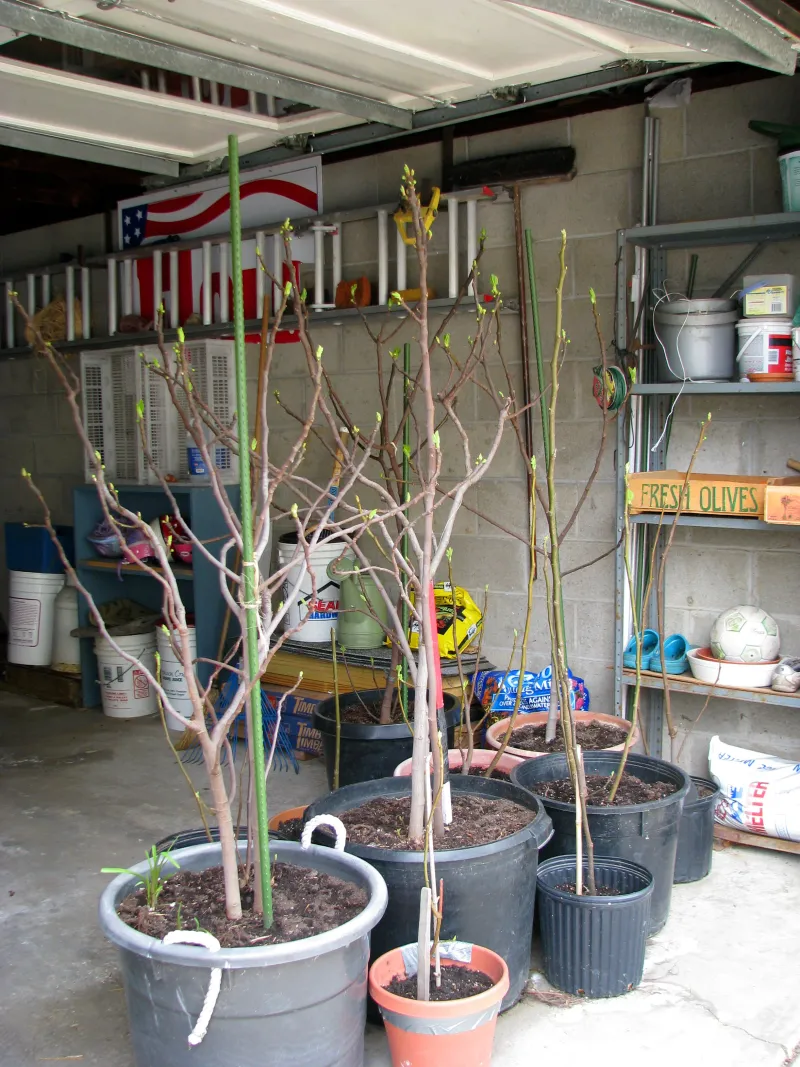
Plenty of gardeners have heard that carrying a fig indoors too soon will wake it up. The sources do not back that up as a rule.
Nothing shows that the move itself reliably triggers growth.
The worry is really about warmth. A fig that is not yet dormant and sits in a warm spot may keep growing or push out new shoots.
Soft late-season growth is more vulnerable, and UF/IFAS notes that tender late growth can be killed by temperatures just below freezing. Whether a later freeze injures it depends on the weather and the tree, so it is a possibility, not a promise.
For winter rest, Iowa State recommends a cool, protected place such as a garage or basement. The key word is cool.
So the real question is not whether to use a garage, but what conditions your fig will actually feel once it gets there.
Leaf change is a cue, not a deadline
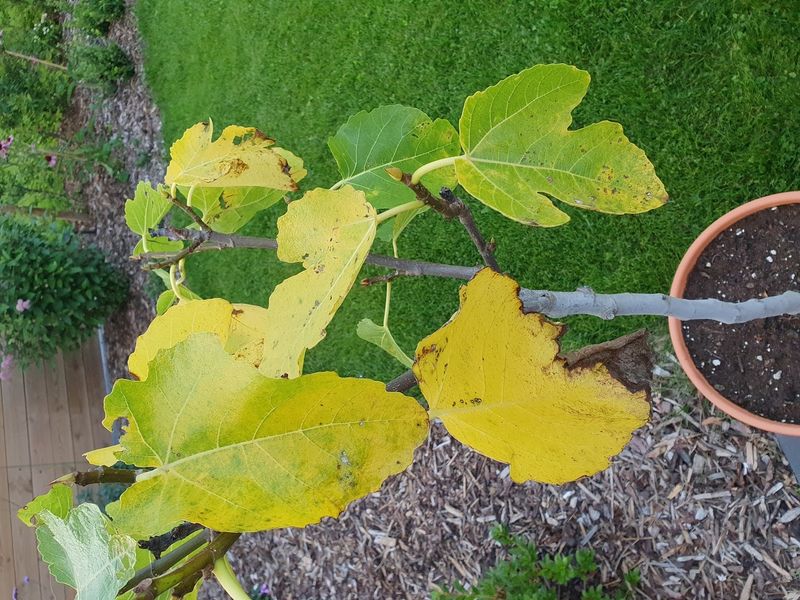
Figs are deciduous, so their leaves tell you something about the season. Yellowing and dropping leaves suggest the tree is slowing down for winter.
That makes leaf change a handy cue for timing a move.
Advice differs a bit by source. Maryland Extension suggests moving container figs to a protected place after the leaves drop.
Iowa State says a fig can stay out while leaves change color, but should come in before a hard freeze.
Put those together and the plan is simple. Wait for leaf change when the weather allows, but if a damaging freeze is forecast and leaves are still hanging on, protect the pot anyway.
Do not leave it out just to see every leaf fall.
One more caution: bare branches do not always mean dormancy. Alabama Extension points out that disease can also cause leaves to drop early, so look at the whole tree and the season.
Judge the shelter by its actual conditions
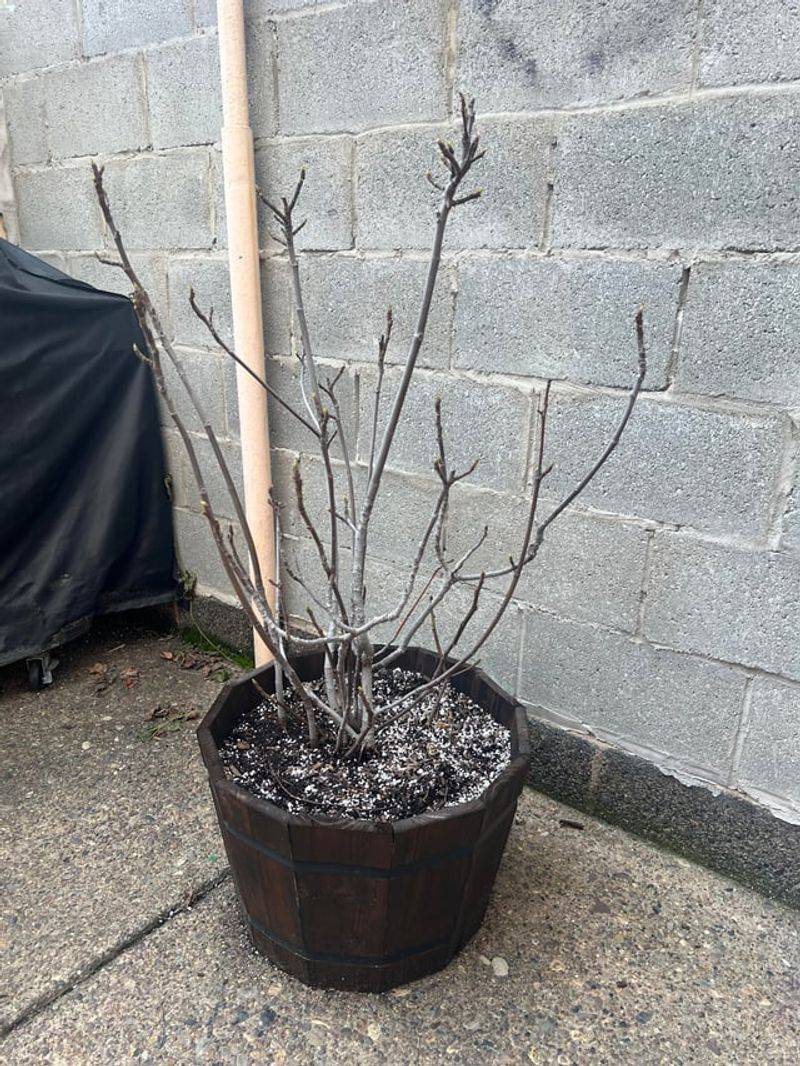
A heated garage and a cold, unheated one are very different places for a fig. The word garage tells you nothing about temperature. A cool, protected space suits dormancy, while a warm room may keep the tree active.
A cheap thermometer is the easy way to find out. Check it on a few cold nights and a mild afternoon, and you will see what your fig would actually live through.
Calendar dates are a weak guide, too. Local climate, cultivar, and the cold you expect all shape the decision.
Figures you see online are regional, not universal. For example, Tennessee Extension suggests protection when temperatures fall to roughly 15 to 20 degrees F, which fits Tennessee, not every yard.
Many Southern gardeners may not need garage storage at all. UF/IFAS says Florida figs generally get enough winter chilling except in south Florida, so winter chill and cold risk vary a lot from place to place.
Protect the roots as well as the branches
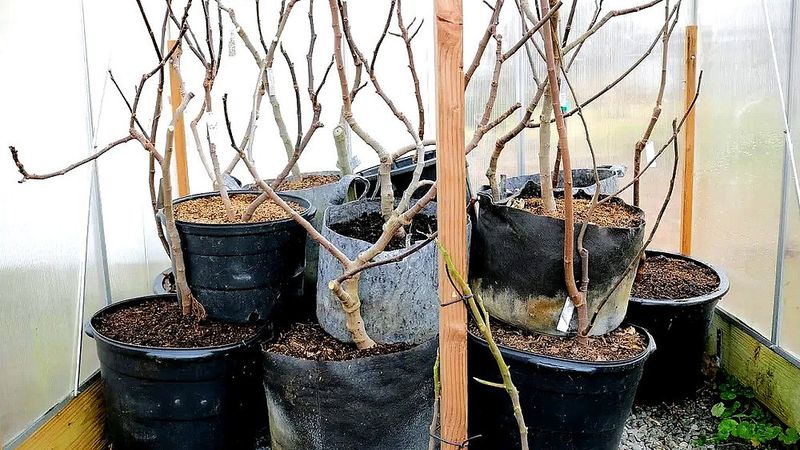
Roots in the ground sit in insulating soil. Roots in a pot are surrounded by thin walls and open air, so they can chill faster.
That is why a fig that handles winter in the ground may need more care in a container.
When you decide on shelter, think about the pot as well as the branches. Size, material, and whether it sits in the open or against a warm wall all change how much cold the roots feel.
Regional advice gives a rough guide. Tennessee Extension recommends winter protection around 15 to 20 degrees F, and Alabama Extension advises bringing potted figs into an unheated garage or shed where winters fall below that range.
Treat those numbers as starting points. They are not a guarantee for every cultivar, pot, or garage, and they describe dormant trees, not active shoots or exposed roots.
Dormant figs still need some water
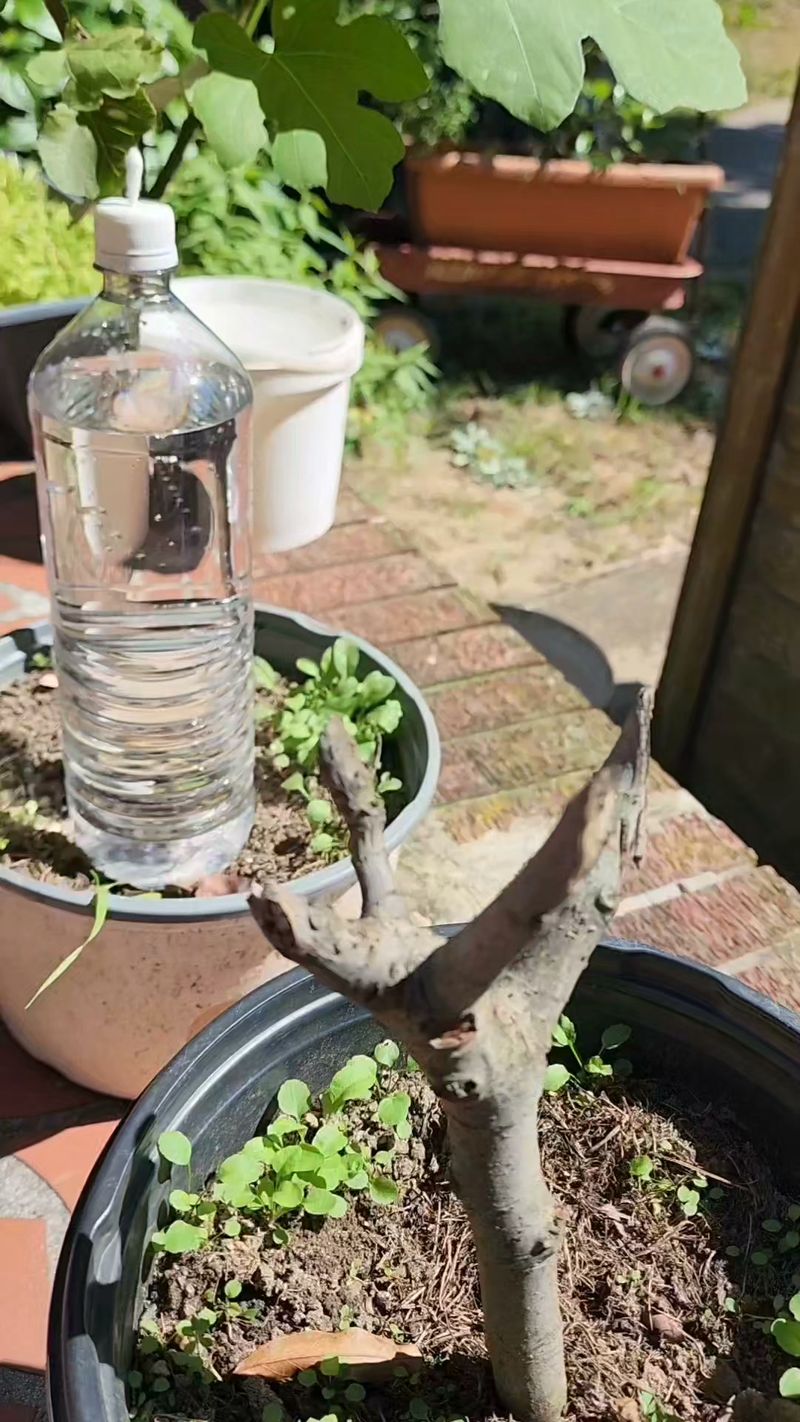
Once your fig settles into dormancy, it drinks far less. Cut back on watering, and do not keep the soil wet.
Soggy soil in a cold spot is a poor combination for roots.
Still, the pot should not be forgotten. Iowa State cautions against both overwatering and underwatering, and Tennessee Extension advises reducing irrigation as the plant moves into dormancy.
A simple routine works well. Every few weeks, push a finger a couple of inches into the soil.
If it feels damp, leave it alone. If it is dry deep down, give a small drink, then let extra water drain away.
Lifting the pot is another clue. A very light pot may mean the root ball is drying out completely, while a heavy one with damp soil can wait.
Use the tree and the forecast to time the move
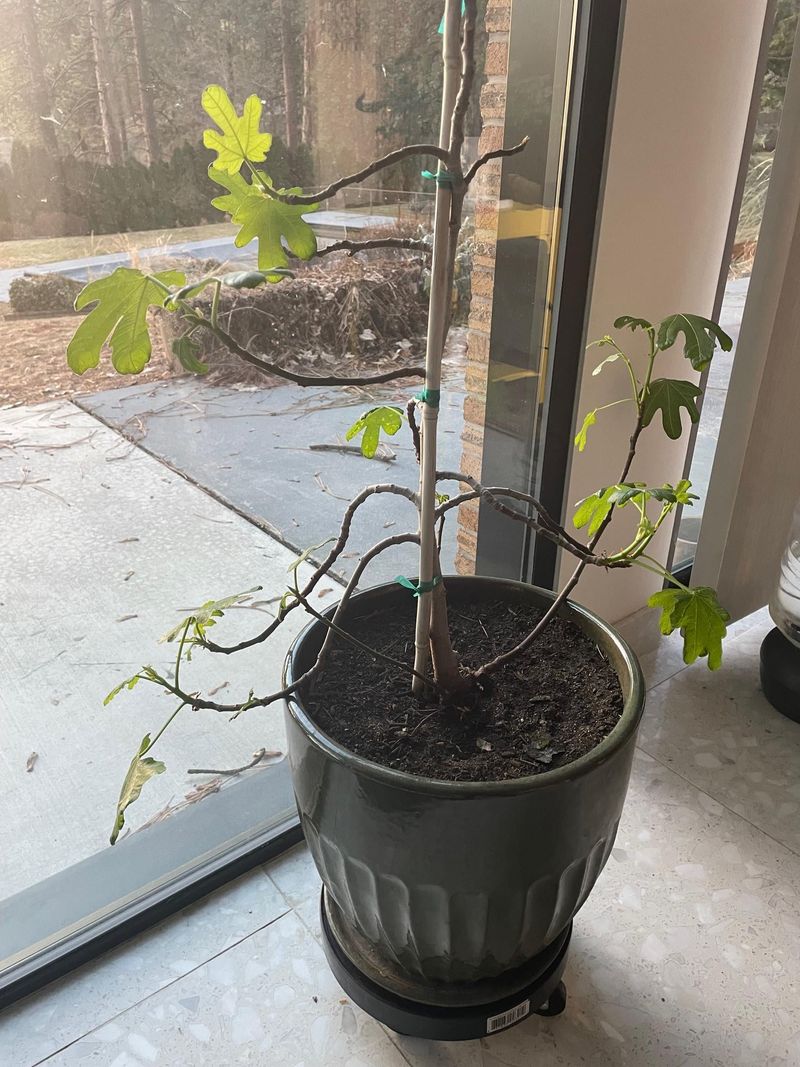
Here is a rule you can use. Watch your fig for leaf change, check the forecast regularly, and move the pot to a cool, protected place before a hard freeze threatens.
Iowa State advises sheltering the fig before a hard freeze.
Leaf drop is a helpful cue, as Maryland Extension’s advice shows, but it is not an absolute requirement. A fixed date is not one either.
Judge the shelter by what it really feels like, and skip the move if your area rarely gets damaging cold.
As for the title, warmth is a possible factor, and UF/IFAS warns that tender growth can be hurt by cold. Early relocation alone is not a proven trigger.
Keep the shelter cool, and your fig can rest.