
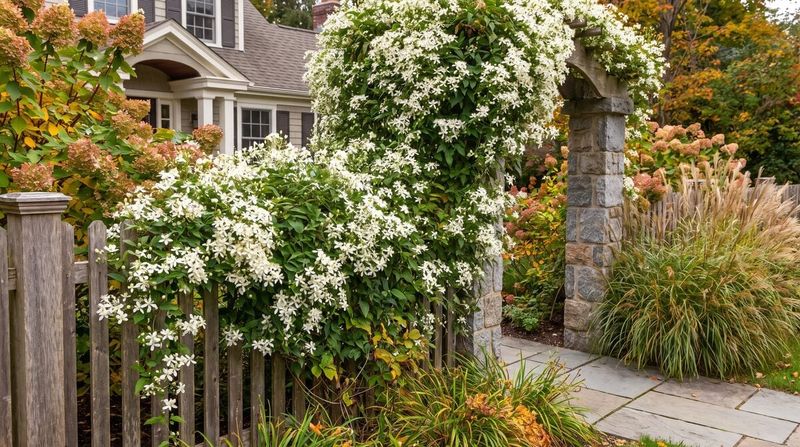
Picture a fence or pergola draped in foamy white flowers right when the garden usually starts to fade. One vine, sweet autumn clematis, is known for doing just that, and for flowers that smell sweet.
It is a vigorous climber, though, and it comes with some real trade-offs for Texas yards. Here is what to know before you decide to plant it.
Meet sweet autumn clematis
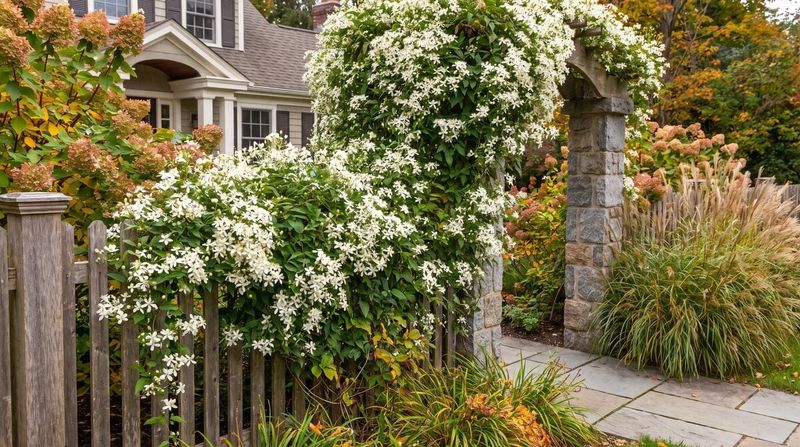
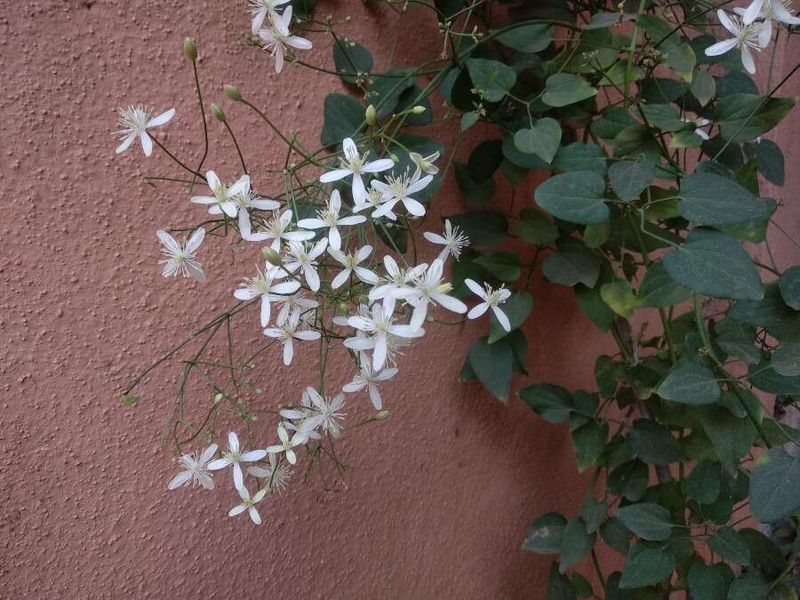
The vine behind the fall-fragrance buzz is most likely sweet autumn clematis, known botanically as Clematis terniflora. It covers itself in masses of small white flowers, and those blooms are fragrant.
From a distance, a well-grown plant looks like a white cloud spilling over its support.
Here is a detail that surprises some people. When we call it a Texas vine, we mean a vine that gardeners can grow in Texas, not a Texas native.
North Carolina State Extension’s plant profile identifies it as native to Asia, so it does not belong to the same group as plants that evolved on Texas prairies and in Texas woodlands.
Texas gardeners have grown it for years, and the Henderson County Master Gardeners plant library describes a vigorous climber that needs some management. That energy is exactly what makes the flower show so generous, and it is also what makes the plant a bigger commitment than a typical flowering vine.
So the real question is not just whether the blooms are pretty. It is whether your fence, your pergola, your pruning habits, and your part of Texas are a good match for a fast, sprawling climber.
The next sections walk through each of those points so you can decide with open eyes.
October flowers are possible, not guaranteed
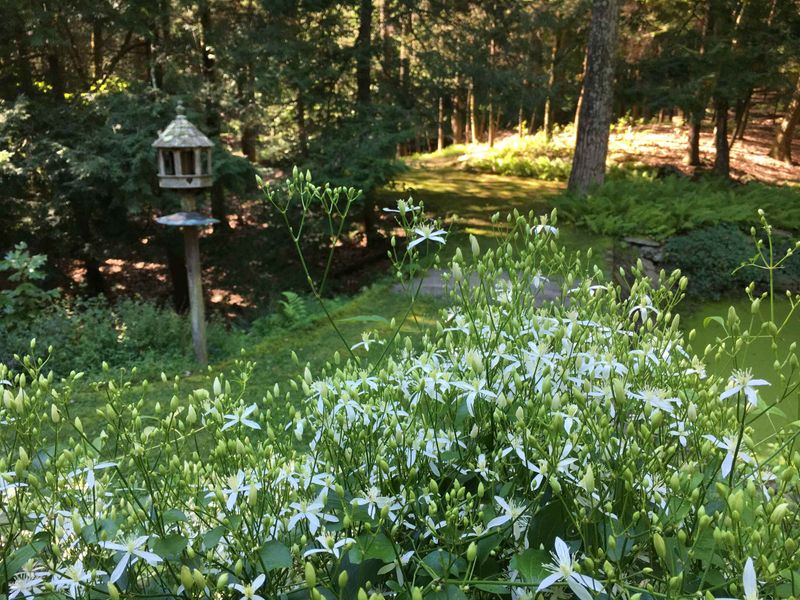
Bloom timing is where a lot of the hype runs ahead of the facts. North Carolina State Extension lists flowering from August into October, while University of Illinois Extension gives a shorter window of August into September.
Texas sources describe late summer into fall, as in the Henderson County Master Gardeners article on clematis. Put together, these accounts say October flowers are possible, but the exact timing shifts with location and the season.
Plan on a late-summer-to-fall display, and treat October as a bonus if it happens. Keep a small garden notebook for the first two or three years.
Jot down the date of the first open flowers and when they fade, and you will learn your own yard’s pattern faster than any article can tell you.
As for scent, the fragrance comes from the flowers themselves. When a mature vine is covered in blooms, you may catch the sweetness when you walk near it.
How far it carries depends on wind, the size of the plant, and the layout of your yard, so one vine should not be expected to perfume everything.
Give this vigorous climber sturdy support and room
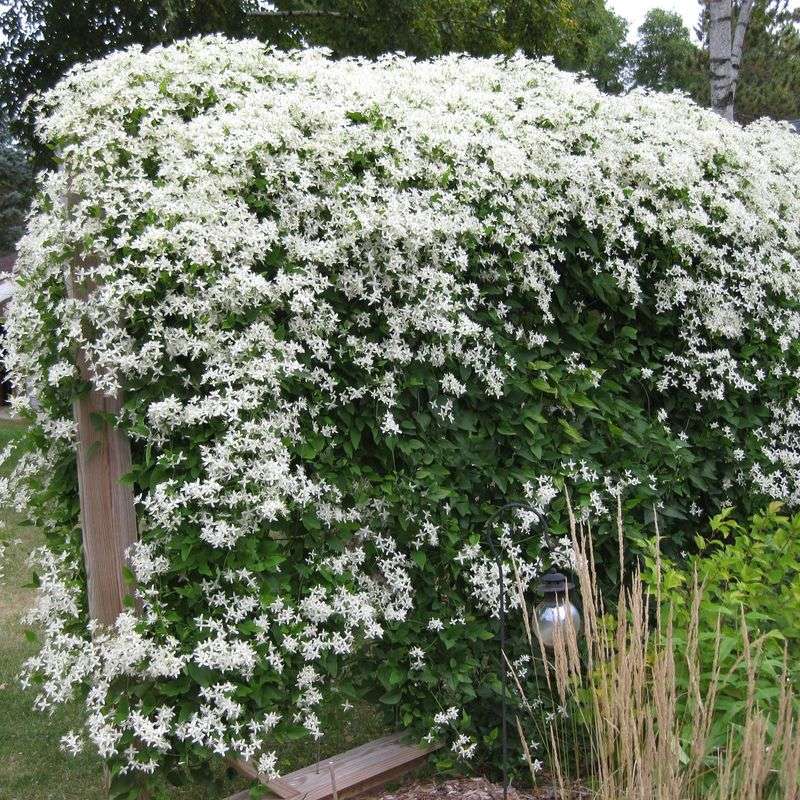
Fifteen to thirty feet is a lot of vine. That is the climbing range reported in the NC State Extension profile, and it means a mature plant can outgrow a casual setup in a hurry.
Think of a thin decorative trellis from a garden center. A vine this size can swamp it, and the weight of wet, leafy growth can pull a flimsy frame sideways.
A solid wooden pergola, a heavy-duty fence with wire or lattice to grip, or a well-anchored arbor makes much more sense.
Room matters just as much as strength. The Henderson County Master Gardeners describe vigorous growth, and the vine can spread over neighboring vegetation.
A spot beside a prized shrub or a small tree is asking for trouble.
Before planting, walk the site and picture the vine at the top of that height range. Check what grows within reach, where the stems could wander, and whether you can get to the whole structure for trimming.
If the answer is a tight corner you cannot easily reach, this may not be the right plant for it.
Choose a sunny-to-partly-shaded site with well-drained soil
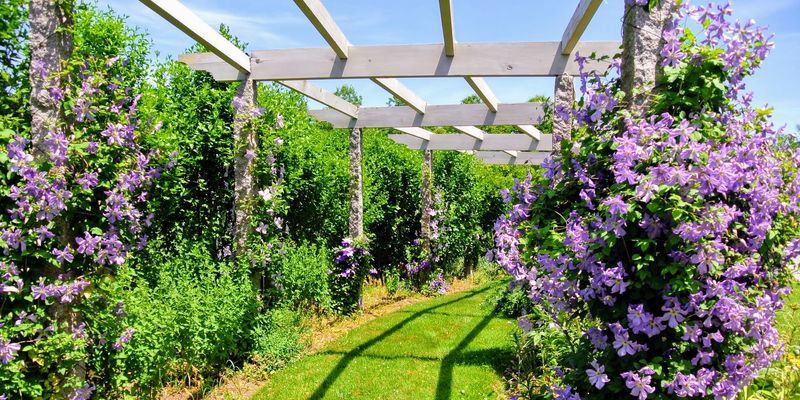
Site advice here stays simple because the documented preferences are simple. NC State Extension lists full sun to partial shade and well-drained soil.
In practice, that points you to a spot that gets plenty of daylight but does not have to be blasted from dawn to dusk. A fence line with morning sun and some relief later, or a pergola edge with filtered light, fits that description.
Pick a place where water drains away after a rain rather than a low corner where it sits.
You can test drainage before planting. Dig a hole about a foot deep, fill it with water, and see how long it takes to empty.
If water lingers for many hours, consider a raised bed or another location.
Texas is a big state with very different soils, from sticky clay to thin limestone to sandy ground. The sources do not say the vine handles every Texas soil or every stretch of triple-digit heat, so watch a new plant closely its first summer.
The Henderson County Master Gardeners entry is a helpful local-minded reference, and your county extension office can tell you more about your own conditions.
Prune in late winter or early spring to manage growth
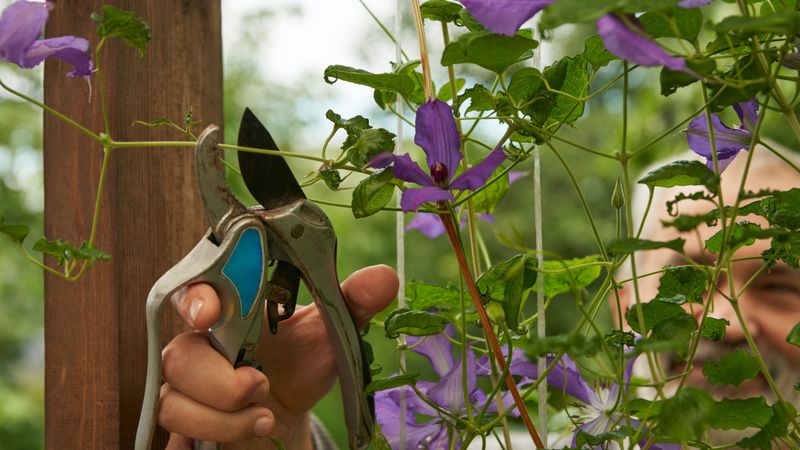
Pruning is the chore that keeps this vine in check. Sweet autumn clematis flowers on new growth, which means the stems that grow this year are the ones that carry the fall blooms.
The Texas Master Gardener guide to pruning clematis recommends pruning fall-flowering types in late winter or early spring. Cutting at that time lets you shape the plant before the season’s fresh growth takes off.
Treat pruning as size control and cleanup. Remove tangled, dead, or unwanted stems, and keep the vine within the space you gave it.
The Henderson County Master Gardeners also advise pruning to control its size.
Do not expect pruning to set a flowering date or guarantee a certain number of blooms. Weather, sunlight, and the age of the plant all play a part.
A practical next step is to mark a reminder on your calendar for late winter, so the job happens before new shoots start reaching toward the neighbor’s yard.
Check local spread concerns before planting
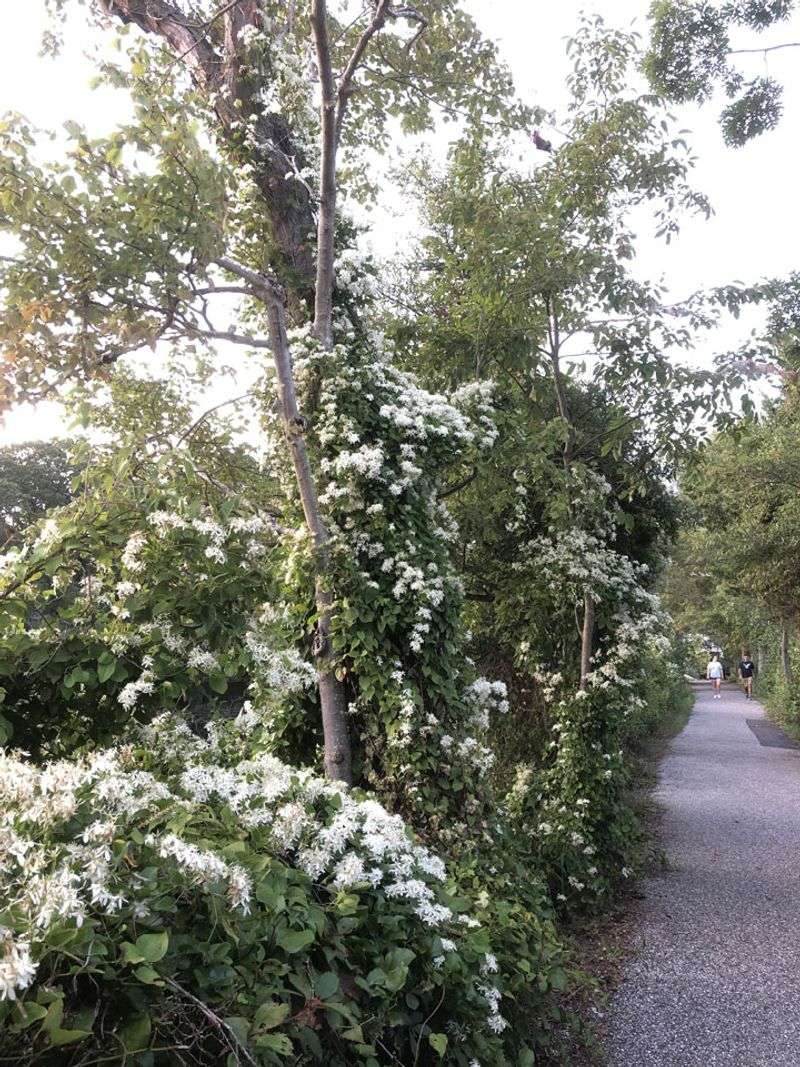
Whether this vine is a problem depends on where you live. The University of Florida IFAS assessment rates Clematis terniflora as a high invasion risk across Florida zones and does not recommend it there.
Texas accounts are mixed. One Grayson County Master Gardener entry labels it invasive.
Another, from Henderson County Master Gardeners, says it is listed as invasive in several states but not Texas, while noting roadside escapes.
A UT Austin Hays County flora account describes one local plant that had not propagated itself. None of this shows the vine is harmless, and none of it shows it is invasive everywhere in Texas.
Florida’s rating is not a Texas verdict, either.
Your best move is to call your county extension office or a local native plant group and ask what they see in your area. Watch for seedlings popping up around the plant, and pull them early.
There is also a lookalike to know. UF/IFAS Gardening Solutions notes that native Clematis virginiana has jagged leaf edges, while sweet autumn clematis has smooth edges.
Use that only to tell them apart. It does not prove the native suits every part of Texas.
Wear gloves and keep pets from eating the vine
Handling the vine calls for a little care. Clematis can irritate skin, as noted in the NC State Extension profile, so gloves are a sensible precaution when you prune, pull seedlings, or haul away cuttings.
Pets deserve a thought too. The ASPCA lists Clematis species as toxic to dogs, cats, and horses if ingested.
The simple takeaway is to keep animals from chewing on the vine. If you have a dog that samples plants, think about fencing off the base, placing the vine where pets cannot reach it, or choosing another climber.
Horse owners should check that the vine does not grow where horses can graze it.
Clear your pruned stems promptly rather than leaving piles where curious animals can nibble. If you ever have a worry about your pet and a plant, your veterinarian is the right person to call.
Decide whether the display fits your yard
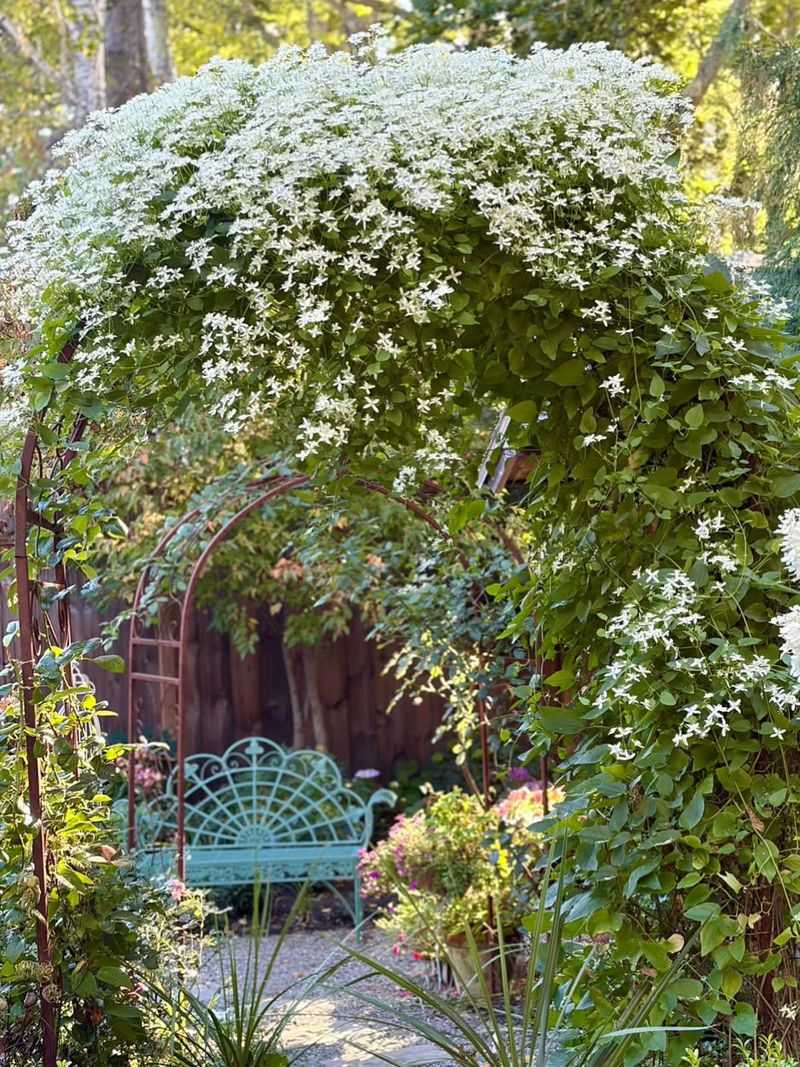
Sweet autumn clematis can give you fragrant white flowers on a roomy, sturdy support. The trade-offs are variable bloom timing, vigorous growth, yearly pruning, and local spread concerns, as described by the Henderson County Master Gardeners and the UF/IFAS assessment.
Pet households should also read the ASPCA listing.
If those points fit your space, a fall cloud of blooms may be worth the effort. A vine is a long-term roommate, so choose it the way you would choose any big yard feature.