
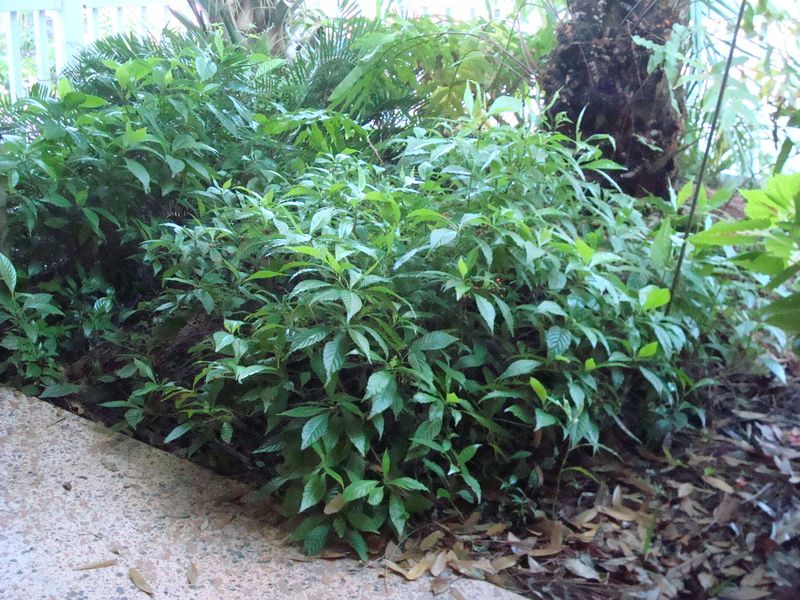
Dark, dull corners under trees can make a Florida yard feel unfinished. Wild coffee, a native shrub with glossy leaves, was made for those shady spots.
Its red fruit may also draw birds, including mockingbirds, though the timing is not the same everywhere. Here is how to decide if it fits your yard, plant it well, and care for it until it settles in.
Wild coffee brings glossy evergreen foliage to a shady corner
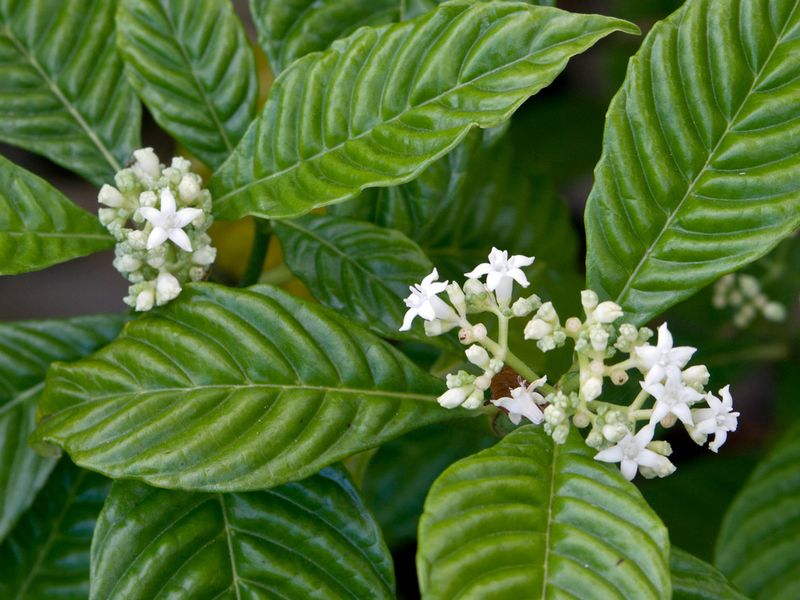
Picture a shrub with deep green, shiny leaves marked by bold veins, tucked into a spot where lawn grass gives up. That is Psychotria nervosa, a Florida-native evergreen.
UF/IFAS Gardening Solutions notes that it carries small white flowers in spring and summer, followed by red fruit.
Give it room to grow. A typical plant reaches about 4 to 10 feet tall and 4 to 8 feet wide, so it works as a screen, a backdrop for smaller shade plants, or a soft filler along a fence line.
Crowding it against a walkway or wall means constant pruning later.
Light matters most. Wild coffee suits partial to full shade and well-drained soil.
In full sun, the leaves can turn yellow and the plant tends to stay small, so a bright, baking bed is the wrong home for it. A UF/IFAS plant profile offers more detail on its site needs.
Where you live also changes the story. Wild coffee is cold-tender, and a 2025 UF/IFAS publication reports that prolonged freezes in north-central Florida can cause dieback to the ground, often followed by spring regrowth.
Gardeners in colder areas should expect some winters to look rough. Also, make sure you are buying Psychotria nervosa, since other Florida plants share the wild coffee name.
Choose planting time by local conditions, not a fixed season
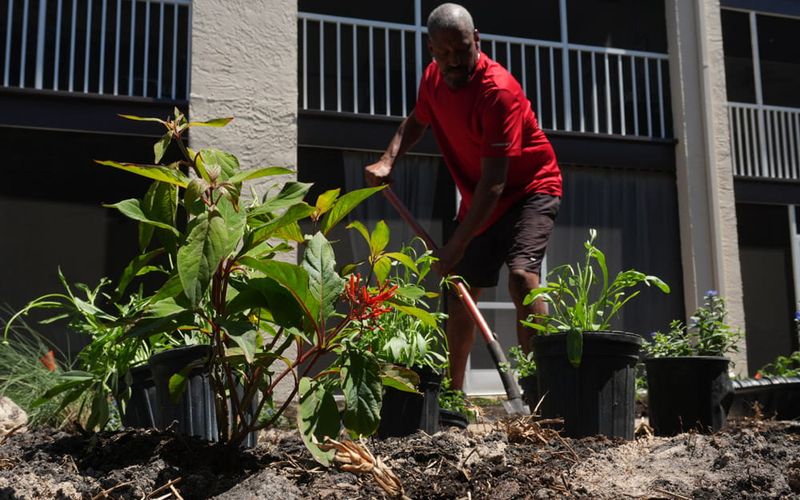
Many gardeners hear that fall or winter is the only time to plant, but Florida is more flexible. According to UF/IFAS guidance on planting shrubs, shrubs can go in during any season.
What changes is how easily they establish, and that depends on local temperature and rainfall.
Hot, dry weather can slow a new shrub down. Roots are still small, and the plant loses water faster than it can take it up.
A cooler or wetter stretch gives roots an easier start.
Start with an honest look at your own situation. Ask how hot and dry your area is right now, whether rain is likely in the coming weeks, and whether you can reach the bed with a hose or irrigation.
If watering will be hard, waiting for the start of your local rainy season can be a practical choice, as the UF/IFAS planting guide suggests. That is an option, not a rule for the whole state.
Wild coffee adds a cold question. If you garden in north-central Florida, planting early enough for roots to settle before a hard freeze may help, though no timing removes freeze risk.
A gardener in the far south may find the rainy season the easier moment. Match the date to your yard, not the calendar.
Set the root flare at or just above soil level
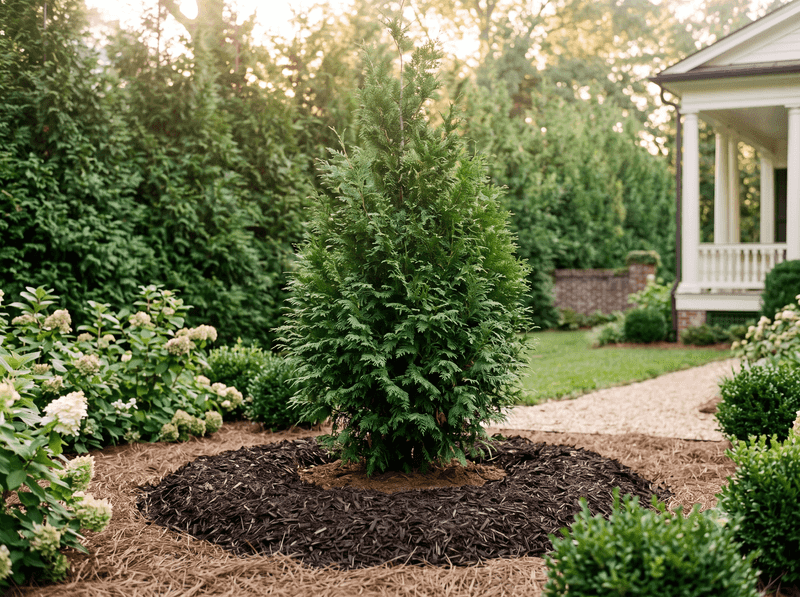
Good planting starts with the hole. Dig it wide and shallow, wider than the pot but no deeper than the root ball.
A wide hole lets new roots spread into the surrounding ground, which matters in loose sandy soil.
Next, find the root flare, the spot where the trunk widens as it meets the roots. Set the shrub so that flare sits at or just above the surrounding soil.
Burying it too deep can stress the plant, so a slight rise is better than a dip. Water the root ball at planting so it starts out moist.
Mulch comes last, and placement counts. Spread it over the planting area, but keep it off the root ball and away from the stems.
Mulch piled against the trunk holds moisture where you do not want it. A simple check is to look for a small gap of bare soil around the base.
Resist the urge to enrich only the hole. UF/IFAS advice on planting and establishing shrubs cautions against putting compost just in the planting hole in Florida’s sandy soils.
Roots may stay in that rich pocket instead of reaching outward. Plant in the existing soil and let the roots explore.
Water regularly while the shrub establishes
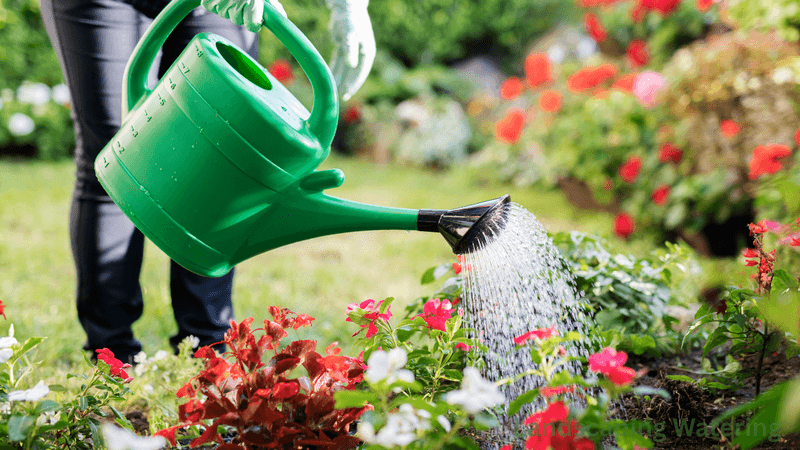
A newly planted wild coffee is not a set-and-forget plant. It has some drought tolerance once settled, but that does not cover the first months.
A UF/IFAS profile lists moderate drought tolerance for the species, which describes a grown plant with a working root system.
New roots are limited to the root ball and a small area around it. Until they grow outward, the shrub depends on you.
UF/IFAS guidance says shrubs need regular irrigation for roughly 20 to 28 weeks while they establish.
That window is a general range, not a promise for every yard. Sources give no single schedule or amount, so watch the plant and the weather rather than following a fixed routine.
Wilting leaves, dry soil a little below the surface, and long stretches without rain are signs to water. The UF/IFAS planting page also stresses watering the root ball at planting and through establishment.
Once the shrub has put on steady new growth and passed that period, it is considered established and needs less attention. Even then, an extended dry spell or a freeze may call for extra care.
Red fruit may attract birds, but winter visits are not guaranteed
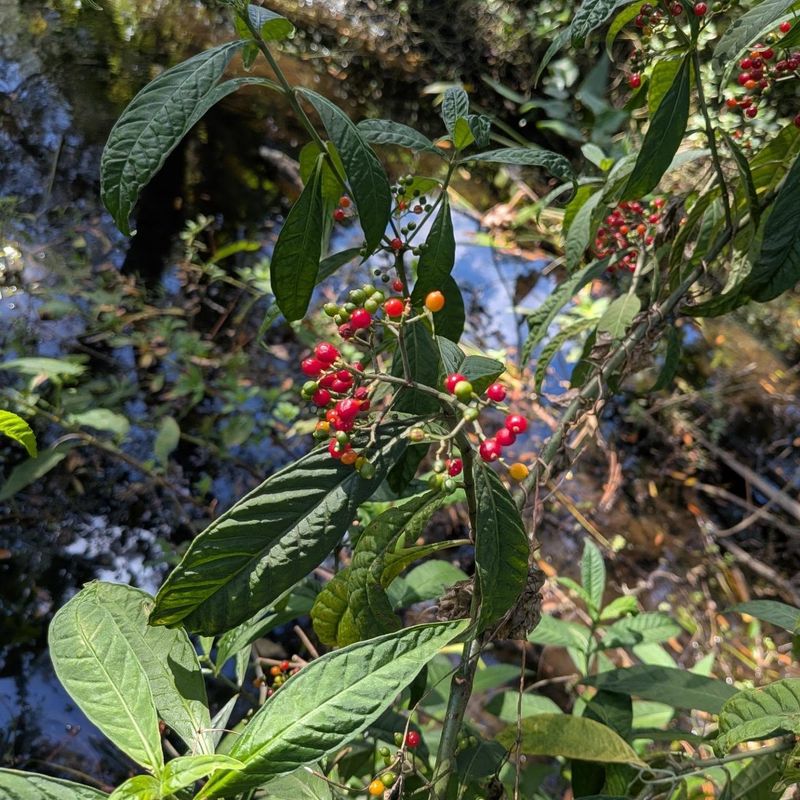
The red fruit is the reason many gardeners want this shrub, and it is also where hopes can run ahead of facts. Fruit timing varies.
UF/IFAS gives summer and fall as the usual fruiting period for Psychotria nervosa. The Florida Native Plant Society says flowers and fruit may occur year-round except during cold or drought.
Those two descriptions do not match, and local weather likely explains part of the gap. So there is no solid basis to count on berries through winter, especially after a cold snap or dry spell.
Birds are a more hopeful story. An Audubon plant listing says the shrub is thought to attract mockingbirds and thrashers.
A UF/IFAS Lake County Master Gardener newsletter names mockingbirds among birds that eat the fruit.
Treat that as a good chance, not a promise. These sources point to a link between the plant and mockingbirds, but they do not show that berries last all winter or that birds will visit your particular yard.
If fruit shows up, enjoy it, and keep notes on which months it ripens where you live.
Skip tasting the berries or brewing them as coffee. Sources do not settle whether that is safe, so leave the fruit for the birds.
If someone swallows part of a plant, Florida Poison Control can be reached at 1-800-222-1222.
Build a bird-friendly yard beyond one shrub
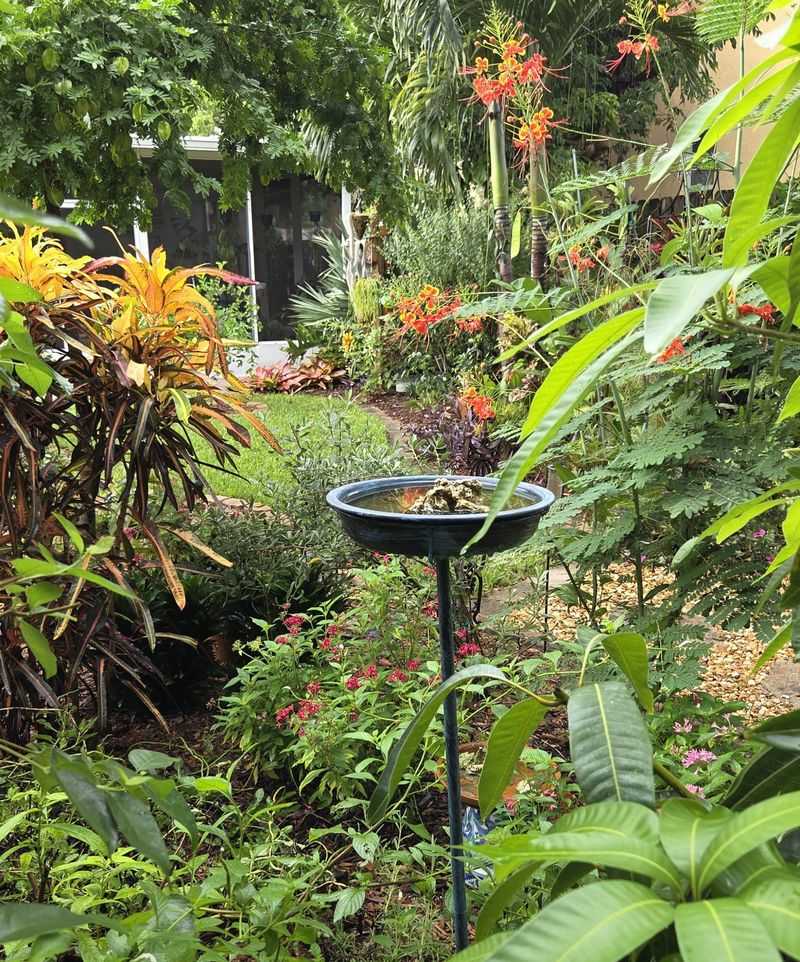
One shrub rarely makes a yard a bird stop. UF/IFAS bird-friendly plant guidance lists wild coffee as a bird-food plant, yet it recommends a wider approach: native plants for food, a source of water, and safe cover all working together.
Think of wild coffee as the shady layer in that plan. Pair it with other native plants suited to sunnier spots, add a shallow bird bath you can keep clean, and leave some dense growth where birds can hide from hawks and cats.
Each piece supports the others.
Site choices still matter. Keep wild coffee out of full sun, remember its freeze limits in north-central Florida, and do not count on it for salt-exposed sites.
Sources disagree on its salt tolerance, so ask your local extension office before planting near the coast.
Plan for care too. A new shrub needs establishment watering, and its UF/IFAS profile is a good place to recheck size and light needs before you buy.
Wild coffee gives a shady corner something to look at all year, and any birds that stop for its fruit are a bonus you earn slowly.