
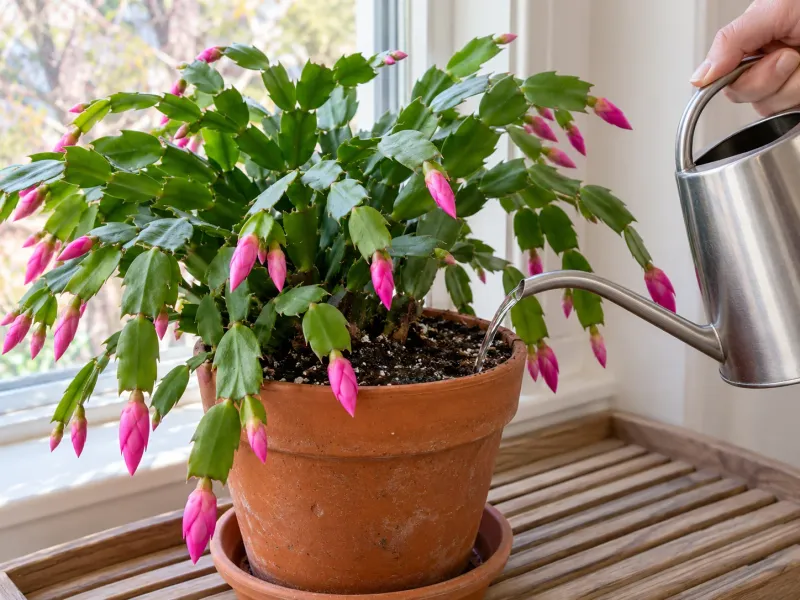
Your holiday cactus may be loaded with tiny buds right now, and one wrong move can send them tumbling to the floor. Watering is the part of care you control every week, so it is worth getting right.
It will not make a plant bloom on its own, but steady moisture can spare the plant extra stress. Here is how to check, water, and protect those buds without falling for myths.
Use the soil, not the calendar, to decide when to water
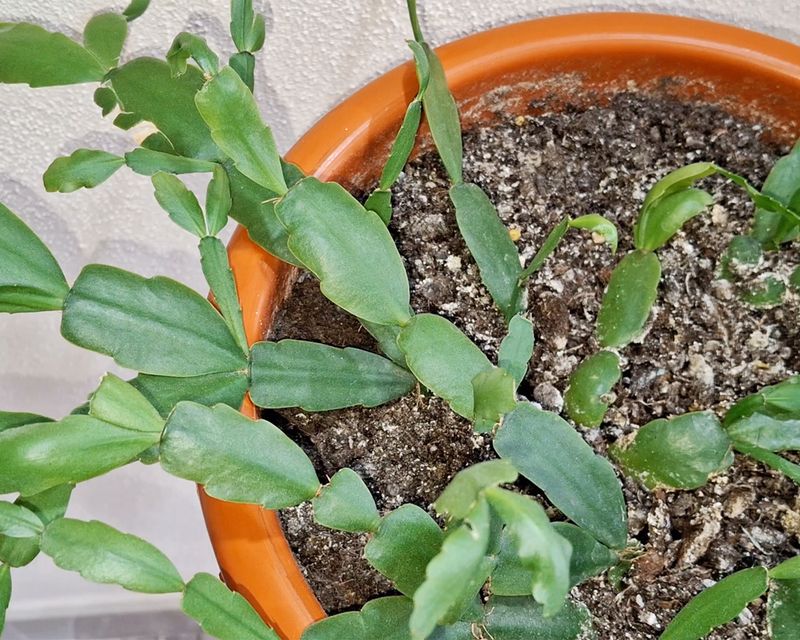
Poke a finger into the potting mix up to the first knuckle. If the top inch feels dry, it is time to water.
If it still feels damp, wait and check again in a day or two.
When the soil is dry, water slowly until liquid runs out of the drainage holes, then let the extra drain away. UF/IFAS guidance recommends this soil check instead of a fixed schedule, and it makes sense once you think about how many things change drying time.
A small clay pot in a sunny, warm room dries out much faster than a large plastic pot in a cool corner. Chunky mix dries faster than dense mix.
A plan like “every Sunday” ignores all of that.
This routine keeps the plant on an even footing and cuts down on avoidable stress. It does not guarantee blooms, because flowering depends on other things, which come up shortly.
Keep roots from drying out or sitting in water
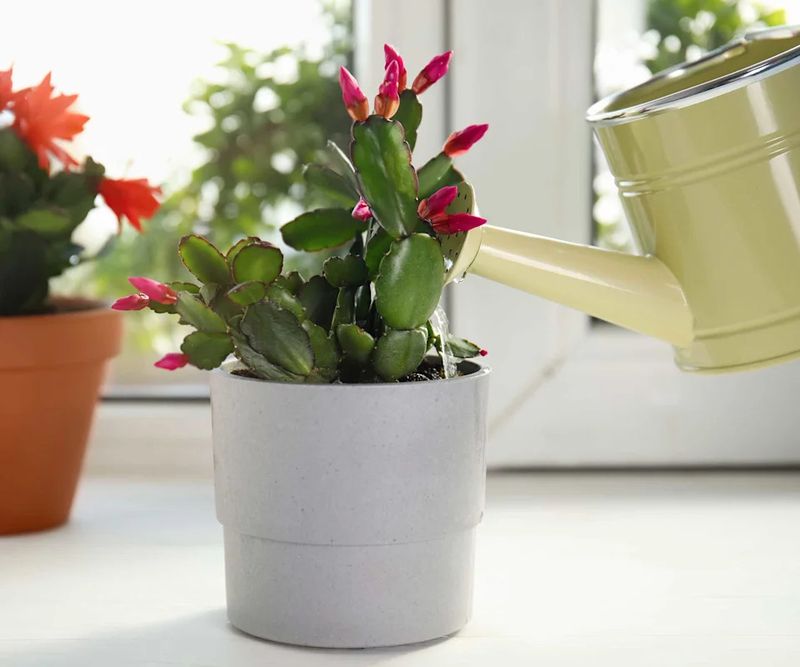
Despite the name, a holiday cactus is not a desert plant. It is a rainforest epiphyte that grows on tree branches, and as UConn Extension explains, it handles drought less well than true desert cacti.
Bone-dry soil and soggy roots are both trouble.
Set the plant up so the middle ground is easy to hit. Use a pot with drainage holes and a well-draining mix, then empty the saucer after watering so roots are not standing in water, as UF/IFAS also advises.
You may hear that letting the plant go thirsty will push it to bloom. That tip does not hold up.
UMass Extension reports that water stress during flower induction can reduce bud set.
If the stems look limp or shriveled, the plant is already stressed. Water it properly and let it drain rather than waiting longer.
Darkness and temperature—not a watering trick—set up flowering
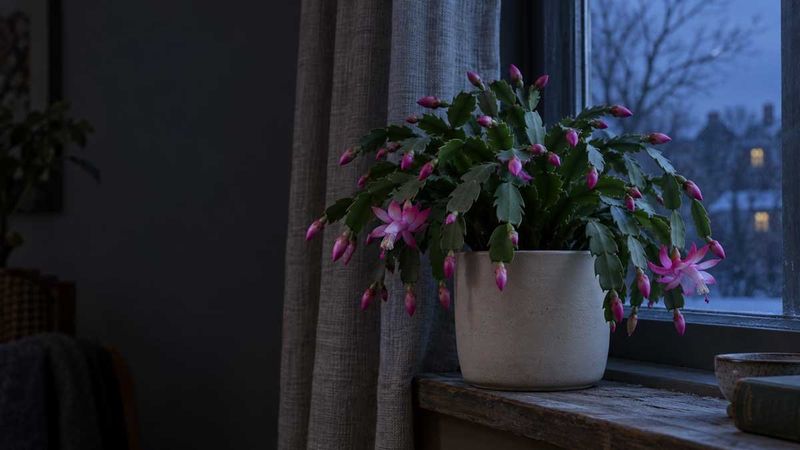
Bud formation is mostly a response to long, uninterrupted nights and cooler temperatures. Watering helps the plant avoid stress, but it cannot stand in for those cues.
Iowa State Extension says most types and cultivars need 14 to 16 hours of darkness, though some may bloom with 12. It also notes that temperatures above 70°F can prevent flowering under the conditions it describes.
Treat those numbers as a guide. Your cultivar, your room, and even a lamp that clicks on at night can change the outcome.
Commercial growers manage these cues carefully, and the UMass Extension fact sheet shows that plant type and timing matter too.
So if your cactus is in a bright hallway with lights on until midnight, a perfect watering routine will not fix that. Consider the plant’s darkness and temperature for next season.
November cannot guarantee a Christmas display
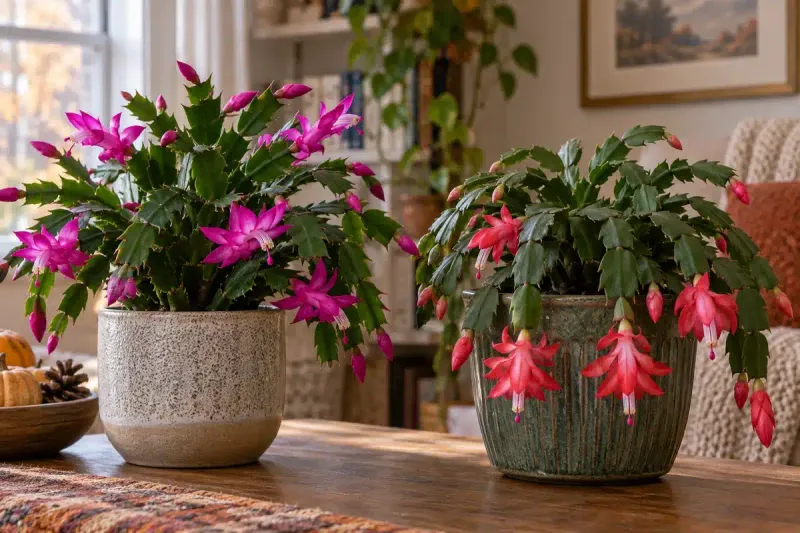
If your cactus has no buds yet, changing how you water in November is unlikely to produce a full Christmas show. Natural light, indoor lighting, and cultivar all affect timing.
For a sense of scale, UF/IFAS gives an example of a controlled dark treatment starting around October 14 for full bloom around December 23. That is one example, not a schedule that fits every plant or home.
Many plants sold as Christmas cactus are actually Thanksgiving cactus. UMass Extension says these generally flower four to six weeks earlier than true Christmas cactus, and Clemson Extension also notes about a month’s difference.
If yours bloomed in November last year, it may be a Thanksgiving type. A plant with no buds may simply flower later, or skip the holiday this year.
Healthy stems now still set you up for the next round.
Keep developing buds in steady conditions
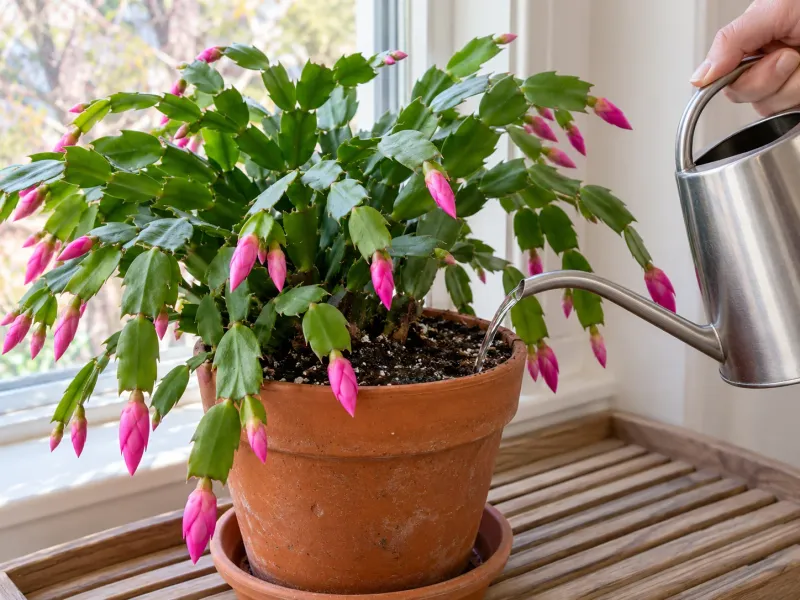
Once buds show up, think of them as delicate. Plants often respond to sudden changes by dropping them.
Try to keep watering, light, temperature, and location as steady as you can. Moving the pot from room to room or turning it often can be enough of a shift to cause trouble.
Draft and heat sources deserve a look. Keep the plant away from heating vents, fireplaces, radiators, and doors that open to cold air.
Iowa State Extension lists sudden environmental changes and improper watering among the recognized causes of bud drop.
Keep up the soil check from earlier, since UF/IFAS suggests the same simple approach while the plant is budding.
Stability lowers avoidable stress. It will not stop every bud from falling or promise that each one opens, but it gives them a fair chance.
Troubleshoot bud drop without guessing
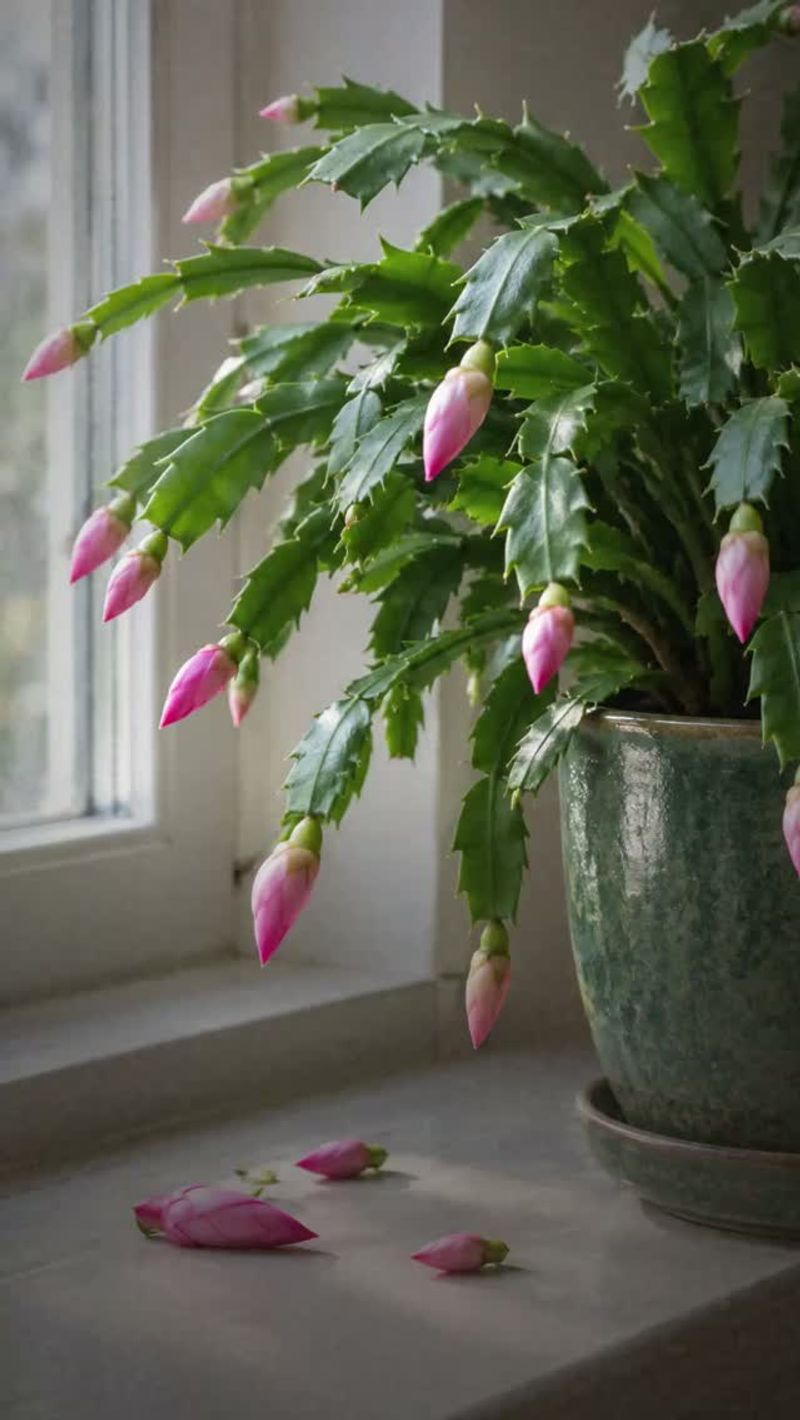
Finding buds on the floor is upsetting, but dropped buds do not point to a single cause. Too much water, too little water, a temperature swing, a draft, or a change in light or location can each do it.
Start by reviewing the last couple of weeks. Did you move the plant, turn on the heat, or leave it in a cold window?
Feel the soil and check whether the pot has been sitting in water.
UConn Extension advises avoiding both underwatering and overwatering, and Iowa State points to several other stressors as well.
If you spot a clear extreme, fix it gradually. A drastic overcorrection can be one more shock for the remaining buds.
Check the soil, water thoroughly when the top inch is dry, let the pot drain, and keep conditions steady. That routine supports a healthy plant, even when it cannot promise a Christmas display.