
Red clay is the soil many North Carolina yards are built on, and it can be tricky to read. Pale grass and sluggish beds make some people reach for a bag of lime right away.
Lime can help, but only when the soil is too acidic, and it works slowly. Here is how November fits in, and how to know if your yard needs it at all.
Why November can give lime a head start
Lime does not work overnight. It dissolves and reacts with soil acid over several months, and that slow pace is the reason fall gets so much attention.
A November application, made because a soil test called for it, has time to begin shifting soil acidity before spring growth starts.
NC State says lime may be applied year-round, and its lawn guidance notes that winter is usually a good time for lawns. Gentle winter rain and freeze-thaw cycles can help work lime into the soil surface.
So November is a useful window, not a deadline. A January or February application can be just as sensible.
Think of fall liming as preparation. NC State’s liming basics explain that lime corrects excess acidity over time, and surface-applied lime moves down slowly.
An established lawn may not look any different by spring, even when the lime is doing its job underground.
Results also depend on weather and how the lime goes on. Long dry spells can stall the reaction, and a downpour right after spreading can wash material away.
If acidity was holding your plants back, a fall start can put you ahead. If it was not, extra lime will not turn the yard green.
Test before deciding whether to lime
A soil test is the decision point. Heavy red clay does not prove your soil is acidic, and a pale lawn can come from many causes, including shade, low fertility, compaction, or disease.
Guessing at lime can waste money and push pH too high.
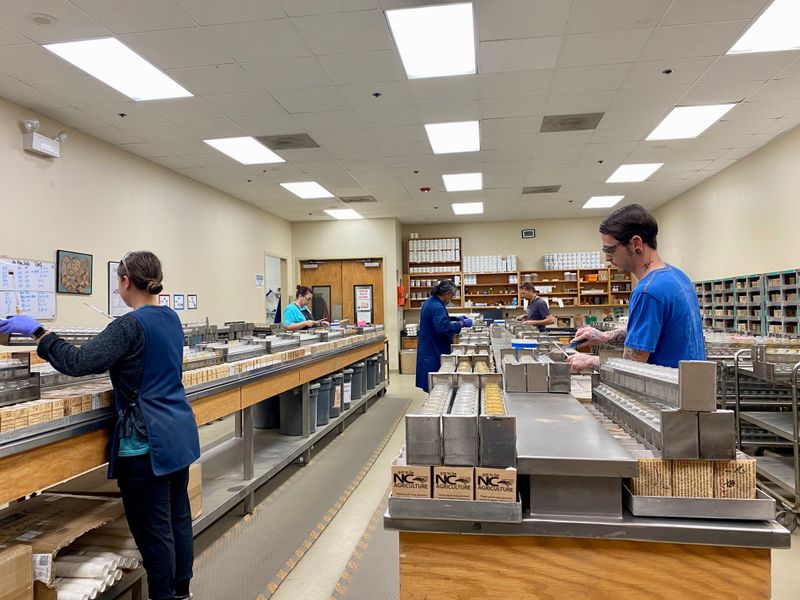
According to NC State’s gardener handbook, a soil test is how you learn whether lime is needed and how much. Reports show pH and give a lime recommendation matched to what you plan to grow.
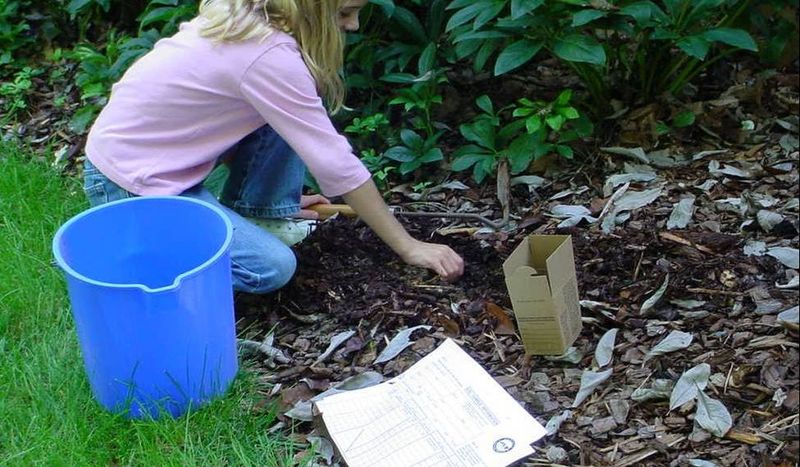
Sample each area on its own. Your front lawn, vegetable garden, and flower beds have different histories and different plants, so mixing them into one bag hides the differences.
NC State’s sampling guide stresses careful, representative sampling for reliable results.
Collect small cores from several spots in one area, mix them in a clean bucket, and fill one labeled box or bag for that area. Note what you grow there so the report can match its advice.
If you want to lime in November, send samples early enough to have the results in hand.
When the report says no lime, believe it. Skip the bag and look for other reasons the plants are struggling.
Match lime and pH to the plants you grow
Different plants want different soil pH, so one yard can hold several different goals. Blueberries thrive in acidic soil, while vegetables prefer it closer to neutral.
Treating the whole property the same way is a good route to trouble.
NC State lists target pH values that show the spread. Centipedegrass is at about 5.5.
Most other lawns and many garden plants sit near 6.0. Vegetable gardens and roses do best around 6.5.
Blueberries and several acid-loving ornamentals aim for about 5.0.
Treat these as examples, not a recipe. Your soil test report gives the target and the amount for the plants you listed, and that report should win over any rule of thumb.
The report may also point you to a type of lime. Dolomitic lime supplies magnesium along with calcium, while calcitic lime supplies mainly calcium.
NC State’s agricultural liming guide says the soil test should guide that choice.
Too much lime can tie up some micronutrients and leave plants hungry even when soil seems rich. Acid lovers like azaleas and blueberries can suffer when pH climbs past their range.
Keep a separate record for each bed so every application matches its own report.
Apply lime carefully to an established lawn
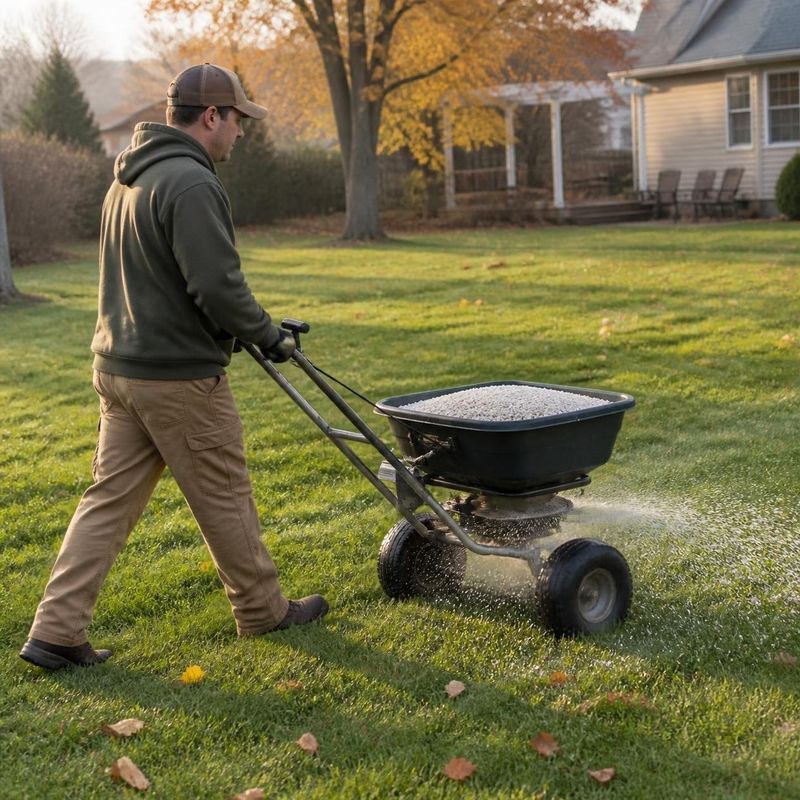
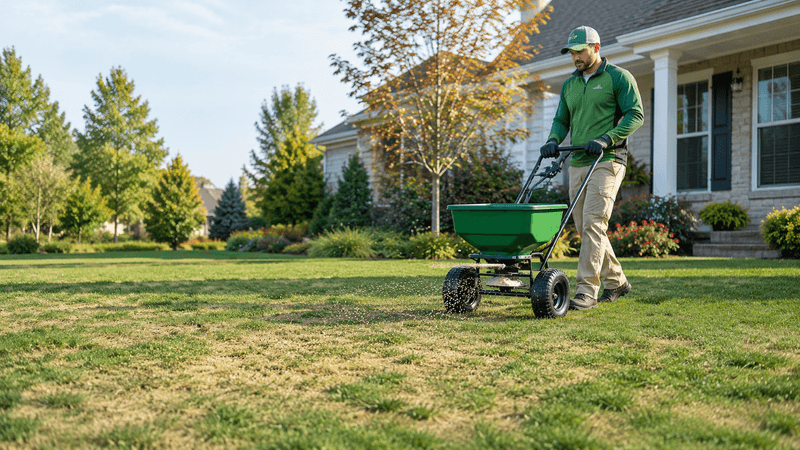
Once a test calls for lime on existing turf, the job is simple but worth doing well. Measure the lawn, calculate the amount from your report, and fill a spreader.
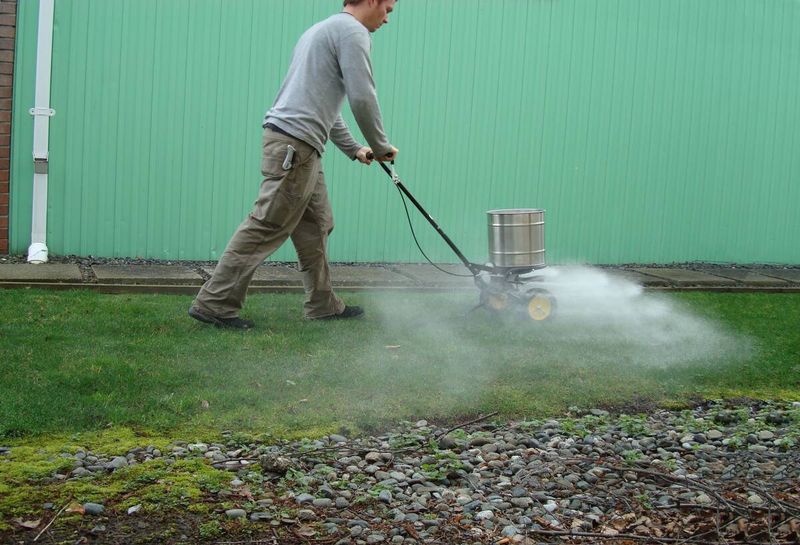
Broadcast it evenly in overlapping passes so no strips get double doses.
Aerating first can help lime reach the root zone. NC State’s Carolina Lawns guide also suggests timing it before a gentle rain, or watering afterward to help it settle in.
Skip application during drought, and avoid days before heavy rain that could wash it away before it enters the soil.
Mind the ceiling. Per NC State’s liming guidance, an established lawn should get no more than 50 pounds per 1,000 square feet at one time.
If your report recommends more, apply 50 pounds now and wait several months before the next round.
Stick with garden or agricultural limestone. Hydrated lime, sometimes sold as builders’ lime, acts fast and strong, and University of Georgia Extension warns it can damage plants or lawns if used wrong.
It is not a casual swap.
Sweep any lime off sidewalks and driveways, store leftovers dry, and mark the date on the calendar. You will want it for your next soil test.
Incorporate lime when preparing new beds
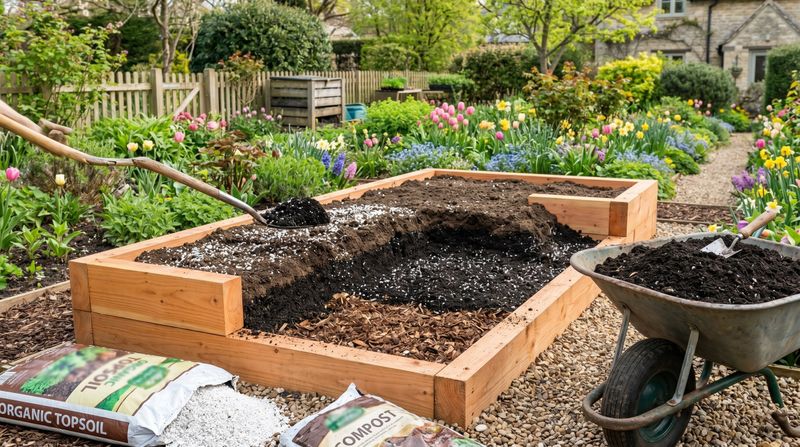
A bed you are about to dig is a different situation from a lawn that is already growing. With bare ground, lime does not have to creep downward on its own.
You can mix it into the soil while you work, which puts it where roots will grow.
NC State’s liming basics describe working lime in to roughly 4 to 8 inches for lawns and gardens. Spread the recommended amount over the loosened ground, then till or turn it in before planting or seeding.
Surface-applied lime moves slowly, and the NC State landscape management calendar treats it that way too. That is why fall bed prep works well.
Lime added in November has months to react before spring planting.
None of this means every new bed needs lime. Test the soil first, and only use the amount the report gives.
A site where a blueberry patch will go may need no lime at all, while a vegetable plot a few feet away may need plenty.
Work when the clay is crumbly rather than soggy. Wet clay smears and bakes into clods, which causes problems no lime can fix.
Treat clay problems separately from soil acidity
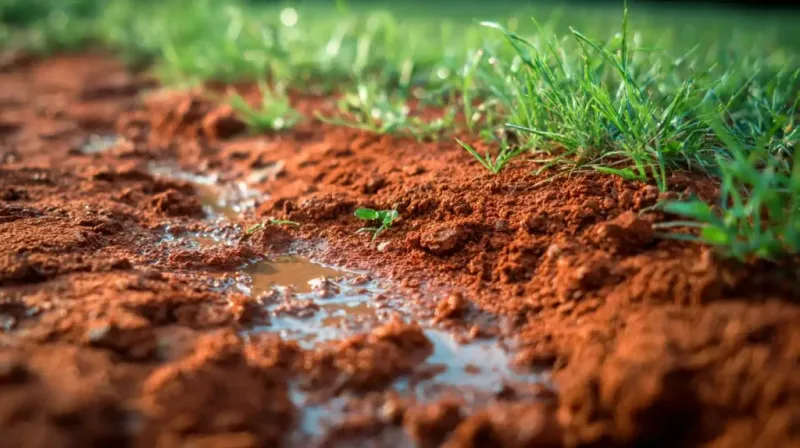
Clay and acidity are two separate matters. Lime changes pH.
It does not change soil texture, and it will not loosen a hard, compacted yard or cure puddles that sit for days.
Clay-rich soils can also resist pH change. The 2025 NC Agricultural Chemicals Manual notes that Piedmont and mountain silt and clay loams tend to change less rapidly with lime and fertilizer than lighter soils.
Patience, and a retest after a year or so, beat a heavier hand.
For the clay itself, look at other tools. NC State’s organic lawn care guidance points to compaction as a concern in clay and discusses organic matter and aeration as separate measures.
Core aeration in the right season and compost worked into new beds can improve how clay behaves.
Clues help sort the causes. Water pooling after rain and a screwdriver that will not push in suggest compaction.
Thin grass under trees suggests shade. A low pH on a test suggests lime.
Here is the order that works. Test each area on its own, follow each report’s rate and target, and apply lime in November only where the test calls for it, in the amount it calls for.
NC State’s lawn guidance backs the same careful approach.
Lime is a slow investment, and spring color is never a sure thing.