
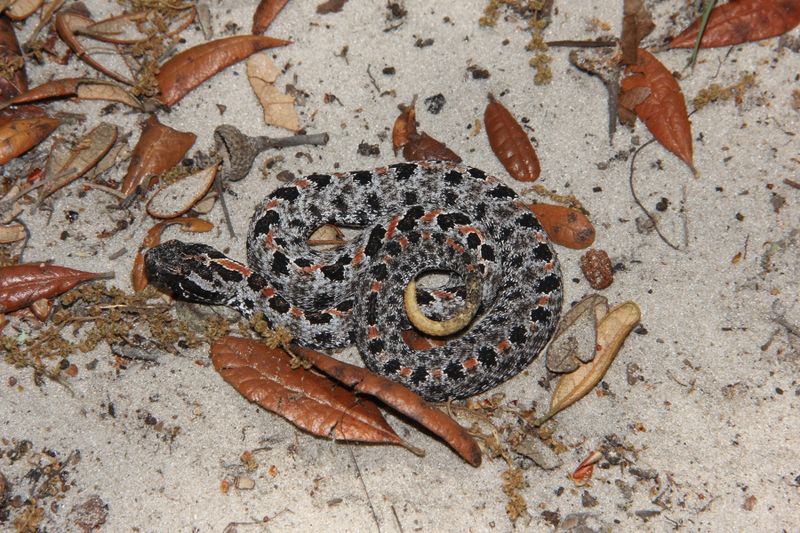
A snake that fits in your gloved hand can still deliver a venom bite. The dusky pygmy rattlesnake is Florida’s smallest rattlesnake, and its tiny rattle is easy to miss.
Knowing what it looks like and where it may turn up helps you work in your garden with a clear head. A few simple habits can lower your chances of a surprise.
Recognize the snake without approaching it
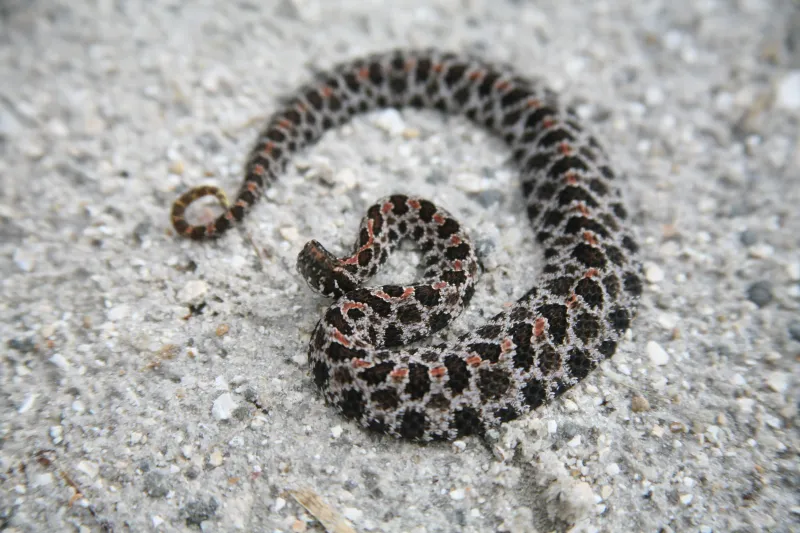
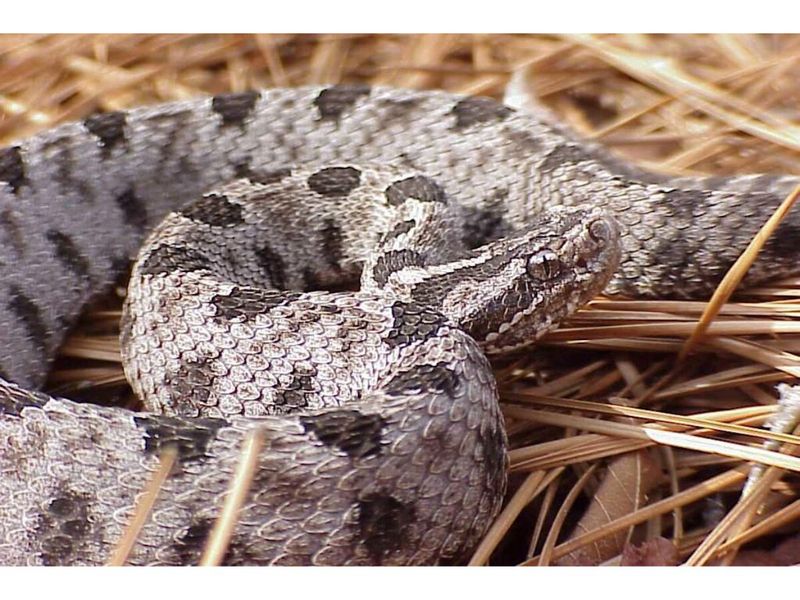
Picture a short, thick-bodied snake with dark blotches along its back. Many have a reddish-brown stripe running down the middle, and a dark line stretches behind each eye.
According to the Florida Museum of Natural History, most adults measure about 12 to 24 inches, though individual snakes vary.
Young pygmy rattlesnakes have a bright yellow tail tip. The rattle on adults is very small, and it may make only a faint buzz, like an insect in the grass.
Because of that, hearing a rattle is not a dependable clue, and silence does not mean a snake is harmless.
The blotchy pattern blends in well with leaf litter, pine straw, and shaded soil. That camouflage is the main reason a small snake can go unnoticed until you are close.
Spotting one at a glance can be tricky even for experienced people.
If you see a snake you cannot name, stay put and step back. Do not lean in, poke it, or move it to check its markings.
Identification should happen from a distance, and when you are unsure, treat the snake as possibly venomous and give it plenty of room.
Where Florida gardeners might encounter one
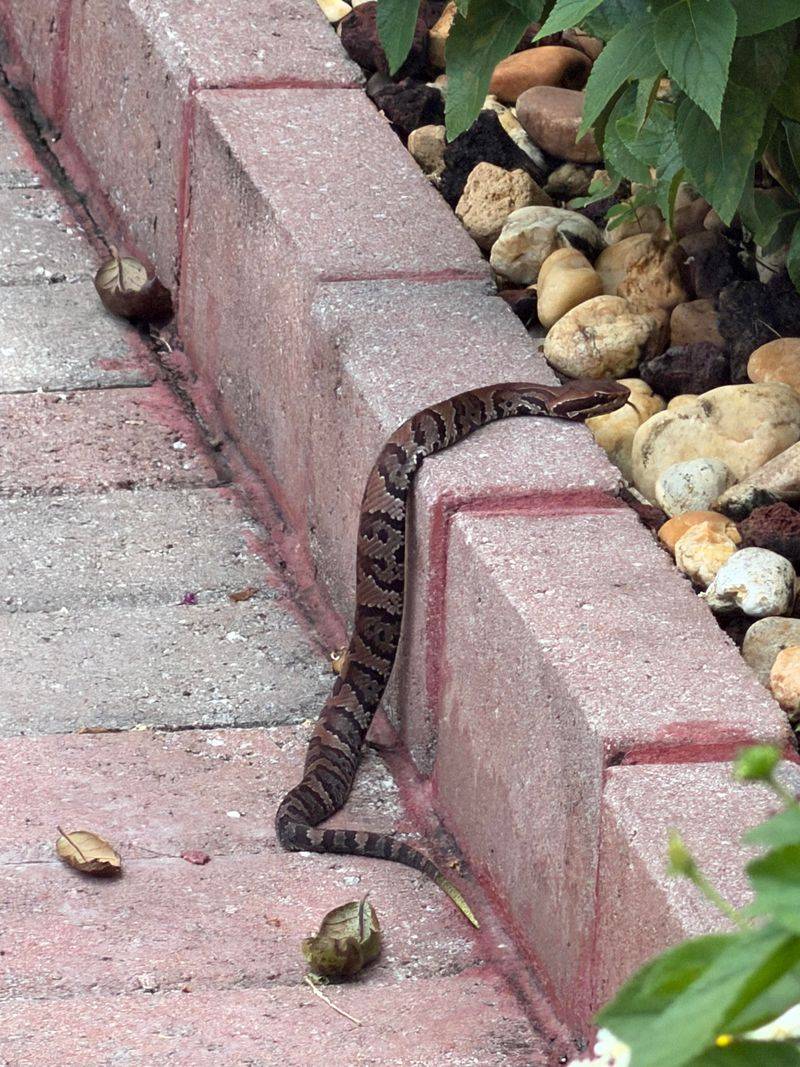
Dusky pygmy rattlesnakes live across Florida, but they are not known from the Keys. The Florida Museum lists habitats such as pine flatwoods, prairies, hammocks, and areas around water.
It also says they can turn up in suburban neighborhoods where homes sit next to suitable habitat.
That means a yard backing onto a wooded lot, wet edge, or natural area has a better chance of a visit than a yard far from such places. Not every yard offers what this snake needs, and meeting one is far from certain.
Now the mulch question. UF/IFAS notes that people may find snakes in gardens and flower beds in general.
But the sources do not show that pygmy rattlesnakes prefer mulch beds or often hide where gardeners reach.
So treat it as a possibility rather than a pattern. Snakes of many kinds use spots that offer cover, so any shaded, tucked-away corner of a garden deserves a quick look before your hands go in.
Think of it as a habit, not a reason to worry.
Protect yourself while working in garden beds

Gear is your first line of defense. UF/IFAS Gardening Solutions suggests wearing thick gloves and boots and taking care in places that can hide snakes.
Thin cotton gloves and open sandals leave a lot unprotected.
Build a few habits around that gear. Look before you reach into dense groundcover, under overhanging foliage, beside stacked pots, or around the base of shrubs.
A long-handled rake or hand tool lets you move leaves and debris while keeping your hands back.
Work in good light when you can, and slow down in thick or shaded spots. Keep your attention on where your hands and feet are going, even during routine weeding.
Remember that gear and careful habits lower risk but cannot remove it. A gardener may still come across a snake despite all precautions, so know what you will do if it happens.
Nothing here suggests that bare-handed contact is a known pattern for this species. It simply makes sense to protect your hands whenever you cannot see what is underneath.
Make the yard less inviting for close encounters
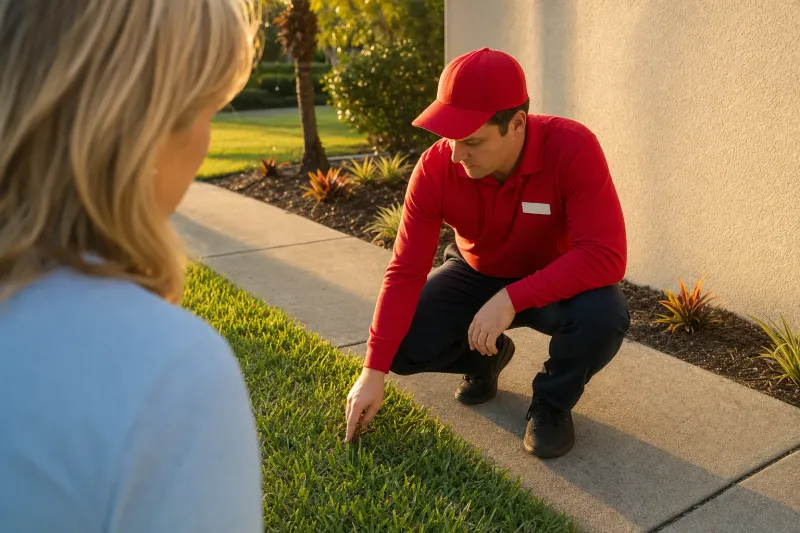
A few targeted changes help. UF/IFAS guidance recommends keeping grass mowed and keeping brush, wood, and debris piles away from buildings and play areas.
Short grass leaves snakes with fewer places to hide near the spots where your family spends time.
Notice what the advice does not say. You do not need to strip your yard of plants or clear away every brush pile.
A yard with native shrubs and some natural cover can still be managed sensibly, as long as the piles sit away from the house, patio, and kids’ play space.
Walk your property and look for tucked-away spots near doors, sheds, and play areas. Stacked firewood, stored lumber, piles of old pots, and dense clutter along foundations are good candidates to move or tidy.
UF/IFAS also notes that advertised snake repellents do not work, so skip them. Keeping rodents in check matters more, since they attract snakes looking for food.
No yard change can promise that snakes will never appear, but these steps reduce hiding places close to where people spend time.
Give a snake space and call for help when needed
Finding a snake calls for calm, not action. Stop what you are doing, step back, and keep children and pets away from the area.
Leave the snake alone so it can move off on its own.
Do not try to handle, kill, or capture it. UF/IFAS warns that attempts to kill a snake raise the chance of a bite.
Snakes tend to strike defensively when they feel threatened or cornered, so giving room keeps everyone safer.
If the snake might be venomous, or you cannot tell what it is, contact a professional. A wildlife or snake removal specialist can identify it and deal with it properly.
Taking a photo is fine only if you can do it from a safe distance, and a zoomed picture helps the expert.
Bring pets indoors and keep the area closed off until the snake leaves or help arrives. Most snake sightings end quietly when the animal is given space.
Watching from a distance and making a phone call is a perfectly good response.
Treat a suspected bite as a medical emergency
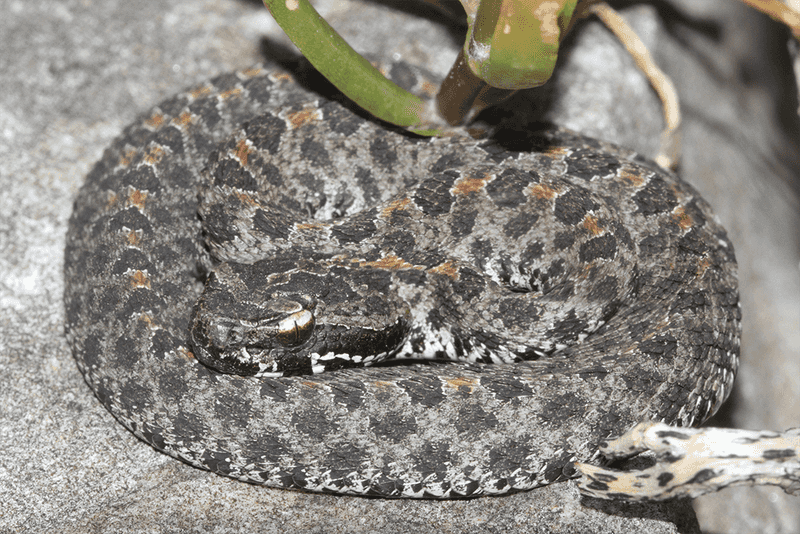
Small does not mean harmless. The Florida Museum describes pygmy rattlesnake bites as painful and generally not life-threatening, yet they still need prompt medical evaluation.
The concern is greater for children and small pets.
For a bite from a venomous or possibly venomous snake, follow the American Heart Association first-aid guidelines. Activate emergency services right away.
Have the person rest and keep the bitten limb still, but only if doing so does not delay care. Remove constricting items such as rings.
Equally important is what to skip. Do not apply ice, cut the wound, try to suck out venom, use a tourniquet, or wrap the limb with a pressure-immobilization bandage.
None of these is recommended.
Do not try to catch or kill the snake to show the doctors. Move away from it and focus on getting help.
You can also call Florida Poison Control at 1-800-222-1222, as listed by Florida’s Poison Control Centers. Treat that line as an extra resource, not a replacement for emergency care.
If a pet is bitten, get it to a veterinarian quickly.
A garden is meant to be enjoyed, and a little preparation lets you do that with confidence.