
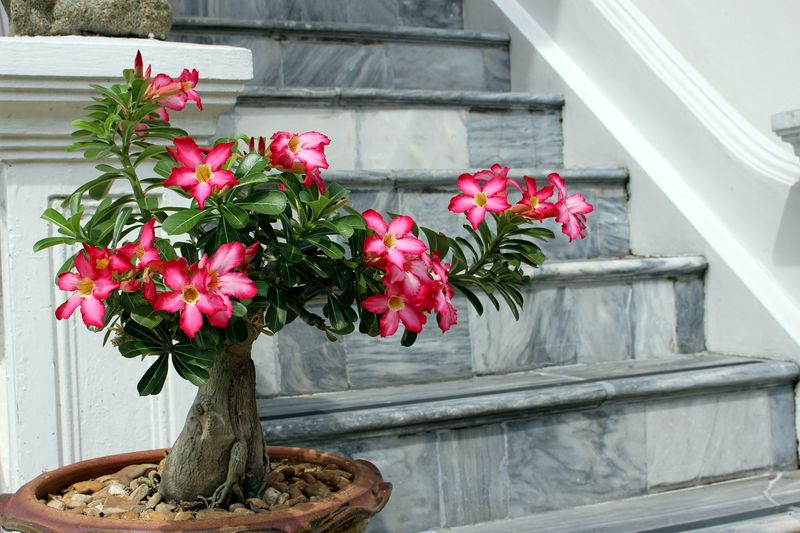
Your desert rose was full of leaves and pink blooms a few weeks ago, and now it looks thinner and slower. That change can be a normal part of the plant’s seasonal cycle, but it can also come from other causes.
The right November care depends on what your plant is doing, what its growing medium is doing, and what the local forecast says. Here is a calm, practical plan that helps you avoid overwatering and cold damage.
A slowdown may signal winter rest
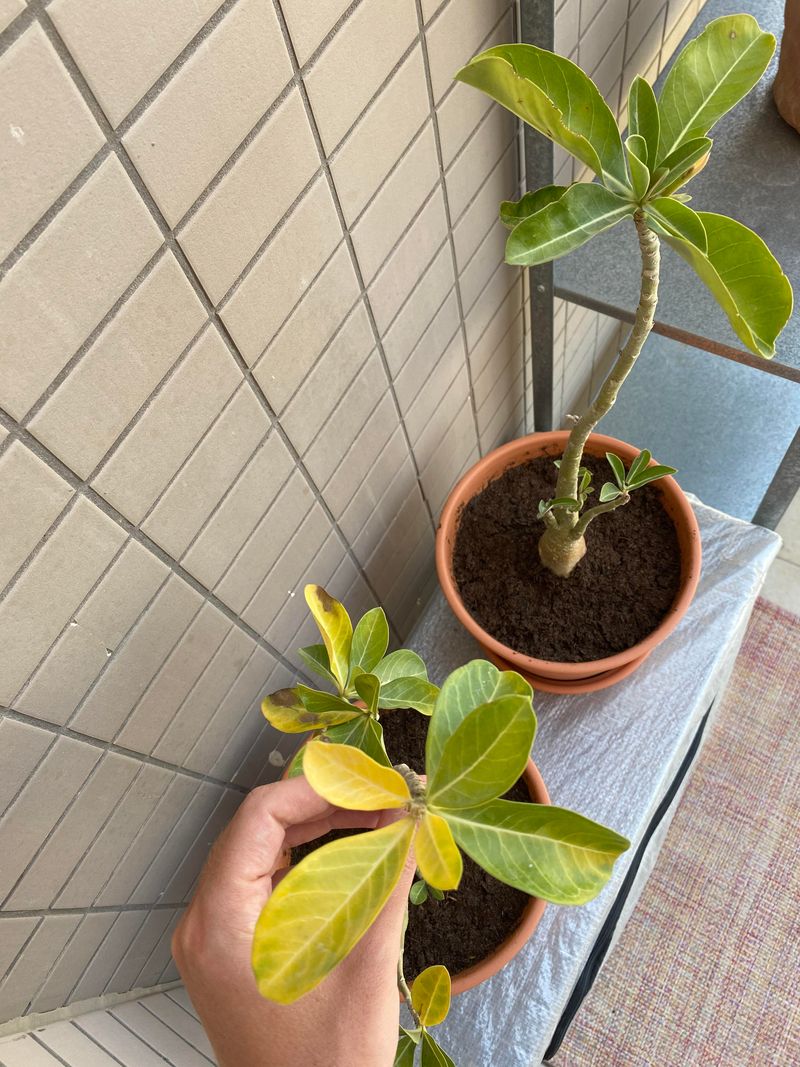
Yellow leaves, fewer blooms, and a pause in new growth can all show up when a desert rose heads toward seasonal rest. UF/IFAS guidance on Adenium obesum says winter leaf and flower drop can be part of the plant’s natural cycle.
So if your plant is dropping a few leaves in November, there is usually no reason to panic.
Still, leaf drop alone does not prove your plant is dormant. Drought stress can also cause leaves to fall, and some dormant plants keep their leaves.
The University of Arizona adenium guide points out that dormancy and leaf loss do not always go together, so it helps to look at the whole plant instead of one sign.
Start with a few simple checks. Look at the branch tips for fresh, green new growth.
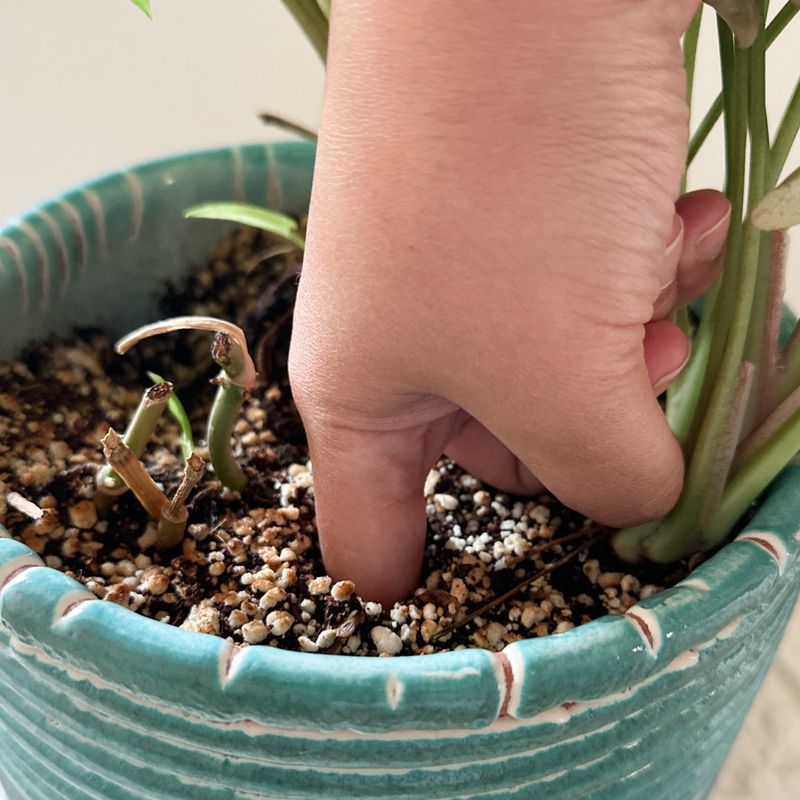
Poke a finger or a wooden skewer into the growing medium to see whether it is bone dry, damp, or soggy. Notice whether the pot has been sitting in cool shade or in a warm, sunny spot.
A plant with steady new growth in a warm location is still active, even if a few older leaves are yellowing. A plant with no new growth, dropping leaves, and cooling nights may be settling into rest.
A plant dropping leaves in dry medium after a hot spell may simply be thirsty.
Treat the slowdown as a reason to observe, not a diagnosis. The next steps for watering and shelter depend on what you find.
Decide whether to water by checking growth and the medium
A weekly watering schedule does not fit a plant whose needs are changing. Water use falls as growth slows, so the amount your desert rose drank in July may be far too much in November.
The better approach is to let the plant and the growing medium tell you what to do.
First, look for active growth. If you see new leaves or stem tips expanding in warm weather, the plant is still using water, and it may need a drink when the medium dries out.
Next, check how fast the medium dries. A gritty mix in a sunny, warm spot dries quickly, while the same pot in cool shade can stay damp for many days.
If the plant is dormant, the advice changes. The University of Arizona guide recommends keeping dormant adeniums dry, especially in cool or dim storage, where wet roots are slow to recover.
Two clues can mislead you. Leaf drop alone does not mean an active plant needs no water, because a thirsty plant can drop leaves too.
And a few winter flowers do not prove that a dormant plant needs water, so do not let a bloom talk you into soaking the pot.
When in doubt, wait until the medium is dry through the pot before watering, and then water lightly.
Prepare container plants for cold nights
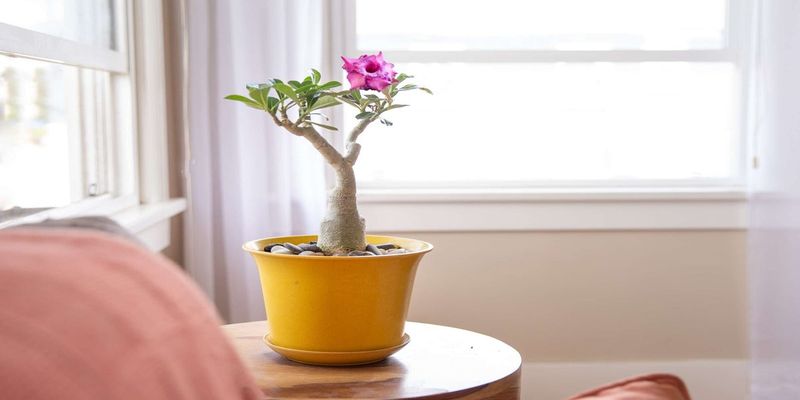
Containers are a gift in cooler months because you can move them. That matters, since UF/IFAS describes the desert rose as not freeze tolerant.
A pot sitting in the open also loses warmth from all sides, so UF/IFAS winter plant protection guidance notes that container plants are especially vulnerable to cold injury.
Plan to bring a vulnerable pot to a sheltered, frost-free place as nights cool, and do not wait for a freeze warning. By then you may be moving a heavy pot in the dark.
Good spots include a garage with a window, an enclosed porch, or a spot against a warm house wall under an eave.
Let your local forecast, not a calendar date, set the timing. Gardeners in North Florida may see cold nights sooner in some years, but a low-lying yard in any part of the state can be colder than a sheltered one nearby.
Microclimate, such as a hilltop, a spot near water, or a yard with open sky overhead, can change the picture.
Make it easy on yourself now. Put the heaviest pots on a plant dolly, and pick a shelter spot with some light.
Check the forecast a few times a week through the cooler months.
South Florida locations still need a cold-snap plan
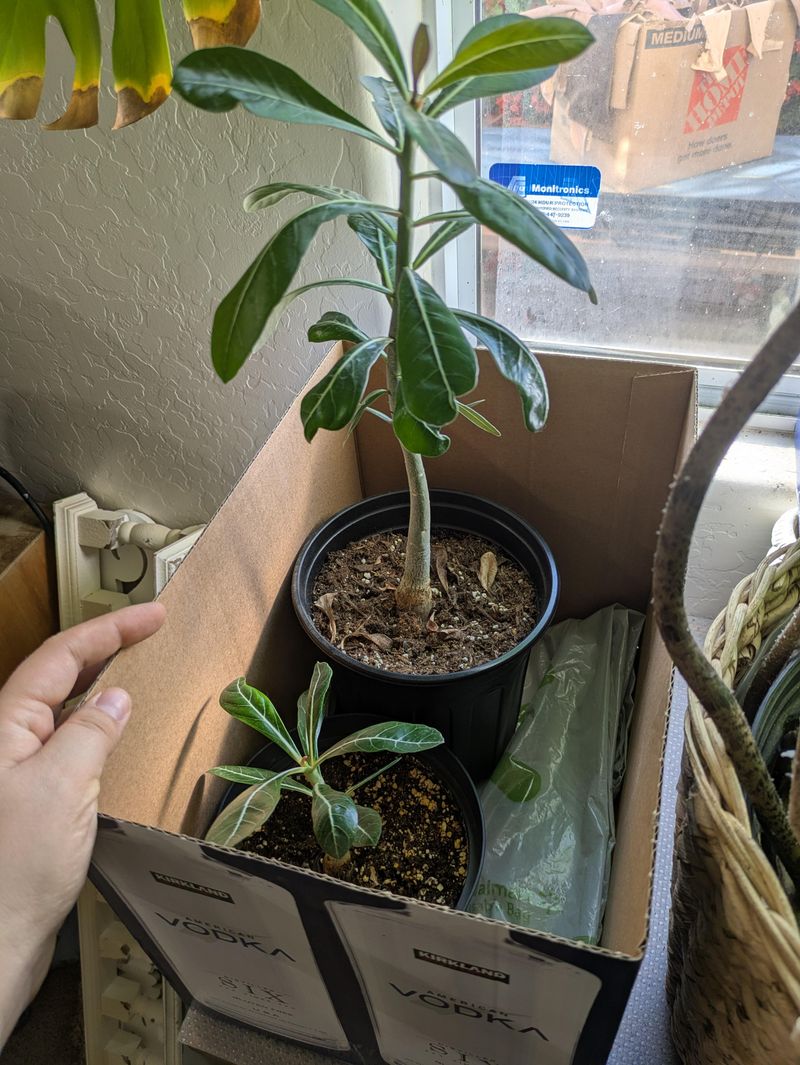
A desert rose in a warm, well-placed South Florida spot may stay outdoors through winter. Even so, a cold snap can still arrive, and a plan ready ahead of time keeps a normal chilly night from becoming a problem.
Cool, wet weather is another concern, since it is hard on roots.
UF/IFAS Charlotte County Extension says containers offer both good drainage and mobility, which are two useful traits for this plant. That same article warns that temperatures below 40°F can damage branch tips.
Treat that number as guidance from one source, not a universal safe cutoff, because other guidance describes chilling at different temperatures.
Remember that UF/IFAS lists year-round outdoor planting only for USDA zones 10B through 12. A plant in the ground cannot be moved, so lean on a protected site, such as the south side of a building.
Practical steps include keeping a pot you can move, using a mix that drains fast, and watching the forecast for dips. On cold nights, shifting the pot under cover is a small job.
After a stretch of cool rainy days, check that the pot is not sitting in water.
Avoid freezing exposure and cold, wet growing medium
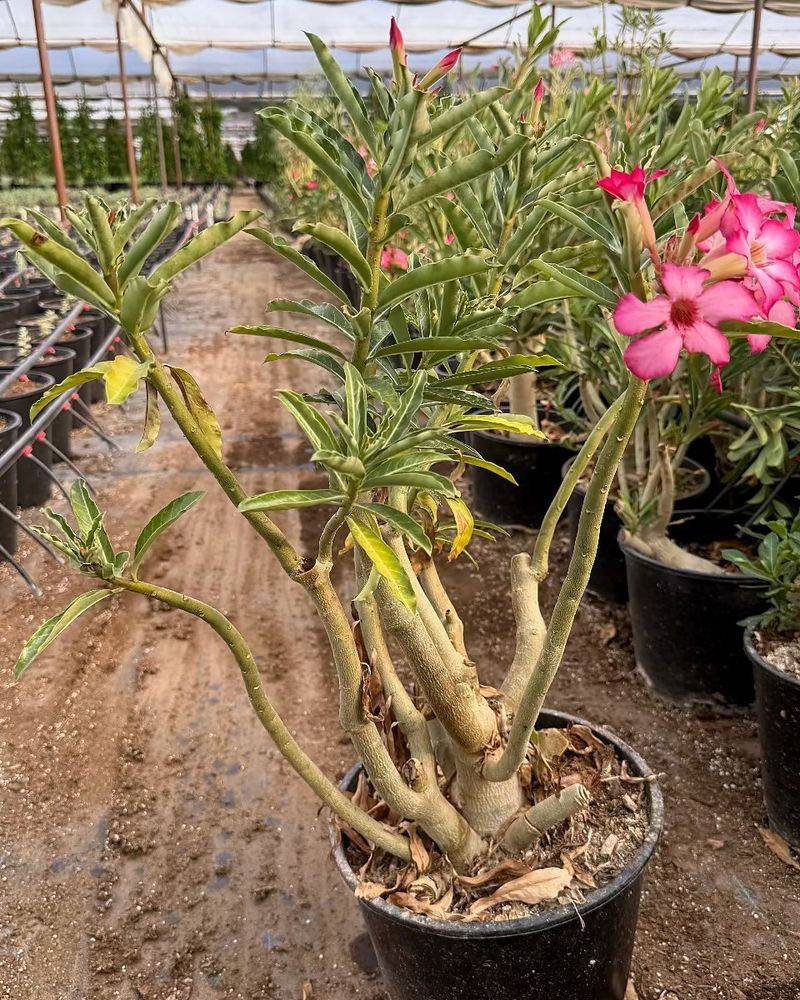
Two separate problems can hurt a desert rose in winter, and either one can cause trouble alone. Cold exposure can injure leaves and branch tips even when the medium is dry.
Cold, wet growing medium adds a rot risk on top of that. Protecting against one does not cover the other.
Temperature advice differs by source and situation. UF/IFAS describes chilling in the 35 to 55°F range as able to cause yellowing and leaf drop.
The Charlotte County article warns about branch-tip damage below 40°F, and the University of Arizona guide suggests withholding water and sheltering when nights fall below 50°F. None of these is one fixed line.
So shelter conservatively. When a cool night is in the forecast, move the pot before dark and keep it out of cold rain and wind.
For drainage, use a pot with open drainage holes and a gritty, fast-draining mix. Lift the pot off saucers that collect water.
If your plant is dormant, keep it dry while it waits in shelter, and avoid watering it just because the leaves are gone.
A damp mix in a cold spot is the combination to avoid. Dry and warm enough is the goal.
Skip late-fall fertilizer and set realistic flowering expectations
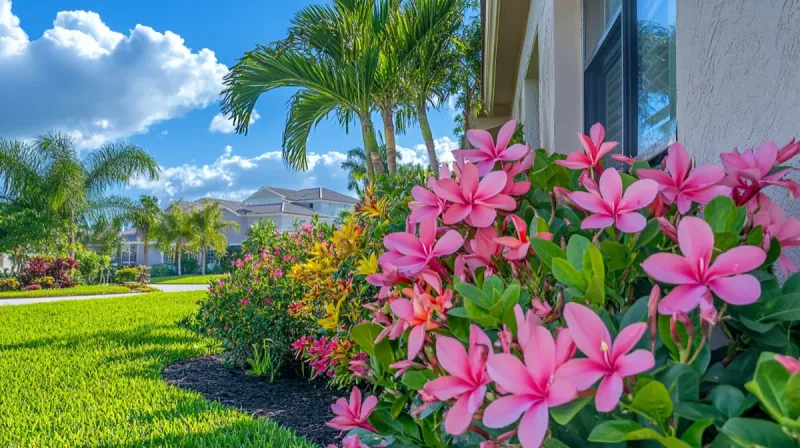
Fertilizer is meant to push growth, and November is the wrong time to push. UF/IFAS warns that late-fall fertilizing can trigger new growth that is more susceptible to cold injury.
Put the fertilizer away until the plant is growing again.
It is tempting to link winter care to next spring’s flowers. Be careful with that link.
A dry winter rest has not been shown to guarantee more spring blooms, so there is no promise to make about it.
What does help flowering is light during the growing season. UF/IFAS says low light prevents flowering and recommends six or more hours of light to maintain summer flowering.
If your plant has been in shade, that is a better thing to change next season than anything you do in November.
Meanwhile, expect fewer flowers now. A bare or quiet plant is not failing.
Keep the care simple: water by need, shelter from cold, and leave the feeding for later.
Handle cleanup with care
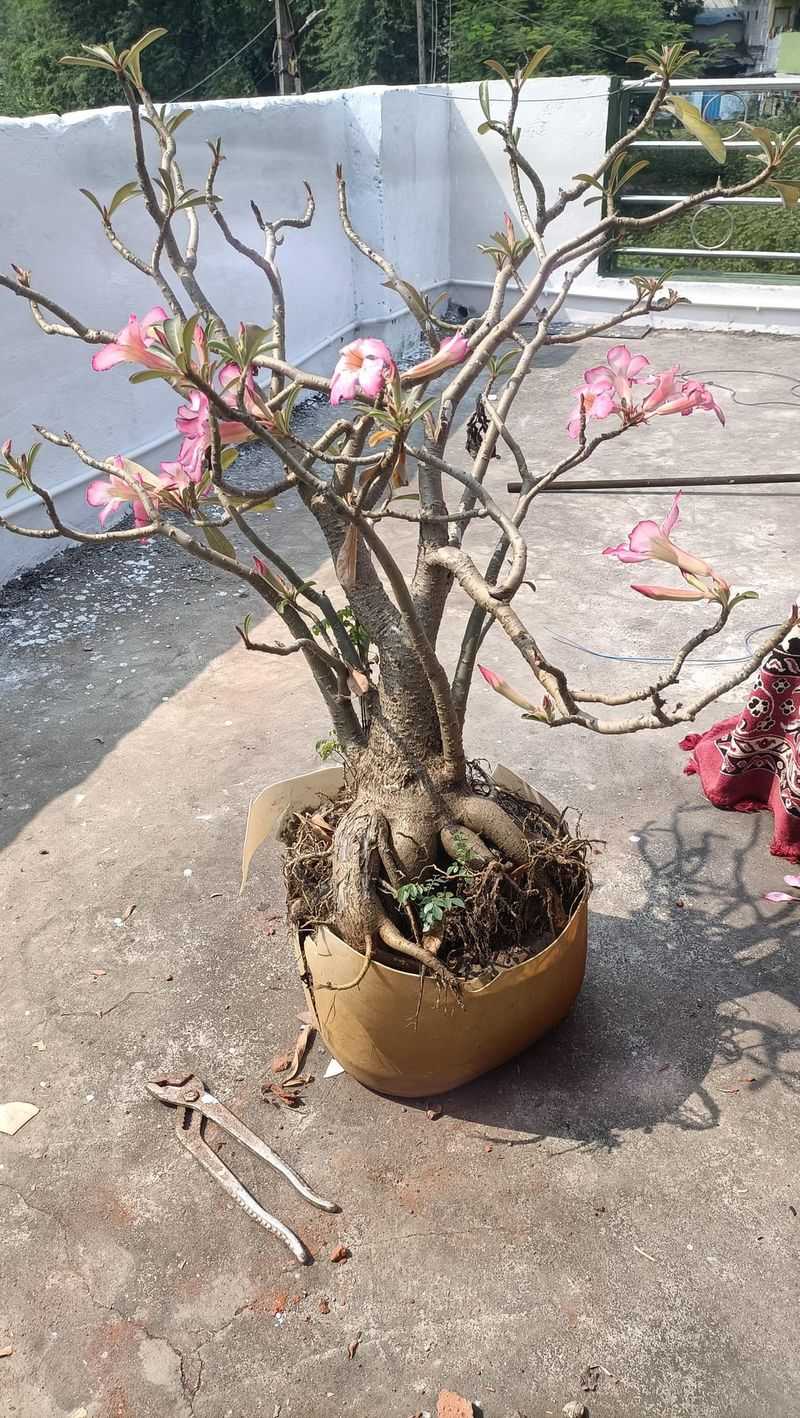
November cleanup often means snipping off dead or cold-damaged stems. Wear gloves for the job.
UF/IFAS recommends gloves when pruning desert roses, and that advice applies to handling damaged stems too.
Pets deserve a thought as well. The ASPCA lists desert rose as toxic to dogs, cats, and horses if ingested.
Keep the plant, and any trimmings, where animals cannot reach them.
When you move the pot into shelter, choose a spot that pets and children do not use. Bag up trimmings and put them in the trash rather than leaving them on the ground.
Wash your tools and hands afterward.
Let the plant and local conditions guide November care
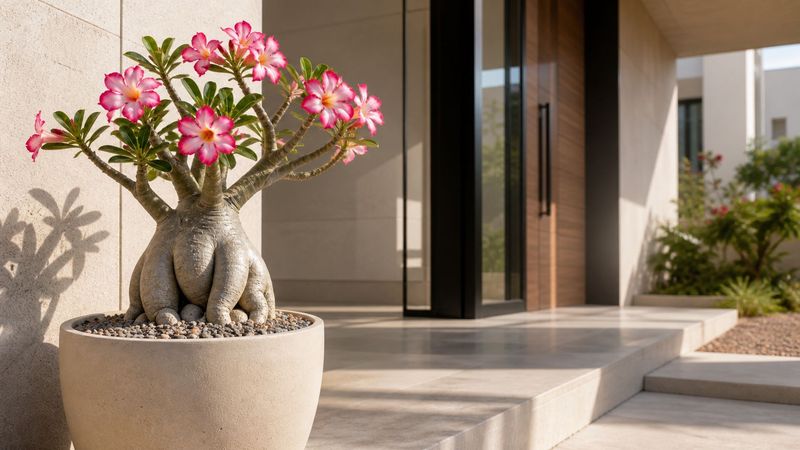
Check for new growth and the moisture of the medium before you water, since dormant plants should be kept dry. Move container plants to shelter based on local cold risk, not on the region label alone.
North and South Florida are handy planning labels, but your forecast and yard decide the plan. A quiet desert rose is usually just reading the season, and you can read it right back.