
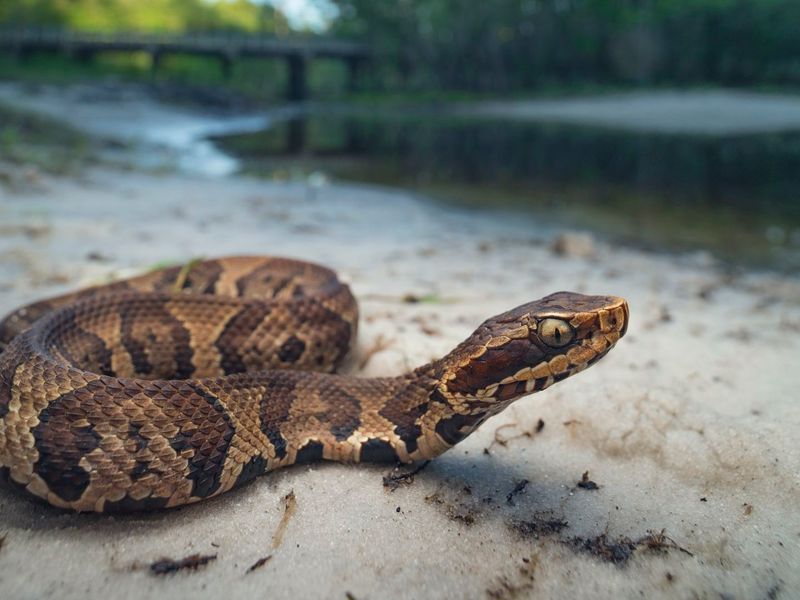
A dark, banded snake near your pond could be a nonvenomous watersnake or a venomous Florida cottonmouth. The two share the same wet yard edges, and they can look surprisingly alike from a distance.
Knowing what clues to watch for helps you decide when to pause before reaching into a planting bed. Here is what Florida gardeners should look for, and why giving the snake space is always the safer choice.
Why Florida’s wet garden edges can host both snakes
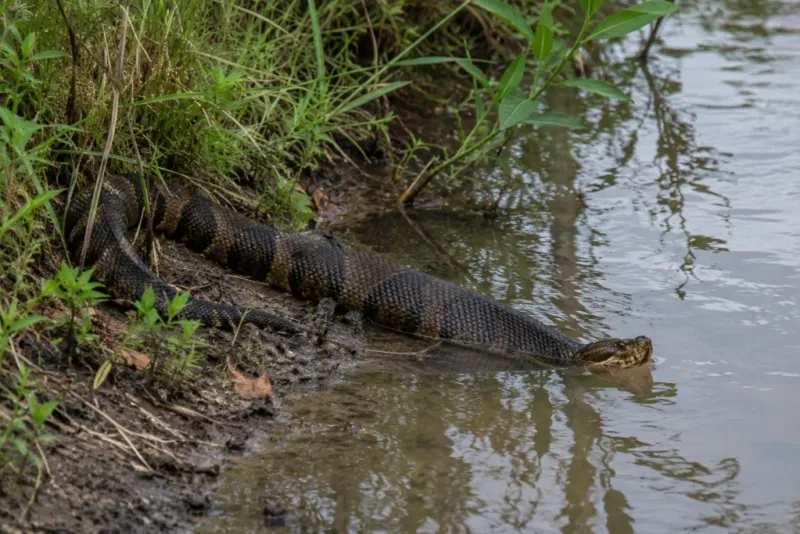
Pond margins, drainage ditches, and soggy planting beds are exactly the kind of places Florida snakes like. Cool shade, plenty of cover, and a steady supply of frogs and fish make these spots attractive to more than one species.
The nonvenomous Southern watersnake is the snake many people call a banded water snake. According to Florida Fish and Wildlife Conservation Commission, banded water snakes live in nearly all of Florida’s freshwater habitats except the Keys.
That means ponds, canals, and wet yard edges across most of the state can host them.
The venomous cottonmouth shares that same kind of habitat. The Florida Museum of Natural History notes that cottonmouths occur statewide near waterways, including ponds and roadside ditches.
So the two animals can turn up in the very same corner of a yard.
What does that mean for your gardening? A wet spot is a reason to work with a little extra care, but it cannot tell you which snake you are looking at.
Florida also has several other watersnake species, and plenty of dark snakes that are neither of these. Treat the habitat as a signal to slow down, not as proof of identity.
A Southern watersnake’s bands may fade with age
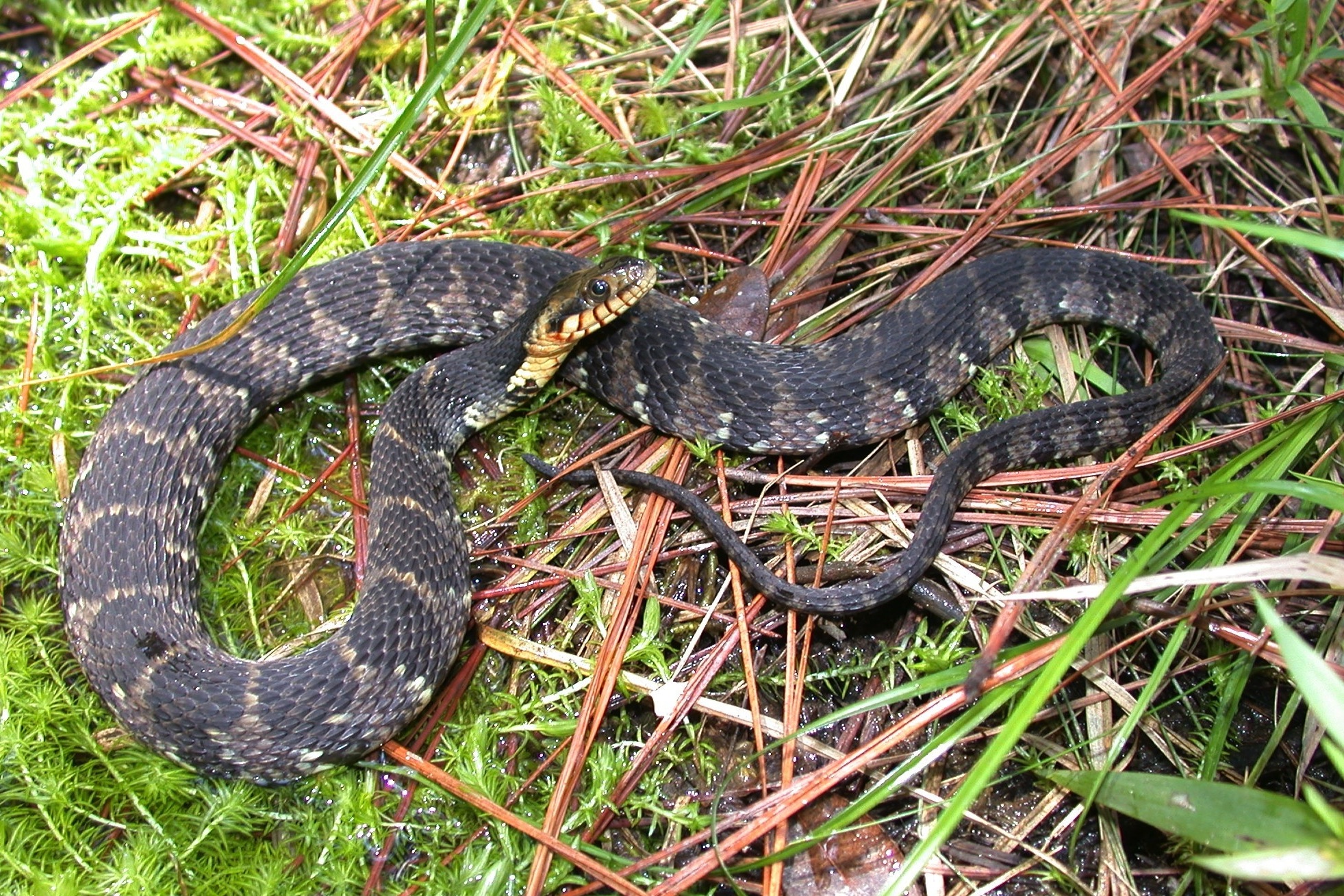
Younger Southern watersnakes tend to show the pattern people notice first. The Florida Museum describes dark brown, black, or reddish crossbands set against a lighter background.
The belly is light with dark markings, and a dark stripe may run through the eye.
Age changes the picture. As these snakes grow, the bands often become less distinct, and large adults can look almost solid black.
A gardener who has only seen the crisp banded pattern in photos may not recognize an older snake at all.
The eye stripe is worth a brief mention, but it is only one clue. Cottonmouths can show one too, so it should never settle the question by itself.
Nonvenomous is not the same as safe to handle. A Southern watersnake may bite defensively if it is grabbed or cornered, and those bites can bleed and get infected.
If one is sunning near your water garden, enjoy the view from a distance and let it move along on its own.
Cottonmouth markings change as the snake matures
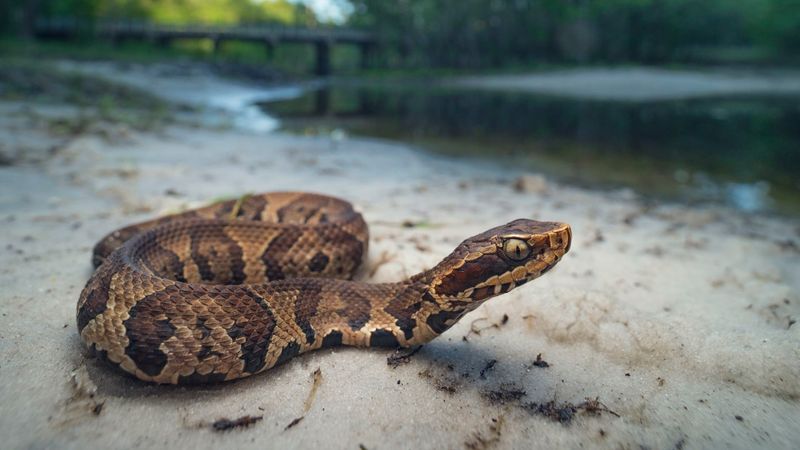
Cottonmouth looks shift quite a bit from youngster to adult. Based on Florida Museum species information, juveniles often show brighter reddish-brown crossbands and a yellow tail tip.
Adults may turn nearly black, which hides the pattern.
Another feature is a broad dark band across the face that helps camouflage the eye. It gives the head a masked look, but a watersnake’s eye stripe can look somewhat similar at a glance.
Think of these details as observations, not a checklist. A snake can match some of them and still be something else, and a cottonmouth can fail to match several.
Florida’s wet habitats hold many dark, patterned snakes.
Nothing here is a reason to move closer for a better look. If you spot a dark snake along a ditch bed or pond shelf and cannot tell what it is, a quick photo from far away is plenty.
Then carry on with your work somewhere else.
Visual clues can help, but they cannot guarantee identification
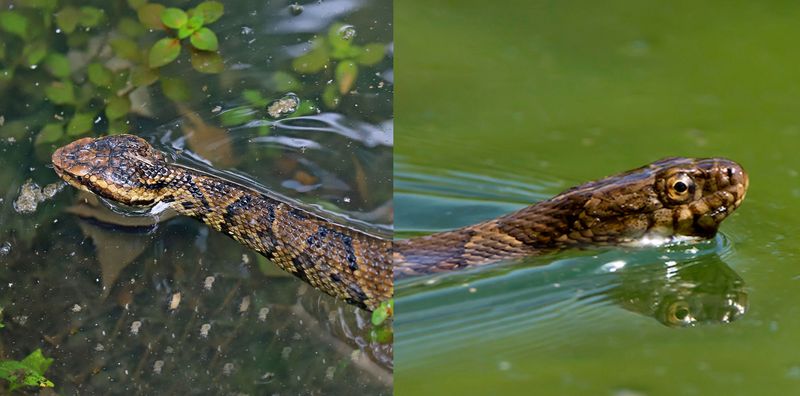
Gardeners often hope for a one-glance trick. Sadly, none exists.
Dark coloring and banding overlap between the two snakes, and both species can darken with age.
Both may also show an eye stripe, so that mark does not separate them. Head shape is just as unreliable.
The Florida Museum cautions that a threatened nonvenomous watersnake can flatten its head and look broader, so a wide, triangular head is no dependable sign of venom.
Cottonmouths do have vertical, cat-like pupils and a heat-sensing pit between the nostril and eye. Those are close-view features, and they are not something to go looking for.
Getting near enough to see them puts your hands, feet, and face within striking range.
Remember too that Southern watersnakes are only one of several Florida watersnake species with similar looks. The comparison is rarely as tidy as two choices.
So the practical rule is simple. If the view is uncertain, step back and give the snake room.
Give snakes room when you work around wet beds
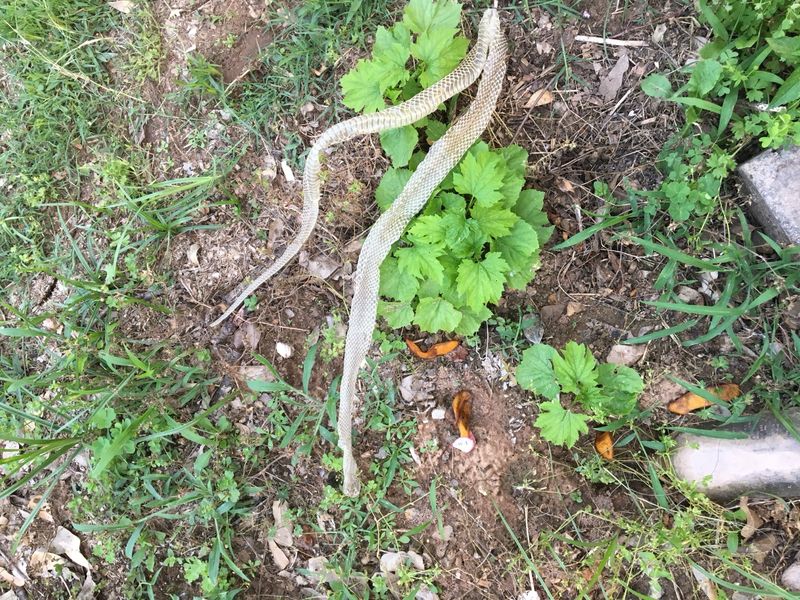
Because identification is so uncertain, your habits matter more than your eyesight. Pause when you notice any snake, and let it move off without interference.
Cottonmouths generally avoid contact, and most bites happen when a snake is bothered or accidentally stepped on.
Keep your hands and feet out of places you cannot see. That includes thick sedge clumps, piles of mulch, stacked pots, and the dark gaps beside ditch edges.
Look first, and use a long-handled tool to move material when you can.
Do not try to catch, kill, or relocate an uncertain snake. Florida Fish and Wildlife guidance encourages simply leaving snakes alone, and handling attempts are a common cause of bites.
Wear boots and long pants outdoors, and add leather gloves when you handle brush or debris. CDC guidance for outdoor workers backs this kind of protective gear.
Treat it as a backup layer only. Clothing does not make close contact with a snake safe.
After a bite, seek emergency care promptly
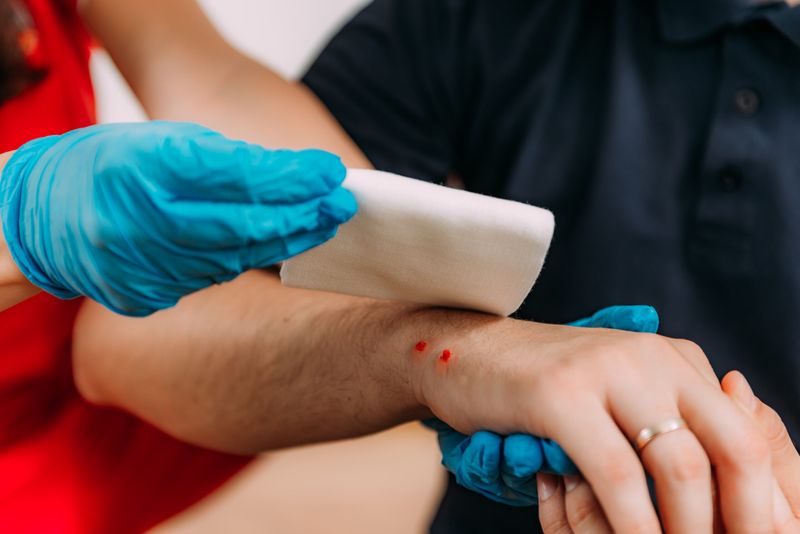
If you think a snake has bitten you, call for emergency medical help right away. Do this even if you believe the snake was a nonvenomous watersnake, since you may not know what it was.
CDC and NIOSH guidance recommends prompt emergency care.
Do not try to capture the snake. Doctors treat the bite and your symptoms, and chasing the animal only risks a second bite.
Skip the old folk remedies. Do not apply ice, do not use a tourniquet, do not cut the wound, and do not try to suck out venom.
Those steps can cause more harm and delay real treatment.
Afterward, take the lesson to heart that leaving snakes alone is the best protection. The visual clues in this article are for noticing from afar, not for inspecting up close.
A snake you never touch is a snake that never bites you.