
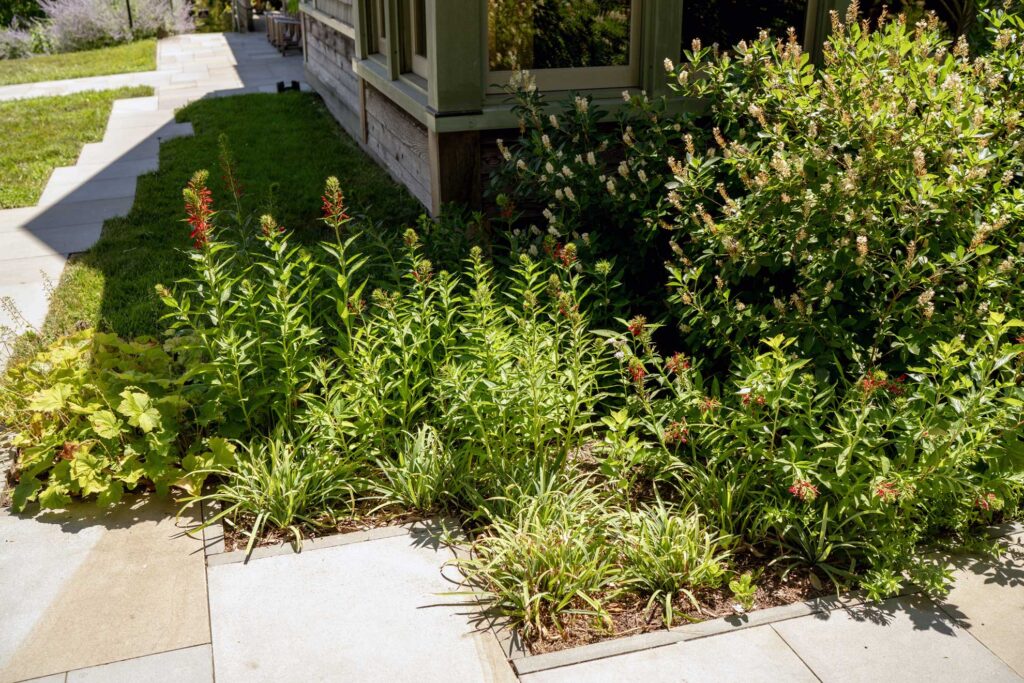
Every hard rain in North Carolina sends a rush of water off your roof and straight into the flower bed below the downspout. Mulch floats away, soil gets carved into little canyons, and roots end up bare.
The fix can be as simple as planting tough native plants with deep, grabby roots that drink up water and hold soil in place. Late September is a smart time to plant them, since cooler days and fall rains help roots settle in before winter.
1. Switchgrass
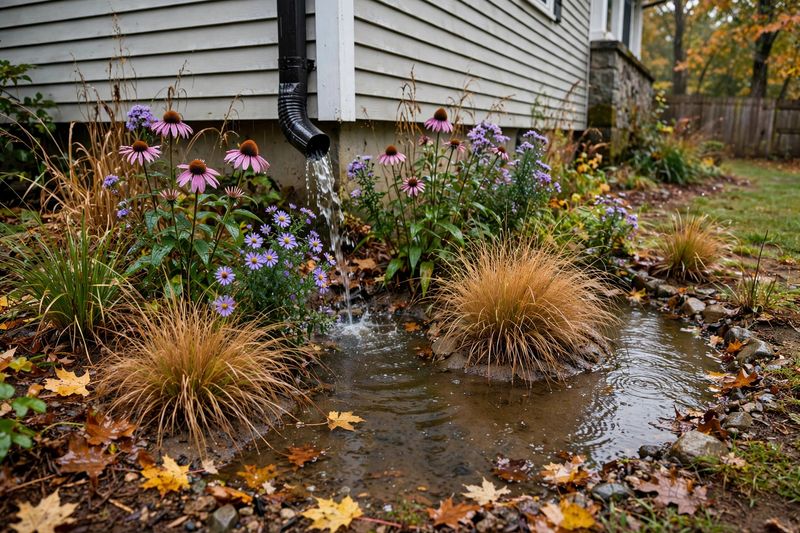
Picture a root system that can reach several feet down into red Piedmont clay. Switchgrass (Panicum virgatum) builds exactly that kind of underground net, which is why it ranks among the strongest choices for a spot where gutter water hits hard.
Plant a few clumps in a short row right where the splash lands. The stiff stems slow moving water, and the roots may help keep soil from sliding out of the bed during summer storms and fall tropical rains.
Cultivars like Shenandoah turn reddish in autumn, so you get color too. Leave the seed heads standing through winter, since sparrows and juncos pick at them when food runs low.
2. Soft Rush
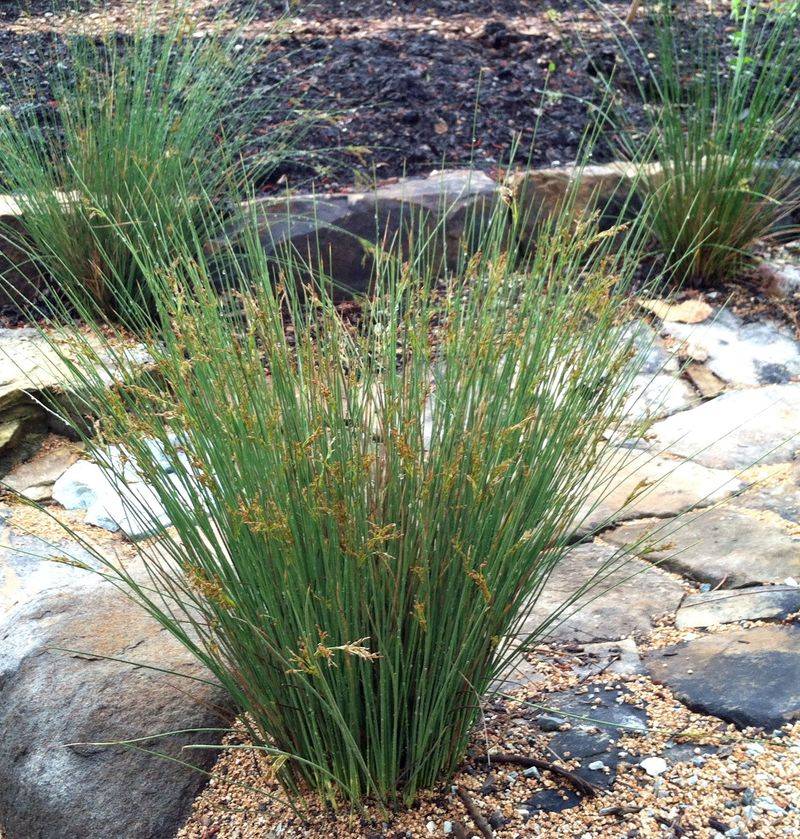
Some spots in the yard stay soggy for days after a storm. Soft rush (Juncus effusus) actually likes that, which makes it a handy fix for the muddy puddle zone right under a downspout.
Its upright green stems stay attractive through most of the year, even in winter across the coastal plain and Piedmont. The fibrous roots knit wet soil together, and the clump can handle being flooded and then dried out.
Fun fact: people in Japan have used this rush for centuries to weave tatami mats. In your yard, its job is simpler but just as useful, holding the line where water collects.
3. Cardinal Flower

Hummingbirds treat a stand of cardinal flower like a roadside diner. The scarlet spikes bloom in late summer into early fall, right as ruby-throated hummingbirds fuel up for migration through North Carolina.
Lobelia cardinalis grows naturally along creek banks, so the damp ground near a downspout feels like home. Tuck it just outside the main splash zone, where the soil stays moist but is not hit directly by the force of the water.
Plants can be short-lived, but they reseed in bare, wet soil. Skip heavy mulch right around the crowns so those seedlings have room to appear.
4. Joe Pye Weed

Want a plant that stands taller than your fence and pulls in butterflies by the dozen? Joe Pye weed (Eutrochium) can reach five to seven feet, with big dusty-pink flower domes from mid-summer into September.
Its thick roots soak up a surprising amount of water, which makes it a good fit at a downspout on the corner of a house. Monarchs, swallowtails, and bees crowd the blooms, especially in mountain and Piedmont gardens.
If you need something shorter, look for the compact cultivar Little Joe. It stays around four feet and still handles wet feet with ease.
5. Virginia Sweetspire

Shrubs do a job perennials cannot. Virginia sweetspire (Itea virginica) spreads by suckering roots, forming a low, dense mass that can anchor a whole bed edge where runoff tends to cut a channel.
White, fragrant flower spikes show up in late spring, and in fall the leaves turn deep red and burgundy. The foliage often hangs on well into winter in eastern North Carolina.
It tolerates wet soil, part shade, and occasional dry spells. That flexibility makes it a strong native swap for imported shrubs that rot in soggy ground.
6. Blue Flag Iris

Here is a plant that shrugs off standing water. Blue flag iris (Iris virginica) grows wild in swamps and ditches across the coastal plain, so a downspout basin is easy living for it.
Its thick rhizomes lock into soil and may help keep a rain garden basin from eroding. Violet-blue flowers appear in spring, and the sword-shaped leaves add structure all season.
Choose the native species rather than yellow flag iris, which is invasive in North Carolina wetlands. Fall is a fine time to divide or plant rhizomes.
7. Little Bluestem
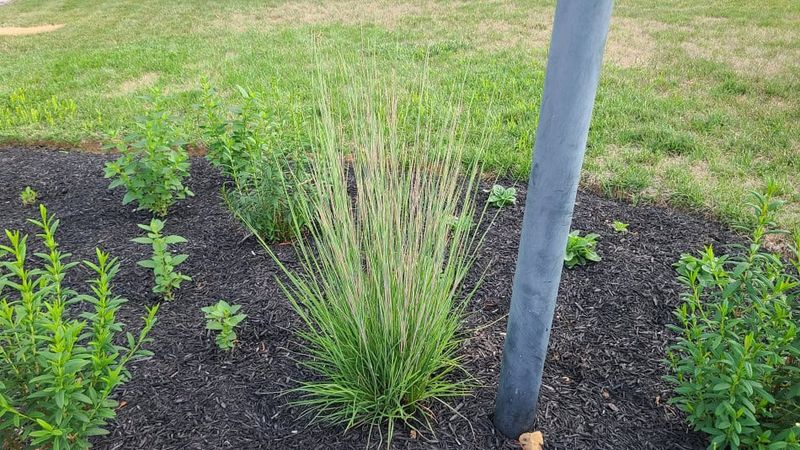
Slopes are where gutter runoff does the most damage, and little bluestem (Schizachyrium scoparium) was made for them. This compact grass handles drier, sloped ground on the edges of the runoff path.
Blue-green summer blades shift to copper and orange in fall, a nice match for NC foliage season. Its fine roots grip soil tightly, which can reduce washouts on banks.
Plant it in a staggered pattern down the slope, about 18 inches apart. Pair it with switchgrass at the bottom, and your bed has a full defense from top to bottom.