
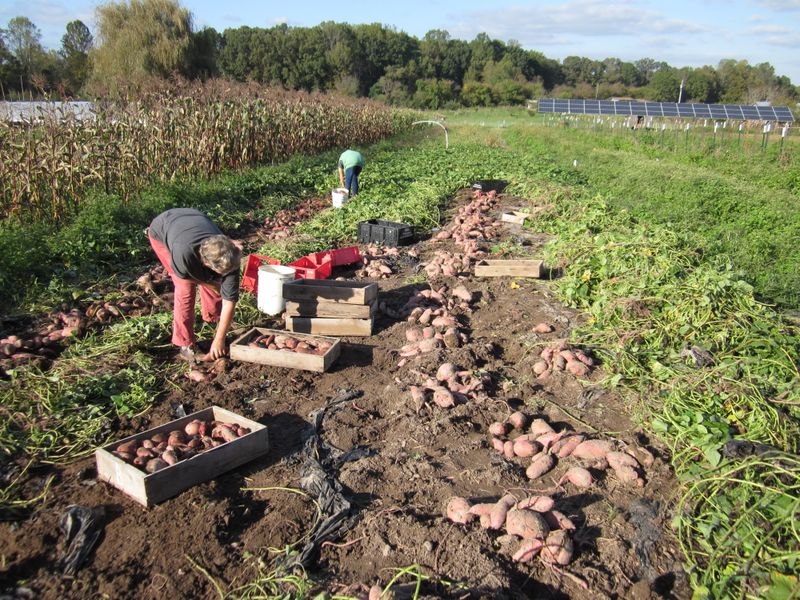
Sweet potatoes grow out of sight, so it is hard to know when cold weather starts to matter. Frost can wipe out the vines overnight, and that makes many gardeners wonder if the roots are doomed.
The real answer depends on your forecast, your soil, and how you handle the roots once they are out. Here is how to read the signs and protect what you grew.
Check local conditions before setting a harvest deadline
No single frost date fits the whole South. A gardener near the Gulf Coast may have weeks of mild weather left, while someone in the northern edge of the region could see a freeze much sooner.
Your own local forecast is the best guide for setting a harvest plan, so check it every few days as fall settles in.
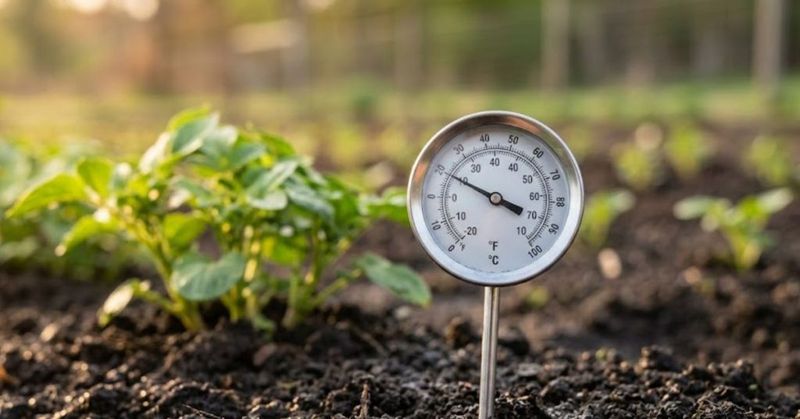
If you can, push a soil thermometer a few inches down near the plants. Soil temperature tells you more about what the roots are feeling than the air temperature does.
A cold snap that lasts one night is a very different event from a stretch of cool, damp days.
Sweet potatoes can be dug once the roots reach a usable size, and UMass Extension notes that roots keep growing while conditions stay warm. Frost or sustained cool soil can end that growth.
A frost warning does not mean the roots are already damaged, but it does mean you should have your tools, crates, and a dry digging day lined up.
Try sampling one hill to see how big the roots are. That quick test helps you decide whether to wait a little longer or start digging.
Frost can kill vines without immediately harming roots
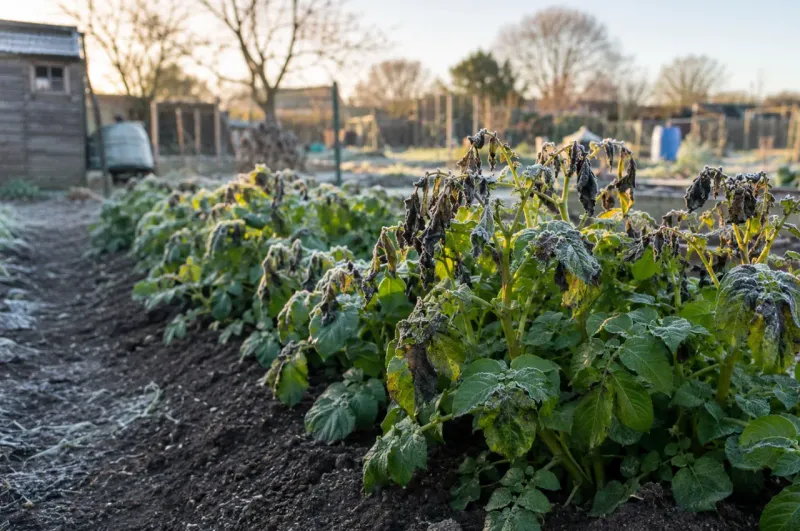
Blackened vines look dramatic, but they only tell part of the story. Frost injures leaves and stems that are above ground, while the roots sit under a blanket of soil that holds heat longer.
NC State Extension points out that frost alone may not harm roots if the surrounding soil stays warm.
The bigger worry is prolonged chilling. Cold soil over time can lower eating quality and make roots more likely to decay later, sometimes weeks or months after harvest.
Possible signs include internal discoloration, breakdown inside the root, off flavors, or hard centers after cooking, though none of these is certain.
Extension sources do not agree on one exact number for risk. Maryland Extension flags chilling injury below about 50°F, while Oklahoma State and UMass point to about 55°F.
Treat 50 to 55°F as a warning range, not a precise cutoff.
So a frosted vine is a reason to pay attention, not a reason to panic. Soil temperature and how long the cold lasts matter most.
Decide when to dig based on crop and cold risk
Three clues can guide your timing. First, the roots are big enough to use.
Second, a hard freeze or a run of cold nights is in your local forecast. Third, the soil is cooling toward that 50 to 55°F range.
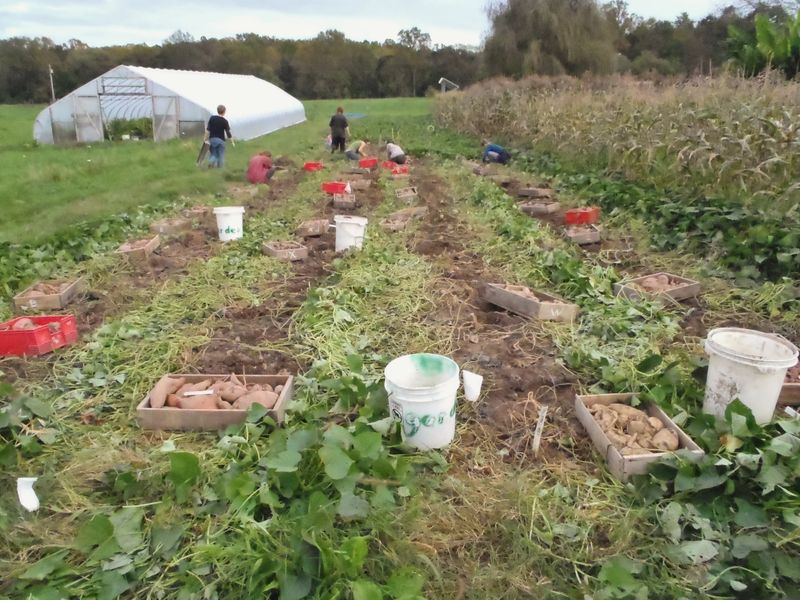
When any of these lines up, start planning a dig day. UMass guidance supports harvesting before a hard freeze, since frost or cool soil ends root growth anyway.
If frost has already killed the vines, dig promptly. Maryland Extension explains that decay in dead vines can move down into the roots.
Dead vines do not prove the roots are hurt, though. NC State notes that roots may be fine if the soil stayed warm, so prompt digging is simply the safer choice.
Skip the calendar and let conditions decide. Pick a dry stretch if you can, because wet digging makes handling harder.
If rain is on the way, harvesting a day or two early may beat waiting for a perfect moment.
Dig gently and protect freshly harvested roots
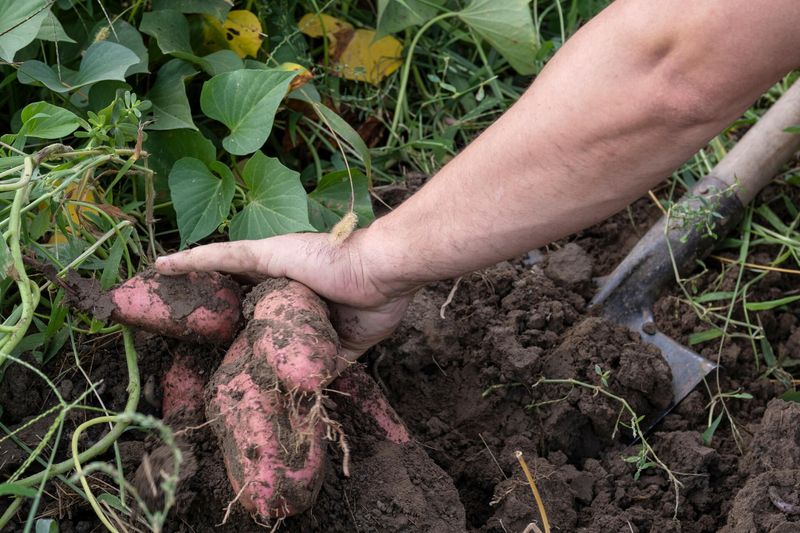
Sweet potato skin is thin and scrapes easily. Start digging a foot or so away from the center of the hill, then work the fork or spade in gently and lift the soil.
Loosen the dirt by hand near the roots so you do not slice into them.
Wounds matter because they give decay organisms a way in. Maryland Extension advises avoiding cuts and bruises for that reason.
Set roots down rather than tossing them, and use the nicked ones first in the kitchen.
Do not wash the roots before curing. Brush off loose soil with your hand and leave the rest.
NC State Extension also stresses careful handling after harvest.
Once roots are out, keep them out of the cold and away from long hours in direct sun. UMass guidance warns that sun exposure can cause sunscald.
A shaded spot, a shed doorway, or a covered crate works well while you finish digging.
Curing can help heal wounds and develop flavor
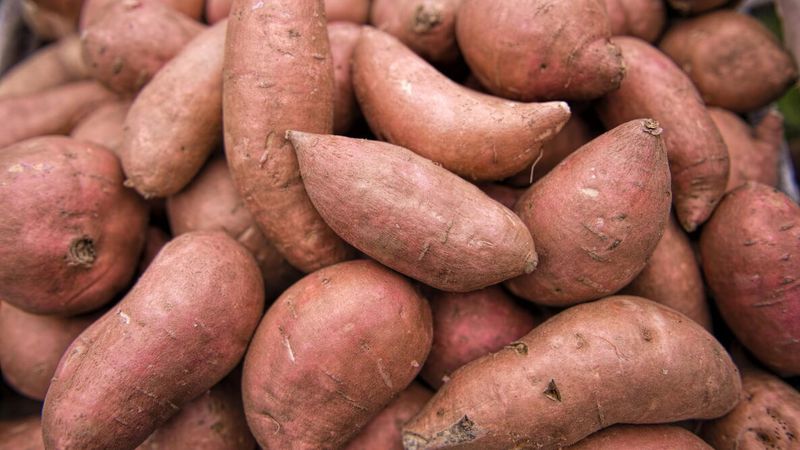
Curing gives harvest scrapes time to heal and lets starches turn into sugars, which improves flavor. For long storage, Alabama Extension describes roughly 80 to 85°F with high humidity for several days to about a week.
Most home gardeners cannot match those numbers exactly, and that is fine. Think of them as a target, not a requirement.
Commercial setups control temperature, humidity, and airflow with equipment that a backyard shed rarely has.
A simpler path comes from Maryland Extension, which describes keeping roots for a week in a covered, airy spot as a partial cure. It also notes that roots may still store well if that week is skipped.
Be careful with any gear you add. Penn State Extension advises keeping heaters away from flammable materials.
Avoid improvised heat sources and sealed, humid containers with no airflow, since poor ventilation can cause its own problems.
Store roots in suitable conditions, without expecting a guarantee
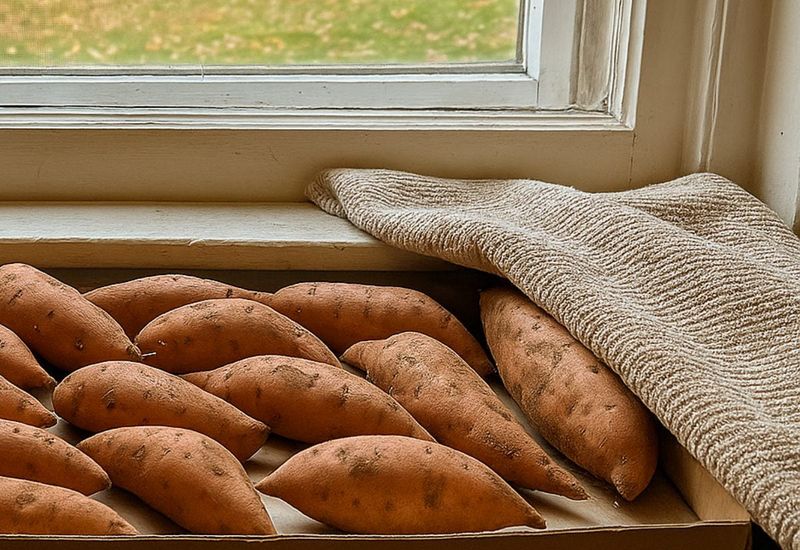
After curing, aim for storage around 55 to 60°F with some airflow. A cool closet, basement corner, or unheated room that stays in that range can work.
Avoid the refrigerator, since cold air can chill the roots.
Storage life varies. Alabama Extension reports four to seven months as a possibility for properly cured roots, and LSU AgCenter offers similar curing and storage advice.
Results still depend on temperature, humidity, handling, cultivar, and growing conditions.
If a root rots anyway, frost is not always the cause. Wet, saturated, low-oxygen soil before harvest can also lead to fast decay in storage, according to UMass Extension.
Rough handling and chilling add to the risk.
Check your crates every couple of weeks and remove any soft roots before they affect their neighbors. The sequence is simple: watch your local cold risk, dig with care, cure as conditions allow, and store cool.
A sweet potato that sits in a good spot rewards you slowly, one winter meal at a time.