
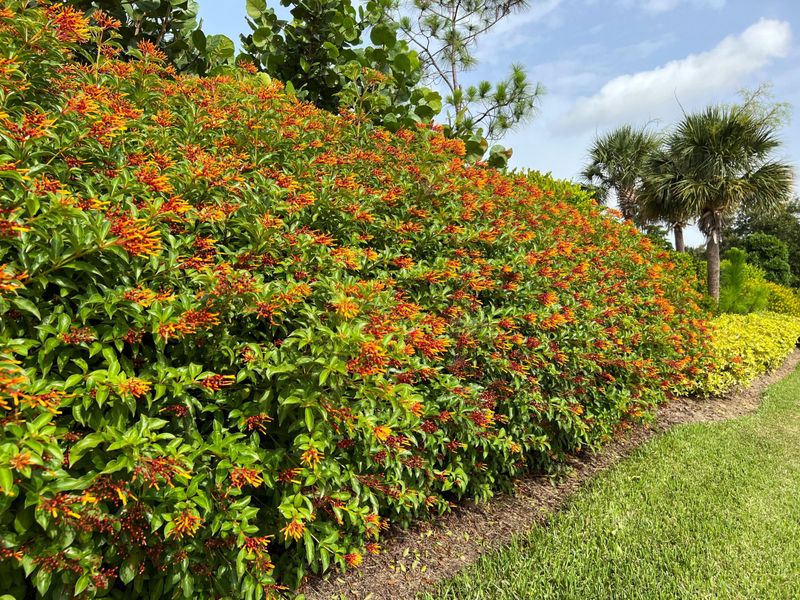
Few shrubs can handle a sunny Florida yard with sandy soil and still put on a show for months. Firebush does it with clusters of orange-red tubular flowers that stand out against deep green leaves.
Hummingbirds and butterflies like those blooms, though no plant can promise a visit. Here is what to know before you pick one, plant it, and give it room to grow.
Firebush can keep a sunny yard in bloom for months
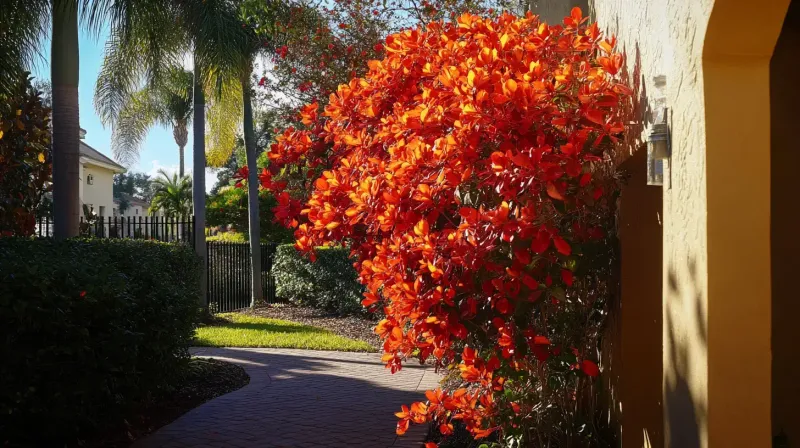
Picture a shrub covered in orange-red tubes that glow in the afternoon sun. That is firebush (Hamelia patens), a flowering shrub that earns its place in Florida yards through a long bloom season.
UF/IFAS Gardening Solutions describes flowering from late spring until the first frost in many settings.
Where winters stay mild, the show can last even longer. In frost-free parts of South Florida, firebush can flower year-round, and the Florida Museum lists year-round bloom as well.
That does not mean every yard in the state will see flowers in January. Cold snaps in northern and central areas bring the season to an earlier close.
The flowers are a draw for wildlife. Hummingbirds and butterflies are known visitors to firebush blossoms, which gives the plant a bonus beyond color.
Still, a visit to your particular yard is possible rather than assured, since birds and butterflies move around based on what else is blooming nearby.
Later sections cover how to identify the right plant, where to put it, and what to expect from winter weather. For now, the takeaway is simple: if you want months of hot-colored flowers in full sun, firebush deserves a spot on your shortlist.
Check which firebush you are buying
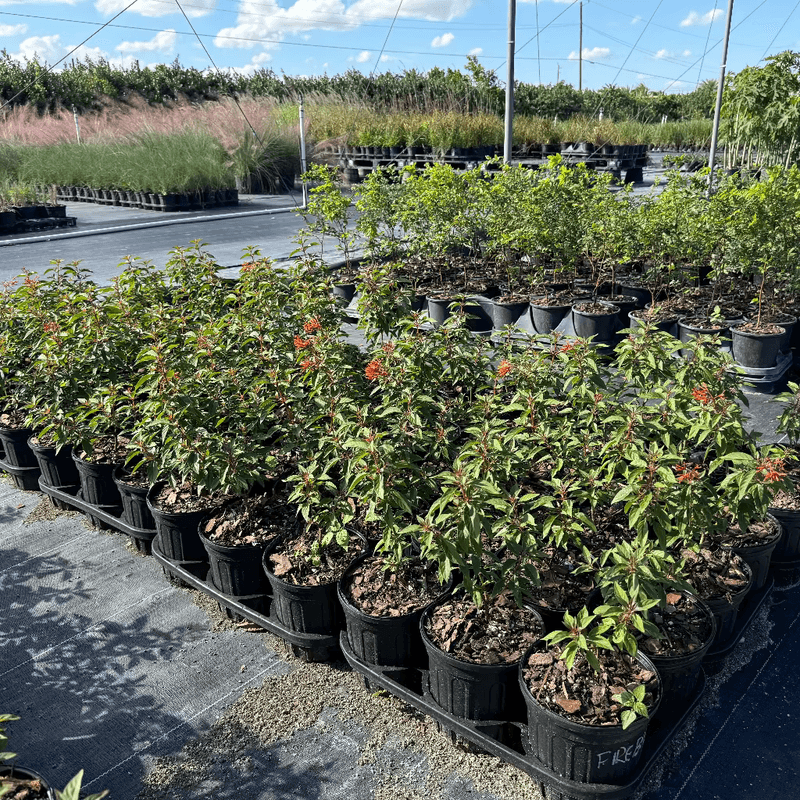
Not every plant sold as firebush is the same plant. The native form is Hamelia patens, typically var. patens, and UF/IFAS Extension says it occurs naturally from Sumter County southward.
That means it is native to central and southern Florida, not the entire state.
The Flora of Florida treats H. patens var. glabra as non-native and mostly cultivated. Plants sold as “Dwarf” or “Compacta” may be this non-native form, as explained in a UF/IFAS Charlotte County article.
A friendly common name on a tag does not prove where a plant comes from.
Before you buy, read the botanical name on the label. Then ask the seller about provenance, meaning where the plant stock originated.
A native plant nursery is often the easiest place to get a clear answer.
The UF/IFAS plant directory is a handy reference if you want to double-check the species name. If a tag says only “firebush” or “dwarf firebush,” treat that as a reason to ask more questions.
Full sun and well-drained soil bring out its best
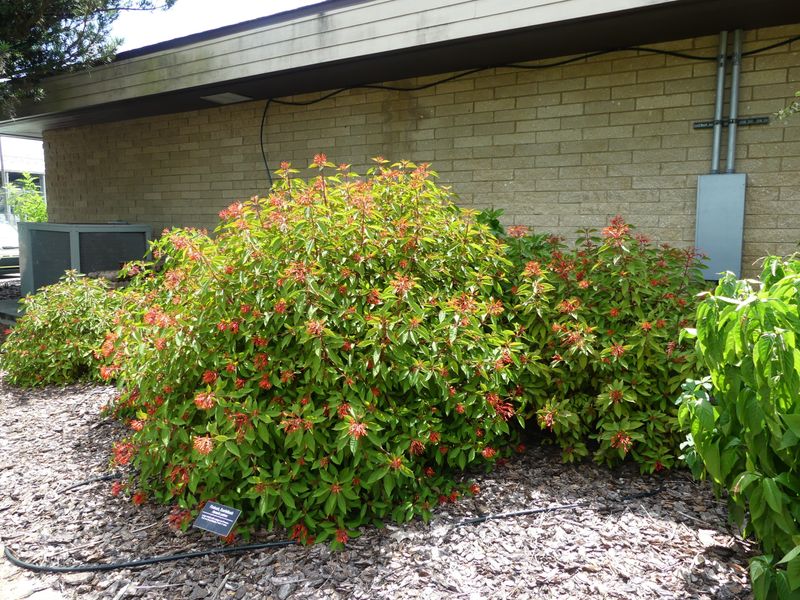
Give firebush a spot with full sun, and you will see stronger flowering. It tolerates partial shade, but blooms are reduced there, according to UF/IFAS.
Sandy, well-drained soil suits it well, and it also tolerates a range of other soil types.
The plant grows best when it has access to moisture, so think of sandy soil as workable rather than magic. Fast-draining ground dries out quickly, which matters most in the first months after planting.
Plan on regular watering while the roots establish. Aim the water at the rootball, where the roots are actually working, instead of spraying the whole plant.
UF/IFAS guidance on establishing shrubs stresses that new landscape plants need consistent moisture until roots spread into the surrounding soil.
Adjust your schedule to rainfall and location. A planting in a hot, open spot with loose sand will need more attention than one that gets regular summer downpours.
Once established, firebush handles heat and has moderate drought tolerance. Moderate is the key word.
A long dry spell can still stress it, so a deep soak during extended dry weather is a smart habit rather than an afterthought.
How much room should you leave for firebush?
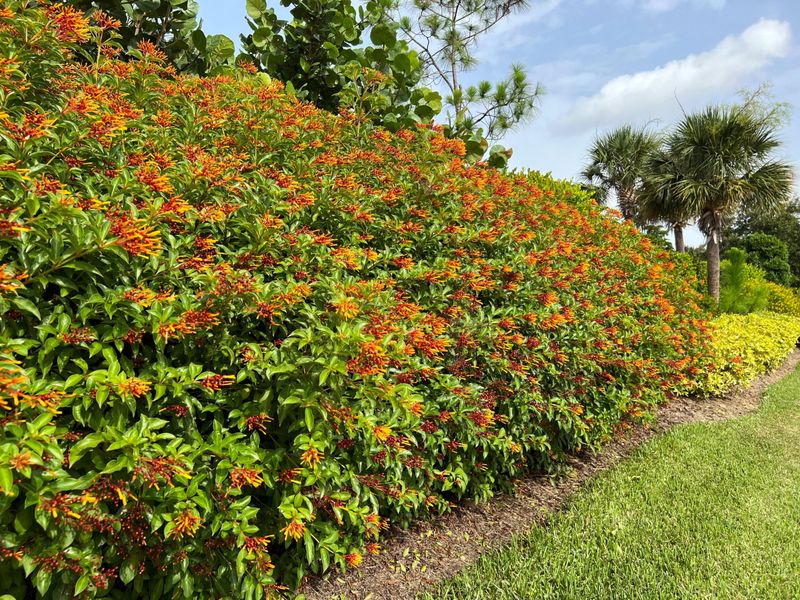
Plan for a big plant. Typical mature size for native firebush is about 6 to 12 feet tall and 5 to 8 feet wide, and UF/IFAS notes it can grow larger in favorable conditions.
This is not a small foundation shrub.
That size works in your favor in the right place. Firebush makes a good specimen plant, a bold back-of-the-border shrub, or a loose screen along a fence or property line.
Measure before you plant. Leave at least five to eight feet of width from walls, walkways, and neighboring plants, and keep it away from windows it could eventually cover.
Squeezing it into a narrow bed usually leads to repeated cutting back. Clipping can hold its size for a while, but it comes with tradeoffs, including fewer flowers, as the cold and pruning section explains.
If your space is tight, a different plant is the better choice than forcing firebush to stay small.
Also remember the earlier warning about names. A plant tagged “compact” may not be the native form, so confirm identity before you count on a smaller footprint.
What cold and pruning mean for the bloom season
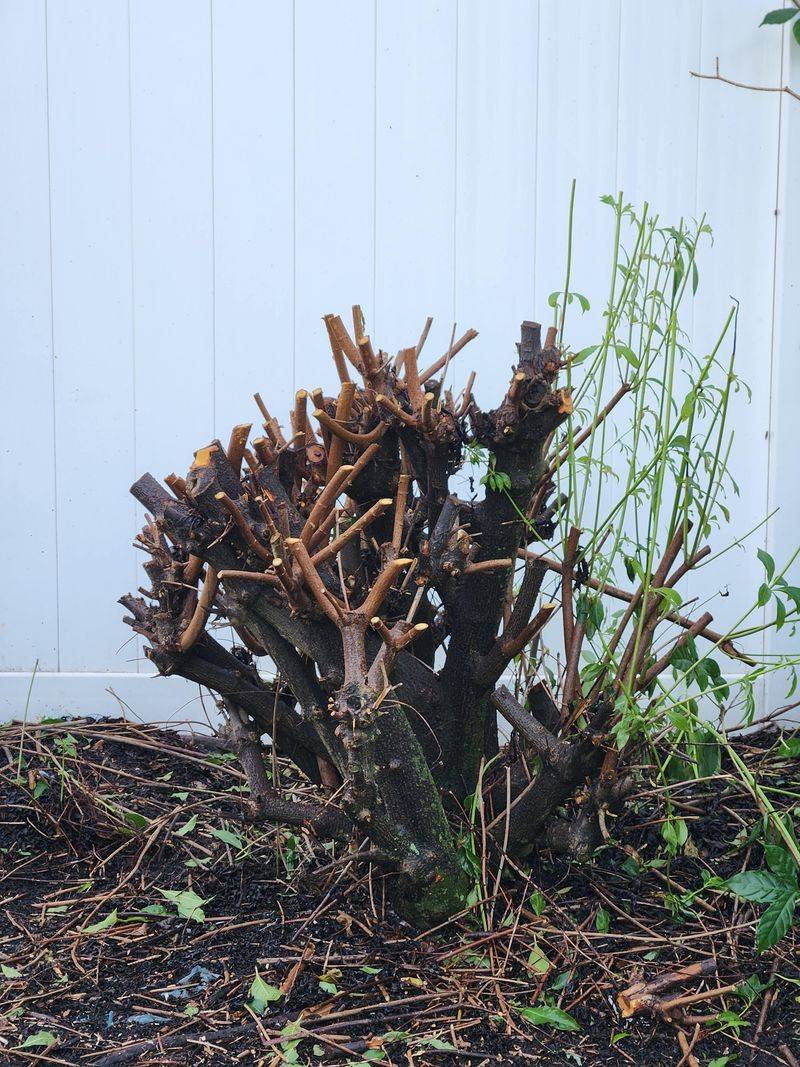
Winter decides how long your firebush performs. In colder parts of Florida, frost can kill the stems back to the ground.
The plant may then regrow from the roots when warm weather returns, as described by UF/IFAS Gardening Solutions.
If you see brown, limp stems after a freeze, wait before cutting. Look for new growth at the base in spring, then trim away what stayed dead.
Frost-free areas can support a longer flowering season, and some plants there keep their foliage and flowers through winter.
Pruning is a separate matter. Heavy or frequent pruning can reduce flowering, and UF/IFAS Extension notes that a regularly clipped hedge may lose flowers.
Shearing a firebush into a tidy box trades blooms for neatness.
A better approach is light shaping now and then, saving any bigger cutback for after a freeze has done the work for you. Be aware that strong wind can also brown the leaves, so do not assume the plant is storm-proof.
Will hummingbirds visit your firebush?
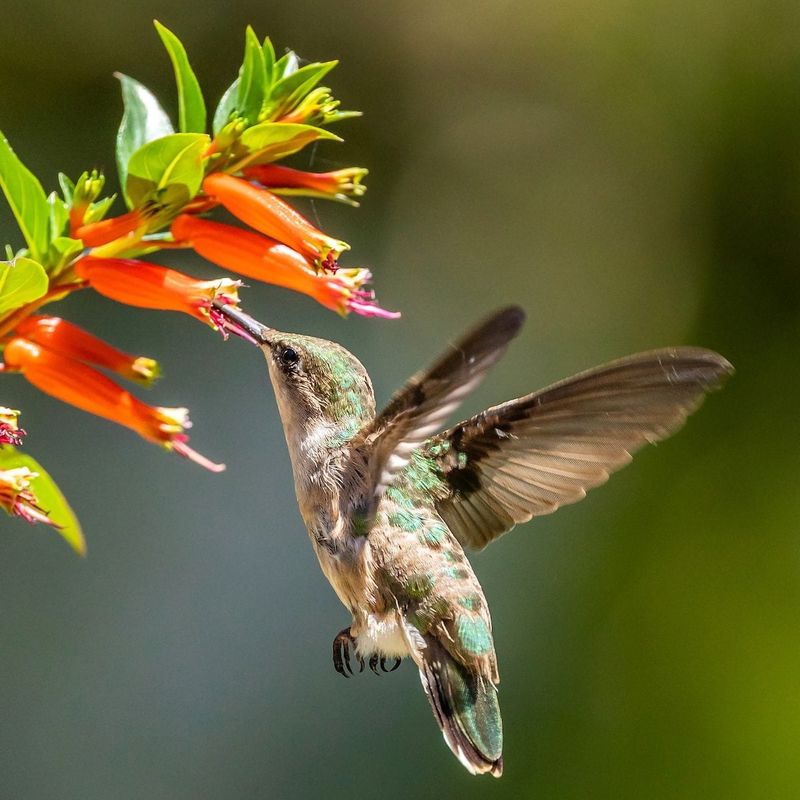
Hummingbirds and butterflies are listed by UF/IFAS as visitors to firebush flowers. That makes it a solid contender for a wildlife-friendly yard.
It does not mean a hummingbird will show up at your plant.
Visits depend on the season, your neighborhood, and what else is offering nectar. UF/IFAS notes on Florida hummingbirds point out that many of these birds pass through or winter in the state, so timing matters.
For steadier results, plant a range of nectar sources with overlapping bloom seasons. UF/IFAS hummingbird garden advice recommends this approach instead of relying on one shrub.
Firebush can anchor the planting, with other nectar plants filling gaps when it slows down.
Flowers are not the only wildlife link. Firebush also produces small black fruit that birds eat, so the shrub can serve visitors beyond the nectar crowd.
Think of it as one strong piece of a larger habitat.
A good fit for the right Florida yard
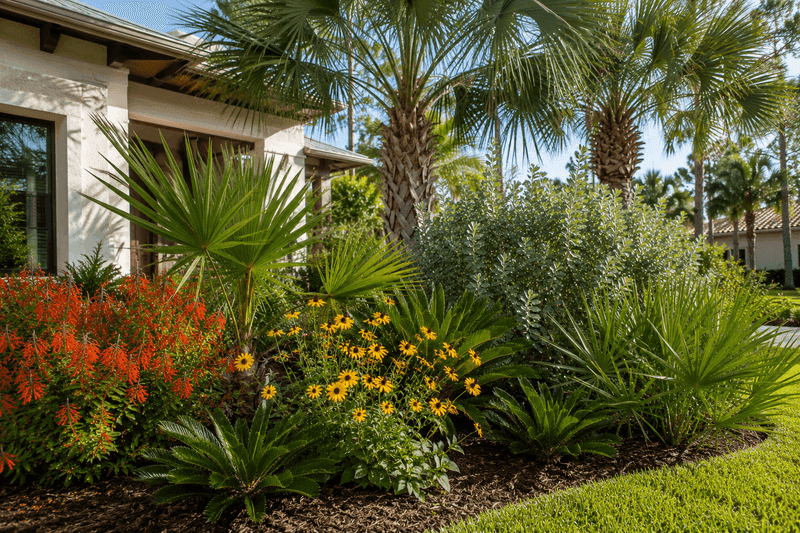
Choose native firebush if your yard has full sun, soil that drains well, and space for a shrub that can reach 12 feet. Be ready to water it regularly while it establishes, as UF/IFAS advises.
Expect bloom length to follow your winters. It runs from late spring to first frost in many places, and longer where frost rarely comes, per UF/IFAS Gardening Solutions.
Hummingbirds may stop by, but they are guests, not promises.
Give it the room and sun it asks for, and it will color the yard long after many other shrubs have quit.