
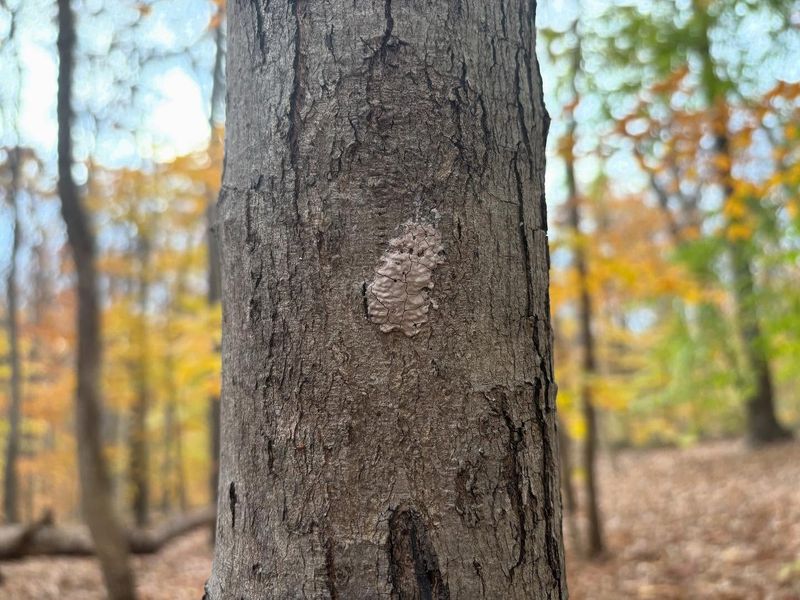
Gray patches on a fence post or tree trunk can look like nothing more than dried mud. In winter, some of them are spotted lanternfly egg masses waiting for warm weather.
North Carolina homeowners in quarantined areas have a simple cold-season job they can do with a plastic card and a small container. Here is how to do it safely and what it can and cannot accomplish.
Look from fall through spring
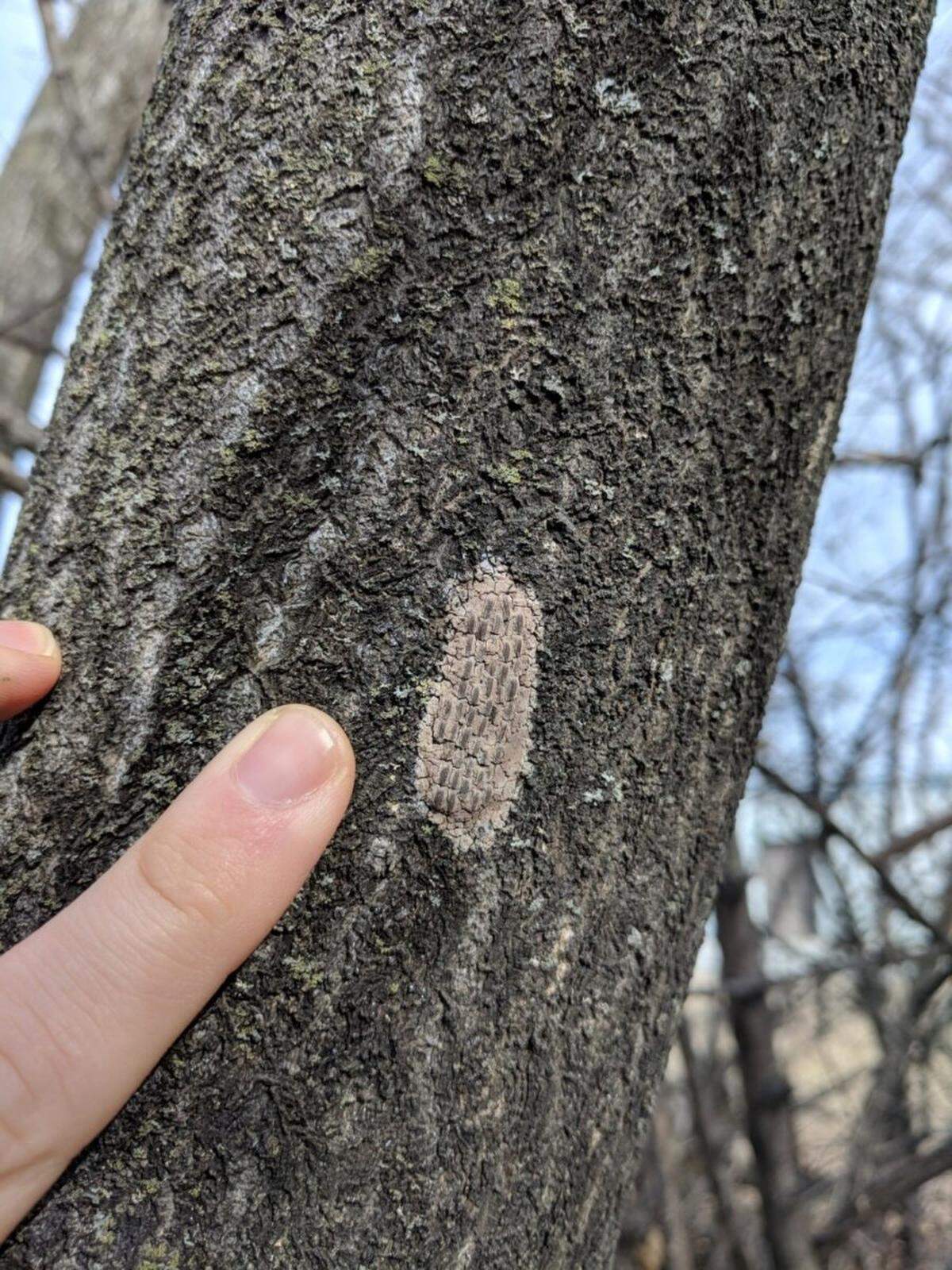
Timing matters more than most people expect. According to NC State Extension, egg masses are most likely to be seen in North Carolina from mid-October through spring.
The adults lay them in fall, and the eggs spend the cold months in place.
The useful window opens once the eggs are laid and closes when they hatch in spring or early summer. That means the job is not a single pre-winter chore.
A weekend check in November, another in January, and a quick look in early spring all count.
Leafless trees make winter a friendly time for searching. Without foliage in the way, trunks, fences, and sheds are easier to scan.
In the mountains, where spring often arrives later, the window may stretch a bit longer than it does in the coastal plain. Piedmont yards fall somewhere in between.
Once hatching begins, destroying eggs is no longer an option, so use the cold months while the masses are still intact.
Check trees and outdoor items
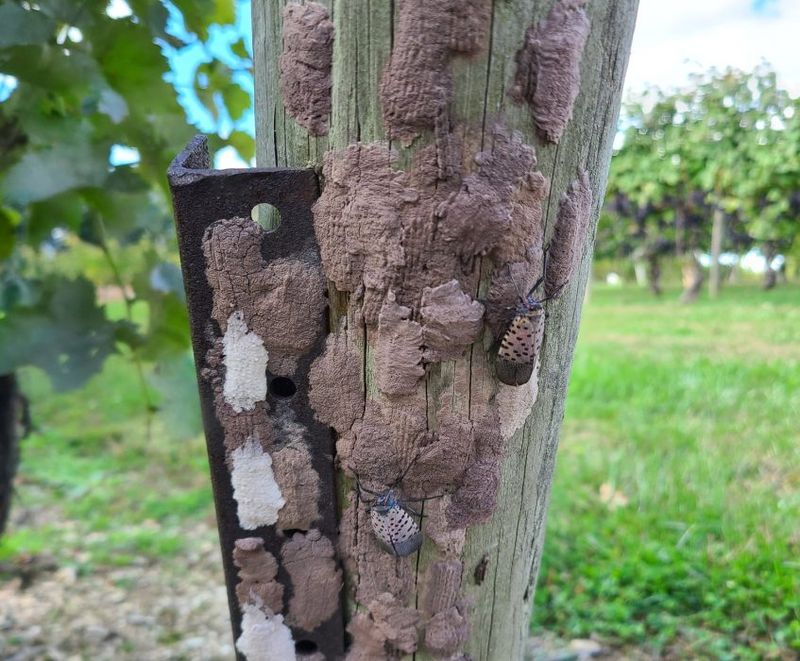
Picture a smear of putty or dried mud, gray-brown, about an inch or two long, often covered in a waxy-looking coating. That is what NC State Extension describes for a fresh egg mass.
Older ones can look weathered and cracked, so a close look helps.
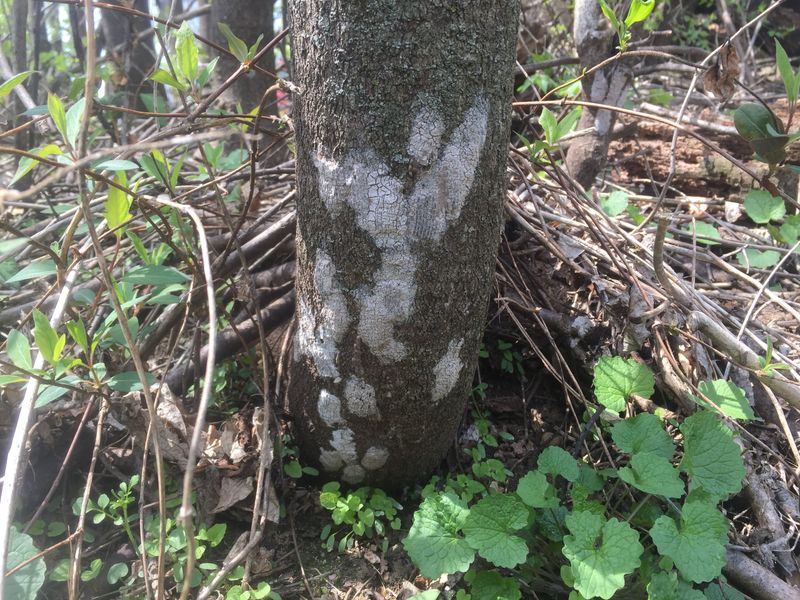
Tree bark and branches are the classic spots. Lanternflies are not picky, though, and Cornell’s pest management team notes they also lay on hard outdoor surfaces.
Walk the yard and check fences, outdoor furniture, grill covers, equipment, stacked firewood, and the sides of sheds.
Not every mark is an egg mass. Lichen, mud splatter, dried sap, and bark scars can all fool you.
If a patch looks flat, powdery, or green, it is probably something else. When unsure, snap a photo and compare it with extension images.
Moving items is where small problems can become bigger ones. USDA APHIS advises inspecting outdoor items before you move them out of an infested area.
Give firewood, planters, and gear a quick check first.
Scrape the mass into rubbing alcohol or hand sanitizer
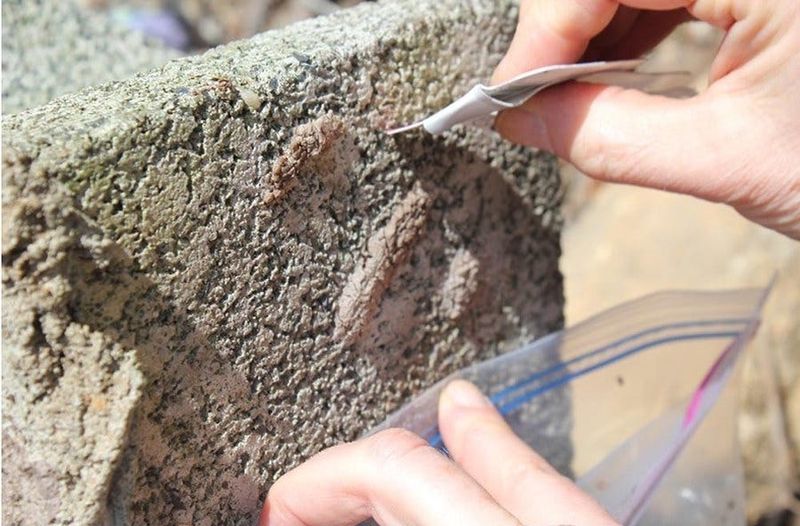
Gather three things before heading out: a firm, flat tool such as an old plastic card or a putty knife, a small container with a lid, and enough rubbing alcohol or hand sanitizer to cover the bottom. Pour the liquid in first.
The goal is for the eggs to touch it.
Hold the container right against the surface, just under the mass. Press the edge of your tool against the bark or fence and scrape so the eggs fall straight into the liquid, as Penn State Extension describes.
Keep scraping until the surface is clear.
Check that the eggs are submerged or coated. If you are using hand sanitizer, stir them in so they are covered.
Then put the lid on and leave the container sealed until you are sure the contents have soaked.
Skip the shortcut of flicking eggs to the ground. Eggs left on the soil can still hatch, which defeats the whole effort.
Cornell’s guidance also points to scraping as a standard way to deal with masses you can reach.
This is a scrape-into-liquid job, not a bagging job, so the container and liquid are the key pieces.
Crush the entire mass as an alternative
No container handy? Crushing is the other approved option.
Penn State Extension lists thorough crushing alongside scraping into alcohol or sanitizer.
The key word is entire. Press down firmly across the whole mass until every egg is ruptured.
A light tap, a partial smash, or knocking the mass loose does not count, because intact eggs can still hatch.
Use a sturdy flat tool or a gloved hand and work across the mass from one end to the other. Afterward, look closely at the spot.
You should see a crushed, damp-looking smear rather than neat rows of intact, seed-like eggs. If you spot any untouched ones, go over them again.
As the Penn State management guide explains, destroying egg masses is one tool among several for people dealing with this pest. Stick to the methods described here rather than inventing new ones.
Stay within safe reach
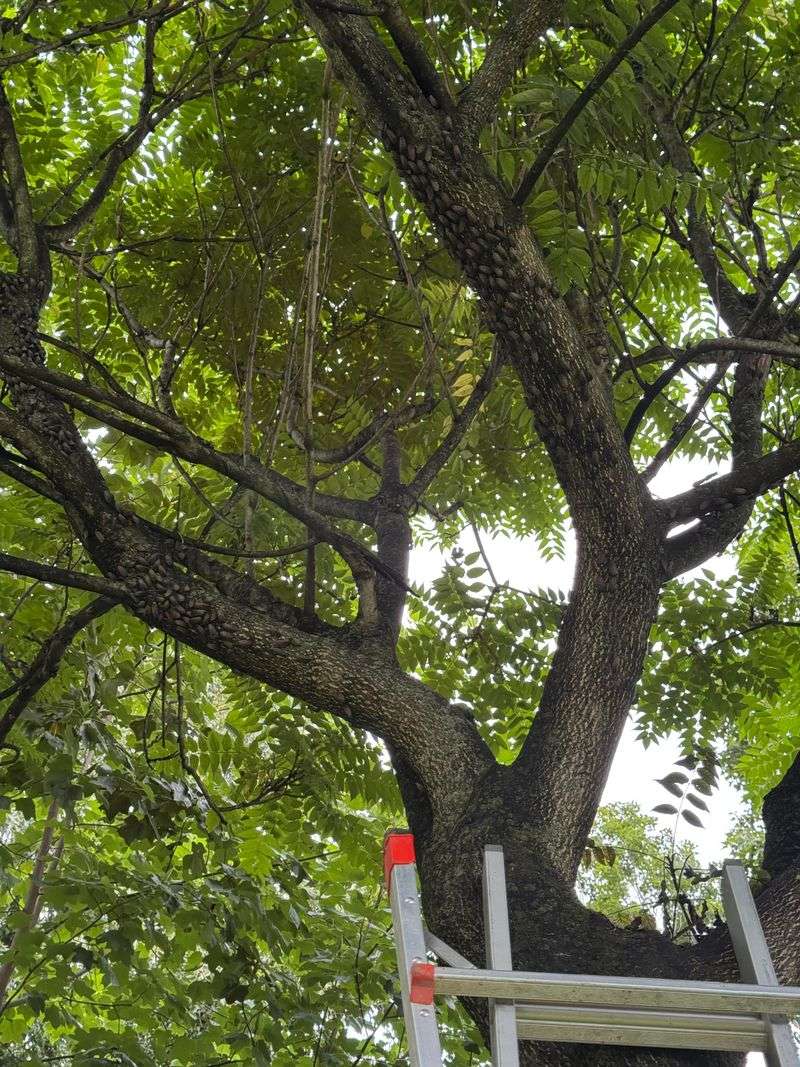
A mass fifteen feet up a tree is not your problem to solve. Penn State Extension specifically advises against climbing ladders to get to egg masses.
A fall costs far more than a few eggs are worth.
Stick to what you can reach comfortably from the ground, with both feet planted. If a mass sits high on a trunk, on a limb, or on a roof edge, leave it alone.
Note the spot and move on.
Fire safety counts too. Rubbing alcohol is flammable, which is why CDC hand hygiene guidance covers keeping alcohol-based products away from heat and flames.
Keep your container away from grills, fire pits, lit cigarettes, and gas appliances.
Cap the container when you are not actively scraping, and store it out of reach of children and pets.
Follow local North Carolina guidance

Where you live decides whether this task applies to you. NC State Extension recommends destroying egg masses for homeowners in quarantined areas.
It is not a call for every yard across the state.
Because the situation keeps changing, county status is worth checking before you act. The NCDA&CS release from February 10, 2026 reported newly confirmed populations, while other official pages describe a smaller set.
Since those sources do not match, check current local guidance from NCDA&CS or your county Extension office instead of relying on a list in an article.
Found something that looks like an egg mass in a place where lanternflies have not been confirmed? Take a clear photo and report it through the state spotted lanternfly reporting tool.
That report may help officials learn where the insect is showing up.
Treat egg removal as a limited step
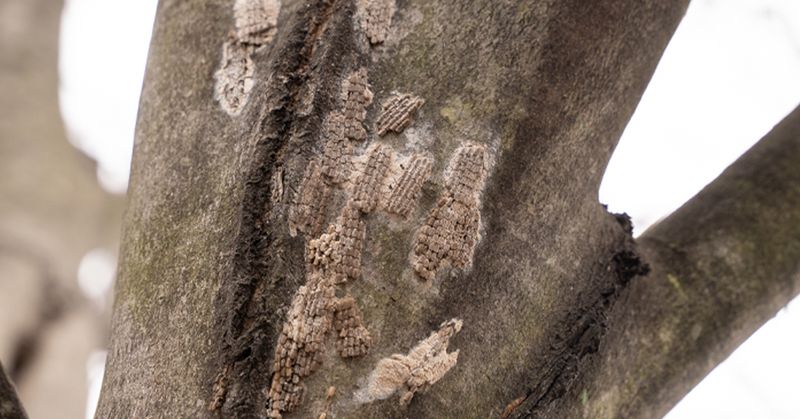
A single mass may hold about 30 to 50 eggs, according to NC State Extension. That number describes eggs, not guaranteed spring insects.
Not every egg would survive to become an adult, so nobody can say exactly how many lanternflies you prevented.
Some masses will be hidden in bark crevices or sit too high to reach safely. Lanternflies can also arrive from neighboring yards and roadsides.
The Penn State management guide treats egg destruction as one piece of a broader approach, and Cornell offers similar advice.
So think of this as a helpful extra, not eradication. Check what you can see, destroy only what you can reach from the ground, and leave the rest.
A few quiet minutes with a plastic card can do real good, even if it is only a small part of the story.